
Sign up to save your podcasts
Or

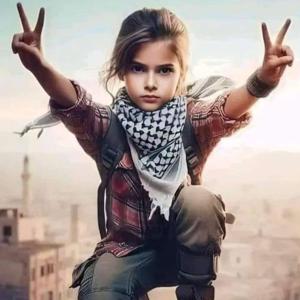


In this week’s episode, we turn our attention to a conversation that has been stirring debate across global media and academic circles alike—a recent analysis by journalist and political commentator Ali Abunimah, titled “Israel’s Catastrophic Failure.”
This discussion arrives at a moment when the region is still trembling from the aftershocks of the Gaza war, and when the political landscape of the Middle East is shifting in ways that even seasoned analysts struggle to fully grasp.
Abunimah’s commentary cuts through the noise with clarity and precision.
In the clip we explore today, he lays out a stark assessment of how Israel’s political and military strategies have not only faltered but unraveled in full view of the world. What was once framed as strength has revealed itself as fragility. What was once presented as control has exposed deep structural cracks. And what was once assumed to be an unshakeable regional order is now being rewritten in real time.
At the heart of Abunimah’s analysis is a simple but profound question:
What happens when a state built on the projection of power suddenly finds that power slipping?
He examines the cascading consequences of the Gaza war—not only for Palestinians, whose suffering remains the moral center of this crisis, but also for Israel’s standing on the global stage.
He traces how the war has accelerated a shift in international opinion, widened fractures within long‑standing alliances, and forced governments around the world to confront uncomfortable truths about their own complicity.
Abunimah also highlights the geopolitical ripple effects:
the recalibration of regional actors,
the emergence of new diplomatic alignments,
and the growing recognition that the old frameworks—political, military, and ideological—can no longer contain the realities unfolding on the ground.
This moment, he argues, reveals the limits of power in the modern Middle East.
Not just Israel’s power, but the power of any state that relies on force, occupation, or narrative control to maintain its position.
The Gaza war has exposed the fragility of these systems, and in doing so, has opened a window into a future where the balance of influence may look very different from the past.
As we listen to this clip, we invite you to sit with the questions it raises:
What does failure look like when it is political, military, and moral all at once?
What does it mean for a regional order when its central pillar begins to crack?
And what possibilities emerge when the world can no longer ignore the consequences of policies that have gone unquestioned for decades?
This episode is not just an analysis of a single moment.
It is an invitation to understand the deeper forces shaping the Middle East today—forces that will define the region’s future, and the worlds, for years to come.
Welcome to This Week in Palestine.
Let’s begin.
Today, we begin with a question that cuts deeper than headlines:
What is the war on Gaza really about?
They want you to believe it’s religious.
They want you to believe it’s ancient hatred or a sudden eruption of violence.
But look closer.
Think deeper.
Because nothing about this war feels spontaneous, accidental, or purely reactive.
Was this truly a retaliation for October 7th—
or was October 7th the spark that activated a plan already drawn in the shadows?
When you watch Gaza being flattened at a pace no military operation could improvise,
you start to wonder whether the goal is not retaliation,
but removal.
Not security,
but emptying the land for something else.
And here is where the story widens.
Some analysts whisper about a future canal—
a new trade route that could rival or even replace the Suez Canal.
A canal that would run through the very land now being erased.
A canal that would shift global power,
global trade,
global alliances.
If such a project existed—
who would benefit?
Who would lose?
Who would quietly support it from behind the curtain?
The United States is locked in conflict with Russia and China.
China remains the manufacturing engine of the planet.
Russia is cut off from Europe and searching for new routes, new partners, new leverage.
And the Suez Canal—though Egyptian in name—remains under Western influence.
So, imagine a new canal emerging.
A canal outside Western control.
A canal that shifts the balance of power toward Beijing and Moscow.
A canal that turns Israel into a strategic command node in a new global supply chain.
Is Israel being protected for its own sake—
or for a larger geopolitical design?
Is Gaza being destroyed for “security”—
or for a future that has nothing to do with religion
and everything to do with trade, power, and empire?
I’m not telling you what to believe.
I’m asking you to think.
To question.
To see the map beneath the rubble.
Because wars are never only about what they claim to be.
And Gaza—small, besieged, unbroken Gaza—
may be sitting on a future powerful nations are willing to destroy an entire people to control.
Stay with us.
As we peel back the layers.
As we follow the money, the routes, the alliances.
As we ask the questions the world avoids.
This is This Week in Palestine.
And today, we look beneath the surface.
Today, we begin with honesty.
We are witnessing an architecture of erasure,
a project where history is rewritten with bulldozers and bombs.
The world watches; some in silence, others in open complicity.
But here, on this program, we refuse silence.
We ask the question the world keeps avoiding:
How long must a people suffer before their humanity is finally recognized as sacred.
To help us peel back the layers of this crisis,
we’re bringing you a rare meeting of minds,
a deep, unflinching analysis from two of the most formidable scholars working today:
Norman Finkelstein and Mouin Rabbani.
In a conversation originally hosted by India & Global Left,
these two analysts map the shifting tectonics of global power.
From the “fig leaf” of failed ceasefire resolutions
to the unsettling rise of far‑right voices claiming space in the debate,
Finkelstein and Rabbani offer the kind of forensic clarity
that helps us understand not just what is happening,
but why it is happening now.
They don’t simply comment on the moment.
They chart a roadmap for the global conscience.
So, stay with us.
As we strip away the silence.
As we uplift the resilient.
As we carry forward the flame of justice.
This journey is shared.
It is urgent.
And it is sacred.
This collection of words, testimonies, and scripts is not simply a broadcast—it is a record of truth. Today we traced the crimes of settlers in the West Bank, the genocide unfolding in Gaza, and the silence of governments that enable Israel’s destruction. We named Zionism for what it is: an ideology of erasure, a system of violence that has brought misery and insecurity to millions.
We remembered the fallen children like Hind Rajab, doctors who healed under fire, journalists who carried the truth, activists who gave their lives, and allies aboard the Freedom Flotilla. We honored the voices of conscience across the globe, from students in American universities to Jewish thinkers who dismantled Zionist myths, to everyday workers who marched in solidarity.
We spoke of resistance: resistance in olive trees, in sand, in memory, in testimony. Resistance in refusing silence, in exposing lies, in carrying forward the flame of justice. And we named the enablers—the Western powers whose weapons, money, and silence sustain apartheid.
This is not polite avoidance. This is bold testimony. It is urgent truth‑telling. It is unapologetic solidarity. The struggle for Palestine is not confined to one land, one people, or one moment. It is shared. It is global. And it is sacred.
Stay with us.
This is This Week in Palestine.
And this is where the silence ends.
As always, we turn our gaze to Gaza.
not only to the bombs that fell,
not only to the ceasefire that never came,
but to the plans whispered in Washington and echoed by Donald Trump.
Trump’s vision for Gaza is not peace.
It is profit.
It is reconstruction for investors,
skyscrapers rising over rubble,
contracts signed over graves.
And he is not alone.
He is supported by guarantor states that remained silent,
by senators like Ted Cruz who cloak Zionism in scripture,
by leaders who normalize relations while hospitals burn.
They stand with him—
not with the people.
But against this agenda, we honor the voices who refused silence.
We honor Rachel Corrie, Shireen Abu Akleh, Issam Abdallah.
We honor doctors like Ghassan Abu Sitta and Mona El‑Farra,
who healed under fire.
We honor students from Columbia, Harvard, Berkeley, and Boston College,
who marched, who occupied, who spoke.
We honor Americans like Angela Davis, Cornel West, Chris Hedges,
and Jewish voices of conscience—Noam Chomsky, Norman Finkelstein, Ilan Pappé—
who exposed the myths and defended the dignity of Palestinians.
These are the names, the lives, the legacies that stand against Trump’s Gaza vision.
They remind us that Gaza is not a blank canvas for empire.
It is a home.
It is a people.
It is a struggle for truth.
So tonight, as Trump and his allies dream of skyscrapers over rubble,
we remember the fallen,
we honor the resistors,
and we declare:
Palestine is not for sale.
Palestine is not for profit.
Palestine is for its people.
Stay with us.
This is This Week in Palestine.
And this is where the silence ends.
The 56th Annual National Day of Mourning – Plymouth, MA
The 56th Annual National Day of Mourning was held on Thanksgiving Day, November 27, 2025, at Cole’s Hill in Plymouth, Massachusetts. Since 1970, Indigenous people and allies have gathered here each year to mourn ancestors lost to colonization and to challenge the myth of Pilgrims and Native harmony. The tradition began when Wamsutta Frank James of the Wampanoag Nation was prevented from delivering a speech that told the truth about genocide and land theft. In response, he and others created a day of remembrance and protest that has continued for more than half a century, organized by the United American Indians of New England.
This year’s gathering drew hundreds despite the cold weather. The atmosphere was solemn yet defiant, filled with drumming, prayers, and speeches that reminded participants that Thanksgiving is not a simple holiday of gratitude but a day that must confront the truth of colonization. Speakers described the genocide of millions of Native people, the theft of land, and the erasure of cultures. They called for Land Back, climate justice, and resistance to racism, sexism, homophobia, and the destruction of the Earth introduced by colonization.
A powerful theme of the 56th Day of Mourning was solidarity with Palestinians. Speakers declared that from Turtle Island to Palestine, colonialism is a crime. They emphasized that both Indigenous Americans and Palestinians face settler colonialism, displacement, and attempts at erasure, and that their struggles are interconnected. Calls were made to stand with Palestinians in Gaza and the West Bank, linking the Thanksgiving myth to the propaganda that obscures Palestinian dispossession.
The gathering was both a remembrance and a rallying cry. It affirmed Indigenous survival despite centuries of violence and underscored the importance of truth-telling and solidarity. By explicitly connecting Indigenous resistance with Palestinian liberation, the Day of Mourning revealed a profound truth: from Plymouth Rock to Gaza, the struggle against settler colonialism is shared, and the fight for justice is global.
Today, we turn our attention not to headlines, but to the human question of neighborliness. Too often, Palestinians are spoken of as if they are unworthy reduced to caricatures, painted as “bad neighbors,” or dismissed as a threat. Cities like Dearborn, Michigan, with its vibrant Arab and Palestinian community, are stigmatized as places of hostility rather than celebrated as centers of resilience and care.
But what does it truly mean to have a Palestinian as a neighbor? Would they throw trash at your door, scratch your car, or break your windows? Or would they do what Palestinians have done for centuries—offer hospitality, share food, and treat the neighbor, whether Muslim, Christian, or Jewish, with dignity?
To challenge the myths, we bring you a clip titled “Jewish Rabbi Gives an Islamic History Lesson.” In it, Rabbi Haim Sofer of Neturei Karta reminds us of a deeper truth: that Jewish and Muslim communities lived side by side for generations, often in peace, often in solidarity. He recalls how Jews found refuge in Muslim lands after being expelled from Europe, and how coexistence—not suspicion—defined centuries of shared history.
So today, we ask not whether Palestinians can be good neighbors, but why the world has been taught to believe otherwise. And we listen to voices—like Rabbi Sofer—that remind us of the dignity, hospitality, and humanity that Palestinians have always carried with them.
Stay with us.
This is This Week in Palestine.
And this is where the silence ends.
Sixty Flags Over Gaza: The Global Complicity in Genocide
Today, we begin with a question that refuses to die:
Why has the world ganged up on Palestine?
Why have more than sixty countries—powerful, wealthy, and self-proclaimed defenders of human rights—lined up behind Israel as it wages a campaign of annihilation against a besieged, stateless people?
This is not just war.
This is genocide.
And it is not being committed in isolation.
It is being funded, armed, and politically shielded by a global coalition of complicity.
According to UN Special Rapporteur Francesca Albanese’s report, over 60 member states have contributed to Israel’s assault on Gaza—through weapons, surveillance tech, military aid, and diplomatic cover. These include the United States, Germany, the United Kingdom, France, Italy, Canada, and Australia. But also Arab states like Egypt, Jordan, and the UAE, who enforce the blockade, normalize relations, and offer logistical support.
Together, they have enabled the destruction of homes, hospitals, schools, water systems, and entire families.
Together, they have tried to erase Gaza from the map.
And together, they have failed.
Because the people remain.
Holding on to every grain of sand.
Holding on to the name: Palestine.
We demand answers.
Why does the world help Zionists steal the land from its rightful inhabitants?
Why do they reward apartheid with trade deals, arms contracts, and diplomatic immunity?
Why do they silence the truth, criminalize solidarity, and punish resistance?
This is not just about Palestine.
It’s about the moral collapse of the international order.
It’s about the Genocide Convention being shredded in real time.
It’s about the cost of silence—and the price of complicity.
So today, we name the countries.
We trace the weapons.
We follow the money.
And we ask the question that history will not forgive us for ignoring:
Why did the world choose genocide over justice?
Stay with us.
This is This Week in Palestine.
And this is where the silence ends.
Before we begin today’s episode of This Week in Palestine, we must pause to mark a political moment that reverberates far beyond city limits. Zohran Mamdani has just been elected mayor of New York City—a victory that defies precedent, expectation, and the machinery of power itself.
He didn’t just win an election.
He dismantled a narrative.
Mamdani defeated billionaires, lobbyists, and even the sitting president’s preferred candidate. He did so not by softening his stance, but by sharpening it. He refused to be silent on Palestine. He refused to visit Israel. He refused to play the game of appeasement. And for that, he was smeared, accused, and targeted. But the people of New York chose principle over propaganda. They chose clarity over compromise.
His victory is more than symbolic. It signals a shift in American political discourse—a shift that centers justice, affordability, and international accountability. It tells us that being pro-Palestine is no longer political suicide. It is political courage.
And that courage brings us to the heart of today’s episode.
We turn now to a clip titled “Professor Exposes Secret Origins of the Israel Project,” featuring Dr. Yakov M. Rabkin—a historian whose work challenges the very foundation of Zionism. Rabkin, professor emeritus at the University of Montreal, argues that Zionism was not born in the Holy Land, but imported from Europe as a colonial ideology.
He writes that Zionism is “a radical break from Jewish tradition,” rooted not in theology but in 19th-century European nationalism.
He reveals how early Zionists formed alliances with antisemites—not out of shared values, but shared goals: to remove Jews from Europe.
And he documents how traditional Jewish communities overwhelmingly rejected Zionism, seeing it as a betrayal of spiritual identity and ethical responsibility.
Rabkin’s critique is not anti-Jewish. It is deeply Jewish.
It is rooted in exile, humility, and the belief that justice cannot be built on dispossession.
So as we reflect on Mamdani’s win—a mayor who centers Palestine in his politics—we also reflect on the deeper history that brought us here.
A history of ideas imported from Europe.
A history of resistance erased.
A history that demands to be retold.
Antisemitism has long been a real and dangerous form of hatred—but today, Zionist institutions increasingly weaponize the term to silence Palestinian advocacy and discredit righteous voices calling for justice. This introduction explores how that distortion works, and why it matters.
Let’s begin with clarity.
Antisemitism is real.
It is a centuries-old hatred that has led to unspeakable violence, discrimination, and genocide—most horrifically in the Holocaust.
It must be condemned wherever it appears.
But today, a dangerous distortion is unfolding.
Zionist institutions and pro-Israel lobby groups have increasingly weaponized the term antisemitism—not to protect Jewish communities from hate, but to shield the Israeli state from accountability.
They’ve redefined criticism of Israel as antisemitism.
They’ve blurred the line between opposing a government and hating a people.
And in doing so, they’ve turned a legitimate concern into a political weapon.
This tactic is not new.
But it’s growing more aggressive.
Palestinians—who are themselves Semites—are routinely accused of antisemitism for speaking about their own dispossession.
Jewish scholars, journalists, and activists who oppose Zionism are smeared as traitors.
Students are expelled.
Professors are fired.
Social media accounts are suspended.
And entire movements are branded as “hate groups” for demanding basic human rights.
According to Palestine Legal, nearly half of the suppression incidents they respond to each year involve false accusations of antisemitism.
The goal is clear: silence dissent.
Discredit resistance.
Punish truth.
And it’s not just happening in the U.S.
In France, President Macron called anti-Zionism a “reinvented form of antisemitism.”
In Canada and the UK, governments have adopted definitions that equate criticism of Israel with hate speech.
In 2023, the U.S. House of Representatives passed a resolution declaring that “anti-Zionism is antisemitism”.
But here’s the truth:
Zionism is a political ideology.
It is not Judaism.
It is not a religion.
It is not a people.
And opposing Zionism—especially in its violent, settler-colonial form—is not antisemitism.
It is a moral stance.
It is a defense of international law.
It is a call for justice.
When Palestinians speak of their stolen homes, their murdered children, their imprisoned elders—they are not expressing hate.
They are expressing history.
They are expressing grief.
They are expressing truth.
And when righteous people—of all backgrounds—stand with Palestine, they are not inciting violence.
They are resisting it.
So, let’s be clear:
The weaponization of antisemitism is not about protecting Jews.
It’s about protecting power.
It’s about silencing the oppressed.
It’s about making sure that the crimes of the Israeli state go unchallenged.
But the truth is louder than the smear.
And the truth is rising.
From Gaza to New York, from refugee camps to college campuses, from synagogues to mosques—people are speaking.
People are resisting.
People are refusing to be silenced.
And that resistance?
It’s not antisemitism.
It’s conscience.
It’s courage.
It’s justice.
From the publisher's feed
"This podcast sheds light on the daily struggles faced by Palestinians since the loss of their homeland. We bring you in-depth discussions and factual insights into the suffering endured by the…