
Sign up to save your podcasts
Or

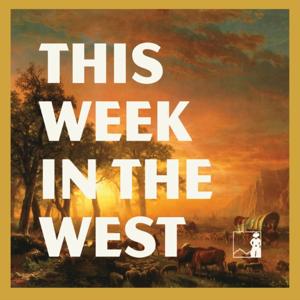

🤠This Week in the West
📢 Episode Summary:
Born in Pennsylvania in 1796, Catlin defied his family’s wishes that he pursue a legal career, abandoning law to follow his passion for art. Drawn west by stories of Native peoples and inspired by the legacy of Lewis and Clark, Catlin traveled to St. Louis in 1830 to meet William Clark and secure support for his ambitious goal: painting members of as many tribes as possible. Over the next several years, he visited more than 50 tribes, journeying across the Plains and into the Rocky Mountains, creating portraits and scenes that emphasized dignity, individuality, and cultural richness.
By the late 1830s, Catlin had assembled more than 500 paintings into his famed Indian Gallery, even as he openly worried about the impact of policies like the Indian Removal Act and events such as the Trail of Tears. Although his work was better received in Europe than in the United States, financial hardship forced him to sell the original collection. Undeterred, Catlin spent his final decades recreating much of his work in what became known as the “Cartoon Collection.” Though recognition came too late for him, his original gallery was eventually preserved by the U.S. government and now resides in the Smithsonian, securing his vision for future generations.
🔍 What You’ll Learn:
👥 Behind the Scenes
🔗 Further research:
📬 Connect With Us:
🗺️ Visit Us: The National Cowboy & Western Heritage Museum, 1700 NE 63rd Street, Oklahoma City, OK, 73111. See us on the map
🎟️: You can now buy tickets to The Cowboy online, go to https://nationalcowboymuseum.org/tickets/
🎧 Listen & Subscribe:
⭐ If you enjoyed this episode, don’t forget to rate & review!
 View all episodes
 By The National Cowboy & Western Heritage Museum

4.7
1919 ratings
🤠This Week in the West
📢 Episode Summary:
Born in Pennsylvania in 1796, Catlin defied his family’s wishes that he pursue a legal career, abandoning law to follow his passion for art. Drawn west by stories of Native peoples and inspired by the legacy of Lewis and Clark, Catlin traveled to St. Louis in 1830 to meet William Clark and secure support for his ambitious goal: painting members of as many tribes as possible. Over the next several years, he visited more than 50 tribes, journeying across the Plains and into the Rocky Mountains, creating portraits and scenes that emphasized dignity, individuality, and cultural richness.
By the late 1830s, Catlin had assembled more than 500 paintings into his famed Indian Gallery, even as he openly worried about the impact of policies like the Indian Removal Act and events such as the Trail of Tears. Although his work was better received in Europe than in the United States, financial hardship forced him to sell the original collection. Undeterred, Catlin spent his final decades recreating much of his work in what became known as the “Cartoon Collection.” Though recognition came too late for him, his original gallery was eventually preserved by the U.S. government and now resides in the Smithsonian, securing his vision for future generations.
🔍 What You’ll Learn:
👥 Behind the Scenes
🔗 Further research:
📬 Connect With Us:
🗺️ Visit Us: The National Cowboy & Western Heritage Museum, 1700 NE 63rd Street, Oklahoma City, OK, 73111. See us on the map
🎟️: You can now buy tickets to The Cowboy online, go to https://nationalcowboymuseum.org/tickets/
🎧 Listen & Subscribe:
⭐ If you enjoyed this episode, don’t forget to rate & review!
228,844 Listeners
153,922 Listeners
41,172 Listeners
14,027 Listeners
3,667 Listeners
772 Listeners
45,795 Listeners
1,338 Listeners

15,596 Listeners

55 Listeners
7,438 Listeners
2,857 Listeners
190 Listeners
137 Listeners
419 Listeners