
Sign up to save your podcasts
Or

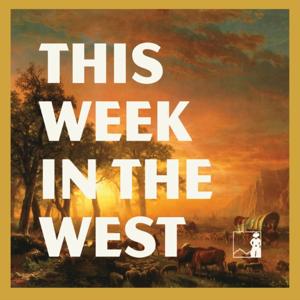

🤠This Week in the West
📢 Episode Summary:
Listeners learn how Glidden’s work emerged amid a flurry of competing barbed-wire prototypes from inventors like Henry Rose, Isaac Ellwood, and Jacob Haish. Between 1868 and 1874, more than 500 patents were filed as the “fencing problem” became a national debate across the growing frontier. Glidden’s 1874 patent — nicknamed “The Winner” — rose above the rest because it was cheap to produce, effective on the open prairie, and easier to manufacture than earlier designs.
The episode digs into how barbed wire reshaped the American West. It allowed settlers to fence vast stretches of land quickly, transforming the plains into a patchwork of private property. That shift restricted traditional cattle trails and contributed to the decline of the open-range cowboy era. Though Glidden sold half of his manufacturing rights early on, per-pound royalties made him a wealthy man until his patent expired in 1892.
The legacy of barbed wire also carried a darker side. It hindered the movement of the American Bison, played a role in confining Native Americans to reservations, and later became a defining and deadly element of World War I trenches and World War II concentration camps. When Glidden died in 1906, newspapers noted that his invention survived with all its “distressing, clothes-tearing, hide-rendering” impact — a lasting symbol of both progress and consequence in the story of the West.
🔍 What You’ll Learn:
👥 Behind the Scenes
🔗 Further research:
📬 Connect With Us:
🗺️ Visit Us: The National Cowboy & Western Heritage Museum, 1700 NE 63rd Street, Oklahoma City, OK, 73111. See us on the map
🎟️: You can now buy tickets to The Cowboy online, go to https://nationalcowboymuseum.org/tickets/
🎧 Listen & Subscribe:
⭐ If you enjoyed this episode, don’t forget to rate & review!
 View all episodes
 By The National Cowboy & Western Heritage Museum

4.7
1919 ratings
🤠This Week in the West
📢 Episode Summary:
Listeners learn how Glidden’s work emerged amid a flurry of competing barbed-wire prototypes from inventors like Henry Rose, Isaac Ellwood, and Jacob Haish. Between 1868 and 1874, more than 500 patents were filed as the “fencing problem” became a national debate across the growing frontier. Glidden’s 1874 patent — nicknamed “The Winner” — rose above the rest because it was cheap to produce, effective on the open prairie, and easier to manufacture than earlier designs.
The episode digs into how barbed wire reshaped the American West. It allowed settlers to fence vast stretches of land quickly, transforming the plains into a patchwork of private property. That shift restricted traditional cattle trails and contributed to the decline of the open-range cowboy era. Though Glidden sold half of his manufacturing rights early on, per-pound royalties made him a wealthy man until his patent expired in 1892.
The legacy of barbed wire also carried a darker side. It hindered the movement of the American Bison, played a role in confining Native Americans to reservations, and later became a defining and deadly element of World War I trenches and World War II concentration camps. When Glidden died in 1906, newspapers noted that his invention survived with all its “distressing, clothes-tearing, hide-rendering” impact — a lasting symbol of both progress and consequence in the story of the West.
🔍 What You’ll Learn:
👥 Behind the Scenes
🔗 Further research:
📬 Connect With Us:
🗺️ Visit Us: The National Cowboy & Western Heritage Museum, 1700 NE 63rd Street, Oklahoma City, OK, 73111. See us on the map
🎟️: You can now buy tickets to The Cowboy online, go to https://nationalcowboymuseum.org/tickets/
🎧 Listen & Subscribe:
⭐ If you enjoyed this episode, don’t forget to rate & review!

228,844 Listeners

153,922 Listeners
41,172 Listeners

14,027 Listeners

3,667 Listeners
772 Listeners

45,795 Listeners
1,338 Listeners
15,596 Listeners

55 Listeners
7,438 Listeners

2,857 Listeners
190 Listeners
137 Listeners
419 Listeners