
Sign up to save your podcasts
Or



Based on Podcast App listening data
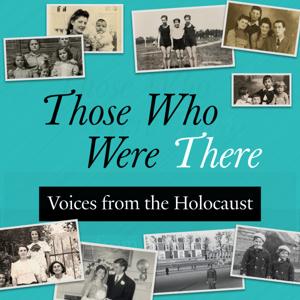
Renee Hartman was one of the first four survivors to give testimony to the Fortunoff Archive's predecessor organization in 1979. In this podcast episode, she describes how she was just a child when the Nazis swept into Czechoslovakia. Her parents and sister were deaf, so she became her family’s ears, alert to the sound of the Gestapo’s boots.
We’re re-releasing this episode in celebration of her life.
In this final chapter of “Remembering Vilna,” several of the survivors whose stories we’ve featured tell of their journeys to safety and new beginnings, even as the traumas they experienced remained ever present.
At war’s end, Vilna’s survivors struggle to regain their health, look for missing family members, and search for ways to leave Europe for the United States or Palestine. But a small group join an effort to seek revenge in Nuremberg, where an international tribunal is underway.
July 1944. For nearly two weeks, the Nazis and the Soviets fight for every street and block in Vilna. When the smoke clears, Jews hiding in the sewers emerge into daylight while other survivors and Jewish partisans filter back into the devastated city.
When the Nazis liquidate the Vilna ghetto, they send thousands of Jews to their deaths or to forced-labor camps. Others escape to the forest to join the partisans. Very few manage to hide. The Nazis also try to eliminate evidence of their efforts to murder Vilna’s Jews.
Young people in the ghetto organize an underground group with the hope of leading an uprising against the Nazis. They risk their lives to build an arsenal, but when it becomes clear most Jews in the ghetto don’t support them, many escape to the surrounding forest to join the partisans.
Life in the Jewish ghetto demands vigilance and adaptation. Families improvise spaces for hiding. Food is smuggled at the risk of execution. And while young people start to organize a resistance, cultural and sporting events prove to be a much needed diversion.
They are given minutes to pack. A suitcase, a sheet-wrapped bundle, whatever they can carry. Thousands of the city’s Jews are marched at gunpoint to the newly enclosed Jewish ghettos, where the previous inhabitants have already been murdered.
When Germany attacks the Soviet Union in 1941, the Nazis occupy Vilna and begin imposing their harsh antisemitic rule, banning Jews from sidewalks, requiring the wearing of an identifying yellow star, and worse. “Within just a few days,” Mira Verbin recalls, “they started kidnapping Jews.”
With the German invasion of Poland on September 1, 1939, the country is split between the Nazi invaders and the Soviet Union. Vilna winds up in the hands of the Soviets, then the Lithuanians, then the Soviets again, who set about seizing property and businesses, and arresting and deporting perceived enemies of the state.
From the publisher's feed

78 Listeners

11,964 Listeners

37,583 Listeners

10,691 Listeners

369,518 Listeners

99,755 Listeners
183 Listeners
3,233 Listeners

46,898 Listeners

295 Listeners

18,019 Listeners

175 Listeners

18,943 Listeners

179 Listeners

20 Listeners

74 Listeners

325 Listeners