
Sign up to save your podcasts
Or

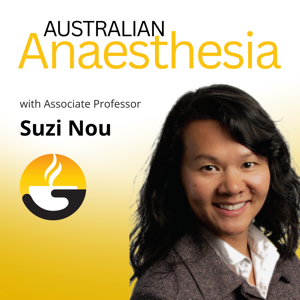

In this episode, I'm reviewing an article that was published in the April 2026 Anaesthesia and Intensive Care journal (AIC). It's all about sharps waste management! A snapshot (literally) on what we are placing in our sharps bins and whether there is any room for improvement (spoiler alert - yes, there is plenty!). I also share some insights from my Sabbatical in Switzerland.
This podcast accompanies the poster designed by Dr Nathan Chin in the June 2026 Australian Anaesthetist magazine. Download your free copy here.
To read the scientific paper from AICm click here. You may need your ASA login to access it.
Three more episodes you might want to listen to:
Ep69. Talking TRA2SH - trainee led research into sustainability in healthcare with Dr Jess Davies
Ep96. Introducing Prof Philip Peyton, new editor in chief at Anaesthesia and Intensive Care
Ep114. Laughing Gas, Serious Waste: Measuring Nitrous Wastage with Dr Ethan Fitzclarence
Some AI generated notes:
Episode Highlights
00:00:30: Introduction to the sharps bin contamination study from April 2026 Anesthesia and Intensive Care journal, featuring artwork by anaesthesia trainee Dr. Nathan Chin
00:02:15: Sharps waste disposal costs 30 times more than general waste, with incineration producing 10 times the carbon footprint of regular waste disposal
00:04:45: UK data shows sharps disposal produces 50 times more carbon dioxide emissions compared to recycling
00:06:30: Zurich, Switzerland example demonstrating the "polluter pays principle" through mandatory tax-added garbage bags and strict recycling enforcement
00:10:20: Study methodology involved photographing sharps bins and counting non-sharps contamination across multiple hospital sites
00:12:45: Key finding: 79.5% of non-sharps items could theoretically be recycled, but only 18% could realistically be recycled with current hospital infrastructure
00:15:30: Most common sharps bin contaminants include glass vials (propofol bottles), plastic syringes without needles, IV lines, endotracheal tubes, and single-use stainless steel instruments
00:18:15: Only 19% of surveyed hospitals can recycle plastic syringes and one-third can recycle plastic ampoules, with glove recycling available at only one surveyed site
Key Takeaways
Healthcare waste management practices significantly lag behind residential recycling standards; implementing systematic segregation at point of use could dramatically reduce environmental impact and costs
Policy presence alone does not ensure compliance—hospitals must invest in infrastructure, education, and accountability systems to translate waste management guidelines into operational reality
Individual clinician behaviour change is achievable and impactful; simple actions like detaching needles from syringes before disposal can redirect substantial waste from expensive sharps streams
Hospitals should audit their recycling capabilities and partner with waste management providers to expand options for plastic syringes, glass vials, and metal instruments currently defaulting to sharps bins
Quotable Moments
"Sharps bin waste is the most expensive waste to get rid of, both from an economic perspective and also in terms of the impact on our environment."
"Getting rid of sharps waste could be 30 times more expensive than getting rid of general waste. 30 times!"
"Sharpe's disposal, the autoclaving crushing landfill type of disposal, produces 50 times the amount of carbon dioxide emission compared to recycling. 50 times. Whoa."
"We buy stuff, we open endless amounts of packaging and we don't think about how or how much it's going to cost to dispose of it."
"Nearly 80% or four in five items could have been recycled for perhaps one 50th of the carbon footprint. That is astounding."
 View all episodes
 By Australian Society of Anaesthetists
In this episode, I'm reviewing an article that was published in the April 2026 Anaesthesia and Intensive Care journal (AIC). It's all about sharps waste management! A snapshot (literally) on what we are placing in our sharps bins and whether there is any room for improvement (spoiler alert - yes, there is plenty!). I also share some insights from my Sabbatical in Switzerland.
This podcast accompanies the poster designed by Dr Nathan Chin in the June 2026 Australian Anaesthetist magazine. Download your free copy here.
To read the scientific paper from AICm click here. You may need your ASA login to access it.
Three more episodes you might want to listen to:
Ep69. Talking TRA2SH - trainee led research into sustainability in healthcare with Dr Jess Davies
Ep96. Introducing Prof Philip Peyton, new editor in chief at Anaesthesia and Intensive Care
Ep114. Laughing Gas, Serious Waste: Measuring Nitrous Wastage with Dr Ethan Fitzclarence
Some AI generated notes:
Episode Highlights
00:00:30: Introduction to the sharps bin contamination study from April 2026 Anesthesia and Intensive Care journal, featuring artwork by anaesthesia trainee Dr. Nathan Chin
00:02:15: Sharps waste disposal costs 30 times more than general waste, with incineration producing 10 times the carbon footprint of regular waste disposal
00:04:45: UK data shows sharps disposal produces 50 times more carbon dioxide emissions compared to recycling
00:06:30: Zurich, Switzerland example demonstrating the "polluter pays principle" through mandatory tax-added garbage bags and strict recycling enforcement
00:10:20: Study methodology involved photographing sharps bins and counting non-sharps contamination across multiple hospital sites
00:12:45: Key finding: 79.5% of non-sharps items could theoretically be recycled, but only 18% could realistically be recycled with current hospital infrastructure
00:15:30: Most common sharps bin contaminants include glass vials (propofol bottles), plastic syringes without needles, IV lines, endotracheal tubes, and single-use stainless steel instruments
00:18:15: Only 19% of surveyed hospitals can recycle plastic syringes and one-third can recycle plastic ampoules, with glove recycling available at only one surveyed site
Key Takeaways
Healthcare waste management practices significantly lag behind residential recycling standards; implementing systematic segregation at point of use could dramatically reduce environmental impact and costs
Policy presence alone does not ensure compliance—hospitals must invest in infrastructure, education, and accountability systems to translate waste management guidelines into operational reality
Individual clinician behaviour change is achievable and impactful; simple actions like detaching needles from syringes before disposal can redirect substantial waste from expensive sharps streams
Hospitals should audit their recycling capabilities and partner with waste management providers to expand options for plastic syringes, glass vials, and metal instruments currently defaulting to sharps bins
Quotable Moments
"Sharps bin waste is the most expensive waste to get rid of, both from an economic perspective and also in terms of the impact on our environment."
"Getting rid of sharps waste could be 30 times more expensive than getting rid of general waste. 30 times!"
"Sharpe's disposal, the autoclaving crushing landfill type of disposal, produces 50 times the amount of carbon dioxide emission compared to recycling. 50 times. Whoa."
"We buy stuff, we open endless amounts of packaging and we don't think about how or how much it's going to cost to dispose of it."
"Nearly 80% or four in five items could have been recycled for perhaps one 50th of the carbon footprint. That is astounding."
549 Listeners
897 Listeners
759 Listeners

113,121 Listeners
14 Listeners
351 Listeners

9 Listeners

8 Listeners

34 Listeners