
Sign up to save your podcasts
Or

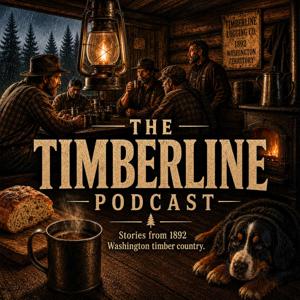


Before chainsaws, bringing down a Douglas-fir required two men, a misery-whip, wedges, and a narrow strip of wood known as the hinge.
But the most important part of felling a tree was not knowing how to cut it. It was knowing when to leave the tools behind and run.
Kenny’s ax struck first.
The bit buried itself in the Douglas-fir with a wet, solid knock. A pale chip spun past Pete’s cheek and landed among the sword ferns.
“Lower,” Sam said.
Pete shifted his corks in the duff and swung beneath Kenny’s cut. The ax entered shallow. The shock climbed the handle and stung both palms.
Kenny glanced at the mark. “You’re high.”
“I see it.”
Pete drew the ax back.
Sam tapped the crooked bite with one finger. “You’re cutting Kenny’s pace instead of your line.”
“I can keep up.”
“The tree doesn’t care.”
Pete studied the mark scratched through the bark. Kenny’s cut angled down. His own needed to rise and meet it clean.
He reset his feet.
Several paces behind them, Jack Mercer watched the crown.
The Douglas-fir rose through the morning mist, broad enough at the base to hide two men. Rain darkened its furrowed bark. High above, a heavy limb reached downhill toward an opening between two younger firs.
Wind moved through the needles in long breaths.
Jack followed the movement, then checked the two escape roads Kenny and Pete had cleared before sunrise. One angled downhill behind a cedar snag. The other climbed toward a thick standing fir.
Pete had spent half an hour cutting brush and kicking deadwood from those paths before Sam allowed them near the tree.
It had felt like delaying the real work.
Jack had walked each road twice.
“The way out is part of the fall,” he had said.
Pete raised the ax.
Kenny swung.
{Knock.}
Pete answered.
{Knock.}
This time the blade entered where he intended.
Sam nodded. “Again.”
They worked the face open one blow at a time.
Kenny cut the upper angle, each swing strong and nearly identical to the last. Pete opened the lower cut, aiming upward to meet him.
Fresh Douglas-fir sharpened the air.
Pete kept his eyes on his own line.
The cuts drew closer until a thick wedge of wood remained between them.
Kenny struck near the meeting point.
A crack traveled through the block.
Pete buried his ax beneath it.
The wedge broke free and dropped between their boots.
Sam rolled it aside with his heel.
The face stood open in the trunk, pale against the rain-dark bark.
Jack came forward and sighted through the opening toward the intended lay. Beyond it, the ground fell clear before brush and young firs crowded the slope.
His gaze climbed the trunk.
The wind pressed the crown.
Jack waited until the needles settled.
“Clean the corner.”
Pete found a ragged fist of wood where his lower cut had failed to meet Kenny’s. He chopped it away with two careful blows.
Jack sighted through the face once more.
“That will do.”
Sam nodded toward the opening. “What does it do?”
“Points the tree,” Kenny said.
Sam waited.
Pete looked through the face toward the open slope. “Gives it somewhere to fall.”
“Somewhere to start.”
They carried the axes clear and brought up the misery-whip.
The saw stretched longer than Pete was tall, its teeth bright beneath the darkened blade. Pete reached for one handle.
Kenny caught his end first.
“Mind the teeth. Camp can’t afford another bent saw.”
“I’ve carried it before.”
“Then you know.”
Pete took the other handle.
Together they brought the saw around the trunk.
Sam crouched and marked the back cut above the floor of the face.
“Not level,” he said.
“Leaves the step?” Pete asked.
Sam nodded. “Helps keep the butt from sliding backward across the stump.”
Jack stood where he could see the crown and both escape roads.
“Helps,” he said.
The broad trunk gave no sign that it had heard.
Sam set the teeth against the bark.
“Start easy.”
Kenny pulled.
The blade jumped so sharply that Pete’s shoulder followed it toward the tree. He shoved the handle back.
The saw bowed and bucked in the shallow kerf.
Sam caught the blade before it kinked.
“Stop.”
Kenny released his handle. “He pushed.”
“You near pulled me into the bark,” Pete said.
“Stand firmer.”
Sam laid one hand on the back of the saw.
“You don’t push a misery-whip.”
Pete rubbed his shoulder. “How does it get back?”
“You give it.”
Sam looked from Pete to Kenny.
“Pull. Breathe. Let go.”
Kenny reset his grip.
Pete planted his feet.
“Easy.”
Kenny drew the saw toward him.
Pete let the handle slide forward without driving it.
Then Pete pulled.
The teeth bit.
He released.
Kenny took the steel back.
For several strokes, the rhythm stumbled. Kenny drew too much blade. Pete caught its weight late. Pete shortened his pull, and Kenny reached before he finished.
The teeth chattered.
“Quit measuring each other,” Sam said. “Listen.”
Pete breathed in.
Kenny pulled.
Pete let go.
The handle slid toward him.
Pete pulled.
Kenny released.
The blade began to sing.
Ssshhk.
Ssshhk.
Ssshhk.
Fine dust spilled from the cut.
The rhythm settled into Pete’s shoulders. The saw no longer felt like something Kenny was trying to take from him. Each man pulled his stroke and surrendered the steel.
Pull.
Breathe.
Let go.
The kerf deepened.
Pete stopped watching Kenny.
The saw began to drag.
He pulled harder, but the blade moved as though the tree had closed a hand around it.
“It’s pinching.”
Sam nodded. “Good.”
Kenny eased his handle. “Good?”
“He noticed.”
Sam signaled them to stop.
“Kerf enough to seat ’em. Then wedges.”
Pete removed his handle and took the first wedge. He reached toward the opening.
Sam caught his wrist.
“Not your fingers.”
Pete withdrew his hand.
Sam showed him how to start the wedge while keeping his fingertips clear of the narrowing cut. Pete held it with the flat of the wooden maul until the thin end caught.
Kenny took the maul.
He tapped the wedge once, then struck harder.
“Seated,” Sam said.
Kenny lifted the maul again.
Sam caught the handle. “Then stop hitting it.”
Kenny’s jaw tightened. “I know how to drive a wedge.”
“Then know when not to.”
Kenny lowered the maul.
They placed a second wedge farther along the kerf and resumed sawing between them.
The blade moved freely again.
Ssshhk.
Ssshhk.
Ssshhk.
Pete felt the tree’s weight pressing against the wedges behind the saw.
Sam moved from one side of the trunk to the other, checking the cut.
The teeth worked closer to the hidden end of the face.
“Short strokes.”
Kenny eased his pull.
Pete did the same.
“Stop.”
The saw halted halfway through Pete’s stroke.
He peered into the cut. “We’re not through.”
Sam pointed to the strip of uncut wood between the back cut and the face.
“That stays.”
“The hinge,” Kenny said.
Sam tapped the open face.
“This gives the tree room.”
His finger moved to the back cut.
“This releases it.”
Then he touched the strip between them.
“This guides the start.”
Jack came around the trunk and crouched beside Kenny’s side.
“Thin.”
Kenny bent toward the hinge. Pete saw it too. His side stood thicker. Kenny’s back cut had crept closer to the face.
“I can even it,” Kenny said.
“No.”
“It only needs another inch on his side.”
“You cannot put wood back.”
Kenny studied the cut. “I can straighten it.”
“You straighten that by making all of it thinner.”
The wind pressed the heavy downhill limb.
Jack watched it rise and settle.
Sam glanced at him. “Enough?”
“For the start.”
Jack stood. “Leave it. We know where the thin side is.”
They drew the saw from the kerf.
Kenny took one end. Pete took the other.
They carried it uphill and laid it beside a young hemlock, fifteen feet from the stump. Pete’s escape road passed between the saw and the shelter fir.
Kenny lowered his handle carefully.
“Teeth clear.”
Pete checked the blade. No stone beneath it. No root pressing against the steel.
“Clear.”
Sam pointed up the escape road.
“When the tree moves, the saw stays.”
Pete looked at him. “I heard Jack.”
He could already hear the dining hall version of it.
[Pete Hawkins stood and watched the best saw on the ridge get crushed]
Jack’s gaze shifted from the crown to Pete.
“A saw can be bought.”
“I know.”
Jack held his eyes for another moment, then pointed downhill.
“Kenny takes that road. Pete goes uphill with Sam. No one runs straight behind the stump.”
…
Joseph Harper’s Clean Hands
From the last Supper Ledger:
Henry Harper didn’t come to supper. His son Joseph came in late, muddy, shaken, and too quiet. Emma saw bruising at his wrist. Jack Mercer did not look up. And the room began to understand that Henry’s absence was no longer empty.
Clara Harper saw her boy before the room admitted it had.
The door had closed behind Joseph.
The cold had not.
It stayed low in the dining hall, under the benches and around the boots, as if something outside had come in with him and had not yet decided where to stand.
Clara remained in the cookhouse doorway with one hand braced against the frame and the other closed around a dish towel she had stopped using some minutes before.
Joseph sat at the Harper table with his plate untouched and his cup held between both hands.
Too carefully.
Too still.
His coat was still buttoned.
That was wrong.
The dining hall stove had already put heat into the room. Men came through the door wet and tired, but the first thing they did after sitting was loosen something.
Collar.
Coat.
Shoulder.
Breath.
Joseph had done none of that.
He sat as if keeping himself wrapped might keep the evening from getting in.
Clara did not call his name.
That was the first thing Emma Everett noticed.
A mother called a boy’s name for small things.
Mud on a boot.
Elbows on a table.
Bread taken too soon.
A sleeve torn on a nail.
But Clara Harper only watched from the doorway, silent as a woman listening for a sound she feared she had already heard.
Behind her, Mae Thompson leaned just far enough from the cookhouse shadows to see into the dining hall.
Not far.
On any other night, Maggie O’Donnell would have sent Mae back to the flour bin with one look.
Tonight, Maggie did not.
That was how Mae knew the room had changed.
Everyone looked without looking.
Everyone listened without admitting they were listening.
That was how fear worked in a room.
It made witnesses before it made words.
Joseph’s boots had left dark marks across the floorboards.
Not ordinary marks.
Men brought mud into Maggie’s dining hall every night and paid for it later with bucket and rag.
But this mud had come in uneven.
Heavy on one side.
Broken on the other.
Not the pattern of a boy walking straight from cabin to supper.
More like a boy who had stumbled.
Or been turned around.
Or stopped where he had not meant to stop.
Maggie saw it.
Of course she saw it.
Maggie O’Donnell could spot one grain of flour out of place from across a storm.
She did not look at the tracks.
She ladled stew.
One bowl.
Then another.
Then another.
Her hand did not slow.
That was how a woman who noticed everything pretended not to notice one thing too closely.
Emma did not touch Joseph’s shoulder.
Not yet.
A hand on the shoulder could comfort a boy.
It could also corner him.
And Joseph already looked cornered enough.
So Emma rested her hand on the back of his chair and let the dining hall understand she had chosen the place beside him.
That was different.
No one spoke past her.
Not after that.
Joseph’s plate steamed in front of him.
He did not eat.
His fingers stayed wrapped around the cup.
Clean at the knuckles.
Clean beneath the nails.
Clean in the wrong places.
No boy came back from Timberline mud with hands like that by accident.
Not after rain.
Not after chores.
Not after a walk that had left his boots heavy and uneven at the door.
His sleeves stayed low.
Too low.
The cuff on his right wrist had dried stiff where it touched his skin.
Emma saw the edge of the bruise when he shifted.
Only a glimpse.
A dark band.
Narrow.
Uneven.
Too specific for accident.
Too deliberate for work.
Joseph pulled the sleeve down again.
Fast.
Not fast enough.
Clara’s hand tightened around the towel.
Mae saw it.
So did Emma.
The towel did not twist.
That worried Emma more.
A frightened woman wrung a towel.
A woman holding herself together made the towel behave too.
At the foremen’s table, Elias Everett sat across from Jack Mercer and Cal Everett.
Elias had not touched his coffee.
Cal had noticed Joseph’s boots first.
Jack had noticed the boy’s hands.
Elias had noticed Clara.
That was why the three men had said nothing.
A room did not need every man speaking at once.
Not when the truth was already trying to find a way in.
Cal Everett shifted his weight on the bench.
Almost nothing.
But Jack’s eyes moved once.
Not up.
Not yet.
Only enough to know Cal had moved.
Cal counted men, tools, teams, hours, weather, and the narrow difference between delay and danger.
If a man was missing, Cal’s mind had already gone to the last place Henry Harper had been assigned.
The last order given.
The last trail used.
The last pair of eyes that had seen him standing.
Cal wanted a question asked.
Elias wanted the right question asked.
Jack waited for the difference.
Maggie crossed to the Harper table and set Henry Harper’s bowl at his usual place.
Full.
No one commented.
No one dared.
The bowl sat there with steam rising from it, looking almost ordinary.
That was the cruelest part.
A full bowl was a promise no one was willing to make aloud.
Joseph stared at it.
His fingers tightened around his cup until the tin complained softly.
Emma heard it.
So did Jack Mercer.
Jack still had not looked up.
That mattered.
Men who did not know Jack mistook stillness for absence.
Timberline knew better.
Jack Mercer could make silence feel like a hand on the back of a neck.
Sam Mercer had looked up.
First at Emma.
Then at Joseph.
That was Sam’s way. He did not move toward trouble until he knew who trouble might touch first.
Then he watched the boy the way a man watched a skittish horse near a broken bridge — not blaming it for fear, but measuring which boards might give first.
Joseph’s breath hitched.
Small.
Almost swallowed.
But Clara heard it.
Her shoulders changed.
Not much.
Enough.
Mae took half a step forward from the cookhouse doorway, then stopped herself before Maggie had to stop her.
Maggie noticed anyway.
“Mae,” she said.
Not loud.
Mae lowered her eyes and stayed where she was.
That was permission enough to watch.
Not enough to interfere.
The stove gave a small pop.
No one flinched.
Except Joseph.
His cup jerked in both hands.
A few drops spilled over the rim and struck the table.
One.
Two.
Three.
No one moved to wipe them.
Maggie looked at the drops.
Then at Joseph.
Then at Clara.
“Eat,” Maggie said.
No one knew at first who she meant.
Joseph looked at her.
Maggie did not soften her face.
That was not her way.
“Eat,” she said again, quieter. “A hungry boy tells a poor account.”
Joseph looked down at his plate.
His hands did not move.
“I ain’t hungry,” he said.
His voice was rough.
Too rough for supper.
Too small for the room.
Clara closed her eyes.
Only for a moment.
But Joseph saw it.
That seemed to hurt him worse than the bruise.
Emma kept her hand on the chair.
Not on Joseph.
Near him.
There was a difference.
“Joseph,” Emma said softly.
The boy’s eyes moved to her hand.
Not to her face.
To the hand.
As if he were deciding whether it was there to hold him in place or keep him from falling.
“You are safe in this room,” Emma said.
The words changed the dining hall.
Not because anyone disagreed.
Because everyone understood she would not have said them unless safety had become a question.
A spoon stopped halfway to a mouth.
Somewhere near the back bench, Pete Hawkins forgot to chew.
Olav Bergstrom lowered his bread to the table.
Tom Grady looked toward the door.
Not toward Joseph.
Toward the door.
That was how quickly a room could understand danger.
First the boy.
Then the bruise.
Then the clean hands.
Then the empty bowl.
Then the door.
Outside, rain worried at the roof.
Inside, Henry Harper’s supper cooled by degrees.
Joseph looked at the door too.
Only once.
But once was enough.
Sam saw it.
Cal saw Sam see it.
Jack still did not look up.
That was worse than speaking.
Clara took one step into the dining hall.
Then stopped.
That one step told Emma nearly as much as the bruise.
Clara knew something.
Or feared she did.
“Maggie,” Clara said.
It was hardly a word.
More a plea that had not yet decided what it needed.
Maggie turned from the pot.
The whole room felt it.
Maggie O’Donnell did not leave stew unattended for small matters.
Emma kept…
A Timberline Podcast
CAST
DUKE — Host, narrator and camp smithy
MAE THOMPSON — Maggie’s baker, young, observant, careful
PETE HAWKINS — Young logger, Second year, earnest, awkward, afraid of Jack
MAGGIE O’DONNELL — Cookhouse authority
JACK MERCER — Faller boss
SAM MERCER — Jack’s brother, dryly amused
THE RIVER HAD EARS
Every camp has rules.
Some are nailed to a post where a man can read them, provided he has the patience and the letters do not wander on him.
Some are shouted by Jack Mercer when somebody’s boots are pointed the wrong way.
Some are kept by Maggie O’Donnell without ink, paper, committee, vote, or permission from any man drawing breath.
Maggie’s rules were the oldest kind.
Kitchen rules.
Table rules.
Fire rules.
Don’t waste bread.
Don’t crowd the stove.
Don’t lie about how much coffee you took.
Don’t come into her cookhouse smelling like horse unless you were bringing something useful or dying, and even then she expected a decent explanation.
And if a young man started finding reasons to pass that cookhouse door more often than hunger required, Maggie noticed.
Now, I’m not saying Pete Hawkins was sweet on Mae Thompson.
I’m just saying a man does not suddenly become interested in kindling before breakfast unless something besides firewood is warming his thoughts.
He carried split cedar twice in one week.
Maggie had not asked for it either time.
Mae gave him an extra biscuit once and claimed it was cracked.
It wasn’t.
Pete ate it like it had become a legal matter.
After that, he found reasons to be near the wash bench, near the flour sacks, near the back step, and once near a bucket he had no earthly business admiring.
Mae did not say much.
That was her way.
But she had a sketchbook she kept tucked close, and she saw more than most people guessed.
She drew Rusty asleep by the stove.
She drew Blue Kitty with one paw in a place no cat had permission to be.
She drew Maggie’s hands rolling dough, though she never showed Maggie because Maggie would have said hands were for working, not being made important.
And sometimes Mae went down to the River.
She said the light was better there.
That was true.
It was also quieter.
And quiet, in Timberline, had a way of inviting trouble to sit beside it.
Now, it would be easy to laugh at Pete Hawkins.
Most of us did.
A man carrying kindling to a River deserves some laughter, provided it is done with mercy.
But Mae Thompson was not laughing the same way.
She liked Pete well enough.
Maybe more than well enough, though if you said so near Maggie O’Donnell, you had better have a chore in your hands and distance between you and the nearest spoon.
But liking a person and being free to stand alone with him were not the same thing.
Not in a camp.
Not in 1892.
Not for a young woman sleeping under Maggie’s roof, earning her place by flour, fire, and good conduct.
A man could be foolish and still come back as himself.
A woman could be careful and still come back carrying a story somebody else had written for her.
That is a hard sentence, but Timberline was built in a hard year, and 1892 did not hand women much room to be misunderstood safely.
Mae knew that.
Pete did not.
Not yet.
So when Mae went down to the River with her sketchbook under one arm and flour still pale on her sleeve, the trouble had already started walking before Pete ever found the path.
And the River?
The River had ears.
Mae Thompson went to the River with her sketchbook under her arm and flour still pale along the cuff of her sleeve.
She had told Maggie she wanted to draw the bend below the Mercer cabin while the evening light still held.
That was true enough to stand on.
Maggie trusted true enough more than most lies, but less than plain truth.
You keep to the open bank.
Yes, ma’am.
And you come back before the lamps need trimming.
Yes, ma’am.
Maggie did not look up from the dough.
And if a certain boy with ears too large for his sense happens to wander down there, you remember sound carries over water.
Mae felt warmth rise to her cheeks.
I’m going to draw.
I did not ask what excuse you were carrying.
Blue Kitty sat near the flour bin, washing one paw with the smug patience of an animal who had never once been held accountable.
Mae slipped out before her face gave Maggie any more evidence.
The path to the River ran behind the cookhouse, past the stacked kindling, through sword ferns wet from afternoon rain.
Timberline quieted differently near the water.
Camp sounds thinned there.
Ax rings softened.
Voices broke apart.
The River took everything offered to it and carried it away before anyone could make a proper argument.
Mae liked that.
The Mercer cabin stood above the bend, tucked back among fir and cedar, close enough for smoke to drift down when the wind turned.
Jack and Sam still shared it, which meant the River below was not as private as it looked.
Mae knew that.
Still, the light was good there.
She found her place beneath a leaning alder where the bank stayed firm and the River turned silver between stones.
Across the water, the Mountain was not visible, but Mae could feel it all the same, the way a person could feel someone standing behind a closed door.
She opened her sketchbook.
At first she meant to draw the River bend.
Then her pencil found Maggie’s hands.
She smiled despite herself and drew the thumb pressed into dough, the knuckles strong, the wrist turned firm over the board.
Maggie would hate it.
That made Mae like it more.
Mae closed the sketchbook so fast the paper slapped.
Pete Hawkins froze halfway down the path with a bundle of cedar splits under one arm.
For a moment neither of them spoke.
The River did.
Pete looked at the wood, then at Mae, then at the water, as if one of the three might offer him a useful reason for being there.
I was bringing kindling.
Mae glanced at the River sliding cold over stone.
To the River?
Pete looked down at the cedar in his arms.
It seemed short.
Mae pressed her lips together.
Pete saw her trying not to smile and looked both pleased and doomed.
I mean, not short of wood. Short of—
He stopped.
That was worse.
A little.
He shifted the cedar to his other arm.
I wanted to ask if you might show me what you draw sometime.
That took the smile from her face, but not in an unkind way.
He had said it plainly.
No teasing.
No grabbing.
Just asking, as if the pages mattered because she had made them.
Mae looked down at the sketchbook against her skirt.
I don’t show many people.
I wouldn’t tell.
That is not the only trouble.
There’s other trouble?
Mae looked at him then, really looked, and the question in his face made her tired in a way she had not expected.
Not angry.
Not exactly.
Just tired of knowing a thing he had never had to learn.
You should not be here alone with me.
Pete’s face changed.
Hurt first.
Then confusion.
I wasn’t meaning anything wrong.
I know.
I wouldn’t.
I know that too.
Then why does it matter?
Because meaning is not always asked for first.
Pete stared at her.
The River moved over stone, quick and silver, as if it had somewhere else to be.
Mae held the sketchbook tighter against her skirt.
If Jack or Sam finds you here, you get laughed at. Maybe scolded. Maybe Maggie gives you a look over supper, and you wish you had drowned first.
Pete glanced toward the trees, uneasy now.
But tomorrow, you are still Pete. Foolish Pete, maybe. Wet Pete, if you keep standing that close to the bank. But still yourself.
His mouth opened, then closed.
Mae looked down at the flour pale along her sleeve.
I come back different.
You wouldn’t.
I wouldn’t have to. Other people would do it for me.
Pete went still.
One person sees us, and by supper, I am not Mae with a sketchbook. I am Mae, who went alone to the River with Pete Hawkins.
By breakfast, someone decides I must have wanted you to follow.
By dinner tomorrow, someone remembers I smiled at you once over biscuits, and now that smile has a meaning I never gave it.
Pete’s face lost color in small stages.
Mae hated that she had to say it.
Hated that saying it made the River feel less like hers.
I sleep in Maggie’s cookhouse. I work under her roof. I have my place because she trusts me. Because people trust what they think they see when they look at me.
I wouldn’t speak against you.
No. But silence does not stop talk. Sometimes silence feeds it.
He looked down at the cedar splits in his arms as if they had become evidence against him.
I only wanted to ask about your drawings.
I know.
That’s all.
I know that too.
His voice dropped.
But all isn’t always all.
Mae looked up.
The words had cost him something. She could see it.
The shame was not the quick kind now, not boyish embarrassment over being caught with a poor excuse.
This was slower.
He was seeing the shape of the thing, and the shape was ugly.
Pete swallowed.
I’m sorry.
She wanted to forgive him at once.
That was the dangerous part.
She wanted to make him smile again, to let the awkwardness lift, to tell him she knew he had meant kindly.
But kindness without care could still leave marks.
So she made herself stand in the harder truth.
If you care for me at all, you have to care about what follows me back when you walk away.
Pete’s grip tightened on the kindling.
I do.
Mae believed him.
That made it worse.
Then don’t ask me to be brave in ways you don’t have to be.
The River kept moving.
Pete nodded once, slow and ashamed.
I didn’t think.
I know.
That makes it worse, doesn’t it?
A little.
He accepted that too.
And because he accepted it, because he did not argue or laugh or tell her she was making too much of nothing, Mae felt the first careful mercy rise in her.
You may ask about the drawings.
Pete looked at her.
Not here.
No. Not here.
And not alone.
No.
And not with kindling for a River.
He almost smiled.
Almost.
Then the brush behind him said nothing at all.
That was the first warning.
Pete turned.
Jack Mercer stood between two firs with one hand resting on the head of his ax.
Sam stood just behind him, arms folded, looking like a man who had arrived early to a sermon and found it better than expected.
Pete dropped the kindling.
Every stick hit the ground at once.
Mae flinched.
Pete backed away.
Mr. Mercer.
Jack did not move.
Pete.
There were men in Timberline who could shout a man backward.
Jack did not need to.
Pete took one step back.
Then another.
Sam’s eyes flicked past Pete’s shoulder to the water.
Pete.
Sam said it too mildly.
Pete did not hear him.
His attention was fixed on Jack, whose face had not changed enough to count as mercy.
I brought kindling.
Jack looked at the scattered cedar splits.
Then at the River.
For the fish?
Sam turned his head.
His shoulders moved once.
Mae bit the inside of her cheek.
Pete took another step back.
His heel found mud.
The mud found no loyalty in itself.
Pete’s arms went out.
For one long second, he seemed to be negotiating with the entire earth.
Then he sat down backward into the River.
The splash was not large.
That made it worse.
Water came up around his waist, cold enough to take the bravery out of any man and most of the grammar.
Pete stared at Jack from the shallows, soaked to the ribs, hat floating beside him.
No one spoke.
The River went on speaking because it had no manners.
Sam covered his mouth with one hand.
Mae looked down at her sketchbook, but her shoulders betrayed her.
Jack regarded Pete for a moment.
That kindling wet now?
Pete closed his eyes
Yes, sir.
Pity.
Mae made a sound she tried to turn into a cough.
It did not survive the attempt.
Pete looked at her.
She was laughing now, not cruelly, but with her whole face lit in a way he had never seen across the dining hall.
It made the River seem less cold and more impossible.
Jack glanced at Mae.
Ms. Thompson.
She straightened at once.
Mr. Mercer.
You all right?
Yes, sir.
You sketching?
Yes, sir.
Good light here.
Yes, sir.
Jack nodded once.
Poor place for kindling.
Yes, sir.
Pete said it from the River.
Sam stepped down the bank and picked up Pete’s hat before it could drift away.
Best get up. Maggie sees you dripping in her cookhouse, she’ll think you drowned on purpose to avoid work.
Pete stood, water running from his shirt, trousers, boots, and what little dignity he had brought with him.
He looked at Mae.
I’m sorry.
Mae’s laughter softened.
I know.
This time the words gave him something back.
Jack pointed up the trail.
You walk ahead.
Mae stayed by the River after they were gone.
Long enough for the sound of Pete’s wet boots to fade up the trail.
Long enough for Jack’s low voice to become only a shape among the trees.
Long enough for Sam’s laugh to finally break once, quickly muffled, and vanish into the timber. Mae opened her sketchbook. Her hand trembled once before settling. On the next blank page, she drew the cedar splits first, scattered along the mud where no kindling had any reason to be. Then she drew Pete’s hat, bent along the brim and dripping at one side.
It would have been easy to draw him foolish. Pete Hawkins had given her plenty to work with. But he had also listened. He had stood there with shame rising in his face and had not told her she was wrong. He had not laughed. He had not made her smaller so he could feel less foolish.
That mattered. Mae looked toward the path where he had gone. The River moved on, silver and cold, carrying every sound away except the ones that stayed. She turned the page slightly and drew Pete as he had looked before Jack appeared: kindling in his arms, fear nowhere on him yet, asking about her drawings as if they mattered.
Only then, small in the corner, she drew his ears.
She made them only a little too large.
Now, some folks hear that story and think the trouble was Pete getting caught.
That was not the trouble. Pete getting caught may have saved him from worse foolishness. The trouble was that Pete had a good heart and no map for where to put it. That happens more than men like to admit.
A man can mean well and still step wrong.
He can come carrying kindness and not notice who has to carry the cost of it.
Mae noticed. She had to. She understood windows.
Footsteps. Supper tables. The pause after somebody says a name.
She understood how one quiet conversation by the River could grow legs by breakfast and come back wearing another person’s judgment.
That is a hard rule. But it was a real one.
Mae was not asking Pete to stop caring.
She was asking him to care with his eyes open.
That is harder than most men think. Not always because men are cruel.
Sometimes because they are innocent in ways the world has never allowed a woman to be.
Pete learned some of that by the River. Not all of it. Not all of it.
A man does not learn the whole world by falling into water. Though I have seen a few make a promising start. Pete learned enough to know that I meant no harm is not the same as no harm was done.
He learned that if your caring leaves somebody else carrying the heavier load, then you had better stop and learn the shape of that load. And he learned it wet. Mortified. Hat ruined. Which, between you and me, is often how the Lord teaches young men who will not listen dry.
Now, Jack Mercer scared Pete Hawkins half to death in those days. Most green men feared Jack a little. Some feared him a lot. Pete fell into the second bucket, and on this occasion, near enough into the River too.
But fear is not always useless. Sometimes fear is the first rough handle a young man gets hold of before courage teaches him a better grip. Pete would need that later. Not that day. Not with his hat full of water and Mae Thompson trying not to laugh herself breathless. But later. Timberline had a habit of making men pay for lessons twice: once in embarrassment, and once when the lesson mattered.
As for Maggie O’Donnell, I would wager my best hammer she knew before Pete ever reached the cookhouse. By the time he came dripping in with wet cedar and no explanation fit for Christian ears, Maggie had already made room near the stove and decided exactly how much mercy he deserved. Not much, likely. But some. That was Maggie’s way.
Pete kept finding reasons to be useful. Only after that day did he learn to make sure his reasons could stand up in daylight. Which is a good rule for romance, logging, and most kinds of trouble.
This has been Duke from Timberline. Keep your hands clear of the bite, your coffee close, and if you are carrying kindling to a River, at least have the decency to know why.
A springboard was not much wider than a man’s boot.
But in the old woods, sometimes that was all the ground he got.
The lesson started the night before.
After supper, when Maggie had cleared the last bowls and the dining hall had settled into coffee, pipe smoke, and tired shoulders, the men drifted toward the fire-pit with their axes.
No one announced it.
No one made ceremony of it.
A man simply found a stump, laid his double-bit ax across his knees, and went to work.
File against steel.
Stone against edge.
A slow, careful scrape in the firelight.
Some men kept one bit fine for clean wood. The other they left a little stouter for roots, knots, and rough work near dirt. But both edges had to be cared for. A dull ax did not only make a man tired.
It made him sloppy.
And sloppy had a habit of waiting until a man’s boots were off the ground.
Jack Mercer sat near the edge of the firelight, turning his ax head in his hands. Sam sat across from him, working a stone along one bit with small, even strokes.
The greenhorn watched from the bench near the wall, trying to decide whether silence meant peace or judgment.
Maggie passed behind him with the coffee pot.
“If you’re staring that hard,” she said, “you might as well learn something.”
The older men smiled into their cups.
The greenhorn stood too quickly and nearly caught his boot on the bench.
Jack did not look up.
“Easy,” he said. “We’re sharpening axes, not fleeing a bear.”
That earned a low laugh from the fire.
Sam held out the stone.
“Come here.”
The greenhorn came.
Sam turned the double-bit ax so the firelight caught the edge.
“Look first,” Sam said.
The boy reached.
“Not with your finger like you’re petting a barn cat,” Jack said.
The greenhorn froze.
Sam smiled faintly and showed him how to test the edge by sight and care, not by offering it skin.
“It has to bite clean,” Sam said. “Tomorrow we cut springboard pockets.”
The greenhorn glanced toward Jack.
“Pockets?”
Jack finally looked up.
“The place your board trusts.”
The boy frowned.
Jack set the ax across his knees.
“A springboard trusts the pocket. The pocket trusts the ax. The ax trusts the man who sharpened it after supper.”
The fire snapped once.
No one improved the sentence.
By morning, the forest had taken the smoke smell from their coats and given them rain instead.
The Douglas-fir rose out of the slope like a wall, its base swollen wide with root flare and old bark thick enough to turn a poor cut ugly. Moss clung to the folds. Ferns crowded the wet ground. The hill dropped away below them, soft with mud, needles, and old duff.
Jack stood at the base of the tree with his double-bit ax in hand.
The greenhorn looked from the trunk to the narrow plank lying in the wet brush.
“That’s what we stand on?”
Jack glanced at him.
“No,” he said. “That’s what you learn to stand on.”
Sam coughed once into his shoulder.
Jack marked the pocket with his ax.
“A man cuts too low on a tree like this,” Jack said, “he fights the flare, the pitch, and every twisted year this fir has been holding the hill together.”
He swung.
The ax bit clean.
Chips flew pale against the rain-dark bark.
Not hurried.
Not showy.
Clean.
The greenhorn watched differently now. He was not only watching Jack swing. He was watching the edge from the fire-pit become a place for a man’s boot.
Jack cut the pocket deep enough to take the iron-shod end of the springboard. Then he slid the board into the notch and drove it home with two hard blows.
The plank jutted from the tree, narrow, wet, and unreasonable.
The greenhorn stared at it.
“That’s all?”
“That’s plenty,” Jack said, “if it’s set right.”
“And if it ain’t?”
Jack stepped onto the board with one boot.
The springboard held.
He shifted his weight once.
Then twice.
The board gave one small wet creak.
The greenhorn stopped breathing.
Jack did not.
“If it ain’t,” Jack said, “you’ll meet the ground sudden and without ceremony.”
One of the older men grinned.
The greenhorn did not.
Jack stepped down and nodded to Sam.
Sam cut the second pocket on the opposite side, his ax work quicker than it looked, each stroke falling where the last one promised it would. He seated his board, tested it with one boot, then looked across the trunk at Jack.
Two boards.
Two men.
One tree too big to be argued with from the mud.
Jack climbed onto his springboard.
Sam climbed onto his.
The boards flexed under their weight.
Not much.
Just enough to remind a man that trust was never the same thing as comfort.
The greenhorn looked up at them.
They were not high enough to seem safe.
Only high enough to make falling honest.
Jack looked down.
“First rule?”
The boy swallowed. “Make sure it’s set?”
“Before that.”
The greenhorn frowned.
Sam rested one hand against the bark, patient.
Jack tapped the board with his boot.
“Know where your feet are.”
The greenhorn nodded.
Jack lifted the misery-whip handle. Sam took the far end. The long saw hung between them, steel teeth waiting against wet bark.
“Second rule,” Jack said.
The boy thought harder this time.
“Don’t look down?”
Sam smiled faintly.
Jack shook his head.
“Look down enough to know you’re not lying to yourself.”
The older men laughed under their breath.
Jack’s face did not change.
“Then look at the cut.”
The misery-whip began to move.
Slow at first.
Pull.
Breathe.
Let go.
Pull.
Breathe.
Let go.
The saw rasped into the fir, and sawdust fell in damp curls. Jack stood steady on his board. Sam matched him from the other side. Their boots held. Their hands worked.
The boards held because the pockets held.
The pockets held because the night had prepared the ax for clean work.
The greenhorn looked from the saw to the boards and back again.
“It don’t seem like much,” he said.
Jack did not stop pulling.
“It ain’t.”
Sam gave the saw back.
Jack drew it clean.
“It’s just enough.”
The greenhorn looked at the narrow planks jutting from the giant fir.
Just enough ground.
Just enough trust.
Just enough height to do the work right.
In Timberline, that was often all a man got.
Please follow our next episode of ‘Words of the Woods’ below: Corks — the boots that keep a man standing.
If Timberline has given you a good seat by the fire, would you mind helping another reader find the trail?
Share this publication with someone who loves historical fiction, old woods, faithful friendships, stubborn hope, and stories where the Mountain keeps count.
A good fire carries farther when someone helps the smoke rise.
The old woods had their own language.
Some words named tools.Some words named weather.Some words named the thing a man should have seen before it saw him.
Widow-maker was one of those.
In a logging camp, danger did not only wait in the mud.
Sometimes it waited overhead.
A dead limb caught high in the branches.A broken top lodged where no one was looking.A splintered piece of tree held by bark, luck, or one last stubborn fiber.A thing already dead, still waiting to fall.
That was a widow-maker.
The name did not soften anything.
It told the truth.
A widow-maker was any dead limb, broken top, or loose piece of timber hanging above the work. It might sit quiet through rain, wind, shouted orders, and saw work. It might look settled. It might look harmless.
But the woods were full of things that had not moved yet.
A shift in wind.A jar from an ax.A tree beginning to lean.One wrong step beneath it.
Then gravity made its claim.
That is why Jack Mercer looks up before he looks down.
Before an ax is set.Before the saw bites wood.Before pride tells a greenhorn he is ready.
Jack reads the canopy.
Not because he fears the woods.
Because he knows better than to trust silence.
A widow-maker teaches one of the first hard lessons of timber: the danger above you may be quieter than the danger in front of you.
Men notice noise.
A cracking trunk.A shouted warning.A cable singing under load.The hard iron cough of the steam donkey.
But a widow-maker does not need to announce itself.
It waits.
And in Timberline, waiting things matter.
Grief can hang above a man.Debt can hang above a camp.A secret can lodge itself in the high branches of a story until one storm shakes it loose.
By the time it falls, everyone below learns what was there all along.
That is what I love about old woods language. The best terms do more than name a hazard. They teach a way of seeing.
Widow-maker means look up.
It means do not trust silence just because it has not hurt you yet.
It means the thing that has not fallen may still be the thing that changes the day.
And in Jack Mercer’s camp, that lesson reaches further than timber.
It reaches the greenhorn eager to prove himself.The faller too tired to make one more careful check.The brother carrying more than he says.The teacher who sees danger where others have stopped looking.
So when Jack says, “Widow-maker,” he is not only naming a dead limb.
He is naming consequence.
He is naming attention.
He is naming the mercy of seeing danger before it drops.
The old woods had a language.
The men who lived learned to look up.
Welcome back to Words from the Woods — a Timberline series about the old terms, hard lessons, and dangerous wisdom hidden in the language of the logging camps.
Please follow to our next episode of ‘Words of the Woods’ below: Barber Chair - danger inside the tree — splitting trunk, failed felling, hidden pressure.
If Timberline has given you a good seat by the fire, would you mind helping another reader find the trail?
Share this publication with someone who loves historical fiction, old woods, faithful friendships, stubborn hope, and stories where the Mountain keeps count.
A good fire carries farther when someone helps the smoke rise.
A misery-whip did not care which man was tired.
It made both men tell the truth.
The Douglas-fir lay across the wet ground like a fallen wall, bark rain-dark, its length disappearing into fern and mist. Fresh chips clung to the mud around Jack Mercer’s corks. Sam stood on the far side of the log, sleeves rolled, hands wrapped around the opposite handle.
Between them, the misery-whip bowed slightly in the cut.
Steel teeth.Wet wood.Two men breathing through one task.
Jack drew first.
The misery-whip slid toward him with a low, clean hiss.
Sam let the blade come, hands easy, shoulders loose.
Then Sam pulled.
Jack gave it back.
Back and forth.
Pull.Breathe.Let go.
Pull.Breathe.Let go.
When the rhythm held, the misery-whip sang.
Not pretty.
Not sweet.
Honest.
A steady rasp moved through the Douglas-fir, and pale sawdust spilled from the kerf in damp curls. The long saw cut because neither man fought it. Jack did not steal Sam’s stroke. Sam did not shove against Jack’s pull. Each man took his turn and yielded the next.
The greenhorn watched from beside a stump, arms folded, trying not to look impressed.
Jack saw him.
Jack always saw the man pretending not to learn.
“You think it’s strength,” Jack said without stopping.
The greenhorn straightened. “Looks like strength.”
Sam pulled.
Jack gave.
“It is,” Sam said, breath steady. “Until it isn’t.”
Jack drew the misery-whip back again.
“A strong fool makes this tool heavier.”
The greenhorn frowned. “How’s that?”
Sam smiled a little, but his hands kept their rhythm.
“You ever dance with somebody who keeps stepping on your boots?”
The greenhorn’s ears reddened.
One of the older men laughed under his breath.
Jack’s eyes stayed on the cut.
“You don’t shove a misery-whip,” Jack said. “You pull your turn and let the other man have his.”
Sam pulled.
Jack yielded.
The blade hissed.
“You rush it,” Jack said, “she bucks.”
“You drag,” Sam said, “she binds.”
“You fight the other man,” Jack said, “and the wood wins.”
The greenhorn looked at the misery-whip again.
This time, he watched different.
He watched Jack’s hands loosen at the end of Sam’s pull. He watched Sam’s shoulders give when Jack took his stroke. He watched the long blade flex, settle, and breathe between them.
Then Jack nodded toward the handle.
“Take mine.”
The greenhorn blinked. “Me?”
“No, the stump,” Jack said. “Yes, you.”
Sam lowered his head.
The older men failed to hide their smiles.
Jack stepped back and handed over the near handle.
The greenhorn set his boots too wide, grabbed the handle like it owed him money, and yanked.
The misery-whip jerked.
Sam’s arms jolted.
The blade bit sideways and stopped dead.
The forest went quiet in the way men go quiet when laughter is trying hard not to show its teeth.
Jack looked at the greenhorn’s hands.
“That there,” he said, “is how a man argues with steel.”
The greenhorn swallowed and loosened his grip.
Sam waited, patient as rain.
“Again,” Jack said. “This time, don’t pull like it stole your coffee.”
That did it.
The older men laughed outright. Even Sam coughed once into his shoulder.
The greenhorn’s face burned, but he set his boots again.
Slower this time.
Sam gave him the blade.
The greenhorn pulled.
The misery-whip moved.
Not well.
Not clean.
But it moved.
“There,” Sam said. “Feel that?”
The greenhorn nodded, surprised despite himself.
“That’s your turn,” Sam said. “Now give it back.”
The greenhorn let go of the fight.
Sam pulled.
The blade came home.
Jack stood beside the stump, arms folded, watching the boy learn what muscle could not teach.
The misery-whip rasped through wet fir.
Awkward at first.
Then steadier.
Pull.Breathe.Let go.
Pull.Breathe.Let go.
The greenhorn’s shoulders dropped. His jaw unclenched. Sam matched him without making a show of it, shortening his stroke, softening the pull, letting the younger man find the pace instead of forcing him into it.
Jack saw that too.
He looked from Sam to the misery-whip, then back to the greenhorn.
“Remember this,” Jack said. “A two-man saw tells on both men.”
The greenhorn looked up.
Jack tapped the log with one muddy boot.
“If one man tries to do all the work, the cut suffers. If one man refuses his part, the cut suffers. If both men pull true—”
Sam drew the misery-whip clean.
The kerf opened.
A fresh spill of sawdust slid down the bark.
Jack nodded once.
“—the wood gives.”
For a while, nobody spoke.
The misery-whip did the talking.
The old woods answered in shavings.
Please follow our next episode of ‘Words of the Woods’ below: Springboards — the narrow planks under a faller’s boots; nerve and balance.
If Timberline has given you a good seat by the fire, would you mind helping another reader find the trail?
Share this publication with someone who loves historical fiction, old woods, faithful friendships, stubborn hope, and stories where the Mountain keeps count.
A good fire carries farther when someone helps the smoke rise.
Some trees did not fall.
Some trees fought back.
The Douglas-fir stood wet and heavy in the morning mist, its crown lost in the gray-green canopy. Rain darkened the bark. Fresh chips lay pale around the men’s corks.
The face cut was set.
The back cut had begun.
Sam Mercer eased the saw free and glanced toward the youngest logger in the crew.
“Come here,” he said. “This is where the wedges earn their keep.”
The greenhorn stepped closer, eager enough to forget his feet.
Sam held up a hardwood wedge between thumb and forefinger.
“Don’t pound just because you’ve got a mallet in your hand,” he said. “The tree’s talking now. Listen first.”
He set the wedge in the kerf and gave it two careful taps.
“Enough to keep her open,” Sam said. “Enough to help her go where she’s already willing.”
The greenhorn leaned in, eyes fixed on the wedge.
That was his mistake.
Jack Mercer stood several paces back, one hand low, eyes lifted to the fir.
He was not watching the lesson.
He was reading the tree.
The kerf tightened.
Not much.
Just enough.
The saw plate gave a small, ugly pinch. A pale strand of wood stretched above the back cut instead of folding clean.
Jack moved before the sound came.
“TURN!”
Sam did not ask why.
He moved on the word.
His hand caught the greenhorn by the back of his coat. He drove him sideways through fern and mud. The boy stumbled. Sam went with him. Both men hit the wet ground hard.
Behind them, the Douglas-fir answered.
Not with a crack.
Not with a groan.
With a wooden scream.
The trunk split upward from the stump, tearing itself open in one long, violent rip. Bark burst loose. Pale wood flashed raw beneath the dark hide. The lower trunk kicked and twisted while a thick slab of timber rose high from the stump, still attached, standing like the back of a rough chair built by anger.
For one breath, nobody moved.
Rain ticked from the branches.
The saw lay half-buried in chips.
The greenhorn stared at the torn stump where he had been standing.
Jack crossed the mud and looked him over once.
“Feet,” he said, low and hard. “Then eyes. You move first. You wonder after.”
Sam sat back on one knee, breathing hard, one hand still fisted in the greenhorn’s coat.
The young man swallowed.
“What was that?”
Jack looked at the split trunk.
“Barber chair.”
The name sounded almost foolish after what they had seen.
But nobody laughed.
Please follow our next episode of ‘Words of the Woods’ below: Misery-whip — the two-man saw; rhythm, brotherhood, exhaustion, trust.
If Timberline has given you a good seat by the fire, would you mind helping another reader find the trail?
Share this publication with someone who loves historical fiction, old woods, faithful friendships, stubborn hope, and stories where the Mountain keeps count.
A good fire carries farther when someone helps the smoke rise.
Welcome back to Words from the Woods — a Timberline series about the old terms, hard lessons, and dangerous wisdom hidden in the language of the logging camps.
The old woods had their own language.
Timberline: Lessons from the Mountain is a reader-supported publication. To receive new posts and support my work, consider becoming a free or paid subscriber.
Some words named tools.Some words named weather.Some words named the thing overhead that had not fallen yet.
Widow-maker was one of those.
In a logging camp, danger did not only wait in the mud.
Sometimes it waited above a man’s hat.
A dead limb caught high in the branches.A broken top lodged where no one was looking.A splintered piece of tree held by bark, luck, or one last stubborn fiber.A thing already dead, still waiting to fall.
That was a widow-maker.
The name did not soften anything.
It told the truth.
A widow-maker was any dead limb, broken top, or loose piece of timber hanging above the work. It might sit quiet through rain, wind, shouted orders, and saw work. It might look settled. It might look harmless.
But the woods were full of things that had not moved yet.
A shift in wind.A jar from an ax.A tree beginning to lean.One wrong step beneath it.
Then gravity made its claim.
That is why Jack Mercer looks up before he lets a man look down.
Before an ax is set.Before the saw bites wood.Before pride tells a greenhorn he is ready.
Jack reads the canopy.
Not because he fears the woods.
Because he knows better than to trust silence.
A widow-maker teaches one of the first hard lessons of timber: the danger above you may be quieter than the danger in front of you.
Men notice noise.
A cracking trunk.A shouted warning.A cable singing under load.The hard iron cough of the steam donkey.
But a widow-maker does not need to announce itself.
It waits.
And in Timberline, waiting things matter.
Grief can hang above a man.Debt can hang above a camp.A secret can lodge itself in the high branches of a story until one storm shakes it loose.
By the time it falls, everyone below learns what was there all along.
That is what I love about old woods language. The best terms do more than name a hazard. They teach a way of seeing.
Widow-maker means look up.
It means do not trust quiet just because it has not hurt you yet.
It means the thing that has not fallen may still be the thing that changes the day.
And in Jack Mercer’s camp, that lesson reaches further than timber.
It reaches the greenhorn eager to prove himself.The faller too tired to make one more careful check.The brother carrying more than he says.The teacher who notices danger the men have stopped seeing.
So when Jack says, “Widow-maker,” he is not only naming a dead limb.
He is naming consequence.
He is naming attention.
He is naming the mercy of seeing danger before it drops.
The old woods had a language.
The men who lived learned to look up.
Please follow our next episode of ‘Words of the Woods’ below:
If Timberline has given you a good seat by the fire, would you mind helping another reader find the trail?
Share this publication with someone who loves historical fiction, old woods, faithful friendships, stubborn hope, and stories where the Mountain keeps count.
A good fire carries farther when someone helps the smoke rise.
Timberline: Lessons from the Mountain is a reader-supported publication. To receive new posts and support my work, consider becoming a free or paid subscriber.
Some words named tools.
Some words named weather.
Some words named the difference between going home for supper and not going home at all.
Out of the bight was one of those.
In a logging camp, danger did not always come roaring down from the canopy. Sometimes it waited quietly in the mud.
A rope near a boot.A choker lying slack.A cable looped beside a stump.A line that looked harmless because nothing had pulled it tight yet.
That loop had a name.
The bight.
Not bite, though the woods never cared much for spelling.
A bight is the bend or loop in a rope, line, or cable. While the line lies slack, it may look harmless. But once the load takes hold, that loop can snap tight with brutal force. A man standing inside it, across it, or too near it may not have time to move.
That is why the rule is simple.
Out of the bight.
Step clear before the pull comes.
Step clear of the loop.Step clear of the load.Step clear of the place where weight, slope, rope, and timber are about to make their own decision.
Jack Mercer does not say it to sound like a boss.
He says it because he has seen what rope can do when pride stands too close. He has seen hurry put a man where judgment should have stood. He has seen bad footing, bad timing, and one careless step turn a working day into a funeral.
In Timberline, out of the bight becomes more than a logging command.
It becomes a way of reading danger before danger speaks.
Because people stand in bights too.
A debt can tighten.A secret can tighten.A promise can tighten.A lie can lie slack for a while, looking harmless, until suddenly it takes hold.
By then, there may be no clean way out.
That is what I love about old woods language. The best terms do more than name a tool or explain a task. They carry judgment. They carry memory. They carry the voice of someone who learned the hard way and lived long enough to warn the next man.
Out of the bight means pay attention to what has not moved yet.
It means respect the quiet danger.
It means do not wait until the line screams to decide where your feet belong.
And in Jack Mercer’s camp, that lesson reaches further than rope.
It reaches the greenhorn standing too close.The faller working under pressure.The brother carrying more than he says.The teacher who sees the camp more clearly than the men expect.Anyone standing near a choice that is about to tighten.
So when Jack says, “Out of the bight,” he is talking about attention.
He is talking about humility.
He is talking about knowing where the danger is before it has a chance to take hold.
The old woods had a language.
The men who ignored it helped teach it to the rest.
Welcome to Words from the Woods — a Timberline series about the old terms, hard lessons, and dangerous wisdom hidden in the language of the logging camps.
Please follow to our next episode of ‘Words of the Woods’ below: Widow-maker — danger overhead — dead limbs, broken tops, things waiting above the work.
If Timberline has given you a good seat by the fire, would you mind helping another reader find the trail?
Share this publication with someone who loves historical fiction, old woods, faithful friendships, stubborn hope, and stories where the Mountain keeps count.
A good fire carries farther when someone helps the smoke rise.
The Podcast isn’t meant to match the words below. The message will be the same.
Welcome to Timberline 🌲🔥
An 1892 logging camp. A modern campfire. A community built around stories that still have something to teach us.
Timberline is rooted in the forests, rivers, hard work, and campfires of the Pacific Northwest in 1892.
But we are not here simply to look backward.
We come here to become better writers, creators, leaders, neighbors, and members of the Substack community.
Sometimes the lesson comes from a logger standing in the wrong place beneath a tree.
Sometimes it comes from a writer trying to find the courage to publish something honest.
Sometimes it comes from simply noticing that someone around the fire has gone quiet.
The century changes.
Some lessons don’t.
Pull up a chair. There’s room around the fire. 🔥🌲
Enter the Camp
Step into the stories of Timberline—an 1892 logging community beneath Tahoma where courage, consequence, hardship, humor, and responsibility are lived rather than explained.
This is a place for stories, kindness, craft, and community.
Timberline began as the world of Tahoma’s Shadow, a forthcoming historical novel by Jay Allen Ford, set in an 1892 Pacific Northwest logging camp beneath the shadow of the Mountain.
Over time, it has grown into more than a story setting.
It is becoming a gathering place for readers, writers, artists, and thoughtful people who believe stories can help us understand:
* courage,
* hardship,
* responsibility,
* love,
* and what it means to care for one another.
Pull Up a Chair
Join the community around the campfire. Meet other writers and creators, share what you’re working on, ask questions, encourage somebody else, and be noticed when you show up.
Sharpen Your Tools
Writing, creativity, leadership, community-building, and navigating Substack with intention. The tools are different from 1892, but the principle is the same: learn your craft, take responsibility for your work, and help the person beside you get better too.
Start Here
New to Timberline? Join us. Follow, Subscribe, get Involved.
Every journey begins somewhere. We would love to have you!
Whether you arrived through a story, a reflection, a recommendation, or a conversation around the fire, there are a few ways to begin exploring.
🌲 Enter the Camp
Begin with the world of Tahoma’s Shadow and the people of Timberline.
Follow the camp, the Mountain, the River, and the choices that shape the lives of those who call this place home.
Discover stories of courage, responsibility, love, loss, and the moments when ordinary people are asked to make extraordinary choices.
🔥 Join the Conversation
The Timberline Circle is where readers, writers, artists, and thoughtful people gather to share questions, observations, and discoveries.
You do not have to arrive with answers.
Bring curiosity.
Bring a story.
Bring a willingness to listen.
Around this fire, every voice matters, every question is welcome, and every person is treated with respect.
📖 Explore the Timberline Ledger
The Timberline Ledger is the growing record of what we discover, preserve, and carry forward.
It is where the deeper stories, history, and conversations surrounding Timberline are gathered.
Inside the Ledger, you will find:
🌲 The Greenhorn GuideA companion for those entering the world of Timberline — the tools, terms, traditions, and realities of life in a nineteenth-century logging camp.
📖 The Book Club GuidesQuestions and reflections designed to help readers explore the characters, choices, and themes within each story.
🪵 Historical NotesResearch, discoveries, and real-world details that helped shape the world behind Tahoma’s Shadow.
✍️ Author ReflectionsNotes about writing, revision, storytelling, and the choices behind building Timberline.
🔥 Behind the FireThe stories, ideas, and conversations that continue to grow around this community.
Each piece is another trail into Timberline.
The Heart of the World
Timberline is a place before it is a story.
In 1892, beneath the shadow of Tahoma—the Mountain most readers know today as Mount Rainier—a fictional logging camp stands near the Nisqually River and the forests that sustain it.
But the camp is only the newest part of this world.
People lived, traveled, worked, gathered, and cared for this land long before the first company building appeared. The people have always been here.
The logging camp has not.
At the heart of Timberline are five enduring symbols:
The Mountain.The River.The Forest.The Fire.The People.
Each can sustain Timberline.
Each can threaten it.
Together, they shape what the camp becomes.
The Mountain
The Mountain stands above Timberline, quiet and constant.
It shapes the weather, feeds the rivers, marks the horizon, and reminds everyone beneath it that they are part of something older and larger than themselves.
To some, it is a landmark.
To others, it is a warning.
The Mountain can guide a traveler home, shelter water in its snow, or send weather down its slopes without asking whether anyone is ready.
It does not explain itself before the weather turns.
It teaches humility.
It keeps count.
The River
The River was here before the roads, the rails, and the saws.
It carries water, fish, timber, and memory.
It sustains families, connects communities, and provides a path through country that does not easily surrender one.
But the River is never fully controlled.
It can carry a log to the mill or sweep away the bridge meant to cross it. It can sustain a community or remind that community how quickly certainty can disappear.
The River teaches respect.
What gives life must also be protected.
The Forest
The Forest provides work, shelter, fuel, and the materials people need to build their lives.
But it is not merely a storehouse waiting to be emptied.
It is livelihood—and responsibility.
Every tree taken represents a choice.
Every tree left standing represents one as well.
Used with care, the Forest can sustain a community for generations. Used without restraint, it can become evidence of what greed leaves behind.
The Forest gives.
It also keeps count of what is taken.
The Fire
The Fire turns survival into community.
It provides warmth after hard work, food after hunger, and light after the sun disappears behind the trees.
It is where stories are told, questions are asked, and lessons pass from one generation to the next.
Around the Fire, strangers become neighbors.
Workers become families.
Silence becomes understanding.
But Fire also demands attention.
Tended carefully, it protects the camp.
Neglected, it can consume everything people have built.
A fire does not belong to the person sitting closest to it.
It belongs to everyone gathered around it—and everyone shares responsibility for keeping it.
The People
The People are not separate from this world.
They are part of it.
Long before Timberline, people knew the Mountain, followed the River, lived within the Forest, and gathered around the Fire. Their relationship with this place did not begin with the logging camp.
The camp is the newcomer.
The people of Timberline must decide what kind of community it will become.
They can work with care or without it.
They can preserve knowledge or conceal the truth.
They can build trust or spend it.
They can protect the vulnerable or use power only to protect themselves.
At the heart of Timberline are people trying to do the right thing when the cost is real.
Their choices determine whether the camp becomes stronger, more generous, and more responsible—or whether ambition, pride, and greed pull it apart.
The Mountain shapes the weather.
The River carries life and danger.
The Forest provides—and keeps count of what is taken.
The Fire can gather a community or consume it.
The People decide how all of it will be treated.
Timberline survives only when these forces remain in relationship.
That is the heart of this world:
A camp beneath the Mountain.
A community under pressure.
And a story about what people take, what they carry forward, and what they choose to protect.
What Matters Here
Kindness in how we meet one another.Courage when something difficult needs to b…
From the publisher's feed