
Sign up to save your podcasts
Or

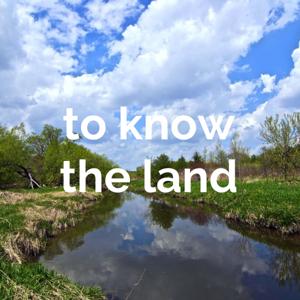


The car broke down on our way to visit my mum. My brother and I got out of the car, and while he researched how to change the alternator, I went behind the vacant garage where we parked the inoperable vehicle. When I explored to the far back of the lot I was grateful to find a small wetland, thriving with tons of species. Trees, tall and low shrubs, and understory thick with both native and non-native, aggressive opportunistic plants vying for life. I was totally impressed and appreciated this wild oasis in the midst of an annoying happenstance.
While I sat there, on an old discarded stump I discovered adjacent to the wetland, I began thinking of weird ecological combinations, novel ecosystems and “invasive” species, both in the context of their potential benefits and their potential harms. I continue to wonder about the role of Dandelion (Taraxacum officinale), Burdock (Arctium lappa), Garlic Mustard (Alliaria petiolata) and Giant Hogweed (Heracleum mantegazzianum) on the landscape of Turtle Island/North America. I continue to weigh all theories and ideas swimming around in the varied academic research and current collected folklore (not so much in the mythic sense, but more so the popular awareness and storytelling of these populations), and try to tease out some path forward : do we leave these populations alone? Do we try to intervene? If so, how? Can we do both? What lessons are already being demonstrated on the landscape? How do we listen to the needs of the lands we cohabit with these contested species?
I guess this is what this weeks show is about, all considered out back of an abandoned garage. Sometimes we can be grateful for the car breaking down. Big thanks though to my brother for the wonderful adventure.
To learn more :
Wild Urban Plants of the NorthEast by Peter Del Tredici. Cornell University Press, 2020.
When Doing Nothing is the Best Invasive Plant Management Tool - youtube video : Dr. Bernd Blossey shares his research on Garlic Mustard
Lately a lot of folks I know have been finding Morels (Morchella spp.) in and around the city where I live. Possibly one of the most prized edible fungi on the planet, everyone seems very excited to bring them home and cook them into an ephemeral dish. If I find a bunch I may do the same, but until then I wanted to look into this amazing fruiting body a little bit more.
It wasn’t long ago that I assumed that this genus was just one or two individual species. Turns out I was incorrect. I have also heard that the False Morels (Gyromitra spp.) look a lot like the Morels and it would be difficult to tell them apart… I reviewed it and I think those folks are missing something important in the id features.
One thing about the show.. I wish there were more books on the natural history of these species, which I could have drawn from. Something akin to John Eastman’s, or Carol Gracie’s works. Alas, there is one, but it’s too expensive right now. But it’s out there if you are looking.
Also, the second part of the show is a review of the new National Audubon Society Mushrooms of North America. I hope you find it useful.
Sources for the show :
Ascomycete Fungi of North America: A Mushroom Reference Guide by Michael Beug, Alan E. Bessette, Arleen R. Bessette. University of Texas Press, 2014.
Mushrooms of the Northeastern United States and Eastern Canada by Timothy J. Baroni. Timber Press, 2017.
National Audubon Society Mushrooms of North America. Knopf, 2023.
I was out with a couple of friends the evening before. We’d been thoroughly engaged listening to the painfully loud calls of the Spring Peepers (Pseudacris crucifer) when I pointed out an Eastern Meadowlark (Sturnella magna) call to one of my pals. He pulled out his phone and got on the Merlin App to try and id the call a little better. Lo and behold, on the list of birds included in his immediate recorded was a Sora (Porzana carolina)! Now, Soras aren’t too rare, or too interesting to many, but they are a bird I have never seen, never heard, and barely heard of. When we were discussing who a Sora is, all I know was that they were a waterbird that didn’t look like a duck. I imagined something more akin to an American Bittern (Botaurus lentiginosa), but I was way off.
Soras are still mysterious to me, but it was fun to go back to the pond, listen to the birds again the following morning, and bring out some books to learn more and reflect on listening. I hope y’all enjoy it as well.
To learn more :
Birds of Lake Pond and Marsh by John Eastman. Stackpole Books, 1999.
Cardinals, Blue Jays, Robins, Mourning Doves, Mallards, Black-capped Chickadees. Quite common and familiar birds most folks seem to know. One of the reasons is that they have very distinct patterning and physical traits that render them easily identifiable. Even some of the Sparrows can be differentiated by a slightly advanced beginner.
Flycatchers? They can be tough. When I see a Yellow-bellied Flycatcher (Empidonax flaviventris) in the woods, despite being one of the more recognizable, determinable Empidonax species, I am still left uncertain, full of doubt and just generally end up calling it a Flycatcher.
But I have found since reading Cin-Ty Lee and Andrew Birch’s new book “Field Guide to North American Flycatchers : Empidonax and Pewees”, I have been looking at the birds with a different lens, one that considers a more holistic view, that asks more questions of often overlooked characteristics which can help lead to a solid id.
I spoke with Cin-Ty and Andrew about their new book and how this new method of identification can help us not only better identify some of the Flycatchers, but also to look at how we regard all birds in ways that encounter them more fully, experiencing them in broader context through investigating narrower characteristics.
To learn more :
Field Guide to North American Flycatchers : Empidonax and Pewees
Cin-Ty Lee’s website
Andrew Birch’s website
Red-tailed Hawks (Buteo jamaicensis) are always exciting to see. However ubiquitous or plentiful they may be on the land, it is always a gift to observe them circling and soaring overhead. I have been noting their behaviours for a few years now, trying to catch a glimpse whenever I can. A couple of years ago I watched a pair eager to find out if they were nesting in the valley I walk or ride on my way into work. I never did find that nest, but I hoped I would in the future.
On Monday, a colleague called over the radio that he was observing two Red-tails building a nest. He later watched as the pair were mating on a different tree down closer to the river. This series of events sparked a great curiosity and enthusiasm between all of my colleagues. We have been trying to find ways to observe, but also not interfere. Trying to research, but not just rely on the books. But as it is still relevant, I decided to hit the books. Thus, this weeks show was created. A deep dive into the nesting behaviours of one of my fav cohabitants.
Thanks Drew for the suggestion to include my sources in the show write-up. And to Matt Hamilton for the photo.
Sources for the show:
Forest Raptors & Their Nests in Central Ontario - this is only a partial pdf, and does not have all of the content. I am searching for a complete pdf.
Peterson Field Guide to North American Bird Nests by Casey McFarland, Mathew Monjello & David Moskowitz. HMH, 2021.
Life Histories of North American Birds of Prey pt 1 by Arthur Cleveland Bent. Dover, 1961.
Stokes Guide to Bird Behaviour vol. 3 by Donald and Lillian Stokes. Little, Brown, 1989.
Birds of Forest, Yard, & Thicket by John Eastman. Stackpole Books, 1997.
When you want to get to know someone, you listen to the stories they have to share. We might ask some questions once in a while, but mostly we watch and listen and that’s how we learn more about who they are and how they exist in the world. We might go visit them in their spaces and ask more questions, like why do they hang out in a particular space more than another? Slowly we start to build a deeper understanding and awareness of who this someone is, and usually, deeper connection.
Listening to the more than human world is a fundamental piece of learning from the land. It decenters the human and allows us a chance to participate in the always ongoing conversations between birds, winds, trees, rivers, insects, and all the myriad of forms which inhabit the worlds we too inhabit.
This episode is a return to ritualized listening. While I try to listen all of the time, it’s around this time of year when my ears really pick up on novel sounds, calls and songs which have been missing from my local bioregion since at least the Fall, but some since the previous Spring. The theme of this show, of recording the early morning bird song in the warming days of Spring, recurs every year, and has since the last four years I believe. Its a good ritual to maintain.
A quote from two years ago:
This tradition is about relationship building through active listening and paying attention. We can’t know someone without listening to them, without giving them attention and acknowledging them. By listening to the birds and working towards understanding them we start to identify their needs, “desires” and habits. By listening to a human friend we do the same. Through this identification we might also develop empathy and care, compassion and love. Seems worth the listen to me.
Why not ritualize this interspecies relationship building and also honour it through highlighting and uplifting on this podcast platform as I might a researcher, author, or knowledge holder? Once we’ve listened where do we go from there? How do we deepen the bonds that listening creates? Can we know the land better through listening to the more-than-human world?
Recently while tracking a Fisher (Pekania pennanti) in Algonquin Park we encountered a large galloping trail that had a long stride length of 106 cm (41¾ in). This was about 28 cm (10 in) longer than what is recorded in Mark Elbroch's “Mammal Tracks and Sign” (Stackpole, 2019). When I finished measuring, I was discussing this extraordinarily long stride with some colleagues. They told me about a National Geographic article, based on a paper about increasing body sizes and range expansion of Fishers in the Northeast. I was immediately interested. When I got home from Algonquin, I looked the paper up. I read the abstract but I had to find out more so I wrote to the author, Dr. Scott LaPoint, to see if he could help answer my questions and be game for an interview. He was in.
And what a wealth of knowledge! Scott LaPoint was very open to share his research findings on Fishers, on seasonal size changes in the skulls of some small Weasel species (elaborating on Dehnel’s phenomena), as well as the need for wildlife connectivity corridors and Dr. LaPoint’s research throught The Hudson Highlands Wildlife Connectivity Project with Bobcats (Lynx rufus) and Fishers studying how they move throughout the landscape. There was even mention of the New York Times article about a Fisher seen prowling around the Bronx a few years ago.
I am always so grateful to get to talk with the researchers who are doing the work in the field which enables us to learn more about the species we track, trail and encounter, especially the cool mesopredators like Fishers. If you are curious about Fishers, Fisher ecology, or wildlife in general, than this is one to listen to.
And just so you know, the Fisher Scott is holding had just been sedated and he was preparing to do a full work up on her, including attaching a tracking collar. No Fishers were hurt in the making of this podcast.
To learn more :
Over and over on this podcast (and through the blog) I have spoken to the need to be outdoors and the value for us emotionally, physically, spiritually and socially in participating with the wider wilder world around us. But when these opportunities are interrupted by white-supremacist narratives on who belongs outdoors, the BIPOC Outdoor Gear Library steps up and reminds us that everyone belongs outside!
BIPOC Outdoor Gear Library is a community-based lending library focused on providing access to outdoor equipment for the BIPOC (Black, Indigenous, and People of Colour) communities of (so-called) Guelph and the surrounding areas. Their gear list includes snowshoes, kayaks, camp stoves, fishing poles, bikes, coolers, sleeping bags, and so much more. But it doesn’t end there. There are events like social hikes, yoga and meditation, archery, cross-country skiing outings, even an overnight camping and paddling weekend!
Through collaboration with partners they are working to increase representation of BIPOC communities engaging in outdoor recreation by reducing barriers to access, creating community, and providing resources and education. What a great organization!
I spoke with founder Dionne Daley about why a BIPOC specific gear library is needed in our communities, why it’s important to dispel the myth of needing to buy all the fancy gear just to get outside, and how folks of colour are asserting space in the outdoors.
Take a listen to the show, and please check out their website and check out their instagram account for more details on how to become a member.
To learn more :
Tracker Certification North America is an evaluating body in the field of wildlife tracking and trailing, and so much more. They host evaluations which double as in depth community tracking and trailing training sessions, going deep on the explanations and pointing out how the evaluator can see what they can see. This process encourages dialogue, feedback and reflection, community discussion and a deeper understanding of the trails the animals are leaving behind.
From a tool which was designed by Louis Liebenberg to celebrate and employ ecological knowledge of indigenous trackers in southern Africa (namely the San of the Kalahari) in wildlife research and conservation, to an international certifying body which assess’ and trains wildlife trackers of all skill levels, the CyberTracker process, also known as Tracker Certification North America on this continent, is leading the way on communication, public education, and evaluation of wildlife track and sign.
Sophie Mazowita has returned to the show for her second time to tell us more about the history of the organization, what evaluations are all about, the difference between a track and sign vs trailing eval, as well as the upcoming North American Wildlife Tracker Conference happening online on March 18 - 19 (I’ve already registered).
Full of stories and insight into the happenings of Tracker Certification North America, this was an exciting and fun conversation to have. Big thanks to Sophie for being on the show again.
To learn more :
Cop City is an urban warfare training facility being built on the South side of Atlanta. To construct this sprawling $90 million compound stretching 85 acres, developers are bulldozing a forest. The stated motive for this project was to boost morale of police in the wake of the George Floyd uprisings, which showed that the public in Atlanta and elsewhere had lessening faith in the role of policing in keeping them safe.
I first heard about the Stop Cop City campaign in 2022 when a friend shared the story with me. We were inspired by this campaign that brought together land defence, the movement away from police and towards liberatory alternatives, and a critical anti-racist analysis, something which has lacked in the history of environmental movements of the past. It reminded me of the tree sits I once participated in to protect forests in Tseshaht, Te'mexw. Snaw-naw-as, K'omoks territories (Cathedral Grove, British Columbia).
The story of the Stop Cop City campaign has since blown up, because of the public outrage at the project, due to the killing of Tortuguita by police, a forest defender camping out in the contested forest.
I got to speak with Leila about the history and ongoing progress of the campaign, how it has evolved, how public support continues to grow for the Stop Cop City movement, and how many local institutions, such as local universities and major corporations are revoking support or outright condemning the training facility.
It’s a hard listen at times, but really makes the case that this absurd project, of cutting down the largest urban forest in the United States to build a military-style training facility is not only not good for public safety, but detrimental to the land.
UPDATE: Here are some extra links that were shared with me I’d like to feature:
To learn more :
From the publisher's feed

90,569 Listeners

3,067 Listeners

17,676 Listeners
568 Listeners

14,902 Listeners

1,249 Listeners