
Sign up to save your podcasts
Or

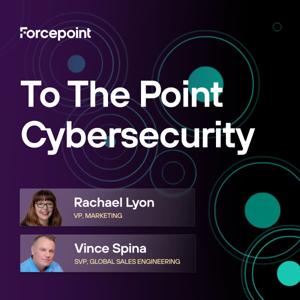


The identity and access model built for human users starts to break the moment an autonomous agent acts on someone's behalf, because an agent cannot be authenticated the way a person is. Rosalyn Curato, Chief Innovation Officer and General Manager of Agentic Security at Vouched, makes the case that an autonomous agent should never be an anonymous one, and that trust starts with verifying the agent and tying it to a known human. Her framing reduces to three questions every organization should be able to answer about an agent: who it is, which human it belongs to and what it has been given permission to do. From there the conversation turns to what breaks without that binding. Curato covers rogue agents, the risk of handing an agent too much access and the fraud and liability costs that organizations are already forecasting. She and hosts Rachael Lyon and Jonathan Knepher work through the controls that answer it, including delegated permissions, immutable audit trails, kill switches and the KYA-OS open standard that Vouched donated to the Decentralized Identity Foundation. For links and resources discussed in this episode, please visit our show notes at https://www.forcepoint.com/resources/podcast/verified-identity-for-ai-agents
Every CIO and CISO adopting AI faces the same trap. Loosen the guardrails and let employees use the tools they want, and put your sensitive data at risk. Block it and lock everything down, and watch shadow AI use grow.
Steven Walchek, co-founder and CEO of Liminal and a former innovation leader at AWS and FIS, joins Rachael Lyon and Jonathan Knepher to argue the answer is not one or the other but both. The conversation covers the real regulatory exposure facing mid-market companies, why the public versus private LLM question echoes the old cloud versus on-prem debate, and the security tradeoffs of running open-source models on your own infrastructure. It closes on a candid look at how AI is reshaping developer work and the careers Steven is steering his own kids toward. For links and resources discussed in this episode, please visit our show notes at https://www.forcepoint.com/resources/podcast/enterprise-ai-security-steven-walchek
As AI systems start acting on their own, the hardest security problem is no longer approving what a model outputs but governing the conditions under which it is allowed to act at all. Michael Chavira, co-founder of Axiologic Solutions, argues that most organizations confuse governance with security, writing policies and standing up AI councils that describe intent while leaving the enforcement layer, where a model actually touches data, underbuilt. His answer is to move humans out of the approve-every-action role and onto the loop, where they define the boundaries an agentic system runs inside and watch for it to step out. That control is only as good as the data underneath it, and for most enterprises, the data is a weak point. Chavira makes the case that AI security is ultimately data security, since a model is only as trustworthy as the data feeding it, and he walks through why shadow AI, unlabeled data and untracked workarounds quietly undermine even well-governed systems. For tools that answer the same question differently each time, he recommends harness engineering and continuous data operations as the way to secure the system rather than chase every output.
For links and resources discussed in this episode, please visit our show notes at https://www.forcepoint.com/resources/podcast/agentic-ai-humans-on-the-loop
Ido Shlomo, co-founder and CTO of Token Security, makes a blunt case: an AI agent is not a person. It is a workload that impersonates one, chasing whatever goal it is handed without judgment, memory, or common sense. Treat it like an employee and hand it the keys, and enterprise security quietly starts to break down.
Shlomo explains why agents inherit the same credentials and keys that service accounts have always used, why over-permissioning backfires on the business itself, and how identity teams can align an agent's access to its real intent. He also argues, against his own instincts, for more regulation of how agents connect to business systems and makes the case that reducing the blast radius matters more than trusting any single model.
For links and resources discussed in this episode, please visit our show notes at https://www.forcepoint.com/resources/podcast/securing-ai-agents-non-human-identity
In this episode of Forcepoint's "To the Point Cybersecurity" podcast, hosts Jonathan Knepher and Rachael Lyon are joined once again by Jeremiah Baker for a deep dive into the rapidly shifting landscape of cybersecurity. With the velocity of AI-driven attacks shrinking defenders' response windows to mere seconds, the conversation explores how organizations—large and small—must adapt their mindsets and strategies to survive in an age where legacy defenses and human complacency can have catastrophic consequences.
Jeremiah Baker draws from decades of hands-on experience, sharing real-world lessons about the evolving threat surface, the importance of thinking like cybercriminals, and the struggles of instilling security-first cultures—especially for businesses lacking dedicated security teams. The discussion tackles the challenges posed by new vulnerabilities, the ever-present risks of social media exposure, and how personal responsibility and security awareness are now non-negotiable parts of business DNA. With anecdotes ranging from boardroom conversations to frontline cyber incidents, this episode is a must-listen for anyone navigating digital transformation, AI risks, and the uncertain road ahead in cybersecurity.
For links and resources discussed in this episode, please visit our show notes at https://www.forcepoint.com/govpodcast/e384
Welcome back to another episode of To the Point Cybersecurity, where Rachael Lyon and Jonathan Knepher dive into the frontline battles of today's digital landscape. This week, they're joined by Jeremiah Baker—an ethical hacker turned keynote speaker and author with over 20 years of cybersecurity experience. Together, they unravel the evolving tactics of financially motivated cyber attacks, explore how AI is rapidly making phishing and fraud more efficient, and highlight why trust is harder than ever to establish online. Jeremiah Baker shares real-world stories of catastrophic breaches, underscores the critical importance of zero trust and proactive defenses, and discusses the game-changing—and double-edged—role of AI for both attackers and defenders. Whether you're a business leader, IT pro, or simply curious about how to stay safe in a world of sophisticated cyber threats, this episode is packed with insights you won't want to miss. For links and resources discussed in this episode, please visit our show notes at https://www.forcepoint.com/resources/podcast/inside-cybersecurity-situation-room-jeremiah-baker-part-1
Welcome back to To the Point Cybersecurity Podcast, where hosts Rachel Lyon and Jonathan Knepher dive into the critical state of our nation's infrastructure with Jake Braun. In this episode, Jake Braun details the vulnerabilities facing America's water systems and explains the mission behind the Franklin Project, an initiative connecting hackers and cybersecurity professionals with small, often-overlooked utilities to bolster their defenses. From stories of hackers working covertly with election officials to the growing threats posed by foreign adversaries, this conversation unpacks the urgency of securing essential services and explores how communities—and individuals—can get involved in the fight to protect our most vital resources. Stay tuned as we discuss how the lines between the hacker, government, and critical infrastructure worlds are being blurred for the greater good.
For links and resources discussed in this episode, please visit our show notes at https://www.forcepoint.com/govpodcast/e381
Welcome to "To the Point Cybersecurity Podcast," where each week hosts Rachael Lyon and Jonathan Knepher dive into the latest trends and critical topics shaping the world of cybersecurity. In this episode, we're thrilled to welcome Jake Braun, Executive Director of the Cyber Policy Initiative at the University of Chicago, CEO and co-founder of Cambridge Global Advisors, and former Acting Principal Deputy National Cyber Director at the White House.
Join us as we explore what it's like to bridge the gap between the hacker community and government, the evolving frustrations hackers have with official institutions, and highlights from the latest "Hackers Almanac." From AI-driven offensive security and mesh network resilience to preserving cultural heritage in the digital age, it's a conversation packed with cutting-edge insights and urgent policy considerations. For links and resources discussed in this episode, please visit our show notes at https://www.forcepoint.com/govpodcast/e380
Welcome to another episode of Forcepoint's "To the Point Cybersecurity" podcast. This week, Rachael Lyon and Jonathan Knepher continue their deep-dive conversation with Monzy Merza, exploring the transformative impact of AI in security operations centers (SoCs) and the evolving landscape of cyber threats and defense.
In this episode, Monzy Merza shares candid insights into building trust and confidence in AI tools, managing the surge in AI-generated data and requirements, and the crucial role of human judgment amid technological advancements. The discussion covers everything from the realities of AI-generated errors to the challenges and opportunities for defenders as attackers adopt agent-driven threats.
For CISOs and SOC managers facing the daunting task of AI transformation, Monzy Merza offers practical strategies, hard-earned lessons from the front lines, and a glimpse into future-proofing your security teams. Tune in to hear what practitioners are really experiencing in the trenches and what key questions every leader should be asking in the race to integrate AI securely and effectively. For links and resources discussed in this episode, please visit our show notes at https://www.forcepoint.com/govpodcast/e380
From the publisher's feed

227,498 Listeners
1,029 Listeners

10,735 Listeners

318 Listeners

421 Listeners

8,535 Listeners
8,059 Listeners

179 Listeners
314 Listeners
73 Listeners

138 Listeners