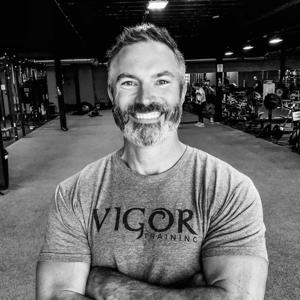
Tom Nikkola | VIGOR Training

Tom Nikkola | VIGOR Training

By Tom Nikkola | VIGOR TrainingHealth & FitnessNutritionMental HealthFitness
Download on the App Store

Tom Nikkola | VIGOR Training episodes

  • I Broke My Neck Part 3: The Mental Game of Rehab and Recovery
    “How’s your recovery going?” I get this question a lot, and it's kind of a loaded question. In the second or two I take to respond (or more if if someone asks through a text message), I quickly ask myself a few questions: Are they sincerely interested or just being polite? Do they want to hear the whole answer or just the highlights? If I share the whole answer, will it make me feel better or worse after sharing.
    That might seem silly, but I understand the importance of maintaining the right mental attitude. It's just as important, if not more important, than the supplements I'm using, therapies I'm getting, the diet I'm eating, or the workout program I'm following.
    That's why I'm dedicating a whole blog post to playing the mental game of injury rehab and recovery.
    I thought it might be helpful to outline the guidelines I've established to make sure I avoid developing a pessimistic, doubtful, lazy, complacent, or victimhood mindset.
    Not surprisingly, these guidelines have a place in other pursuit's beyond a swift and complete recovery from injuries and ailments.
    Oh, and if you haven't already, be sure to read my first two blog posts about my broken neck and spinal cord injury:
    I Broke My Neck, Part 1: Injuries, Surgery, and Recovery Challenges
    I Broke My Neck Part 2: What I’m Doing to Recover And Why
    You can also find numerous updates of the day-to-day recovery process on my Facebook timeline, starting on July 30, 2022.
    I will never seek or accept sympathy.
    This is more of a rule than a guideline for me, and it’s a rule I’ve tried to live by for years, not just after going head first over my handlebars on my mountain bike.
    Sympathy is defined as a feeling of pity or sorrow for the distress of another; commiseration.
    Getting sympathy from others does nothing to keep me focused on the tough, uncomfortable, sometimes painful process of rehabbing my nervous, muscular, and skeletal systems.
    Instead, getting sympathy leads to self-pity. 
    If someone else pities me or feels sorrow for my current state of being, I will undoubtedly feel pity or sorrow for myself. That won’t help me remain optimistic. It’ll do the opposite. It’ll lead me to look at the world through the eyes of a pessimistic victim.
    That’s bad for me but also bad for the person I’m interacting with.
    Why would I want to infect his or her mind with pity or sorrow? If I’m not dead, God’s not through with me yet. 
    You can’t be a light for others, much less yourself, when you’re consumed by the darkness of self-pity, pessimism, or victimhood.
    Of course, people may express sympathy, especially those who care most. You just have to do your best to ignore it.
    I must surround myself with encouragers, not doubters or downers
    If you’ve followed the posts and stories Vanessa has shared over the past five weeks, you know I dismiss those who doubt my abilities, or those who think they know my body better than I do.
    That started the morning after my surgery when I was supposed to stay in bed for a few days. I wanted to stand even though the nurses said I shouldn’t. I knew that I could. They doubted me. To emphasize my point, I stood on each leg, one at a time, and balanced, and then did a half squat on each leg.
    Early on in my recovery, it was easy to keep doing what I knew I needed to, despite having people tell me I shouldn’t or couldn’t.
    But the ability to ignore critics, doubters, or downers only lasts so long.
    It’s part of why I wanted to get out of the hospital immediately. I didn’t want doctors and nurses telling me what I was capable of based on their standard of care documents.
    I’ve also been cautious about interacting with others who would tell me to slow down, follow the doctor’s guidelines, or spend more time resting. Surrounding myself with such people could lead me to trust their “advice” instead of listening to my intuition.
    I’d still be lifting soup cans and limiting my squats to the...
    16 min
  • I Broke My Neck Part 3: The Mental Game of Rehab and Recovery
    “How’s your recovery going?” I get this question a lot, and it's kind of a loaded question. In the second or two I take to respond (or more if if someone asks through a text message), I quickly ask myself a few questions: Are they sincerely interested or just being polite? Do they want to hear the whole answer or just the highlights? If I share the whole answer, will it make me feel better or worse after sharing.
    That might seem silly, but I understand the importance of maintaining the right mental attitude. It's just as important, if not more important, than the supplements I'm using, therapies I'm getting, the diet I'm eating, or the workout program I'm following.
    That's why I'm dedicating a whole blog post to playing the mental game of injury rehab and recovery.
    I thought it might be helpful to outline the guidelines I've established to make sure I avoid developing a pessimistic, doubtful, lazy, complacent, or victimhood mindset.
    Not surprisingly, these guidelines have a place in other pursuit's beyond a swift and complete recovery from injuries and ailments.
    Oh, and if you haven't already, be sure to read my first two blog posts about my broken neck and spinal cord injury:
    I Broke My Neck, Part 1: Injuries, Surgery, and Recovery ChallengesI Broke My Neck Part 2: What I’m Doing to Recover And Why
    You can also find numerous updates of the day-to-day recovery process on my Facebook timeline, starting on July 30, 2022.
    I will never seek or accept sympathy.
    This is more of a rule than a guideline for me, and it’s a rule I’ve tried to live by for years, not just after going head first over my handlebars on my mountain bike.
    Sympathy is defined as a feeling of pity or sorrow for the distress of another; commiseration.
    Getting sympathy from others does nothing to keep me focused on the tough, uncomfortable, sometimes painful process of rehabbing my nervous, muscular, and skeletal systems.
    Instead, getting sympathy leads to self-pity. 
    If someone else pities me or feels sorrow for my current state of being, I will undoubtedly feel pity or sorrow for myself. That won’t help me remain optimistic. It’ll do the opposite. It’ll lead me to look at the world through the eyes of a pessimistic victim.
    That’s bad for me but also bad for the person I’m interacting with.
    Why would I want to infect his or her mind with pity or sorrow? If I’m not dead, God’s not through with me yet. 
    You can’t be a light for others, much less yourself, when you’re consumed by the darkness of self-pity, pessimism, or victimhood.
    Of course, people may express sympathy, especially those who care most. You just have to do your best to ignore it.
    I must surround myself with encouragers, not doubters or downers
    If you’ve followed the posts and stories Vanessa has shared over the past five weeks, you know I dismiss those who doubt my abilities, or those who think they know my body better than I do.
    That started the morning after my surgery when I was supposed to stay in bed for a few days. I wanted to stand even though the nurses said I shouldn’t. I knew that I could. They doubted me. To emphasize my point, I stood on each leg, one at a time, and balanced, and then did a half squat on each leg.
    Early on in my recovery, it was easy to keep doing what I knew I needed to, despite having people tell me I shouldn’t or couldn’t.
    But the ability to ignore critics, doubters, or downers only lasts so long.
    It’s part of why I wanted to get out of the hospital immediately. I didn’t want doctors and nurses telling me what I was capable of based on their standard of care documents.
    I’ve also been cautious about interacting with others who would tell me to slow down, follow the doctor’s guidelines, or spend more time resting. Surrounding myself with such people could lead me to trust their “advice” instead of listening to my intuition.
    I’d still be lifting soup cans and limiting my squats to the toi...
    16 min
  • I Broke My Neck Part 2: What I’m Doing to Recover And Why
    As I explained in my pervious post, I fractured my C6 and C7 vertebrae when I landed head first after going over the handle bars on my mountain bike. The fractures, combined with significant disc degeneration in my C5 and C6 caused compression and flattening of my spinal cord, which then caused Central Cord Syndrome.
    The surgeon performed emergency surgery where he and his team removed bone spurs on C5 and C6, removed the remains of my two degenerated discs, replaced them with spacer cages and an artificial bone matrix, and fused my C5 to C6 and C6 to C7 with a two-level anterior cervical fusion and discectomy (ACFD). I also had some bleeding on my brain, but it seems to have been minimal.
    Initially, the doctors said it would be a few days before I'd walk and would be in the hospital for a week to a week and a half, and activity for the foreseeable future would be kept to a minimum. Against their recommendations, I demanded to stand up on my own 12 hours after surgery, and later that day said I wanted to walk. The next day, I asked to use the stairs between floors at the hospital and was discharged three days after my surgery.
    From the beginning, I also told the medical staff that my hands felt like I'd punched a cement wall. Each staff member told me it was just nerve pain, even though my hands looked like they belonged on the Pillsbury Dough Boy they were so swollen. At a follow-up appointment last week, I told the PA the same thing and she said the same thing: "It's just nerve pain." I asked her to order an X-ray on my right hand, which she begrudgingly did. It turns out I was right. My right hand was broken. My left seems to have faired slightly better.
    With that as a brief summary, I'll share what we're doing to speed up the recovery process, and how that contrasts with the advice I got from the medical team.
    I'm sharing this information as a way to detail an "unofficial" case study, not to suggest this for others. If anything, I hope that by sharing the details of what we're doing in this and future posts, it'll cause others in similar situations to ask better questions of their medical team. I also hope it causes healthcare practitioners to invest some time into exploring ways their patients can safely recover from similar injuries in less time.
    Side Effects of Conventional Guidance Following Spinal Cord Injuries
    Following a spinal cord injury and surgery like mine, conventional advice during the first 6-12 weeks includes:
    Wearing a collar (i.e. Aspen collar) at all times. An exception may be to take it off to shower after 2-4 weeks. My PA said I should only do that if I have a shower chair to sit on. I thought that was funny.
    No lifting items over 10 pounds
    Limit exercise to walking or riding on a recumbent bike
    Once patients are "allowed" to become more active, the guidance is often akin to lifting soup cans or pink dumbbells.
    While I'm all for protecting the area of injury and helping to ensure the fusion heals appropriately, I'm also 100% against allowing the rest of my body to fall apart while that happens. Especially if it isn't absolutely necessary.
    Unfortunately, most patients aren't led to see things this way. As a result, the average spinal cord injury patient experiences the following:
    18-46% decrease in muscle cross sectional area in first six weeks, and 45-80% after six months
    significant decrease in ratio of slow twitch to fast twitch muscle fiber type, which reduces fat metabolism, stamina, and endurance
    Up to 126% increase in intramuscular fat within first six weeks and more than a 300% increase after six months
    3X increased risk of developing diabetes compared to uninjured, comparable adults
    Significant loss in bone mineral density, leading more than 40% of SCI patients to developing osteoporosis or osteopenia, according to one study
    These stats are disturbing!
    As of 3 1/2 weeks post-op, not a single healthcare professional from my ca...
    24 min
  • I Broke My Neck Part 2: What I’m Doing to Recover And Why
    As I explained in my pervious post, I fractured my C6 and C7 vertebrae when I landed head first after going over the handle bars on my mountain bike. The fractures, combined with significant disc degeneration in my C5 and C6 caused compression and flattening of my spinal cord, which then caused Central Cord Syndrome.
    The surgeon performed emergency surgery where he and his team removed bone spurs on C5 and C6, removed the remains of my two degenerated discs, replaced them with spacer cages and an artificial bone matrix, and fused my C5 to C6 and C6 to C7 with a two-level anterior cervical fusion and discectomy (ACFD). I also had some bleeding on my brain, but it seems to have been minimal.
    Initially, the doctors said it would be a few days before I'd walk and would be in the hospital for a week to a week and a half, and activity for the foreseeable future would be kept to a minimum. Against their recommendations, I demanded to stand up on my own 12 hours after surgery, and later that day said I wanted to walk. The next day, I asked to use the stairs between floors at the hospital and was discharged three days after my surgery.
    From the beginning, I also told the medical staff that my hands felt like I'd punched a cement wall. Each staff member told me it was just nerve pain, even though my hands looked like they belonged on the Pillsbury Dough Boy they were so swollen. At a follow-up appointment last week, I told the PA the same thing and she said the same thing: "It's just nerve pain." I asked her to order an X-ray on my right hand, which she begrudgingly did. It turns out I was right. My right hand was broken. My left seems to have faired slightly better.
    With that as a brief summary, I'll share what we're doing to speed up the recovery process, and how that contrasts with the advice I got from the medical team.
    I'm sharing this information as a way to detail an "unofficial" case study, not to suggest this for others. If anything, I hope that by sharing the details of what we're doing in this and future posts, it'll cause others in similar situations to ask better questions of their medical team. I also hope it causes healthcare practitioners to invest some time into exploring ways their patients can safely recover from similar injuries in less time.
    Side Effects of Conventional Guidance Following Spinal Cord Injuries
    Following a spinal cord injury and surgery like mine, conventional advice during the first 6-12 weeks includes:
    Wearing a collar (i.e. Aspen collar) at all times. An exception may be to take it off to shower after 2-4 weeks. My PA said I should only do that if I have a shower chair to sit on. I thought that was funny.No lifting items over 10 poundsLimit exercise to walking or riding on a recumbent bike
    Once patients are "allowed" to become more active, the guidance is often akin to lifting soup cans or pink dumbbells.
    While I'm all for protecting the area of injury and helping to ensure the fusion heals appropriately, I'm also 100% against allowing the rest of my body to fall apart while that happens. Especially if it isn't absolutely necessary.
    Unfortunately, most patients aren't led to see things this way. As a result, the average spinal cord injury patient experiences the following:
    18-46% decrease in muscle cross sectional area in first six weeks, and 45-80% after six monthssignificant decrease in ratio of slow twitch to fast twitch muscle fiber type, which reduces fat metabolism, stamina, and enduranceUp to 126% increase in intramuscular fat within first six weeks and more than a 300% increase after six months3X increased risk of developing diabetes compared to uninjured, comparable adultsSignificant loss in bone mineral density, leading more than 40% of SCI patients to developing osteoporosis or osteopenia, according to one study
    These stats are disturbing!
    As of 3 1/2 weeks post-op, not a single healthcare professional from my care team has recommended an...
    24 min
  • I Broke My Neck, Part 1: Injuries, Surgery, and Recovery Challenges
    It was a warm summer morning, July 30. Vanessa, our grandson Asher, and I were riding a single-track mountain bike course in Woodbury, MN. As always, I rode in the third position, ironically, in the event either of them ever had a bad fall.
    I came upon a skinny bridge about three feet off the ground and, for a brief moment, thought I should skip it that day. I didn’t listen to my intuition.
    Instead, I slowly pedaled up the steep incline. As my front tire reached the top, I knew I needed to follow the bridge's curve to the right, but I was going so slow I couldn’t correct myself. Instead, I kept riding straight ahead.
    Before I could blink, my front tire dropped off the bridge, and when it hit the ground, I was leaning forward enough that the only thing that could happen was for my body and the back of my bike to fly over the front.
    The top of my head made contact with the ground first, the rest of my body directly above it. As our grandson would later describe, my head then got squished into my shoulders, my neck hyperextended, and the rest of my body rolled over until I lay flat on my back.
    Within seconds, I realized I had no feeling in my lower body. I knew this would be a severe injury. I also felt surprisingly calm, knowing things would work out according to God's plan, whatever that might be. As she'd later tell me, Vanessa felt at peace in the chaos as well.
    The police and fire department arrived 15 minutes after my wife called 911. They gave me ketamine, carried me to an ATV, loaded me onto the back, drove me to an ambulance, gave me fentanyl, and drove me to Regions Hospital in St. Paul, Minnesota.
    This is an introductory post about my adventure back from a serious spinal cord injury. I'll refer back to it in future posts as I discuss the therapies we use and the insights we gain. Here, I want to outline the complications we faced, as it turned out to be more than a broken neck or a spinal cord injury alone. Also, my wife, Vanessa Romero has documented, and will continue to document, our approach to recovery and its milestones on her Facebook and Instagram pages. Please check them out!
    The Diagnosis
    Upon arriving at Regions, the staff ushered me into X-rays, CT scans, and MRIs.
    According to my admission notes, I had:
    C6-C7 fracture dislocation with bilateral facet fractures, unilateral perched facet.
    Severe degenerative disc disease at C5-C6 with severe secondary spinal stenosis (narrowing of the spinal canal).
    Spinal cord injury with central cord syndrome at C5-C6 and C6-C7.
    Based on the degenerated discs and bone spurs he saw, the surgeon told Vanessa I was a walking disaster, even if I hadn't broken my neck. He said I was lucky the crash hadn't made me a quadriplegic. We call it a blessing.
    The surgery team told her I would likely be in the hospital for 10 to 12 days. They even said it would be a few days before I could walk.
    The surgeon, Dr. Mendes, wanted to do immediate, emergency surgery. As he noted:
    Because of instability, the unstable nature of fracture, dislocation at C6-C7, surgery was immediately recommended because of the severe compression at C5-C6.
    So, by late afternoon I was headed for surgery. I don't remember much about that afternoon as I was pretty drugged up.
    The Surgery
    Dr. Mendes, the neurosurgeon, performed a two-level anterior cervical diskectomy and fusion (ACDF). This was to reduce the compression and flattening of my spinal cord, caused by the fractured vertebrae, existing disc degeneration, and bone spurs.
    If you geek out at this stuff, here are the notes from my surgeon on my procedure.
    PROCEDURE IN DETAIL: The patient was anesthetized, intubated, and placed supine on the OR table, roll underneath his shoulder blades, head in mild extension, head resting on a foam donut.
    Gardner-Wells tongs were applied approximately an inch in front of the external auditory meatus to reinforce this lordotic positioning.

    12 min
  • I Broke My Neck, Part 1: Injuries, Surgery, and Recovery Challenges
    It was a warm summer morning, July 30. Vanessa, our grandson Asher, and I were riding a single-track mountain bike course in Woodbury, MN. As always, I rode in the third position, ironically, in the event either of them ever had a bad fall.
    I came upon a skinny bridge about three feet off the ground and, for a brief moment, thought I should skip it that day. I didn’t listen to my intuition.
    Instead, I slowly pedaled up the steep incline. As my front tire reached the top, I knew I needed to follow the bridge's curve to the right, but I was going so slow I couldn’t correct myself. Instead, I kept riding straight ahead.
    Before I could blink, my front tire dropped off the bridge, and when it hit the ground, I was leaning forward enough that the only thing that could happen was for my body and the back of my bike to fly over the front.
    The top of my head made contact with the ground first, the rest of my body directly above it. As our grandson would later describe, my head then got squished into my shoulders, my neck hyperextended, and the rest of my body rolled over until I lay flat on my back.
    Within seconds, I realized I had no feeling in my lower body. I knew this would be a severe injury. I also felt surprisingly calm, knowing things would work out according to God's plan, whatever that might be. As she'd later tell me, Vanessa felt at peace in the chaos as well.
    The police and fire department arrived 15 minutes after my wife called 911. They gave me ketamine, carried me to an ATV, loaded me onto the back, drove me to an ambulance, gave me fentanyl, and drove me to Regions Hospital in St. Paul, Minnesota.
    This is an introductory post about my adventure back from a serious spinal cord injury. I'll refer back to it in future posts as I discuss the therapies we use and the insights we gain. Here, I want to outline the complications we faced, as it turned out to be more than a broken neck or a spinal cord injury alone. Also, my wife, Vanessa Romero has documented, and will continue to document, our approach to recovery and its milestones on her Facebook and Instagram pages. Please check them out!
    The Diagnosis
    Upon arriving at Regions, the staff ushered me into X-rays, CT scans, and MRIs.
    According to my admission notes, I had:
    C6-C7 fracture dislocation with bilateral facet fractures, unilateral perched facet.Severe degenerative disc disease at C5-C6 with severe secondary spinal stenosis (narrowing of the spinal canal).Spinal cord injury with central cord syndrome at C5-C6 and C6-C7.
    Based on the degenerated discs and bone spurs he saw, the surgeon told Vanessa I was a walking disaster, even if I hadn't broken my neck. He said I was lucky the crash hadn't made me a quadriplegic. We call it a blessing.
    The surgery team told her I would likely be in the hospital for 10 to 12 days. They even said it would be a few days before I could walk.
    The surgeon, Dr. Mendes, wanted to do immediate, emergency surgery. As he noted:
    Because of instability, the unstable nature of fracture, dislocation at C6-C7, surgery was immediately recommended because of the severe compression at C5-C6.
    So, by late afternoon I was headed for surgery. I don't remember much about that afternoon as I was pretty drugged up.
    The Surgery
    Dr. Mendes, the neurosurgeon, performed a two-level anterior cervical diskectomy and fusion (ACDF). This was to reduce the compression and flattening of my spinal cord, caused by the fractured vertebrae, existing disc degeneration, and bone spurs.
    If you geek out at this stuff, here are the notes from my surgeon on my procedure.
    PROCEDURE IN DETAIL: The patient was anesthetized, intubated, and placed supine on the OR table, roll underneath his shoulder blades, head in mild extension, head resting on a foam donut.
    Gardner-Wells tongs were applied approximately an inch in front of the external auditory meatus to reinforce this lordotic positioning.
    12 min
  • Supplements, Essential Oils, and Mood Disorders: A Research Review
    As I was browsing new health and fitness research papers, I came across a review in Frontiers in Pharmacology, titled Inhalation Aromatherapy via Brain-Targeted Nasal Delivery: Natural Volatiles of Essential Oils on Mood Disorders.
    Though I enjoy reading full papers like this, I realize that many people don’t have the time or interest to read the whole thing, but would appreciate a simple summary outlining how essential oils and certain supplements may alleviate feelings of depression, anxiety, or difficulty sleeping.
    As a long-time fitness professional, I understand well how one’s mood affects their willingness to make good nutrition and lifestyle decisions and to stay consistent with a good exercise program. 
    Anything that supports your mood without causing adverse side effects will help you make healthier choices. Unfortunately, only a small percentage of fitness professionals understand the value of mood-supporting supplements and essential oils, and so their clients miss out on them. 
    As it relates to essential oils, the paper's authors stated:
    In recent years, use of natural aromatherapy as adjuvant therapy for mental disorders, especially anxiety and depression has increased steadily, and increasing research is being done on the treatment mechanism . And furthermore, it has been proven to produce pharmacological effects via the use of high-quality essential oils entering the body by the nasal inhalation (through the respiratory system or olfactory nerves), through topical absorption (skin), or through oral administration (digestive system).
    I’ll summarize the findings and weave in my own thoughts and practical applications throughout the post.
    Mood Disorders: Dealing with the Cause Versus the Symptom
    Mood disorders arise from a variety of issues:
    chronic stress (physical or mental)
    medication side effects
    nerve injury
    neurotransmitter imbalance
    organ damage
    psychological disorders
    trauma
    The past couple of years has caused significant financial, professional, and social stress, and it doesn’t seem to be getting better anytime soon. So, we should expect rates of depression, anxiety, and sleep debt to keep rising. At least, until the public elects an administration with a smidgen of common sense.
    I should also point out that excessive physical stress can cause anxiety, depression, and sleep debt. If young athletes don’t eat enough high-quality food and get enough rest, they may unexpectedly succumb to mood disorders.
    With all that said, supplements, essential oils, and even most medications don’t deal with the cause of a mood disorder. 
    Therefore, they don’t treat it. They simply help you manage the symptoms, which makes life much more enjoyable. It’s still crucial to root out the cause and deal with it.
    Lavender
    Not surprisingly, the authors covered lavender first. It’s the most studied and popular essential oil on the planet. Keep in mind, though, there’s still a significant difference between cheap lavender oil at a gas station or retail store, and high-quality, therapeutic lavender essential oil.
    Linalool and linalyl acetate are the two most important constituents in lavender essential oil, though it contains dozens of others. Both compounds have been shown to reduce pain and activate the parasympathetic nervous system, helping you relax.
    A 2021 systematic review found that lavender decreased feelings of anxiety and despair while other studies have shown it improves sleep quality. The improved sleep could be a result of reduced anxiety, or increased secretion of sleep-inducing neurotransmitters.
    Personally, I didn’t like lavender that much when I first started using essential oils, though the scent did grow on me. Fortunately, there are plenty of other options if the scent of lavender isn't your thing.
    Read also: Lavender Essential Oil for Anxiety and Depression.
    Roman Chamomile
    Roman Chamomile has been used in Egypt, Greece,
    12 min
  • Supplements, Essential Oils, and Mood Disorders: A Research Review
    As I was browsing new health and fitness research papers, I came across a review in Frontiers in Pharmacology, titled Inhalation Aromatherapy via Brain-Targeted Nasal Delivery: Natural Volatiles of Essential Oils on Mood Disorders.
    Though I enjoy reading full papers like this, I realize that many people don’t have the time or interest to read the whole thing, but would appreciate a simple summary outlining how essential oils and certain supplements may alleviate feelings of depression, anxiety, or difficulty sleeping.
    As a long-time fitness professional, I understand well how one’s mood affects their willingness to make good nutrition and lifestyle decisions and to stay consistent with a good exercise program. 
    Anything that supports your mood without causing adverse side effects will help you make healthier choices. Unfortunately, only a small percentage of fitness professionals understand the value of mood-supporting supplements and essential oils, and so their clients miss out on them. 
    As it relates to essential oils, the paper's authors stated:
    In recent years, use of natural aromatherapy as adjuvant therapy for mental disorders, especially anxiety and depression has increased steadily, and increasing research is being done on the treatment mechanism . And furthermore, it has been proven to produce pharmacological effects via the use of high-quality essential oils entering the body by the nasal inhalation (through the respiratory system or olfactory nerves), through topical absorption (skin), or through oral administration (digestive system).
    I’ll summarize the findings and weave in my own thoughts and practical applications throughout the post.
    Mood Disorders: Dealing with the Cause Versus the Symptom
    Mood disorders arise from a variety of issues:
    chronic stress (physical or mental)medication side effectsnerve injuryneurotransmitter imbalanceorgan damagepsychological disorderstrauma
    The past couple of years has caused significant financial, professional, and social stress, and it doesn’t seem to be getting better anytime soon. So, we should expect rates of depression, anxiety, and sleep debt to keep rising. At least, until the public elects an administration with a smidgen of common sense.
    I should also point out that excessive physical stress can cause anxiety, depression, and sleep debt. If young athletes don’t eat enough high-quality food and get enough rest, they may unexpectedly succumb to mood disorders.
    With all that said, supplements, essential oils, and even most medications don’t deal with the cause of a mood disorder. 
    Therefore, they don’t treat it. They simply help you manage the symptoms, which makes life much more enjoyable. It’s still crucial to root out the cause and deal with it.
    Lavender
    Not surprisingly, the authors covered lavender first. It’s the most studied and popular essential oil on the planet. Keep in mind, though, there’s still a significant difference between cheap lavender oil at a gas station or retail store, and high-quality, therapeutic lavender essential oil.
    Linalool and linalyl acetate are the two most important constituents in lavender essential oil, though it contains dozens of others. Both compounds have been shown to reduce pain and activate the parasympathetic nervous system, helping you relax.
    A 2021 systematic review found that lavender decreased feelings of anxiety and despair while other studies have shown it improves sleep quality. The improved sleep could be a result of reduced anxiety, or increased secretion of sleep-inducing neurotransmitters.
    Personally, I didn’t like lavender that much when I first started using essential oils, though the scent did grow on me. Fortunately, there are plenty of other options if the scent of lavender isn't your thing.
    Read also: Lavender Essential Oil for Anxiety and Depression.
    Roman Chamomile
    Roman Chamomile has been used in Egypt, Greece,
    12 min
  • Is antibiotic resistance a greater threat to public health than COVID?
    Natural health practitioners have been warning people about antibiotic use for decades now. Not surprisingly, most of their concerns have fallen on deaf ears.
    Today, antibiotic resistance as a public health threat is undeniable.
    Unfortunately, the COVID pandemic has made that threat even worse, not because of COVID, nor because of an increase in bacterial infections, but because most COVID-positive patients received antibiotic treatments as part of their care. Doctors prescribed them without any evidence they helped patients, but with clear evidence that their prescriptions increased the risk of antibiotic resistance.
    A recent paper in the British Medical Journal, titled Delayed antibiotic prescribing to reduce antibiotic use: an urgent care practice change emphasizes the need for medical professionals to limit antibiotic use, pointing out that 45.7% of antibiotic prescriptions are prescribed unnecessarily.
    Because so many doctors are already overwhelmed with patient loads, it’s likely many doctors will miss this kind of information. And even if they learn about antibiotic resistance, they may be so steeped in the habit of prescribing antibiotics that they might not change their ways.
    This is why it’s crucial for patients and consumers to remain informed, and push back on their doctor’s knee-jerk reactions to antibiotic prescriptions.
    Antibiotic Resistance
    Without question, antibiotics have saved countless numbers of lives since their introduction to modern medicine in the 1940s. Since then, scientists developed numerous new antibiotic medications in addition to the original: penicillin.
    Experts have expressed caution about antibiotic overuse since the mid-1940s, worrying that it may cause antibiotic resistance, the development of bacteria strains immune to the effects of those antibiotics.
    Like vaccines that cause the creation of new viral strains (the COVID-19 vaccines being a perfect example), antibiotic drugs cause the creation of new bacterial strains.
    New antibiotic-resistant strains of the bacteria that cause pneumonia, tuberculosis, gonorrhea, and salmonellosis make treatment more difficult, take longer, and end up costing more.
    Antibiotics in Agriculture
    Antibiotic-resistant bacteria don’t come just from humans using antibiotics. Agriculture plays a major role.
    To keep animals healthy, especially when they’re kept in close quarters, the animals are routinely given antibiotics. Not surprisingly, the agricultural industry also sees a critical need for alternatives to current antibiotic drugs. 
    Interestingly, the majority of research on the antibacterial effects of essential oils is done on animals. If farmers can provide a natural alternative to pharmaceuticals, it may slow the development of drug-resistant bacteria. In addition, thousands of plants show antibacterial effects, which could dramatically increase the variety of antibacterial options for farms and ranches.
    Antibiotics in Medicine
    That’s not to say that the medical community is innocent. Doctors consistently overprescribe antibiotics to patients. 
    For example, people average two to five colds per year. If they see a doctor for a cold, they usually get an antibiotic prescription, even though the vast majority of colds are caused by viruses, not bacteria, making an antibiotic totally unnecessary and useless.
    Most consumers wouldn’t know that, though. They gladly fill and take their prescriptions, trusting that their doctor knows best.
    During the first several months of 2020, antibiotic use waned, but that was primarily because people stayed at home, avoided other people, and stayed out of hospitals and clinics except for emergencies of COVID infections.
    Interestingly, as more patients visited healthcare facilities for COVID-19, antibiotic prescription rates increased significantly. 
    As explained in a report by the Office of Science & Data Policy:
    10 min
  • Is antibiotic resistance a greater threat to public health than COVID?
    Natural health practitioners have been warning people about antibiotic use for decades now. Not surprisingly, most of their concerns have fallen on deaf ears.
    Today, antibiotic resistance as a public health threat is undeniable.
    Unfortunately, the COVID pandemic has made that threat even worse, not because of COVID, nor because of an increase in bacterial infections, but because most COVID-positive patients received antibiotic treatments as part of their care. Doctors prescribed them without any evidence they helped patients, but with clear evidence that their prescriptions increased the risk of antibiotic resistance.
    A recent paper in the British Medical Journal, titled Delayed antibiotic prescribing to reduce antibiotic use: an urgent care practice change emphasizes the need for medical professionals to limit antibiotic use, pointing out that 45.7% of antibiotic prescriptions are prescribed unnecessarily.
    Because so many doctors are already overwhelmed with patient loads, it’s likely many doctors will miss this kind of information. And even if they learn about antibiotic resistance, they may be so steeped in the habit of prescribing antibiotics that they might not change their ways.
    This is why it’s crucial for patients and consumers to remain informed, and push back on their doctor’s knee-jerk reactions to antibiotic prescriptions.
    Antibiotic Resistance
    Without question, antibiotics have saved countless numbers of lives since their introduction to modern medicine in the 1940s. Since then, scientists developed numerous new antibiotic medications in addition to the original: penicillin.
    Experts have expressed caution about antibiotic overuse since the mid-1940s, worrying that it may cause antibiotic resistance, the development of bacteria strains immune to the effects of those antibiotics.
    Like vaccines that cause the creation of new viral strains (the COVID-19 vaccines being a perfect example), antibiotic drugs cause the creation of new bacterial strains.
    New antibiotic-resistant strains of the bacteria that cause pneumonia, tuberculosis, gonorrhea, and salmonellosis make treatment more difficult, take longer, and end up costing more.
    Antibiotics in Agriculture
    Antibiotic-resistant bacteria don’t come just from humans using antibiotics. Agriculture plays a major role.
    To keep animals healthy, especially when they’re kept in close quarters, the animals are routinely given antibiotics. Not surprisingly, the agricultural industry also sees a critical need for alternatives to current antibiotic drugs. 
    Interestingly, the majority of research on the antibacterial effects of essential oils is done on animals. If farmers can provide a natural alternative to pharmaceuticals, it may slow the development of drug-resistant bacteria. In addition, thousands of plants show antibacterial effects, which could dramatically increase the variety of antibacterial options for farms and ranches.
    Antibiotics in Medicine
    That’s not to say that the medical community is innocent. Doctors consistently overprescribe antibiotics to patients. 
    For example, people average two to five colds per year. If they see a doctor for a cold, they usually get an antibiotic prescription, even though the vast majority of colds are caused by viruses, not bacteria, making an antibiotic totally unnecessary and useless.
    Most consumers wouldn’t know that, though. They gladly fill and take their prescriptions, trusting that their doctor knows best.
    During the first several months of 2020, antibiotic use waned, but that was primarily because people stayed at home, avoided other people, and stayed out of hospitals and clinics except for emergencies of COVID infections.
    Interestingly, as more patients visited healthcare facilities for COVID-19, antibiotic prescription rates increased significantly. 
    As explained in a report by the Office of Science & Data Policy:
    10 min

About Tom Nikkola | VIGOR Training

From the publisher's feed

Tune into the audio version of my written articles found at tomnikkola.com, read by yours truly. I candidly cover health and fitness,…