
Sign up to save your podcasts
Or

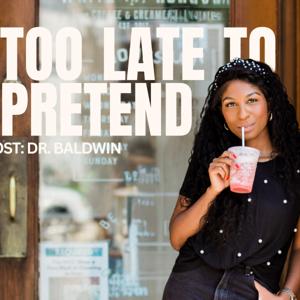


Dr. Baldwin unpacks one of the hardest emotional skills there is: duality — the ability to hold two seemingly opposite feelings at the same time without letting one cancel out the other. In this episode, she breaks down why you can love someone deeply and still recognize the relationship isn't safe, why leaving isn't the opposite of loving someone, and how to start trusting your feelings again when your brain has been talking you out of them.
What you'll learn in this episode:
- Why "love means staying" isn't always true and when it isn't
- How to tell the difference between guilt and love when they feel identical
- Why red flags are a signal to stop, not a signal to push through
- Practical ways to reconnect with your feelings as reliable information (not just noise)
- How choosing yourself is not the same as abandoning someone else
If you've ever felt stuck between loving someone and knowing the relationship is hurting you, this one's for you.
Disclaimer: The content shared on this page is for informational and educational purposes only and does not constitute psychotherapy, counseling, or any form of professional mental health treatment. Viewing, commenting on, or engaging with this content does not establish a therapist-client relationship. The information provided is general in nature and may not apply to your individual circumstances. Please consult a licensed mental health professional for personalized advice and support.
Please note that I am unable to respond to direct messages or comments regarding clinical concerns, personal mental health questions, or requests for therapeutic advice. Social media is not a secure or appropriate platform for clinical communication, and any such messages received will not be answered.
If you are experiencing a mental health emergency or crisis, please call or text 988 (Suicide & Crisis Lifeline), call 911, or go to your nearest emergency room.
Some relationships are worth fixing — but only if you know how to actually repair them. In this episode of Too Late to Pretend, Dr. Cecelia Baldwin, a licensed therapist, breaks down what real repair looks like after a relationship has been damaged, and why most apologies fail before they even start.
She walks through a 7-step framework for repairing a relationship the right way:
- Why "I'm sorry things went bad" is avoidance, not acknowledgment
- How adding "but" to an apology cancels it out
- Why listening to understand (not to defend yourself) rebuilds trust faster than words
- The one question most people skip: asking what the other person actually needs
- Why apologizing without changed behavior is a form of manipulation
- Why you don't get to set the timeline for someone else's healing
- Why you need to repair yourself, too — not just the relationship
Not every relationship can or should be repaired. But for the ones worth fighting for, this episode gives you the real steps forward.
Disclaimer: The content shared on this page is for informational and educational purposes only and does not constitute psychotherapy, counseling, or any form of professional mental health treatment. Viewing, commenting on, or engaging with this content does not establish a therapist-client relationship. The information provided is general in nature and may not apply to your individual circumstances. Please consult a licensed mental health professional for personalized advice and support.
Please note that I am unable to respond to direct messages or comments regarding clinical concerns, personal mental health questions, or requests for therapeutic advice. Social media is not a secure or appropriate platform for clinical communication, and any such messages received will not be answered.
If you are experiencing a mental health emergency or crisis, please call or text 988 (Suicide & Crisis Lifeline), call 911, or go to your nearest emergency room.
Your boundaries aren't a preference, they're the structure that holds your entire life together. And if no one respected your "no" when you were a kid, chances are you're still struggling to hold that structure up as an adult.In this episode, Dr. Cecelia Baldwin breaks down why boundaries function like the walls of a building: not built to keep people out, but to keep you standing. Most of us were never taught what healthy boundaries even look like. Instead, we were raised in homes, schools, and communities that rewarded selflessness and punished self-protection. When a child's "no" gets overridden again and again, that child grows into an adult who feels guilty, or selfish just trying to set one.This episode covers:- Why boundaries are a developmental process that starts in childhood- How "compliance" and "respect" get confused when kids aren't allowed to say no- Why the guilt you feel setting boundaries comes from old messages, not present reality- A simple starting practice: saying "no, thank you" to something small this weekIf this episode resonated with you, comment below what you thought. Disclaimer: The content shared on this page is for informational and educational purposes only and does not constitute psychotherapy, counseling, or any form of professional mental health treatment. Viewing, commenting on, or engaging with this content does not establish a therapist-client relationship. The information provided is general in nature and may not apply to your individual circumstances. Please consult a licensed mental health professional for personalized advice and support.Please note that I am unable to respond to direct messages or comments regarding clinical concerns, personal mental health questions, or requests for therapeutic advice. Social media is not a secure or appropriate platform for clinical communication, and any such messages received will not be answered.If you are experiencing a mental health emergency or crisis, please call or text 988 (Suicide & Crisis Lifeline), call 911, or go to your nearest emergency room.
The people around you are either building you up or quietly costing you something, there's no in-between.
Dr. Cecelia Baldwin, a licensed therapist, breaks down why your next six months will look exactly like your last six unless two things change: who you're spending your free time with, and what you're spending it doing. She walks through why comfort isn't the same as growth, why familiar relationships can feel safe while still keeping you stuck, and why your nervous system responds to your environment, not your goals.
→ Why your environment shapes your thinking more than your willpower does
→ The "seed and concrete" metaphor for growth that never happens
→ Why familiar (even draining) relationships can feel comfortable
→ Two practical exercises to take inventory of your relationships and time
→ How to tell if you're growing — or just going in circles
This one is for you if:
→ You feel stuck despite having real goals and real motivation
→ You suspect certain relationships are keeping you anchored to an old version of yourself
→ You're ready to take an honest inventory of your time and your people, not just your habits
Disclaimer: The content shared on this page is for informational and educational purposes only and does not constitute psychotherapy, counseling, or any form of professional mental health treatment. Viewing, commenting on, or engaging with this content does not establish a therapist-client relationship. The information provided is general in nature and may not apply to your individual circumstances. Please consult a licensed mental health professional for personalized advice and support.
Please note that I am unable to respond to direct messages or comments regarding clinical concerns, personal mental health questions, or requests for therapeutic advice. Social media is not a secure or appropriate platform for clinical communication, and any such messages received will not be answered.
If you are experiencing a mental health emergency or crisis, please call or text 988 (Suicide & Crisis Lifeline), call 911, or go to your nearest emergency room.
Are you staying in this relationship too long? Is it time to reevaluate this friendship? Can it be repaired?
In this episode, Dr. Cecelia Baldwin, a licensed therapist, walks through her perspective on why so many of us stay in relationships — romantic, friendship, and professional — long after they stop serving us, and how to honestly evaluate the ones you're in right now.
→ Why comfort, history, and fear of uncertainty keep people stuck in painful dynamics
→ The physical signals your body gives you before your mind catches up
→ How chronic relational stress shows up as real, measurable health decline
→ Why most people can't name what they actually need from a relationship
→ A step-by-step action plan for evaluating who belongs in your next chapter
This is for you if:
✔ You've felt a weight in your chest before a phone call or conversation
✔ You're more yourself away from someone than you are with them
✔ You've been avoiding a conversation you know you need to have
✔ You're trying to figure out which relationships deserve your energy going forward
Disclaimer: The content shared on this page is for informational and educational purposes only and does not constitute psychotherapy, counseling, or any form of professional mental health treatment. Viewing, commenting on, or engaging with this content does not establish a therapist-client relationship. The information provided is general in nature and may not apply to your individual circumstances. Please consult a licensed mental health professional for personalized advice and support.
Please note that I am unable to respond to direct messages or comments regarding clinical concerns, personal mental health questions, or requests for therapeutic advice. Social media is not a secure or appropriate platform for clinical communication, and any such messages received will not be answered.
If you are experiencing a mental health emergency or crisis, please call or text 988 (Suicide & Crisis Lifeline), call 911, or go to your nearest emergency room.
If you don't practice expressing your feelings, you might watch your soulmate marry someone else.Dr. Cecelia Baldwin, a licensed therapist, breaks down why so many people shut down instead of speaking up, and what that silence is actually costing them. Your feelings are not the problem, you were never taught that it was safe to have them.You'll learn:→ Why anger is often a sign every other emotion has been suppressed→ Why holding it in doesn't protect you, it isolates you→ The 3-step framework to start building emotional expression: name it privately, say it safe, expand slowly→ Why vulnerability isn't for everyone, but it is for the people who've earned your trustThis is for you if you've ever stayed quiet when you should have said what you really felt, or you've been told you need to "work on your anger" when really, anger is the only feeling you've ever been allowed to show.Leave a comment. Send this to a friend who needs it.Disclaimer: The content shared on this page is for informational and educational purposes only and does not constitute psychotherapy, counseling, or any form of professional mental health treatment. Viewing, commenting on, or engaging with this content does not establish a therapist-client relationship. The information provided is general in nature and may not apply to your individual circumstances. Please consult a licensed mental health professional for personalized advice and support.Please note that I am unable to respond to direct messages or comments regarding clinical concerns, personal mental health questions, or requests for therapeutic advice. Social media is not a secure or appropriate platform for clinical communication, and any such messages received will not be answered.If you are experiencing a mental health emergency or crisis, please call or text 988 (Suicide & Crisis Lifeline), call 911, or go to your nearest emergency room.
Change doesn't happen just because you think about it. Change happens when you can actually picture it.In this episode, Dr. Cecelia Baldwin breaks down the role imagination plays in whether people heal, grow, or stay stuck and why so many people never even realize their imagination is the missing piece. She explains how trauma and chronic stress disrupt the brain's ability to picture anything different, why the brain doesn't fully separate what's imagined from what's real, and how visualization can become a rehearsal for the life someone actually wants to live.→ Why talking about change isn't enough to create it→ How imagination works as a cognitive function, not just creativity→ Why trauma collapses the ability to picture a different future→ How visualization activates the same neural pathways as real action→ A simple two-minute practice to start rebuilding that capacityIf you want to start changing your life for the better, this episode is for you. Disclaimer: The content shared on this page is for informational and educational purposes only and does not constitute psychotherapy, counseling, or any form of professional mental health treatment. Viewing, commenting on, or engaging with this content does not establish a therapist-client relationship. The information provided is general in nature and may not apply to your individual circumstances. Please consult a licensed mental health professional for personalized advice and support.Please note that I am unable to respond to direct messages or comments regarding clinical concerns, personal mental health questions, or requests for therapeutic advice. Social media is not a secure or appropriate platform for clinical communication, and any such messages received will not be answered.If you are experiencing a mental health emergency or crisis, please call or text 988 (Suicide & Crisis Lifeline), call 911, or go to your nearest emergency room.
Nobody wants to admit they're the jealous friend. But if so many people are experiencing jealousy from others — somebody has to be on the other side of that equation.In this episode, Dr. Cecelia Baldwin, licensed therapist, tackles the part of friendship jealousy that almost no one is willing to examine: the jealousy we carry ourselves. → Why jealousy is information, not a character flaw — and what it's actually pointing to→ The difference between jealousy and grief, and why so much of what we feel is really the latter→ How unmanaged jealousy silently changes your behavior and damages friendships over time→ The self-reflection exercise that traces a feeling all the way back to its real source→ What emotional maturity actually looks like when jealousy shows up in a friendship→ Why the healthiest people aren't the ones who never feel jealous — they're the ones who know what to do when they doThis episode is not here to make you feel bad, instead it's a mirror so you can heal and show up as a better friend by telling the whole truth. Disclaimer: The content shared on this page is for informational and educational purposes only and does not constitute psychotherapy, counseling, or any form of professional mental health treatment. Viewing, commenting on, or engaging with this content does not establish a therapist-client relationship. The information provided is general in nature and may not apply to your individual circumstances. Please consult a licensed mental health professional for personalized advice and support.Please note that I am unable to respond to direct messages or comments regarding clinical concerns, personal mental health questions, or requests for therapeutic advice. Social media is not a secure or appropriate platform for clinical communication, and any such messages received will not be answered.If you are experiencing a mental health emergency or crisis, please call or text 988 (Suicide & Crisis Lifeline), call 911, or go to your nearest emergency room.
People pleasing is one of the most destructive relational patterns Dr. Baldwin sees in therapy. Most people have no idea it started in childhood, as a survival strategy, long before they could understand what was happening. In this episode, she breaks down where this pattern actually comes from, why it mimics anxiety and depression, and why it doesn't even guarantee the connection you're working so hard to protect.→ How people pleasing develops in childhood, before you have the words for it→ Why it's less about kindness and more about control through approval→ The anxiety overlap: overthinking, second-guessing, social hypervigilance→ Why people pleasing can eventually start to look like depression→ A real first step: noticing the gap between what's being asked and what you feel→ How to start small, with the people who already feel safeThis is for you if you've ever agreed to something and immediately regretted it, if you're exhausted from managing everyone else's reactions, or if you've started to lose track of what you even want anymore.Disclaimer: The content shared on this page is for informational and educational purposes only and does not constitute psychotherapy, counseling, or any form of professional mental health treatment. Viewing, commenting on, or engaging with this content does not establish a therapist-client relationship. The information provided is general in nature and may not apply to your individual circumstances. Please consult a licensed mental health professional for personalized advice and support.Please note that I am unable to respond to direct messages or comments regarding clinical concerns, personal mental health questions, or requests for therapeutic advice. Social media is not a secure or appropriate platform for clinical communication, and any such messages received will not be answered.If you are experiencing a mental health emergency or crisis, please call or text 988 (Suicide & Crisis Lifeline), call 911, or go to your nearest emergency room.
If you've ever felt like you're carrying the weight of a relationship alone, over-explaining, over-apologizing, constantly questioning yourself, this episode is about the reason why that keeps happening.Dr. Baldwin breaks down the one skill that changes everything in your relationships: self-awareness. Not self-knowledge. Not knowing your history or your diagnosis or your attachment style. Real-time, honest, in-the-moment awareness of yourself: what you're feeling, what you're repeating, and what role you're actually playing in your own experience.You'll learn: → Why knowing your story isn't the same as being self-aware→ What it looks like to be in a relationship with someone who lacks self-awareness — and what it costs you→ Why "better communication" is not the answer to a self-awareness problem→ How self-awareness is multidimensional — it doesn't just change how you see yourself, it changes who you choose→ The 3 practical tools to start building it: the daily honesty check, pattern noticing, and the relationship audit→ The two questions you need to answer honestly before you go any furtherIt starts with you and that's where the real power is.This episode is for you if you keep ending up in the same dynamics, feel unseen in your relationships, or know something needs to change but can't quite name what it is.Disclaimer: The content shared on this page is for informational and educational purposes only and does not constitute psychotherapy, counseling, or any form of professional mental health treatment. Viewing, commenting on, or engaging with this content does not establish a therapist-client relationship. The information provided is general in nature and may not apply to your individual circumstances. Please consult a licensed mental health professional for personalized advice and support.Please note that I am unable to respond to direct messages or comments regarding clinical concerns, personal mental health questions, or requests for therapeutic advice. Social media is not a secure or appropriate platform for clinical communication, and any such messages received will not be answered.If you are experiencing a mental health emergency or crisis, please call or text 988 (Suicide & Crisis Lifeline), call 911, or go to your nearest emergency room.
From the publisher's feed