
Sign up to save your podcasts
Or

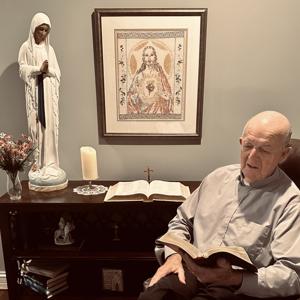


Today, June 27, as our Church celebrates the Memorial of Cyril of Alexandria, Bishop and Doctor, we are invited to reflect on a passage from the book of Sirach (39: 4-10), entitled "The wisdom of a man who is learned in the Scriptures". Our treasure, which follows, is from a letter by Saint Cyril of Alexandria, bishop.
Cyril of Alexandria (c. 376–444) was the Patriarch of Alexandria in Egypt and one of the greatest theologians of the early Church. He lived during a time of intense debate about the identity of Jesus Christ and devoted his ministry to defending the truth that Jesus is one divine Person who is fully God and fully man. Because of the depth and lasting influence of his teaching, he was declared a Doctor of the Church.
Cyril is best known for defending both the unity of Christ's person and Mary's title as Mother of God. He also wrote influential commentaries on Scripture, especially the Gospels, emphasizing that the Word of God became flesh to save humanity and unite us with God. His writings highlight the importance of the Incarnation and the Eucharist, teaching that through Christ we are brought into communion with God's own life.
Our "treasure" today is from "Defender of the Divine Motherhood of the Virgin Mary," a letter by Cyril of Alexandria in which Cyril teaches that Jesus Christ is one divine Person, fully God and fully man, and therefore the Blessed Virgin Mary is rightly called the Mother of God (Theotokos). Cyril explains that Mary did not give birth merely to the human nature of Jesus but to the one Person of the eternal Son of God, who truly became man through the Incarnation. Calling Mary the Mother of God safeguards the truth about who Christ is.
The main takeaway is that the title "Mother of God" is fundamentally a teaching about Christ, not simply about Mary. By defending Mary's divine motherhood, Cyril was defending the central mystery of the Christian faith: that in Jesus, God truly became man without ceasing to be God. This truth assures us that the One who died and rose for our salvation is the very Son of God, making our redemption complete. Mary's title as Mother of God therefore proclaims both the reality of the Incarnation and God's immeasurable love in becoming one of us to save us.
The principal message from Sirach in our first reading is that true wisdom comes from prayerfully studying God's word, seeking His will, and putting His teachings into practice. The wise person does more than acquire knowledge; he meditates on the Scriptures, prays for understanding, and allows God's wisdom to shape his life. As a result, he speaks with insight, lives virtuously, and becomes a source of guidance and blessing for others.
The main takeaway is that Scripture is meant to transform us, not merely inform us. Those who humbly seek God's wisdom through prayer and reflection grow in holiness and bear lasting fruit in their lives and ministry. Their wisdom is recognized not simply by what they know, but by how faithfully they live and how they lead others closer to God.
On Friday of the Twelfth week in Ordinary Time our Church invites us to reflect on a scripture passage from the first book of Samuel (25:14-24, 28-39), entitled "David and Abigail". Our treasure, which follows, is from a homily by Saint Gregory of Nyssa, bishop.
Saint Gregory of Nyssa was a fourth century archbishop of Constantinople and a theologian. He is numbered among the Doctors of the Church. He was a contemporary and close friend of Saint Basil the Great. He is widely considered the most accomplished rhetorical stylist of the patristic age. He was a classically trained orator and philosopher.
The primary contribution of Saint Gregory of Nyssa to the teachings of the Catholic Church is his profound development of the spiritual and mystical understanding of the Christian life, especially the idea that the soul is called to an endless growth in God. He taught that union with God is not a static state but a continual journey deeper into divine life—a concept often described as eternal progress, grounded in the infinite nature of God.
In essence, Gregory of Nyssa's lasting legacy is his vision of the Christian life as an ever-deepening participation in God's infinite mystery, combining doctrinal clarity with a deeply contemplative spirituality.
In his homily "The Hope of Seeing God", today's "treasure", Saint Gregory teaches that the deepest longing of every human heart is to see and be united with God. This vision of God is not attained by physical sight but by growing in holiness and purity of heart. As we allow God's grace to transform us, we become more capable of recognizing His presence and sharing in His divine life.
The main takeaway is that we come to "see" God by becoming more like Him. Saint Gregory explains that those who cultivate love, purity, mercy, and holiness reflect God's image and therefore experience His presence more deeply. The Christian life is a lifelong journey of transformation, moving ever closer to God with the hope that one day, in eternal life, we will behold Him face to face. This hope inspires us to persevere in faith, pursue holiness, and trust that our ultimate fulfillment is found in perfect union with God.
The principal message of our first reading is that wisdom, humility, and peacemaking can prevent sin and allow God's justice to prevail. When Nabal insulted David, David was ready to take revenge. However, Nabal's wise and courageous wife, Abigail, intervened with humility, generosity, and sound counsel. She persuaded David to leave judgment to God rather than take vengeance into his own hands.
The main takeaway is that God calls us to overcome anger with wisdom and to trust Him to bring about justice in His own time. Abigail's faith and prudence saved many lives and kept David from committing a serious sin that could have stained his future as king. The passage reminds us that humility and thoughtful counsel can defuse conflict, and that true strength is shown not by seeking revenge but by exercising self-control and entrusting justice to God.
On Thursday of the Twelfth week in Ordinary Time our Church invites us to reflect on a scripture passage from the first book of Samuel (21:2-10; 22:1-5), entitled "The flight of David". Our treasure, which follows, is from a homily by Saint Gregory of Nyssa, bishop.
Saint Gregory of Nyssa was a fourth century archbishop of Constantinople and a theologian. He is numbered among the Doctors of the Church. He was a contemporary and close friend of Saint Basil the Great. He is widely considered the most accomplished rhetorical stylist of the patristic age. He was a classically trained orator and philosopher.
Saint Gregory of Nyssa's treatise, On Perfection, explores the concept of Christian perfection as a continuous journey of striving towards God, rather than a static state achievable in this life. Saint Gregory doesn't view perfection as a final destination in this life, but rather as a continuous, ever-growing process of becoming more like Christ. The core of Christian perfection, according to Gregory, lies in imitating Christ's virtues and aligning oneself with his example. He highlights the significance of embodying the various names and titles attributed to Christ, such as "sanctification," "the temple of God," and "the power and wisdom of God".
Our "treasure" today, which is from Saint Gregory of Nyssa's homily "God Is Like an Inaccessible Rock", teaches that God is infinitely greater than human understanding and can never be fully comprehended by the human mind. Like a towering rock that cannot be completely scaled or measured, God always remains beyond our grasp. Yet, while His divine nature is inaccessible in its fullness, He continually invites us to draw closer to Him through faith, prayer, and holiness.
The main takeaway is that the spiritual life is a never-ending journey toward God. The more we come to know Him, the more we realize the depth of His mystery and greatness. Rather than becoming discouraged by God's transcendence, Gregory encourages us to continue seeking Him with humility and love, knowing that true perfection is found not in fully possessing God, but in continually growing closer to Him. The Christian life is therefore a lifelong ascent into the infinite goodness and beauty of God, who always has more of Himself to reveal to those who seek Him.
Our first reading from the first book of Samuel concerning David's flight from Saul. The principal message is that God remains faithful to those who trust in Him, even during times of fear, uncertainty, and persecution. As David flees from the jealousy and hostility of Saul, he experiences hardship, danger, and exile. Yet God continues to protect and guide him, and others who are distressed and in need gather around him.
The main takeaway is that God's chosen servants are not exempt from suffering, but God accompanies them through their trials and uses those hardships to prepare them for their future mission. David's flight teaches us to trust God's providence when life becomes difficult, to seek refuge in Him rather than in our own strength, and to remain faithful even when circumstances seem unfair or discouraging. Often, God is quietly accomplishing His purposes precisely in the midst of our struggles.
Today, June 24, as our church celebrates the Solemnity of the Birth of John the Baptist our church invites us to reflect on a passage from the book of the prophet Jeremiah (1: 4–10, 17–19) entitled "The call of the prophet". Our treasure is from a sermon by Saint Augustine, bishop.
The birth of John the Baptist was a miraculous sign of God's faithfulness and the beginning of a new chapter in salvation history. His parents, Zechariah and Elizabeth, were elderly and had been unable to have children. God sent an angel to announce that they would have a son who would be filled with the Holy Spirit and would prepare the people for the coming of the Messiah. At John's birth, Zechariah's speech was restored, and he praised God for fulfilling His promises.
John's significance lies in his unique role as the forerunner of Jesus Christ. He was the last and greatest of the prophets of the Old Covenant, sent to prepare the way for the Savior by calling people to repentance and conversion. His mission was to point others to Jesus, declaring, "He must increase, I must decrease." The birth of John marks the dawn of God's final plan of salvation, bridging the Old and New Testaments and announcing that the long-awaited Messiah was about to appear.
Saint Augustine was born at Tagaste in Africa in 354. He was unsettled and restlessly searched for the truth until he was converted to the faith in Milan and baptized by Ambrose. Returning to his homeland, he embraced an ascetic life and subsequently was elected bishop of Hippo. For thirty-four years he guided his flock, instructing it with sermons and many writings.
Saint Augustine is perhaps the most significant Christian thinker after St. Paul. He adapted Classical teaching and created a powerful theological system of lasting influence. He also shaped the practice of biblical exegesis and helped lay the foundation for much of medieval and modern Christian thought.
Saint Augustine is a preeminent Catholic Doctor of the Church. His most important teachings shape not only Western theology but the entire intellectual tradition of the Church. His thought deeply influenced later figures such as Saint Thomas Aquinas and remains foundational in Catholic doctrine.
In his sermon "The Voice of the One Crying in the Wilderness", today's "treasure", Saint Augustine explains the relationship between John the Baptist and Jesus Christ. Augustine describes John as the voice and Christ as the Word. A voice exists to communicate a word; once the word is heard and understood, the voice has fulfilled its purpose. In the same way, John's mission was to prepare people for Christ and then step aside so that Christ could be known and followed.
The main takeaway is that all Christian ministry should point people to Christ rather than to ourselves. Like John the Baptist, we are called to be humble instruments who help others encounter Jesus. Augustine reminds us that true greatness lies not in seeking recognition, but in faithfully proclaiming Christ and allowing Him to increase in the hearts and lives of those we serve. As John himself said, "He must increase, but I must decrease." This humility and Christ-centeredness are the hallmark of authentic discipleship.
In our first reading, the principal message of Jeremiah (1:4–10, 17–19) is that God knows, chooses, and equips those whom He calls to serve Him. Before Jeremiah was even born, God had a plan for his life and appointed him to be a prophet to the nations. Although Jeremiah felt inadequate because of his youth and inexperience, God assured him that He would give him the words to speak and the strength to carry out his mission.
The central takeaway is that God's call is based not on our abilities but on His grace and purpose. When God entrusts us with a mission, He also provides the guidance, courage, and support we need to fulfill it. Like Jeremiah, we may feel unworthy or afraid, but God promises to be with us through every challenge. The passage encourages us to trust God's plan, respond generously to His call, and remain faithful even when facing opposition or difficulty.
On Tuesday of the Twelfth week in Ordinary Time our Church invites us to reflect on a scripture passage from the first book of Samuel (17:57---15:9, 20-30), entitled "Saul's jealousy of David". Our treasure, which follows, is from a treatise on Christian Perfection by Saint Gregory of Nyssa, bishop.
Saint Gregory of Nyssa was a fourth century archbishop of Constantinople and a theologian. He is numbered among the Doctors of the Church. He was a contemporary and close friend of Saint Basil the Great. He is widely considered the most accomplished rhetorical stylist of the patristic age. He was a classically trained orator and philosopher.
Saint Gregory of Nyssa's treatise, On Perfection, explores the concept of Christian perfection as a continuous journey of striving towards God, rather than a static state achievable in this life. Saint Gregory doesn't view perfection as a final destination in this life, but rather as a continuous, ever-growing process of becoming more like Christ. The core of Christian perfection, according to Gregory, lies in imitating Christ's virtues and aligning oneself with his example. He highlights the significance of embodying the various names and titles attributed to Christ, such as "sanctification," "the temple of God," and "the power and wisdom of God".
In our treasure today, from his treatise "Christ Should Be Manifest in Our Whole Life", Saint Gregory teaches that the Christian life is a continual journey of becoming more like Christ. Faith is not limited to prayer, worship, or isolated acts of devotion; rather, Christ should be reflected in every aspect of a believer's life—thoughts, words, actions, relationships, and character.
The main takeaway is that Christians are called to make Christ visible to the world through the way they live. Saint Gregory explains that bearing the name "Christian" means striving to imitate Christ's virtues, especially His love, humility, purity, mercy, and obedience to the Father. The more we allow God's grace to transform us, the more clearly Christ is manifested in us. In short, the goal of Christian perfection is to become so conformed to Christ that others can see His presence and love reflected in our daily lives.
The principal message of our first reading from the book of Samuel is that jealousy and insecurity can blind us to God's will and lead to destructive behavior. After David defeated Goliath and won the admiration of the people, Saul became envious when he heard the people praising David's successes. Instead of rejoicing in God's blessings upon David and the victories won for Israel, Saul viewed David as a threat and allowed jealousy to take root in his heart.
The main takeaway is that envy can distort our judgment, damage relationships, and prevent us from appreciating God's gifts both in ourselves and in others. In contrast, David remained faithful and humble despite Saul's hostility. The passage challenges us to trust God's plan, rejoice in the success of others, and guard our hearts against jealousy, knowing that God's blessings are not diminished when He blesses someone else.
Today, June 22, as our Church celebrates the Memorial of John Fisher, Bishop and Martyr, and Thomas More, Martyr, we are invited to first read and reflect on the letter of the apostle Paul to the Romans (8:18-39) entitled "Nothing is able to separate us from the love of God which comes to us through Jesus Christ. Our treasure is from the letter written in prison to his daughter, Margaret, by St. Thomas More.
St. John Fisher was born in 1469. After completing his theological studies at Cambridge in England, he was ordained to the priesthood. Appointed Bishop of Rochester, he led a most austere life and fulfilled his pastoral role by frequently visiting the faithful. He also composed works against the errors of the time.
Saint Thomas More was born in 1477 and was educated at Oxford. He married and had one son and three daughters. While Chancellor of the Kings Court, he wrote works on the governance of the realm and the defense of the Faith.
Both were beheaded in 1535 by order of King Henry VIII, whom they had resisted in the matter of his divorce: John Fisher on June 22 and Thomas Moore on July 6. While detained in prison, Bishop Fisher was named to the College of Cardinals of the Holy Roman Church by Pope Paul II.
Saint Thomas More wrote a famous letter from prison to his beloved daughter, Margaret Roper, while he was confined in the Tower of London in 1534–1535. More had refused to take the oath acknowledging Henry VIII as the supreme head of the Church in England because it contradicted his Catholic faith and his conscience. Imprisoned, separated from his family, and facing the likelihood of execution, he wrote to Margaret to encourage her and to explain why he could not compromise his beliefs. His letters reveal a deep trust in God's providence, serenity in suffering, and confidence that earthly trials are temporary when compared with eternal life.
The primary teaching of the letter is that a Christian must remain faithful to God and to a well-formed conscience, even at great personal cost. Saint Thomas teaches that no earthly power, fear, or suffering should lead a person to betray the truth. He encourages Margaret to place complete trust in God's loving plan, reminding her that whatever God permits ultimately works for the good of those who love Him. The letter is a powerful witness to courage, fidelity, and hope in the midst of persecution.
In our first reading, the principal message of Romans (8:18–39) is that the glory God has prepared for His children far outweighs any suffering they experience in this life, and nothing can separate them from His love in Christ Jesus. Saint Paul the Apostle teaches that present hardships are temporary and that all creation is longing for the fulfillment of God's plan of salvation. He assures believers that the Holy Spirit helps them in their weakness and intercedes for them according to God's will.
The passage reaches its climax with Paul's powerful declaration that God is always working for the good of those who love Him and that no power—whether suffering, persecution, danger, death, or any other force in creation—can separate us from the love of God revealed in Christ Jesus. The central takeaway is one of hope, confidence, and perseverance: Christians can face life's trials with courage because God is with them, His love is unfailing, and their ultimate destiny is eternal life with Him.
On Sunday of the Twelfth week in Ordinary Time our Church invites us to read and reflect on a scripture passage from the first book of Samuel (16:1-13) entitled "David is anointed king". Our treasure is from a treatise on the Trinity by Faustinus Luciferanus, priest.
Faustinus (or Faustus) Luciferanus was a fourth-century priest and theologian associated with the followers of Lucifer of Cagliari, a staunch defender of the Church's teaching on the divinity of Christ during the Arian controversy. He is best known for writing a treatise on the Trinity from which the Office of Readings takes the reflection "Christ, King and Priest Forever." In that work, he explains that Jesus is the eternal King and Priest, anointed not with earthly oil but with the Holy Spirit, and that all Christian dignity and ministry flow from Him. He is not the same person as Faustus of Riez, who lived about a century later and is known primarily for his writings on grace and free will.
In his treatise on the Trinity Faustinus teaches that Jesus Christ is truly God, united with the Father and the Holy Spirit in the one divine Trinity, and that faith in this truth is essential to the Christian faith and our salvation.
The principal spiritual insight of our "treasure" from Faustinus's passage "Christ, king, and priest forever" is that Jesus uniquely fulfills both the royal mission of David and the priesthood prefigured by Melchizedek. His anointing by the Holy Spirit makes Him the eternal King and Priest, and all Christian participation in priestly and royal dignity flows from Him.
The message of our first reading from 1 Samuel 16:1–13 is that God looks at the heart, not at outward appearances. When God sent Samuel to anoint a new king, Samuel was impressed by the appearance and stature of David's older brothers. But God told him, "Not as man sees does God see, because man sees the appearance, but the Lord looks into the heart." God chose David, the youngest son and a humble shepherd, because of his faith, character, and openness to God's will.
The main takeaway is that God's choices are based on inner qualities rather than human standards of success, power, or appearance. The passage encourages us to cultivate hearts that are faithful, humble, and obedient to God, trusting that He sees our true worth and can call ordinary people to accomplish extraordinary things in His service.
On Saturday of the Eleventh week in Ordinary Time our Church invites us to reflect on a Scripture passage from the book of Judges (16:4-6, 16-31), entitled "The treachery of Delilah and the death of Samson". Our treasure, which follows, is from a treatise on the Lord's Prayer by Saint Cyprian, bishop and martyr.
Saint Cyprian's Treatise on the Lord's Prayer written around A.D. 252, is one of the earliest and most influential explanations of the Our Father in Christian history. In it, Cyprian teaches that Jesus Himself gave us the perfect prayer, containing everything necessary for our relationship with God. He explains each petition of the Lord's Prayer, showing how it teaches us to honor God, seek His will, trust Him for our daily needs, ask forgiveness, forgive others, resist temptation, and persevere in faith.
The treatise is important because it reveals how the early Church understood prayer and Christian discipleship. Cyprian emphasizes that when we pray "Our Father," we pray not as isolated individuals but as members of God's family and the Church. He teaches that the Lord's Prayer forms both our hearts and our lives, leading us to humility, charity, unity, and trust in God. His work has influenced Christian spirituality for centuries and remains a valuable guide for understanding and praying the prayer that Jesus taught His disciples.
In his treatise on the Lord's Prayer, Saint Cyprian teaches that Christians should long for the coming of God's Kingdom and strive to conform their lives to His will. The Kingdom is ultimately fulfilled in eternal life with God, and so this prayer expresses the believer's hope for Christ's return and the completion of God's plan of salvation.
In our "treasure" today, from his treatise on the Lord's Prayer, "Prayer Should Be Expressed in Deeds as Well as Words," Saint Cyprian teaches that true prayer is more than reciting words—it must be reflected in the way we live. Our actions should be consistent with the petitions we make to God. If we ask for His mercy, we should show mercy to others; if we pray for His will to be done, we should strive to obey His commandments.
The main takeaway is that authentic prayer transforms our lives. Saint Cyprian reminds us that God looks not only at what we say but also at how we live. Prayer and conduct must go together, so that our deeds become a visible expression of our faith. A life of charity, humility, forgiveness, and obedience is the strongest evidence that our prayer is sincere and that God's grace is at work within us. In short, Christians should live the prayers they pray.
In the story from the book of Judges, Samson was a judge of Israel chosen by God before birth to help deliver the Israelites from Philistine oppression. As a Nazirite consecrated to God, he possessed extraordinary strength that came from God's Spirit and was symbolized by his uncut hair. Although Samson performed great feats against Israel's enemies, he often acted impulsively and allowed personal weaknesses to undermine his mission. He fell in love with Delilah, who betrayed him by discovering the secret of his strength. After his hair was cut, he was captured, blinded, and imprisoned by the Philistines. In his final act, Samson repented and prayed for God's help. God restored his strength, and Samson brought down a Philistine temple, defeating many of Israel's enemies. His story teaches that God's gifts require faithfulness, that sin has consequences, and that God's mercy remains available to those who turn back to Him.
The teaching in our first reading, from Judges (16:4–6, 16–31), is that turning away from God and becoming careless with His gifts can lead to downfall, but sincere repentance can restore us to His grace and purpose.
In this passage, Samson allows himself to be deceived by Delilah and reveals the secret of his consecration to God. As a result, he loses his strength, is captured by the Philistines, and suffers humiliation. Yet in his final moments, Samson turns back to God in prayer, and God grants him the strength to defeat Israel's enemies one last time.
The central lesson is that God's gifts should never be taken for granted and that spiritual compromise has consequences. At the same time, the story reveals God's mercy: even after failure and sin, those who humbly return to Him can find forgiveness and renewed purpose. Samson's life is both a warning against self-reliance and a testimony to the power of repentance and God's faithfulness.
On Friday of the Eleventh week in Ordinary Time our Church invites us to reflect on a Scripture passage from the book of Judges (13:1-25), entitled "The birth of Samson is foretold". Our treasure, which follows, is from a treatise on the Lord's Prayer by Saint Cyprian, bishop and martyr.
Saint Cyprian's Treatise on the Lord's Prayer written around A.D. 252, is one of the earliest and most influential explanations of the Our Father in Christian history. In it, Cyprian teaches that Jesus Himself gave us the perfect prayer, containing everything necessary for our relationship with God. He explains each petition of the Lord's Prayer, showing how it teaches us to honor God, seek His will, trust Him for our daily needs, ask forgiveness, forgive others, resist temptation, and persevere in faith.
The treatise is important because it reveals how the early Church understood prayer and Christian discipleship. Cyprian emphasizes that when we pray "Our Father," we pray not as isolated individuals but as members of God's family and the Church. He teaches that the Lord's Prayer forms both our hearts and our lives, leading us to humility, charity, unity, and trust in God. His work has influenced Christian spirituality for centuries and remains a valuable guide for understanding and praying the prayer that Jesus taught His disciples.
In his treatise on the Lord's Prayer, Saint Cyprian teaches that Christians should long for the coming of God's Kingdom and strive to conform their lives to His will. The Kingdom is ultimately fulfilled in eternal life with God, and so this prayer expresses the believer's hope for Christ's return and the completion of God's plan of salvation.
Our " treasure" today is from Saint Cyprian's treatise on the Lord's Prayer "We Are God's Children; Let Us Abide in His Peace" wherein he teaches that because we have become God's children through Christ, we are called to live in peace, unity, and charity with one another. It is not enough to call God our Father; our lives must reflect the family likeness by showing forgiveness, patience, and love toward our brothers and sisters.
The main takeaway is that peace with God should produce peace with others. Saint Cyprian emphasizes that Christians cannot truly pray or worship God while harboring hatred, division, or resentment. As children of the one Father, we are called to seek reconciliation, preserve unity in the Church, and live in harmony with one another. By abiding in God's peace, we give witness to our identity as His sons and daughters and prepare our hearts for eternal communion with Him.
Our "treasure" from Judges (13:1–25), "The Birth of Samson Foretold", teaches that God prepares and calls individuals for His purposes even before they are born. When the Israelites were suffering under Philistine oppression, God announced through His angel that a son would be born to the previously barren wife of Manoah. This child, Samson, was to be consecrated to God from birth and would begin the work of delivering Israel from its enemies.
The central lesson is that God's plans often unfold long before we can see them, and He remains faithful to His people even in times of weakness and suffering. The story highlights God's initiative, grace, and providence. It reminds us that every person has a purpose in God's plan and that we are called to respond faithfully to the vocation and responsibilities He entrusts to us.
In summary: God is at work even before we recognize it, preparing people and circumstances to accomplish His saving purposes. We are called to trust His providence and cooperate faithfully with His plan for our lives.
On Thursday of the Eleventh week in Ordinary Time our Church invites us to reflect on a Scripture passage from the book of Judges (8:22-23, 30-32; 9:1-15, 19-20), entitled "The people of God attempt to find a king". Our treasure, which follows, is from a treatise on the Lord's Prayer by Saint Cyprian, bishop and martyr.
Saint Cyprian's Treatise on the Lord's Prayer written around A.D. 252, is one of the earliest and most influential explanations of the Our Father in Christian history. In it, Cyprian teaches that Jesus Himself gave us the perfect prayer, containing everything necessary for our relationship with God. He explains each petition of the Lord's Prayer, showing how it teaches us to honor God, seek His will, trust Him for our daily needs, ask forgiveness, forgive others, resist temptation, and persevere in faith.
The treatise is important because it reveals how the early Church understood prayer and Christian discipleship. Cyprian emphasizes that when we pray "Our Father," we pray not as isolated individuals but as members of God's family and the Church. He teaches that the Lord's Prayer forms both our hearts and our lives, leading us to humility, charity, unity, and trust in God. His work has influenced Christian spirituality for centuries and remains a valuable guide for understanding and praying the prayer that Jesus taught His disciples.
In his treatise on the Lord's Prayer, Saint Cyprian teaches that Christians should long for the coming of God's Kingdom and strive to conform their lives to His will. The Kingdom is ultimately fulfilled in eternal life with God, and so this prayer expresses the believer's hope for Christ's return and the completion of God's plan of salvation.
Our " treasure" today is from Saint Cyprian's treatise on the Lord's Prayer, "After the Gift of Bread We Ask Pardon for Our Sins," wherein he teaches that after asking God for our daily bread—especially the Bread of Life, Christ in the Eucharist—we immediately ask for forgiveness because we are sinners who continually need God's mercy. Saint Cyprian emphasizes that no one is without sin, and therefore every Christian should approach God with humility, repentance, and trust in His forgiveness.
The main takeaway is that God's mercy is essential to the Christian life. As we receive God's gifts each day, we must also acknowledge our faults, seek His pardon, and extend forgiveness to others. Saint Cyprian reminds us that forgiveness is both a gift we receive from God and a responsibility we practice toward our neighbors. A heart that is humble, repentant, and merciful is a heart prepared to live in communion with God and others.
The main takeaway from our first reading from Judges (8:22–23, 30–32; 9:1–15, 19–20) is that God alone is the true King of His people, and trouble follows when people seek power, status, or security apart from His will.
After Gideon's victory, the Israelites wanted to make him their king, but Gideon rightly replied, "The Lord shall rule over you." However, his son Abimelech later sought power for himself, using violence and ambition to gain leadership. Through Jotham's parable of the trees, Scripture warns against selfish and unworthy leaders who seek authority for their own benefit rather than for the good of the people.
The central lesson is that leadership should be exercised in humble service under God's authority, not for personal ambition or gain. When people place their trust in human power instead of God, division and suffering often result. The passage calls us to seek leaders of integrity and to remember that all legitimate authority must ultimately be guided by and accountable to God.
From the publisher's feed