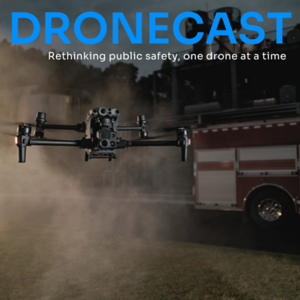
As Drone-as-First-Responder (DFR) programs expand, many agencies believe they are deploying autonomous systems when most operations still rely on remote pilots and manual readiness checks. In this episode, Curt Lary clarifies the difference between true autonomy and remote operations with automation and why that distinction matters in time-critical public safety environments.
Curt examines the infrastructure decisions that define real-world performance, including battery swapping versus charging docks, the necessity of automated pre-flight inspection, and the hidden complexity introduced by scaling multiple drone stations. He also explains why reliability, not innovation optics, is the primary metric that determines whether a DFR program succeeds during a 911 response.
This conversation equips public safety leaders, program managers, and policymakers with a grounded framework for evaluating autonomy claims and building drone programs designed for continuous availability, regulatory alignment, and long-term scalability.
What You'll Learn:
- The difference between true drone autonomy and remote operations labeled as autonomous
- Why battery swapping dramatically improves uptime and reduces system complexity
- How automated pre-flight inspections enable zero-human-intervention missions
- Why small readiness gaps create major risks in 911 response environments
- How infrastructure choices impact cost, reliability, and scalability
Helpful Links:
- Fill out the Audience Form here.
- Explore more episodes and insights on the official DroneCast website: https://www.dronesense.com/dronecast
- Ready to launch or enhance your drone program? Get Started with DroneSense today!
- Parrot, ANAFI UKR Tech Sheet: https://5n8jp.share.hsforms.com/2oWfNvmGLRCeKUWcJGtFbBg
Episode Highlights:
- [31:54 – 32:15] The New Standard for True Drone Autonomy
Curt explains why automated pre-flight inspection is a prerequisite for autonomy. He outlines how machine-learning-based aircraft health checks must meet or exceed the safety standards of on-site operators to satisfy both operational and regulatory requirements.
- [33:31 – 34:09] Why Battery Swapping Beats Charging Docks for DFR
Curt breaks down how battery swapping enables a single aircraft to maintain higher uptime than multiple charging-based stations. He explains why attempting to match that availability through redundancy increases cost, complexity, and failure risk.
- [43:20 – 43:55] Reliability Is Non-Negotiable in 911 Response
Curt details why public safety operations cannot tolerate partial readiness. He highlights how variables as small as battery charge thresholds directly affect flight time and mission success when seconds matter.
Dronecast: Rethinking Public Safety, One Drone at a Time Podcast is handcrafted by our friends over at: fame.so
Previous Guests include: Matt Rowland, Jason Burnside
Check out our 3 most downloaded episodes:
- Revolutionizing Emergency Response: Chris Lester on Drones in EMS
- Navigating Drone Program Challenges: Lessons from George Mason University
- Navigating the Future of Counter-Drone Operations: Insights from Jack Venables
Facebook | Instagram | Twitter | LinkedIn



 View all episodes