
Sign up to save your podcasts
Or

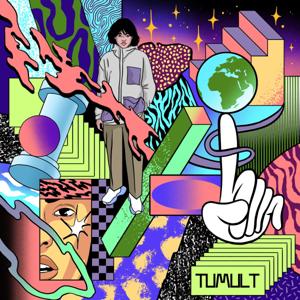


Wolltest Du Dich schon immer mit einem syrischen Autor auf einen Kaffee treffen? Dich über Flucht und Hoffnung, Demokratie und Ängste unterhalten, während der Brunnen neben Dir pläschtert und die Kirchenglocken im Hintergrund läuten? Deine Chance ist gekommen!
Nach seinem ersten Buch ''Der Tod backt einen Geburtstagskuchen'' veröffentlichte Hamed Abboud im Dezember 2019 sein zweites Buch ''In meinem Bart versteckte Geschichten'' (Edition Korrespondenzen).
In seinem Bart versteckt Hamed unzählige Geschichten. In diesen ersten Teil unseres Dialogs sprechen wir unter anderem über die Provinz als Erholung nach der Flucht, unausgesprochene Vorurteile und wie man sich in Panzerfahrer hineinversetzen kann.
Hamed Abboud ist gebürtiger Syrer und kam nach Aufenthalten in Dubai, Ägypten und der Türkei 2015 nach Österreich
https://www.hamedabboud.at/
ISBN: 3902951443
Cover by @happytoborders
After three devastating years under the occupation of ISIS, Mosul's cultural scene is starting to blossom again.
The smoke of the war had not yet vanished from the city, when Fahad Sabah and his partner Harith Yaseen Abdulqadar started their mission to revive the spirit of Mosul – by creating a safe space for men and women alike, open for political debates, celebrating the literary minds of local writers and readers.
I talked to Fahad about this incredible achievement, the risks, and struggles of cultural projects in a post-war society and his visions for the future of Mosul and its people.
Find the Book Forum on Facebook:
https://www.facebook.com/BookForumMosul/
Instagram: @tumultpodcast
Language is much more than learning grammar and stocking up your vocabulary. Language can function as a peacemaker, a lifesaver and a tool to foster understanding and acceptance among different cultures.
I talked to my former Arabic teacher NOUR ALZAMAN about her new business 'Arabic is Simple' and how she aims at improving cultural understanding and bettering the work of NGOs and aid workers that are in daily contact with Arabic-speaking refugees.
I was lucky enough to get insights into the broader Arabic culture and language with Nour, last year when I was living in the Netherlands. I hope some of you, who are looking for ways to better understand refugees and immigrants, will consider learning their language even if it is just a few words. The power of this, you will understand after this episode.
ARABIC IS SIMPLE WEBSITE: https://www.arabicissimple.com/ and follow Arabic is Simple on Instagram and Facebook to benefit from amazing learning videos and comprehensive explanations.
April is #autismawarenessmonth.
Nikki Hughes is an activist, advocate, and mother of three children. Two of her children are autistic and Nikki herself got diagnosed as an adult.
In this episode, she shares her experiences on the pathway to her adult diagnosis. We talk about her day to day experience as an autistic person and what she wishes people would know about autism – race, ethnicity, culture, ableism, and the importance of a community.
Thank you, Nikki, for this enlightening conversation.
You can follow her on Facebook and Instagram @autisticlifeinmotion.
Other lovely accounts I encountered on the journey to this episode are The Autistic OT on Facebook, @theautisticlife, and @theworldwithalfie on Instagram.
You can follow TUMULT on Instagram and Facebook @tumultpodcast and make sure to subscribe wherever you get your podcasts.
The artwork for this episode was created by @happytoborders.
Misconceptions about marginalized ethnic groups and cultural minorities are unfortunately not new. The structural inequalities they entail, however, have devastating consequences.
Especially in times of the Coronavirus Pandemic, ethnic groups around the world fear for their lives and often lack the protection they need.
For this week's episode, I contacted the ERGO Network, a non-profit network connecting Roma and pro-Roma grassroots organizations across Europe.
What are the origins of the Roma? Why are they systematically oppressed? What are the consequences of this oppression during the coronavirus pandemic?
Find the ERGO Network on Facebook, or on Instagram @ergo.network to support their activism.
Special thanks go to the incredible graphic designer, who created the artwork for this episode. I reached out to @happytoborders and they immediately offered to create unique cover art for this episode. Follow them for incredible activist art.
Factual Information for this episode and accompanying media material was based on the results of the Fundamental Rights Agency and data published by Amnesty International.
Liebe Zuhörer 🌍
In dieser Folge von TUMULT geht es um die aktuelle Situation von Geflüchteten in Gemeinschaftsunterkünften und Flüchtlingslagern in Zeiten der Coronavirus Pandemie. Da sich viele Hilfsorganisationen aus den Gebieten zurückziehen, wird die Situation in teilweise völlig überfüllten Flüchtlingslagern immer dramatischer.
Dr. Ramona Lenz, Fachreferentin für Migration und Flucht bei Medico International, gibt Einblicke in die aktuelle Lage in Unterkünften in Deutschland sowie in Lagern auf Lesbos und Moria in Griechenland und Idlib in Syrien. Diese Berichterstattung fand am 20. März. 2020 statt.
Am 23. März bestätigte der Syrische Gesundheitsminister den ersten Corona Fall im Land. Regelmäßige Updates wurden nicht veröffentlicht.
Wir können die Arbeit von Medico International mit einer Spende unterstützen.
Vielen Dank für's Zuhören.
Bleibt gesund.
#throughtumult
Sounds Effect am Anfang von Yellow Tree @WaylonDaly6 Attribution license: https://creativecommons.org/licenses/by/3.0/
#throughtumult
DISCLAIMER: This episode captures subjective experiences from people all around the world. They DO NOT represent official information. Please inform yourself about the current state of affairs in your respective country. https://www.who.int/emergencies/diseases/novel-coronavirus-2019
Dear Listeners,
I hope that when you are reading this, you, your friends and family are safe and healthy.
The global spread of the Coronavirus, with all its detrimental implications, is something that affects people all over the world in various different ways. And as daunting as that sounds, it can also mean that we are able to connect globally and understand each other’s circumstances and sorrows.
In this episode, that all of you created with me, you will hear from people in over 19 countries, about how they are coping with the current situation caused by the Coronavirus. In times like these, things can change every day. This is a capture of the weekend from the 20 to the 22 of March, where many things changed for people all over the world, and the effects of the quarantine are starting to show not only in the economy and public health but in the personal wellbeing of some.
Believe in the medical professionals that are urging us to stay indoors and have faith in the global connection we have established.
Thank you from the bottom of my heart to everyone who took time out of their day to contribute to this episode.
Stay safe and healthy and keep your spirits high. If you need help, please don't hesitate to reach out to me.
Mattia - Rome, Italy 01:55
Anja - Augsburg, Germany 05:00
Furvah - London, United Kingdom 10:06 (Britain is now under Lockdown)
Francesca - Madrid, Spain/ Italy 13:44
Olena - Lviv, Ukraine 15:43
Emily - Madrid, Spain 20:39
AJ - Bogota, Columbia 27:59
Chris - Dunedin, New Zealand 33:44 (New Zealand is now under lockdown)
Linh - Ho Chi Minh City, Vietnam 36:22
Paula - Peru, Lima 39:46
Annie - California, US 41:24
Aragorn - Copenhagen, Denmark 45:37
Kate - Moscow, Russia 51:44
Waleed - Riyadh, Saudi Arabia 55:41
Carla - Belgium 58:56
Lina - Dubrovnik, Croatia 01:06:27
Florine - Lille, France 01:11:12
Ittalee - Amsterdam, Netherlands/ Aruba 01:16:19
Rodrigo - Santiago de Chile, Chile 01:21:44
George - Tallinn, Estonia 01:24:55
Thank you so much for your participation.
Check out @tumultpodcast on Instagram and listen to TUMULT's episodes on every platform you get your podcast from.
Feel free to share this episode with a friend.
Intro Track by RAME https://rameofficial.com/ www.mQube.in (no changes made)
https://freesound.org/people/RokZRooM/
Attribution License: https://creativecommons.org/licenses/by/3.0/
Hi everyone and welcome back to another episode of Tumult. I’m so excited you are here with me!
This week's episode is about what I think you should know before going to Saudi Arabia as a tourist. Why? Saudi Arabia only recently opened its doors to tourists in September 2019 and a lot of people have questions about the Saudi experience. I traveled to Riyadh in January and would like to share my impressions with you and hopefully give some useful insights into Saudi Arabian culture. We are gonna talk about the visa application process, prohibited items, dress codes, gender segregation, prayer times, public transport and recommendations!
Featuring some incredible insights and analysis of a Saudi local! Intrigued? I’d absolutely love for you to check out this episode on your favorite platform. Including Spotify!
Thank you for listening!
OFFICIAL VISA APPLICATION WEBSITE: https://visa.visitsaudi.com/
Prohibited Items (official): https://www.customs.gov.sa/en/general/Prohibited-goods
Vision 2030: https://vision2030.gov.sa/en
Winter at Tantora Festival: https://experiencealula.com/en/Winter_at_Tantora/about/Pages/default.aspx
MDL Beast Festival: https://mdlbeast.com/the-festival/
Timestamps:
00:00 - 02:34 Introduction
02:35 Visa Application
05:10 Prohibited Items
07:00 Dress Codes
10:35 Mshari: Impact of Tourist Visa on Saudi Society
17:20 Gender Segregation
18:56 Prayer Times
21:47 How to get around
22:56 Recommendations/ Vision 2030/ Disclaimer
What to See:
Al Masmak Fortress and the surrounding 'Old Town': https://www.visitsaudi.com/en/see/highlights/Al-Masmak-Fortress
City of Dir'iyah (a small city outside of Riyadh): https://www.visitsaudi.com/en/see/highlights/historical-Dir-iyah
Thumama desert: 45min drive from the center of Riyadh. You can rent quad bikes and have a picnic in the dunes.
City View from one of the highest buildings in Riyadh: Al Faisaliah Tower: The Globe Experience
The 303 (Art Exhibitions and lots of coffee places - tourist hub) https://www.the303.sa/
What to Do:
Kashta at Wadi Hanifah
Walk at Wadi Namar (lake 40min from the center of Riyadh)
Ask for Arabic Coffee and Hookah! (and dates!)
What to Eat:
Lebanese place Karam Beirut: http://www.karambeirut.com/locations (vegetarian dishes)
Zaatar w Zeit: http://www.zaatarwzeit.net/KSA/home (vegetarian dishes)
A m a z i n g falafel place: Abu Jbara, Riyadh
Chick 'n' Bun: https://www.instagram.com/chicknbun.sa/?hl=en
Why is animal testing done? What are the common testing methods? Are there any alternatives? How do we navigate the ethics entailing animal testing?
In this episode of Tumult, Josie and I are talking about animal testing in universities, and all the moral questions it entails. As Josie is working in the field and studies Biology, we try to offer you various perspectives on the topic and introduce some common testing methods. The episode focuses on animal testing in the domain of neurobiology.
Thank you for listening!
I hope you enjoy.
Sources and Articles worth reading:
Ulcerative Colitis:
https://www.mayoclinic.org/diseases-conditions/ulcerative-colitis/symptoms-causes/syc-20353326
Banning of the forced swim test:
https://www.telegraph.co.uk/science/2020/01/10/kings-college-becomes-university-world-formally-end-cruel-mouse/amp/
The journey of a new medication:
http://phrma-docs.phrma.org/sites/default/files/pdf/rd_brochure_022307.pdf
From the publisher's feed