
Sign up to save your podcasts
Or

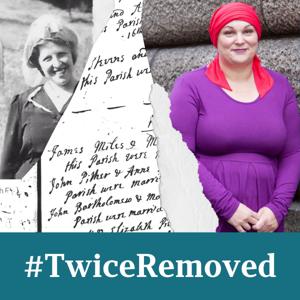


How did our female ancestors cope with periods, childbirth, menopause? How did they understand their own bodies? How did they feel about childbirth? What was their lived experiences like, compared to ours today?
On this episode of #TwiceRemoved, Dr Sara Read helps me to explore the lives of our Early Modern female ancestors.
Find out more about Sara and all resources mentioned in this episode at www.genealogystories.co.uk/sararead
Support #TwiceRemoved by purchasing me a cuppa coffee at https://ko-fi.com/genealogystories
Sylvia Valentine discusses smallpox, inoculation and those that opposed compulsory vaccination in this highly topical episode of #TwiceRemoved.
What was smallpox? How dangerous was it? How was inoculation developed and how risky was it?! How did the government try to enforce inoculation and how did our ancestors react?
For more information on resources mentioned in this episode please see www.genealogystories.co.uk/sylvia-valentine
If you'd like to support TwiceRemoved you can do so by treating me to a cup of coffee at
https://ko-fi.com/genealogystories
Discover the funeral traditions of your 18th Century ancestors. How did they evolve and how do they compare to today's practices? How did our ancestors find an undertaker - and how did undertakers come about?
Dr Dan O'Brien, visiting research fellow at the University of Bath, digs into the history of funerals and undertakers.
Find out more on www.genealogystories.co.uk/dan-obrien
Support the show by buying me a cup of KoFi at: https://ko-fi.com/genealogystories
What was life like for disabled or differently abled people during the Industrial Revolution? How would they have considered themselves and their disabilities? How did others consider disabled people?
In this episode (recorded live) Professor David Turner from the University of Swansea helps us to explore the lives of our disabled ancestors during the Industrial Revolution. Discover the wide range of views and attitudes about disability and how you might start to uncover more about the lives of your own disabled ancestors.
This episode was recorded live. To follow future episodes live and ask your questions subscribe and hit the notification bell at www.youtube.com/c/GenealogyStories
See www.genealogystories.co.uk/professor-david-turner for more information.
Support the show by treating me to a cup of coffee at https://ko-fi.com/genealogystories
Historian Laura Newman shares the work of Addressing Health, a project dedicated to examining and exploring the health of Victorian and Edwardian postal workers.
Essential viewing for any one with a Post Office ancestor AND anyone interested in the history of occupational health. From sick days to TB fears.
Find out more on www.genealogystories.co.uk/addressing-health for links to all the resources mentioned in the video.
Visit https://addressinghealth.org.uk/ to explore this amazing project!
Support the show by treating me to a cup of coffee: https://ko-fi.com/genealogystories
Anne Lister was a diarist who famously recorded her intimate relationships with women (amongst many many other things). Subject of the brilliant BBC Drama #GentlemanJack, in this interview I talk to the Packed With Potential Project about their work to decipher Anne's diaries and to discover the 'real Anne'.
Find out more at www.genealogystories.co.uk/packed-with-potential
Visit Packed With Potential at www.packedwithpotential.org
Resources Mentioned:
Historian Sarah Murden takes us back in time to explore our Georgian ancestors. What was life like for our working ancestors? Why was there such a big divide between poor and rich? How long did they live and why was everyone so obsessed with getting married? Sarah answers all this and more!
You can find out more about Sarah and her books at www.genealogystories.co.uk/Sarah-Murden
If you enjoyed this episode, why not treat me to a cup of coffee at https://ko-fi.com/genealogystories
Julia Laite (of Birkbeck University) investigates the lives of our female domestic servant ancestors in the late 19th / early 20th century. Together we discuss their hopes and dreams, the struggles they faced and the various ways in which they were all too often exploited.
What were the lives of working class women like? How did they change over time?
More information about Julia and this episode can be found at www.genealogystories.co.uk/julia-laite
Julia's brilliant book, The Disappearance of Lydia Harvey can be found in all good bookshops.
My guest Paul Couchman serves up a delicious slice of Regency history in this episode! We explore what our Georgian ancestors ate (from street food to French cuisine), how they cooked, wrote up and shared their recipes.
You can find out more about Paul (including links to sites mentioned within the episode) at: www.genealogystories.co.uk/Paul-Couchman
You can visit Paul at www.paulcouchman.co.uk
A history of Britain's resurrection men. Suzie Lennox delves into the dark world of the body snatchers. Who were these criminals? How much was a body worth? How did they go about stealing the corpses? How worried were people about their loved ones remains? What theft prevention methods did people employ? Suzie answers all these questions and more!
WARNING: This episode contains some dark humour, discussion of dead bodies and dissection. It is not for the squeamish.
You can find out more about this episode at: www.genealogystories.co.uk/suzie-lennox
You can find out more about body snatching at Suzie's website: www.diggingup1800.com
From the publisher's feed
1 Listeners