
Sign up to save your podcasts
Or

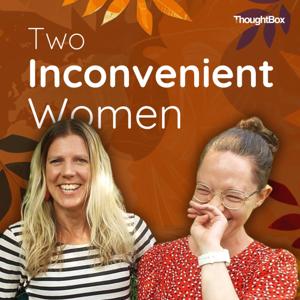


This August, we're taking a break here at ThoughtBox, so we're sharing a collection of previous episodes where we dive into the nuance of personal wellbeing and what it means to learn to care fully for ourselves. In this mini episode, Holly shares a poem on the theme of personal wellbeing, and introduces some of the highlights from our past three seasons, which make up this week's mini series:
If you'd like to join us for any of the Triple WellBeing opportunities mentioned in the podcast, you can find more information at:
Hosted on Acast. See acast.com/privacy for more information.
What happens when we allow ourselves to fall back in love with the world?
For many people it may feel obvious why we need to protect the earth and prevent run-away climate change and species extinction. Yet it may not be so clear as to how changing our relationship with the natural world is just as pressing – if not more so – than any environmental activism. When we take time to notice how incredible the natural world is, to understand and witness how the thriving of nature enables the thriving of ourselves, our appreciation of the importance of earth-care naturally grows. It’s hard to ‘stop and smell the roses’ in a culture that continues to celebrate ‘doing’ over ‘being’ and being in domination over nature, rather than being in relationship with nature. And yet when we start to see ourselves as part of nature, and allow ourselves to feel genuine connection with the more than human world, everything changes.
In this episode we talk about the inconvenience of earth-care and what it means to rewild ourselves, regenerate our thinking and reconnect with the whole of life.
We reference the following:
Hosted on Acast. See acast.com/privacy for more information.
Humans are a social species by design, with an inbuilt need to be with others, whilst qualities of care and kindness are innate in us all. Many of us are, however, living in a hyper-individualised world which encourages us to 'other' and separate from our communities, creating a culture of segregation and loneliness. In response, tides are turning across the world, as more and more people choose to look beyond the mainstream media stories and start instead to connect with our common humanity. We cannot be human alone - and it is our differences which make us so fascinating, and our diversity which allows our societies to flourish. And so what does it look like to live a life of care for others, and why is this in fact deeply good for us too?
In this week's episode, we explore the inconvenience of 'people-care', and the importance of nurturing caring and healthy communities in our lives - both near and far. We explore our connection to the behaviours of chimpanzees and bonobos; think about how to hold a deep legacy of colonialism within many cultures and reflect on some of the ways that acts of care for others can generate a deep sense of growth, healing and connection with ourselves.
In this conversation we reference the following:
Hosted on Acast. See acast.com/privacy for more information.
Self-care gets a bad wrap. It's often at the very bottom of our agenda, seen sometimes as self-indulgent - selfish even. And yet being aware of ourselves, being present in our emotions and actions, being kind and caring to our own needs is far from selfish. When we tend to our selves - the analogy of the 'oxygen mask first' we are able to better support others, as we are more resourced and resilient to do so. The growing appreciation for us to look after our personal wellbeing is growing - and is now becoming a conscious part of educational spaces - and yet too often it sits as an add-on or 'bonus' element of how we live and learn together. So how can we learn to embed habits and practices of self-care into our daily rhythms in a culture fixated on more, more, more?
In this week's episode, we dive into the depths of personal wellbeing and acts of self-care, exploring what it means to drink deeply from the 'well of our being' and how we can bring self-care to the top of the agenda.
In this episode we reference the following:
Hosted on Acast. See acast.com/privacy for more information.
For reasons known and written about by many, there's been a shift over time which has enabled 'learning' within educational contexts to be mainly focused on the head and often ignoring the heart or the hands. With a knowledge-saturated curriculum and a mainstream structure built around sitting down at desks and absorbing information, we're recognising the absence of a holistic focus for many of the learning contexts around the world. Which is ironic and unhealthy, for all of us as humans learn best when we are engaging all of our senses, all of our being as it were.
Head, Heart and Hands is a handily alliterative phrase coined to refer to a more holistic style of learning, and a way to enable a pedagogy of connection to our whole self. So why don't we bring more of this into our lives and learning spaces? In this week's episode, Holly and Rachel dive into the nourishing feeling of head, heart, hands learning, exploring where opportunities for this sort of connection to life are already happening and how we can embed a more holistic approach to learning across our communities.
We reference the following:
Hosted on Acast. See acast.com/privacy for more information.
In a world that glorifies busyness, rest can feel inconvenient—even rebellious. But what happens when we stop doing and simply allow ourselves to be? This episode explores rest as resistance against the belief that worth is tied to productivity. What happens when we slow down? Who benefits when we pause? And how might reclaiming rest help us build a healthier, more human way of living? This week's conversation is all about slowing down and redefining what it means to be a 'human being' rather than a 'human doing'.
In this episode, we reference the following:
Hosted on Acast. See acast.com/privacy for more information.
The Inconvenience of Joy
“I will never apologise for embracing joy and beauty - even when the world is falling apart – for joy and beauty are the fuel for my activism”.
These words by Karen Walrond are one of the inspirations for this week’s conversation on 'Joy', exploring how cultivating joy is both a way to resource ourselves and build the resilience needed to meet the challenges of our world. Joy is often seen as being the same thing as happiness, and yet these two emotions are profoundly different; one coming from external sources, one being cultivated from within. It is not a surprise that the practice of joy is embedded into all world religions as it can become a deeply spiritual practice – as well as a beautifully infectious state to find ourselves in.
In this week's conversation we dive into the meaning of joy, how it shows up in our lives; how activists across history have cultivated joy in their lives and work and what happens when we learn to practice joy as part of our daily rhythms.
In this episode we reference the following:
Hosted on Acast. See acast.com/privacy for more information.
The world is feeling a very broken place right now, with all that is erupting out of the Middle East, and with continued suffering across the world. When we do engage in conversations about what is happening, we often find ourselves sidetracked into the dance of moral outrage and the opportunity for a conversation is lost. And yet simple human connection sits at the heart of all that we're yearning for - each of us carrying the innate need to be seen, to be heard and to belong. So what happens when we offer to meet those needs in others, simply by noticing their shared humanity?
This week's conversation is raw, personal, honest and deeply human. With no apology. For we don't need to hide our humanity to be professional. In fact, that is perhaps the reason why so many of our institutions have become so inhumane and it also holds an invitation for how we can each start to re-humanise the landscapes we are part of.
In this episode we reference the following:
Hosted on Acast. See acast.com/privacy for more information.
We talk a lot about change but living through it is something else entirely. Change is the only constant, and yet change can feel deeply uncomfortable - fearful at times - and not necessarily something that many of us openly embrace. In a world constantly talking about the need for change, systems-change and changemakers, there is a deep energy of possibility in this invitation - and a deep necessity when we realise that the current context is making us unwell - and yet which is the direction of change to follow?
In this week's episode we reflect on the messy, non-linear and often uncomfortable nature of personal and systemic change. Whether that's the changing nature of relationships or the constantly shifting and changing climate; changes in culture and society to systems change and changes in our brains and bodies, we dive deep into the different ways we can embrace the uncertainty of change and find a more easeful relationship with a world in constant shift.
In this episode we reference the following:
Hosted on Acast. See acast.com/privacy for more information.
We've all probably experienced the feeling at some point in our lives where we're talking to someone and know that they are just pretending to listen. The feeling of disconnect that this creates within us may be subtle but it's felt. Listening is a gift - when we give our full attention, we are in presence and attentive to anything that may emerge. And yet, in many of our modern cultures, the art of listening is a dying act whilst silence is endangered species. Learning to listen to ourselves, to each other and to the wider world is a practice we can all inhabit and a hugely rich and deep way of forming seen and unseen connections with ourselves and the world.
In this week's podcast, we talk about the inconvenience of listening, what it means to truly listen; why listening is so hard and what happens on a cellular level when we gift another person our full attention.
In this conversation we reference the following:
Hosted on Acast. See acast.com/privacy for more information.
From the publisher's feed
In a world which can feel increasingly volatile and uncertain, join Holly and Rachel from ThoughtBox as we explore some of the inconvenient truths, possibilities and opportunities of our rapidly…
Each episode we’ll be diving deep into the big, tricky issues of our time, exploring what it means to be ‘inconvenient’ in our work to transform lives, communities and mindsets towards a healthier future for people and planet.
To find out more about the work we do at ThoughtBox Education, visit www.thoughtboxeducation.com.
Hosted on Acast. See acast.com/privacy for more information.