
Sign up to save your podcasts
Or

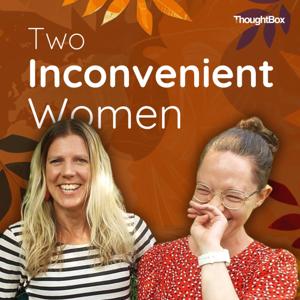


Wellbeing is a 'trendy term' nowadays; something that organisations know they must support in their colleagues; something top of the agenda in our schools and something we all know matters in our own lives, yet something rarely given space, time or validity in our modern culture of productivity.
In this week's podcast, we dive headfirst into the truly inconvenient inconvenience of wellbeing, looking at what it means for a 'being' to 'be well' in our modern world. We think about how wellbeing is both a culture and a way of life, exploring some of the blocks and opportunities to enabling wellbeing to flourish in our lives and learning communities. We dive into the complexities of how wellbeing is being co-opted and turned into a commodity, ironically sold back to us in neat packages of wellness whilst being slowly eroded from our daily lives. For when wellbeing is seen as an addon, all it can ever do is soothe the symptoms, rather than treat the causes of our 'unwell' state of being. But what needs to shift to start to allow our 'beings' to be more well in our modern world?
In this episode, we reference the following:
Hosted on Acast. See acast.com/privacy for more information.
What is the difference between nature contact and nature connection? What does it mean to have a relationship with nature? And why - for some - is the notion that 'we are nature' so difficult to welcome?
In the second part of this exploration on the inconvenience of nature connection, we dive deep into the nuances between moments when we're 'using' nature for our own needs compared to when we're simply relating to the natural world. We share stories of our own humble encounters with the wilder world and think about ways in which we can elicit spaces of awe and wonder in our own lives and communities to welcome a more conscious, awe-some and active relationship with the nature within us as well as the nature all around us.
In this episode we reference the following:
Hosted on Acast. See acast.com/privacy for more information.
In many modern cultures, we find ourselves spending ever more time indoors, sitting down and separated from nature - both the nature within us and the nature all around us. At the same time, we're drawn to want to spend time outdoors and in natural environments, and we have a deep sense of ease when connected to nature. So why is it so hard?
In this week's episode, we explore the inconvenience of nature connection in a modern world and the many ways that our ways of living keep us in separation - sometimes isolation - from the natural world. We explore the impact of a sedentary, indoor lifestyle on our physical, emotional and spiritual health; explore how connecting to nature is infinitely good for our holistic wellbeing - as well as supporting the health of the natural world in return - and reflect on the many different ways to welcome more nature connection into our lives and learning spaces.
In this episode we reference the following:
Hosted on Acast. See acast.com/privacy for more information.
It's one thing to be brazenly hypocritical but it's another thing entirely when you're having to unwillingly be a hypocrite. And yet so often in our current context we find ourselves faced with impossible choices that mean we have to take actions that completely misalign with our positive intentions. Why? Because our cultural stories as they stand limit so many of the choices we make whilst life is never that simple, it is full of nuance.
This week we explore the inconvenience of hypocrisy in a modern world and the deeply uncomfortable - sometimes existential - crises that can be faced when having to act in ways which are at odds with our values. We dive into the complexity of being an activist and working to change systems whilst also having to live within them as they stand; the importance of awareness and compassion and the myriad ways we can keep shifting, pivoting and transforming our lives to move towards healthier, more easeful ways of living together.
In this episode we reference the following:
Hosted on Acast. See acast.com/privacy for more information.
In the final of this 'triplet' of podcasts, Holly and Rachel are this week talking about the inconvenience of systems thinking.
From the very get-go at ThoughtBox, we've had systems thinking as one of the three pillars of our work to encourage a deeply relational experience of the world (Thinking, Feeling, Connecting) by connecting with others, connecting with the wider world, and feeling deeply connected with ourselves.
Thinking in systems has started being given a lot of attention - you can take multiple courses in systems-thinking, whilst systems-change is all the range. But what is a system? What does it mean to transform systems? And what is systems thinking anyway?
This week we unpick the inconvenience of systems thinking by going right back to the roots and appreciating how this is not a 'thing to learn about' but simply how life works. We are all of us part of infinite, interconnected systems and 'thinking in systems' simply means knowing and noticing the connections that we are a part of and influenced by. This is as simple and as profound as it gets.
In this episode we reference the following:
Hosted on Acast. See acast.com/privacy for more information.
In the second of this 'triplet' of podcasts, Holly and Rachel are this week talking about the inconvenience of empathy.
Empathy is a muscle, something that we can strengthen the more we practice. Yet the spaces and places where empathy is developed, practised and actively encouraged in our dominant societies are dwindling, whilst at the same time it is a skill being championed as foundational for our changing world.
From the very get-go at ThoughtBox, we've had empathy as one of the three pillars of our work to encourage a deeply felt experience of the world (Thinking, Feeling, Connecting) by feeling with others, feeling with the wider world, and feeling deeply within ourselves. All of our programmes to support the practice, and yet this is another skill that is subtly being removed from our education systems, whilst our dominant media and globalised culture is actively encouraging it out of us.
This week we discuss questions such as: ‘What is the difference between empathy, sympathy and compassion? Where and how can we practise empathy? 'Do we all practise empathy in the same way? How can we be empathic with some of the people currently 'leading' our world?'
In this episode we reference the following:
Plus we reference research from some of the recent leading reports into a future-fit education:
Hosted on Acast. See acast.com/privacy for more information.
In this week’s episode of Two Inconvenient Women, Holly and Rachel talk about the inconvenience of critical thinking – for many reasons, one being its growing absence in our schools, despite the fact that leading reports into future-fit education all concur that it is a foundational skill needed for our changing world.
From the very get-go at ThoughtBox, we've had critical thinking as one of the three pillars of our work (Thinking, Feeling, Connecting) and designed all of our programmes to support the practice. One of the very first ThoughtBox slogans was 'Learning how (not what) to think'. Our very name as an organisation is a subtle invitation to be thinking 'outside of the box'. And yet it this is a skill that is both subtly and blatantly being removed from our education systems, whilst our dominant globalised culture is actively encouraging it out of us.
This week we discuss questions such as ‘What does it mean to think critically? Why is stepping back to ask deeper, more challenging questions becoming a lost art? What is being lost when we lose our ability to think outside of the box?’
In this episode we reference the following:
Plus we reference research from some of the recent leading reports into a future-fit education:
Hosted on Acast. See acast.com/privacy for more information.
In many cultures around the world, we are entering a new calendar year and with that often comes a sense of renewal, hope and possibility. But where does hope sit in a world that seems so overwhelmingly fraught with problems? What place do 'resolutions' or 'good intentions' have in our lives when facing so many obstacles? How can we reclaim hope from being seen as something ephemeral and return it to what it truly is - an active verb with its sleeves rolled up, ready to take action?
In this conversation, Rachel and Holly talk about active hope and the process of actively creating a healthier, more hopeful future. We explore some of the ways that new habits can become life-long changes in our lives and help create healthier ways of living, as well as how we can re-think our relationship to hope, by seeing it as something we do, rather than something we have.
In this episode we reference the following:
Hosted on Acast. See acast.com/privacy for more information.
As 2024 comes to a close, we thought we'd take a moment to reflect on what's unfolded this year and - more significantly - what's been unfolding through our organisation over the past 9 years to make us do what we do in the way that we do it.
In this episode, Holly and Rachel explore ideas such as: What does success look like? What does it mean to run an organisation 'regeneratively'? How does our business strategy reflect our values? How is showing up as our authentic selves part of the impact of our organisation? What does it mean to practise what we preach?
During the conversation, we reference the following:
Hosted on Acast. See acast.com/privacy for more information.
Belonging is the innate human desire to be part of something larger than us, and within each of us sits a deeply primal need to gather together. But what does gathering look like in our modern world?
In this week's episode, Holly and Rachel explore the many facets of gathering and where and how we are all seeking to find places to belong. We explore questions such as: How and why do we gather? What does gathering offer us on a conscious and unconscious level? What do we need to feel safe when we gather? What is gained and what is being lost when we gather online? How can we enable gathering spaces which allow everyone to feel welcome?
During the episode we reference the following:
Hosted on Acast. See acast.com/privacy for more information.
From the publisher's feed
In a world which can feel increasingly volatile and uncertain, join Holly and Rachel from ThoughtBox as we explore some of the inconvenient truths, possibilities and opportunities of our rapidly…
Each episode we’ll be diving deep into the big, tricky issues of our time, exploring what it means to be ‘inconvenient’ in our work to transform lives, communities and mindsets towards a healthier future for people and planet.
To find out more about the work we do at ThoughtBox Education, visit www.thoughtboxeducation.com.
Hosted on Acast. See acast.com/privacy for more information.