
Sign up to save your podcasts
Or

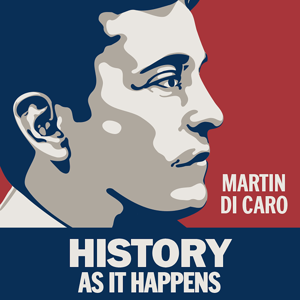

Similar to fascism or socialism, the political ideology of populism has meant different things to different people at different times in history. Figures as diverse as Huey Long, William Jennings Bryan, George Wallace, Bernie Sanders, and Donald Trump have been described as populists, which may explain why populism defies easy explanation on the right and left. With its American roots planted in the nineteenth century, populism coalesced around the notion that powerful, even conspiratorial, forces were pitted against ordinary people, fueling grievances against elites and outsiders -- cultural, economic, and political elites as well as immigrants. Georgetown University historian Michael Kazin, an expert on social and political movements, joins the podcast to explain one of the most vexing issues of our day.
 View all episodes
 By Martin Di Caro

4.4
6262 ratings
Similar to fascism or socialism, the political ideology of populism has meant different things to different people at different times in history. Figures as diverse as Huey Long, William Jennings Bryan, George Wallace, Bernie Sanders, and Donald Trump have been described as populists, which may explain why populism defies easy explanation on the right and left. With its American roots planted in the nineteenth century, populism coalesced around the notion that powerful, even conspiratorial, forces were pitted against ordinary people, fueling grievances against elites and outsiders -- cultural, economic, and political elites as well as immigrants. Georgetown University historian Michael Kazin, an expert on social and political movements, joins the podcast to explain one of the most vexing issues of our day.
8,474 Listeners
1,110 Listeners

743 Listeners

6,304 Listeners
724 Listeners

907 Listeners
14 Listeners

2,039 Listeners

7,244 Listeners
2,405 Listeners

16,525 Listeners

208 Listeners
385 Listeners
500 Listeners

496 Listeners