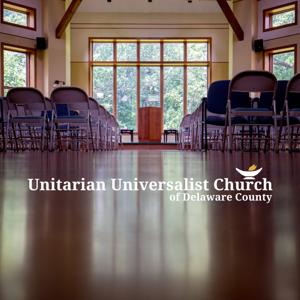
Oh, how I long to be with you today. To have this sanctuary filled to the brim with your smiling, expectant, grateful faces. To hold our traditional fall harvest ritual, with cups of cider and piles of pumpkin bread set out, a feast for all of us to enjoy. And I wish those we’ve lost during this past year to still be with us. We’ve lost so many this year. Far too many. And I wish we all were getting together with our loved ones. Remember those awful days of trying to travel over the holidays? Weather delays at airports. Traffic jams on the highways. I even miss those, too. The list of what we miss this year goes on and on. There is so much that’s different, and it’s so stressful in so many ways, and there just doesn’t seem to be an end in sight. I don’t know of a single person who doesn’t wish it was all very, very different than it is.
I have a feeling that, when we finally emerge from this pandemic we’re all going to be a little more Buddhist in our outlook on life. We’ll acknowledge that all life is dukka, which means challenge, and that the more attached we are to things, the harder life is. Maybe we’ll all be a little more flexible. We’ll all hold onto things more lightly, accepting that everything is fleeting. And maybe, just maybe, we’ll all appreciate the little things a little more. We’ll take them less for granted than we have.
This time of year has traditionally been about being grateful for the abundance in our lives. We celebrate the harvest, when our barns and our bellies are full of all the riches the earth has to offer. It’s represented by the image of the cornucopia, or “horn of plenty,” food spilling out of it and across the table because there’s so much goodness it can’t hold it all. Fullness – of hearts, of minds, of spirits, of bodies – is what we celebrate and how we celebrate. And the conundrum we face this year is that these feel like such lean times. Our patience is wearing thin. Many who are isolated and alone are hanging on by a tenuous thread. Although it erupted briefly after the election, hope still seems hard to hold onto.
So how, in these lean times, can we be thankful? In her most recent blog, Christian writer and theologian Diana Butler Bass had this to say about giving thanks amidst the trauma that is 2020: “We shouldn’t be grateful for COVID, for the political chaos, for the broken climate, for economic suffering. But we can be grateful through these times, while we are struggling in them…None of us should be thankful for this terrible year. But, if we stop and reflect, we see that we can be thankful through it. 2020 needn’t have the final word and steal from us the possibility of thanks and joy.”[1]
What Ms. Butler-Bass is saying is that while the virus is running rampant through our community, despite the threats to our democracy from a narcissistic President, notwithstanding the perpetual threat to black lives from persistent, systemic racism, what has not been stolen from us, what no amount of devastation can rob from us, is our capacity for gratitude. Our capacity for gratitude – our ability to find something, anything, to be thankful for – is one of the innate characteristics of our very being. It lies at the core of who we are as thinking, feeling humans. While it may seem elusive at times, we always have within us the seeds of gratitude.
At this time of year, in this year, the losses seem so large. And they are large and I would never want to minimize them. But no matter how large the losses, we cannot and must not let them overshadow the smaller things that are the fertile soil in which we can plant the seeds of gratitude. My heart is lifted when I see photos of beautiful sunsets posted on Facebook, because it means someone is grateful for the beauty. I look at the generosity of this congregation in supporting our community partners where, during the pandemic, we’ve seen Share the Plate contributions nearly double what they were pre-pandemic. I see the YUUCKI’s