
Sign up to save your podcasts
Or



In the final live recording from the “Carceral Media Ecologies—And How To Break Them” symposium at UC, Santa Cruz (May 13, 2026), Visualizing Abolition co-director Gina Dent offers closing reflections on themes that emerged across the symposium. Speaking extemporaneously, Dent revisits questions of abolitionist media practice, representation, temporality, collaboration, and revolutionary imagination. Dent returns repeatedly to a central question: how can artists, scholars, organizers, and communities create forms of media that resist carceral logics while building new ways of being together?
Citations
Unmaking the Prison Image is a production of Visualizing Abolition, a public scholarship initiative at the University of California, Santa Cruz, directed by Gina Dent and Rachel Nelson. Additional support comes from Amherst College. Full transcripts for all episodes are available at https://ias.ucsc.edu/unmaking-the-prison-image/.
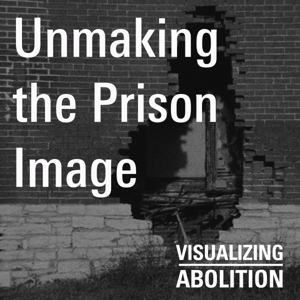
Theme music for Visualizing Abolition is Pray by Terri Lyne Carrington and Social Science. Our cover art features an image from Christopher Harris’s still/here.
Is media made inside prisons (A) a tool of collective empowerment, (B) a promotional vehicle for prisons, (C) an instrument of management, or (D) all of the above?
In this live recording from the “Carceral Media Ecologies—And How To Break Them” symposium at UC, Santa Cruz (May 13, 2026), Visualizing Abolition co-director Rachel Nelson speaks with filmmaker and organizer Thanh Tran and cultural strategist Keisha Knight (Solidarity Media Network) about media-making under conditions of incarceration.
The panelists trace the history of prisoner-led media initiatives at San Quentin, examining the emergence of the prison’s media center, the creation of For This Productions and the San Quentin Film Festival, and the tensions that arise when institutions seek to control the stories incarcerated people tell.
Because a third panelist joined the event by phone from prison, portions of the conversation were monitored and recorded by the California Department of Corrections and Rehabilitation (CDCR). To protect the incarcerated participant, some material has been edited from this version of the recording.
Citations
Media Resources
Unmaking the Prison Image is a production of Visualizing Abolition, a public scholarship initiative at the University of California, Santa Cruz, directed by Gina Dent and Rachel Nelson. Additional support comes from Amherst College. Full transcripts for all episodes are available at https://ias.ucsc.edu/unmaking-the-prison-image/.
Theme music for Visualizing Abolition is Pray by Terri Lyne Carrington and Social Science. Our cover art features an image from Christopher Harris’s still/here.
Can evidence serve communities—and not only the courts?
In this live recording from the “Carceral Media Ecologies—And How To Break Them” symposium at UC, Santa Cruz (May 13, 2026), host Pooja Rangan is joined by media artist Sharon Daniel and community organizer Raj Jayadev for a conversation about the tactical uses of media within the criminal legal system.
Sharon Daniel reflects on more than two decades of work creating interactive documentary projects with incarcerated people, beginning with Public Secrets, an ambitious archive of testimonies from women incarcerated in California prisons. She discusses how her ongoing investigation into the wrongful conviction of Tim Young led to her work co-teaching the Making an Exoneree course at the University of California, Santa Cruz. Raj Jayadev describes the participatory defense movement pioneered by Silicon Valley Debug, a collective process through which families and communities intervene directly in legal proceedings by generating what Debug calls “social biographies.” The panelists discuss the tension between producing evidence and building social capacity, and what happens when courts are invaded by community intelligence.
Citations
Media Resources
Unmaking the Prison Image is a production of Visualizing Abolition, a public scholarship initiative at the University of California, Santa Cruz, directed by Gina Dent and Rachel Nelson. Additional support comes from Amherst College. Full transcripts for all episodes are available at https://ias.ucsc.edu/unmaking-the-prison-image/.
Theme music for Visualizing Abolition is Pray by Terri Lyne Carrington and Social Science. Our cover art features an image from Christopher Harris’s still/here.
Do prison films confine our imagination?
In this live recording from the “Carceral Media Ecologies—And How To Break Them” symposium at UC, Santa Cruz (May 13, 2026), Visualizing Abolition co-director Gina Dent joins filmmakers Adamu Chan and Gilda Sheppard to discuss the limitations and horizons of the “prison film.”
Adamu Chan reflects on making What These Walls Won’t Hold, which documents the relationships and organizing networks that sustained incarcerated people in San Quentin during the COVID-19 pandemic. Gilda Sheppard discusses her film Since I Been Down, which follows members of the Black Prisoners Caucus in Washington state, and their prisoner-initiated educational program, TEACH (Taking Education and Creating History). The conversation pushes past the category of “prison film” to consider prisons as sites of study and political education.
Citations
Media resources
Unmaking the Prison Image is a production of Visualizing Abolition, a public scholarship initiative at the University of California, Santa Cruz, directed by Gina Dent and Rachel Nelson. Additional support comes from Amherst College. Full transcripts for all episodes are available at https://ias.ucsc.edu/unmaking-the-prison-image/.
Theme music for Visualizing Abolition is Pray by Terri Lyne Carrington and Social Science. Our cover art features an image from Christopher Harris’s still/here.
What happens when entertainment joins forces with law enforcement? Who gets hurt, and who--or what--evades accountability?
In Episode 3 of Unmaking the Prison Image, host Pooja Rangan is joined by filmmaker Davit Osit, critical criminologist Michelle Brown, and formerly incarcerated policy advocate and founder of America on Trial, Inc. Vidal Guzman to discuss the social costs of carceral entertainment, from reality TV shows filmed inside prisons to self-appointed vigilantes and "predator catchers."
Davit Osit reflects on the ethical contradictions of documentary filmmaking, including his own film Predators, and walking the tightrope of complicity and challenge. Michelle Brown situates "carceral entertainment" within a broader political landscape that exhausts our imagination and normalizes punitive responses to harm. Vidal Guzman talks about how incarcerated people experience the physical and legal harms of incarcerated reality shows like 60 Days In and his work on the #AIRS (Abolish Incarcerated Reality Shows) campaign.
Citations:
Media Resources:
Unmaking the Prison Image is a production of Visualizing Abolition, a public scholarship initiative at the University of California, Santa Cruz, directed by Gina Dent and Rachel Nelson. Additional support comes from Amherst College. Full transcripts for all episodes are available at https://ias.ucsc.edu/unmaking-the-prison-image/.
Theme music for Visualizing Abolition is Pray by Terri Lyne Carrington and Social Science. Our cover art features an image from Christopher Harris’s still/here.
This episode includes discussion of rape and sexual violence. We recognize that these topics may be difficult or distressing for some listeners, so please take care while listening and feel free to pause or step away at any time.
What happens when abolition meets its most common objection?
In Episode 2 of Unmaking the Prison Image, host Pooja Rangan brings together curator and scholar Rachel Nelson, documentary scholar Laliv Melamed, and feminist filmmaker Deepa Dhanraj to confront the question that often marks the limit of abolitionist imagination: “But what about the rapists and murderers?”
Drawing from personal experience and feminist media practice, the conversation examines how rape becomes a powerful moral and emotional boundary in debates about prisons across multiple geopolitical contexts.
Citations
Additional Resources
Unmaking the Prison Image is a production of Visualizing Abolition, a public scholarship initiative at the University of California, Santa Cruz, directed by Gina Dent and Rachel Nelson. Additional support comes from Amherst College.
Theme music for Visualizing Abolition is Pray by Terri Lyne Carrington and Social Science. Our cover art features an image from Christopher Harris’s still/here. Full episode transcripts are available at https://ias.ucsc.edu/unmaking-the-prison-image/.
What does it mean to learn filmmaking as a practice of abolition?
In this first episode of Unmaking the Prison Image, host Pooja Rangan speaks with filmmakers and educators Christopher Harris, Brett Story, and Thanh Tran about how documentary shapes what we think we know about prisons, and how filmmaking can help us unlearn those assumptions.
The conversation traces how media literacy becomes a form of political education, from community radio to experimental cinema and a self-taught film collective inside San Quentin prison. Thanh recounts teaching himself filmmaking from a closet full of unused cameras inside prison. Brett reflects on learning narrative responsibility through activist media work. Chris asks how carceral images shape perception, and how dissonant filmmaking can interrupt them.
Together, they ask: What allows an image to do abolitionist work? And how can filmmaking become a collective practice for imagining worlds beyond incarceration?
Citations:
Media Resources
Full transcripts for each episode are available at https://ias.ucsc.edu/unmaking-the-prison-image/.
Unmaking the Prison Image is a production of Visualizing Abolition, a public scholarship initiative at the University of California, Santa Cruz, directed by Gina Dent and Rachel Nelson. Additional support comes from Amherst College.
Music credit: Pray by Terri Lynne Carrington and Social Science
Welcome to Unmaking the Prison Image, a three-episode series exploring the role documentary film can play in imagining a world without prisons. Host Pooja Rangan speaks with filmmakers, scholars, and system-impacted artists and organizers who are rethinking the role documentary plays in shaping how we see, and imagine, prisons.
Unmaking the Prison Image is a production of Visualizing Abolition, a public scholarship initiative at the University of California, Santa Cruz, directed by Gina Dent and Rachel Nelson. Podcast produced by Alex Moore, Louise Leong, and Pooja Rangan. Eric “Maserati E” Abercrombie is our editor and sound designer. The theme music for Visualizing Abolition is Pray by Terri Lyne Carrington and Social Science. Our cover art features an image from Christopher Harris’s still/here. Transcripts available at https://ias.ucsc.edu/unmaking-the-prison-image/