
Sign up to save your podcasts
Or

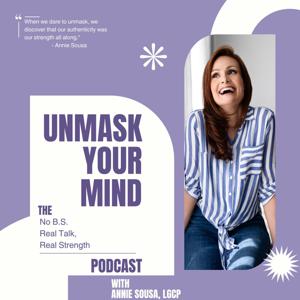


Host: Annie Sousa
Hey everyone! Welcome back to Unmask Your Mind. I’m your host, Annie Sousa, and today’s episode is all about finding those people and places where we can finally drop the mask and feel like our true selves. We all need spaces where we feel safe and understood—especially when so much of the world seems to expect us to fit into boxes we don’t quite fit. We’re going to talk about the importance of these spaces, how to identify safe people and places, and tips to help you create more of them in your life. So, let’s dive in!”
Section 1: The Importance of Safe Spaces
Host: Annie Sousa
“Let’s start with why safe spaces are so essential. For anyone, but especially for neurodivergent individuals, safe spaces are places where we feel accepted, valued, and free to be ourselves. These spaces allow us to relax without worrying about judgment or misunderstanding. Imagine having to wear a costume or act a certain way everywhere you go—it’s exhausting! That’s where safe spaces come in. They’re like an oasis where you can recharge and reconnect with who you truly are.
“When we don’t have these spaces, life can feel incredibly isolating and overwhelming. We may start to believe that we’re alone in our experiences or that we need to change to fit in. But safe spaces remind us that we are enough as we are. And this feeling isn’t just comforting; it’s essential for mental and emotional health. Think of it like this: if the world feels like a stage where we’re always in character, safe spaces are the green room—a place to step out of character, breathe, and be.”
Engagement Prompt: “Take a moment to think: Where do you feel most like yourself? Is it a place, a group of people, or even an online community? I’d love to hear from you! Share your safe space with us on social media, or just reflect on it yourself.”
Section 2: Identifying Safe People and Places
“Now, let’s talk about how to identify safe people and places. Safe people are those who encourage you to be authentic without judging you. They’re the friends who genuinely listen, the family members who respect your boundaries, or the mentors who make you feel seen and valued. Safe people might not always fully understand your experiences, but they make an effort to accept you as you are.
“Safe places, on the other hand, could be physical or virtual. Maybe it’s a quiet room in your home, a cozy corner in your favorite café, or an online community where you connect with others who get you. Identifying these places and people often starts by paying attention to how you feel. Do you feel relaxed, free, and valued? Or do you feel like you need to put on a front? Safe spaces don’t pressure you to be anything but yourself, and finding them is a personal journey that can sometimes take time.
“It’s important to remember that a space that feels safe to one person may not feel safe to another, and that’s completely okay. What matters most is how you feel in that space.”
Reflection Prompt: “Think of someone who makes you feel truly at ease. What is it about them that lets you relax and feel safe? And is there a specific place where you feel you can just be, without any expectations? Write it down or share it with us if you feel comfortable. Safe spaces are powerful, and identifying them is the first step in creating more of them.”
Section 3: Cultivating Safe Environments
“Sometimes, we don’t just find safe spaces—we create them. Cultivating your own safe environment might look like setting up a cozy nook in your home with things that make you feel grounded: a favorite blanket, sensory objects, calming colors, or even your favorite plants. Creating a physical comfort zone in your living space is one way to start feeling safer and more relaxed.
“But safe environments are also about the people you allow in. Building connections with people who respect and understand you is another way to cultivate these spaces. Maybe that’s joining a support group for neurodivergent individuals or finding friends who are accepting and open. Surrounding yourself with people who accept you as you are—quirks and all—is a key part of creating safe environments.
“Sometimes, cultivating safe spaces also means setting boundaries. It’s okay to decline social invitations if they make you uncomfortable, or to avoid spaces where you feel pressured to mask. Prioritizing your mental and emotional health isn’t selfish—it’s necessary. Your comfort zone should be a place where you’re free to recharge without judgment or pressure.”
Engagement Prompt: “Do you have a comfort zone at home or with certain people? If not, think about ways you might start building one. Maybe it’s a small area in your home, or a weekly call with a friend who makes you feel understood. It doesn’t have to be big—sometimes the smallest spaces are the most meaningful.”
Section 4: The Power of Vulnerability in Safe Spaces
“Alright, let’s talk about vulnerability, a word that’s often easier said than done. Being vulnerable is one of the most powerful ways to deepen our connections in safe spaces. When we feel safe, we can gradually open up and reveal our true selves. This doesn’t mean sharing everything at once, but rather allowing bits and pieces of ourselves to be seen.
“Vulnerability allows us to build stronger, more genuine connections. It’s a mutual exchange—when we let down our guard, others are more likely to do the same. However, vulnerability can feel risky, especially if we’ve been hurt or misunderstood in the past. That’s why we start small. Test the waters with safe people. Share a little piece of yourself and see how they respond. Over time, this builds trust and creates even stronger bonds.
“Think of vulnerability as a bridge that connects you more deeply to those who value you. And remember, safe spaces aren’t just about physical places—they’re emotional places too. When we feel comfortable enough to be vulnerable, we’re taking an important step in reclaiming our true selves.”
Reflection Prompt: “Think back to a time when you opened up to someone, and it was met with acceptance and understanding. How did that make you feel? Or, if you haven’t had that experience yet, think about what you’d like to share if you found that safe person. Vulnerability is a journey, and it’s okay to take small steps.”
Closing Reflection and Practical Tips
“As we wrap up, let’s go over some practical steps for finding or creating safe spaces and building supportive connections:
Outro: ““Thank you for joining me on this episode of Unmask Your Mind. Today, we covered why safe spaces are so important, how to recognize them, and how to start creating more of them in your life. Building these spaces and relationships is a journey, one that helps us reconnect with our true selves.
“If you’re interested in more resources or ideas on finding safe spaces, check out our website and social media for additional content and tips. And if you found this episode helpful, please consider sharing it with someone who could use a little support in their own journey. In our next episode, we’ll discuss building self-compassion as a powerful tool for authenticity. Until then, take care and remember you deserve spaces where you can be fully yourself.”
Final CTA: “For additional resources, guides, and connection with our community, visit our website at unmaskyourmind.com and follow us on Instagram @unmask.your.mind.
Let’s keep this conversation going!”
Mentioned in this episode:
INTRO
intro
INTRO
intro
In Episode 6 of Unmask Your Mind, host Annie Sousa takes a deep dive into the emotional and physical costs of masking. For many neurodivergent individuals, masking—hiding or altering parts of oneself to fit societal expectations—can lead to burnout, impacting mental and physical health in profound ways. In this episode, Annie unpacks the signs of masking fatigue, explores the effects of long-term stress on the body, and shares practical tips for managing these challenges.
Here’s what you can expect:
Reflection Prompts: Throughout the episode, Annie encourages listeners to reflect on their experiences with masking and how it affects their well-being. This is an invitation to reconnect with your true self and find balance on your journey to authenticity.
Join us for this essential episode, and remember, authenticity is a journey. Follow Unmask Your Mind on social media for additional tips, infographics on burnout, and community engagement!
Mentioned in this episode:
INTRO
intro
INTRO
intro
Join Annie Sousa as she takes off the mask and shares her deeply personal journey with neurodivergence, specifically her experiences with ADHD and autism in this first part of a four part podcast series. Throughout the episode, she emphasizes the importance of embracing one's true self and the challenges that come from masking to fit into societal norms. Annie recounts her childhood struggles, the misconceptions surrounding neurodivergence, and how societal expectations can lead to feelings of isolation and misunderstanding. With honesty and vulnerability, she provides insights on navigating the complexities of self-acceptance and mental wellness, highlighting the significance of community and support. This heartfelt discussion aims to resonate with anyone who has ever felt different, encouraging listeners to recognize that they are not alone in their journey.
Annie Sousa shares an intimate glimpse into her life as she discusses her experiences with ADHD and autism. The episode serves as a powerful reminder of the challenges faced by neurodivergent individuals who often feel pressured to mask their true selves to fit societal norms. Annie reflects on her childhood, recalling how she grappled with misunderstanding and isolation, while also highlighting the misconceptions surrounding neurodivergence. Her candid storytelling reveals the emotional toll of feeling 'different' and the stigma that often accompanies such identities, ultimately framing the conversation around the need for greater acceptance and awareness.
The narrative delves deeper into the impact of masking on mental health, illustrating how living authentically can be a revolutionary act in itself. Annie emphasizes the importance of self-acceptance and the ongoing journey toward embracing one's true identity. Through her experiences, she addresses the critical need for supportive environments where neurodivergent individuals can thrive without fear of judgment. Listeners are encouraged to reflect on their own journeys, with Annie providing practical advice on building flexible routines, practicing self-compassion, and finding community.
The episode culminates in a hopeful and empowering message, as Annie advocates for the importance of understanding and accepting oneself. She challenges listeners to break free from the constraints of societal expectations and to recognize their inherent worth. Annie's story is not just one of struggle, but also of resilience and growth, serving as an inspiring call to action for those who may feel lost in their own journeys. The takeaways from this episode resonate deeply, inviting listeners to embrace their unique identities and advocate for themselves in a world that often demands conformity.
Takeaways:
Mentioned in this episode:
INTRO
intro
INTRO
intro
Self-doubt can silently undermine our potential across various aspects of life, from work to personal relationships. Annie Souza delves into the roots of this inner critic, emphasizing that confidence is not a magical trait but a skill that can be developed step by step each day. She shares practical strategies for overcoming self-doubt, such as setting small, manageable goals, practicing affirmations, and maintaining a journaling habit to track progress. By taking action despite fears, listeners can break free from the paralysis of overthinking and learn to celebrate their achievements, no matter how small. Join Annie as she guides you on a journey toward building confidence and embracing your capabilities.
Tackling self-doubt is a journey many can relate to, as it often manifests in various aspects of life, from professional aspirations to personal relationships. Annie Souza dives into the pervasive nature of self-doubt, exploring its roots and offering practical strategies to combat it. She emphasizes that self-doubt is that nagging voice within, whispering fears of inadequacy and failure. This voice can be particularly loud for those of us who identify as neurodivergent, but it is a universal struggle. Throughout the episode, Annie shares her personal experiences with self-doubt, recounting moments of anxiety and hesitation in her journey toward pursuing her goals, such as becoming a therapist and launching her podcast.
The core message conveyed is that confidence is not an innate quality but a skill that can be cultivated through consistent action. Annie provides actionable strategies for listeners, including setting small goals, practicing affirmations, journaling progress, and managing expectations. By breaking down larger goals into manageable steps, listeners can begin to celebrate small victories, which in turn fosters a sense of capability and builds momentum. The discussion encourages vulnerability, urging listeners to express their needs and set boundaries in relationships without fear of rejection, thereby reinforcing self-worth and confidence.
Annie's insights underscore that self-doubt is a common human experience, and the way to overcome it is through persistence and practice. As she wraps up, she invites her audience to take one small action towards a goal they’ve been hesitant about, reinforcing that each step taken, no matter how small, contributes to building a more confident self. This episode serves as an empowering reminder that everyone has the potential to silence their inner critic and embrace their aspirations.
Takeaways:
Negative self-talk can be a significant barrier to building confidence and self-acceptance. This episode delves into the nature of this inner critic, exploring its various forms such as all-or-nothing thinking, overgeneralization, catastrophizing, and personalization. Annie Souza emphasizes that understanding and recognizing these negative patterns is the first step towards fostering self-compassion and shifting our mindset. Listeners are encouraged to track their negative thoughts, identify triggers, and reframe those thoughts into positive affirmations. By practicing self-kindness and challenging their inner critic, individuals can reclaim their confidence and embrace personal growth, ultimately realizing that progress is more important than perfection.
Negative self-talk is a pervasive issue that can significantly undermine our confidence and mental health. The host, Annie Souza, delves into the nuances of this inner critic that many face, identifying it as a barrier to self-acceptance and growth. The episode discusses four common types of negative self-talk: all-or-nothing thinking, overgeneralization, catastrophizing, and personalization. These patterns not only distort our self-image but can also lead to increased stress, anxiety, and even depression. Annie emphasizes the importance of recognizing these thought patterns, as awareness is the first step toward change. With practical tips, she encourages listeners to track their negative thoughts and identify triggers, fostering a deeper understanding of the origins of their inner critic.
Additionally, Annie suggests methods to counteract negative self-talk, such as naming the inner critic to create distance and using reframing techniques to promote self-compassion. For example, transforming a thought like 'I will never get it right' into 'I am learning and improving every day' can shift one's mindset positively. This episode not only highlights the detrimental effects of negative self-talk but also offers a roadmap toward building self-confidence through compassion and positive affirmations. The discussion culminates with an invitation for listeners to share their experiences with overcoming negative self-talk, reinforcing the community aspect of personal growth.
Takeaways:
Unmask Your Mind is a heartfelt podcast aimed at exploring the complexities of neurodiversity, trauma, and mental health. Host Annie Sousa shares her personal journey, highlighting her own experiences with ADHD and autism, and the challenges faced while navigating a world that often misunderstands neurodivergent individuals. This first episode emphasizes the importance of creating a stigma-free space where listeners can feel seen and understood, breaking down the walls of shame that often accompany mental health struggles. Annie's mission is to empower others by providing practical tools, fostering community, and encouraging authenticity. Join her as she embarks on this transformative journey, inviting everyone to embrace their true selves without masks.
Takeaways:
Annie Sousa opens the inaugural episode of the Unmask Your Mind podcast with a warm and heartfelt welcome, creating an inviting atmosphere for listeners. She introduces her mission: to provide a safe space for conversations surrounding neurodiversity, trauma, and mental health. Drawing from her own experiences as a neurodivergent individual and a mother of neurodivergent children, Annie emphasizes the importance of authenticity and the detrimental effects of societal stigma. Throughout the episode, she delves into her personal journey of self-discovery, revealing her late diagnoses of ADHD and autism spectrum disorder. This personal narrative serves as a powerful reminder that many individuals navigate life feeling misunderstood and invisible, often masking their true selves in an attempt to fit into a neurotypical world.
The discussion expands to the broader implications of living undiagnosed in a society that frequently overlooks neurodivergence. Annie highlights the trauma that can arise from these experiences and the urgent need for a supportive community that embraces differences rather than shames them. She shares her commitment to advocacy and education, aiming to empower those who feel lost or silenced. The podcast seeks to dismantle the harmful narratives surrounding neurodivergence, offering practical tools and strategies to foster a sense of belonging and self-acceptance.
Listeners are invited to engage with the podcast, as Annie expresses her desire for it to be a two-way conversation. She encourages audience feedback and interaction, reinforcing the theme that everyone’s voice matters. As the episode concludes, Annie inspires hope and resilience, reminding listeners that they are not alone and that their unique experiences are valuable. She urges everyone to embrace their authentic selves and embark on this journey of self-discovery and community together, setting a hopeful tone for future discussions.
From the publisher's feed