
Sign up to save your podcasts
Or

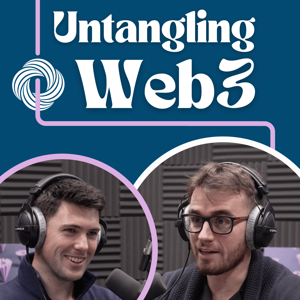


This special edition of Untangling Web3 features the first-ever live recording of the show, held in London and focused on the theme of Web3 for Social Good.
Guest panelists Sunny Lu (CEO of VeChain) and Pankhuri Bansal (blockchain and AI expert with the UN and LTO Network) explore how decentralized technologies are driving impact in sustainability, social inclusion, and environmental action.
Key highlights:
Web3 offers an unprecedented opportunity to coordinate global action at the individual level. From plastic waste collection to climate data verification, blockchain enables transparent and trustless systems that reward citizens for doing good.
Rather than relying solely on governments or institutions, Web3 empowers individuals to contribute directly to sustainable outcomes—and be compensated in the process. As regulatory clarity emerges and enterprise interest grows, the alignment of social impact and tokenized value creation will become a powerful force for green transformation.
--
This episode is sponsored by the VeChain foundation. Learn more about VeBetterDAO here:
https://vebetterdao.org/
--
Learn more about Web3 at:
https://untanglingweb3.com/
--
Untangling Web3 is brought to you by hosts Jack Davies and Alec Burns, with music by Daniel Paigge. Got a question or topic suggestion? Send us an email at [email protected].
Love what you're hearing? Show your support by becoming a subscriber and don't forget to leave us a stellar review.
The views we express here are our own, and do not represent the views of our employers. Nothing discussed or stated in the show should be considered advice.
In this episode of Untangling Web3, co-founder of Fluence and host of the DePINed Podcast, Tom Trowbridge, breaks down the evolving world of DePIN—Decentralized Physical Infrastructure Networks.
Drawing on his leadership at Fluence and his experience launching Hedera Hashgraph, Trowbridge provides a technical yet accessible overview of how DePIN offers an alternative model to centralized infrastructure, unlocking powerful new design patterns in blockchain-based networks.
Key highlights:
DePIN represents a fundamental rethinking of infrastructure—from centralized ownership to community-powered networks secured and incentivized by blockchain.
From physical deployments like drone-based mapping to compute platforms like Fluence, this emerging paradigm offers the chance to outcompete traditional infrastructure on cost, resilience, and scalability. DePIN is now poised to evolve into one of the most impactful sectors in Web3.
Read Tom's DePIN Tokenomics report in full here:
https://depined.xyz/report#depin-token-economics-report
--
This episode is sponsored by the VeChain foundation. Learn more about VeBetterDAO here:
https://vebetterdao.org/
--
Learn more about Web3 at:
https://untanglingweb3.com/
--
Untangling Web3 is brought to you by hosts Jack Davies and Alec Burns, with music by Daniel Paigge. Got a question or topic suggestion? Send us an email at [email protected].
Love what you're hearing? Show your support by becoming a subscriber and don't forget to leave us a stellar review.
The views we express here are our own, and do not represent the views of our employers. Nothing discussed or stated in the show should be considered advice.
This week on Untangling Web3, we're joined by artist, comedian, and AI innovator King Willonius to explore how artificial intelligence is reshaping creativity, comedy, music, and storytelling.
Known best for his viral AI-generated track "BBL Drizzy," King breaks down the mechanics, ethics, and cultural implications of using AI as a creative collaborator—offering a first-hand look into how creators are using technology to expand the boundaries of art and expression.
Key highlights:
Artificial intelligence is not just a tool for productivity—it is becoming a medium of cultural expression, satire, and commentary. The future of creativity involves hybrid workflows, where human originality is amplified by synthetic intelligence.
Artists who embrace AI without abandoning ethics or intention will be at the forefront of a new era in music, comedy, and culture. Whether remixing internet moments, shaping virtual identities, or training AI agents to rap, creators like King Willonius are rewriting what it means to be an artist in the age of artificial intelligence.
Learn more about King Willonius' work here:
https://www.kingwillonius.com/
--
This episode is sponsored by the VeChain foundation. Learn more about VeBetterDAO here:
https://vebetterdao.org/
--
Learn more about Web3 at:
https://untanglingweb3.com/
--
Untangling Web3 is brought to you by hosts Jack Davies and Alec Burns, with music by Daniel Paigge. Got a question or topic suggestion? Send us an email at [email protected].
Love what you're hearing? Show your support by becoming a subscriber and don't forget to leave us a stellar review.
The views we express here are our own, and do not represent the views of our employers. Nothing discussed or stated in the show should be considered advice.
In this episode of Untangling Web3, Daniel Liebau, founder of Lightbulb Capital and co-author of a leading academic book on DAOs, explores how decentralized autonomous organizations are redefining governance, collaboration, and organizational design.
Drawing on research and real-world examples, this episode examines the opportunities and risks associated with DAOs as scalable, decentralized alternatives to traditional organizational structures.
Key highlights:
DAOs offer a fundamentally new model for coordination, one that replaces rigid hierarchies with collective governance, transparency, and programmable incentives. While risks around accountability, governance, and financial stability remain, DAO design continues to evolve in ways that make these organizations more resilient and scalable.
As regulatory frameworks mature and infrastructure improves, DAOs have the potential to become core components of both decentralized ecosystems and traditional institutions seeking to embrace openness and adaptability.
Learn more about Daniel's work here:
https://www.danielliebau.org/
--
This episode is sponsored by the VeChain foundation. Learn more about VeBetterDAO here:
https://vebetterdao.org/
--
Learn more about Web3 at:
https://untanglingweb3.com/
--
Untangling Web3 is brought to you by hosts Jack Davies and Alec Burns, with music by Daniel Paigge. Got a question or topic suggestion? Send us an email at [email protected].
Love what you're hearing? Show your support by becoming a subscriber and don't forget to leave us a stellar review.
The views we express here are our own, and do not represent the views of our employers. Nothing discussed or stated in the show should be considered advice.
This week on Untangling Web3, Dan Hughes, founder of Radix DLT, explores the future of DeFi, scalability, and the barriers to mainstream adoption.
With over a decade of experience in blockchain infrastructure, Dan shares insights on what it will take to onboard the next billion users into DeFi while maintaining decentralization and security.
Key highlights:
DeFi is at a crossroads where it must evolve beyond speculation and deliver tangible financial products that rival traditional finance in usability and efficiency. User experience, security, and scalability must be prioritized to make DeFi truly accessible to billions of people.
The next five years will determine whether DeFi remains a niche financial experiment or transforms into a foundational component of the global economy.
--
This episode is sponsored by the VeChain foundation. Learn more about VeBetterDAO here:
https://vebetterdao.org/
--
Learn more about Web3 at:
https://untanglingweb3.com/
--
Untangling Web3 is brought to you by hosts Jack Davies and Alec Burns, with music by Daniel Paigge. Got a question or topic suggestion? Send us an email at [email protected].
Love what you're hearing? Show your support by becoming a subscriber and don't forget to leave us a stellar review.
The views we express here are our own, and do not represent the views of our employers. Nothing discussed or stated in the show should be considered advice.
This week on Untangling Web3, Kyle Weiss and Shady El Damaty join us from ETH Denver to explore the future of digital identity, decentralized personhood, and blockchain-based verification systems.
As the digital landscape evolves, ensuring secure, verifiable, and privacy-preserving digital identities has become a critical challenge. This conversation delves into how Web3 is reshaping identity management and what it means for online trust, governance, and digital interactions.
Key highlights:
Decentralized digital identity is shaping the future of online trust, governance, and security in Web3. By enabling users to own and control their identity, blockchain-based identity solutions enhance privacy, prevent fraud, and create fairer digital ecosystems.
As digital interactions become more automated, the ability to verify real humans in a decentralized, privacy-preserving way will be a cornerstone of the next evolution of the internet.
Learn more about Kyle and Shady's work here:
--
This episode is sponsored by the VeChain foundation. Learn more about VeBetterDAO here:
https://vebetterdao.org/
--
Learn more about Web3 at:
https://untanglingweb3.com/
--
Untangling Web3 is brought to you by hosts Jack Davies and Alec Burns, with music by Daniel Paigge. Got a question or topic suggestion? Send us an email at [email protected].
Love what you're hearing? Show your support by becoming a subscriber and don't forget to leave us a stellar review.
The views we express here are our own, and do not represent the views of our employers. Nothing discussed or stated in the show should be considered advice.
This week on Untangling Web3, Oleg Fomenko, co-founder of Sweat Economy, breaks down the concept of the movement economy—a system where physical activity is tokenized to create financial and social value. Sweat Economy leverages Web3 incentives to encourage people to be more active, transforming movement into a digital asset with real-world applications.
Key highlights:
Sweat Economy redefines how physical activity is valued, turning movement into a digital currency that fuels a decentralized health and wellness ecosystem. By leveraging blockchain, tokenized incentives, and AI-driven personalization, Sweat Economy aims to create a more physically active, financially empowered, and healthier society.
The future of the movement economy lies in integrating Web3 incentives with real-world applications, bridging the gap between personal health and financial opportunity.
--
This episode is sponsored by the VeChain foundation. Learn more about VeBetterDAO here:
https://vebetterdao.org/
--
Learn more about Web3 at:
https://untanglingweb3.com/
--
Untangling Web3 is brought to you by hosts Jack Davies and Alec Burns, with music by Daniel Paigge. Got a question or topic suggestion? Send us an email at [email protected].
Love what you're hearing? Show your support by becoming a subscriber and don't forget to leave us a stellar review.
The views we express here are our own, and do not represent the views of our employers. Nothing discussed or stated in the show should be considered advice.
In this episode of Untangling Web3, brand strategist and Web3 expert Diego Borgo explores the challenges and opportunities of branding in the decentralized space.
With extensive experience advising global brands like Adidas, Prada, Mastercard, and Porsche, Diego shares insights into the evolving perception of Web3 and how brands can adapt to the changing digital landscape.
Key highlights:
Web3 branding needs a fundamental shift from its current perception of being technical, speculative, and difficult to understand. To reach mainstream audiences, companies must prioritize trust, user experience, and clear messaging that resonates with non-technical consumers.
The convergence of AI and Web3 offers a promising path forward, where automation and intelligent systems make decentralized applications more accessible and integrated into everyday life.
--
This episode is sponsored by the VeChain foundation. Learn more about VeBetterDAO here:
https://vebetterdao.org/
--
Learn more about Web3 at:
https://untanglingweb3.com/
--
Untangling Web3 is brought to you by hosts Jack Davies and Alec Burns, with music by Daniel Paigge. Got a question or topic suggestion? Send us an email at [email protected].
Love what you're hearing? Show your support by becoming a subscriber and don't forget to leave us a stellar review.
The views we express here are our own, and do not represent the views of our employers. Nothing discussed or stated in the show should be considered advice.
In this episode of Untangling Web3, futurist and AI expert Dan Södergren joins the conversation to explore how artificial intelligence and Web3 technologies are transforming the future of work.
With a background in digital transformation and consumer rights, Dan explains why the rise of AI is triggering what he calls the Fifth Industrial Revolution and what it means for individuals, businesses, and society.
Key highlights:
AI is no longer a futuristic concept; it is an immediate and disruptive force in the workplace. The shift towards AI-powered automation and decentralized digital workspaces will require individuals and organizations to rethink productivity, employment structures, and business strategies.
Embracing AI while maintaining ethical and responsible use will define success in the evolving digital economy. The companies and individuals that adopt AI intelligently will lead the charge in the Fifth Industrial Revolution.
Learn more about how to use AI for Marketing with Dan's course here:
www.aimarketingcourse.co.uk
--
This episode is sponsored by the VeChain foundation. Learn more about VeBetterDAO here:
https://vebetterdao.org/
--
Learn more about Web3 at:
https://untanglingweb3.com/
--
Untangling Web3 is brought to you by hosts Jack Davies and Alec Burns, with music by Daniel Paigge. Got a question or topic suggestion? Send us an email at [email protected].
Love what you're hearing? Show your support by becoming a subscriber and don't forget to leave us a stellar review.
The views we express here are our own, and do not represent the views of our employers. Nothing discussed or stated in the show should be considered advice.
In this week's episode of Untangling Web3, we dive deep into the future of Web3 identity with George Kassis from Kinexys by J.P.Morgan.
George's blockchain journey began a decade ago with a university thesis on Bitcoin prediction models, and he has since become a thought leader in the space. In this episode, we explore the evolution of identity from Web0 to Web3, discussing how identity has transformed from physical documents to digital representations.
Key highlights:
George emphasizes the importance of identity in the digital age, where fraud rates soar due to inadequate identity systems. We discuss the need for a more efficient, privacy-preserving identity solution that respects user autonomy while ensuring security. George shares insights on the role of blockchain in creating a common source of truth for identity verification, highlighting the potential of decentralized identity systems.
This episode highlights the transformative potential of blockchain in reshaping digital identity management systems, moving towards more secure, user-centric models. It emphasizes the need for an overhaul in digital identity structures to accommodate the demands of a fully digital world, proposing blockchain as a viable solution to existing vulnerabilities.
--
This episode is sponsored by the VeChain foundation. Learn more about VeBetterDAO here:
https://vebetterdao.org/
--
Learn more about Web3 at:
https://untanglingweb3.com/
--
Untangling Web3 is brought to you by hosts Jack Davies and Alec Burns, with music by Daniel Paigge. Got a question or topic suggestion? Send us an email at [email protected].
Love what you're hearing? Show your support by becoming a subscriber and don't forget to leave us a stellar review.
The views we express here are our own, and do not represent the views of our employers. Nothing discussed or stated in the show should be considered advice.
From the publisher's feed
The podcast that simplifies tomorrow's tech, today.
Untangling Web3 dives deep into the world of the next-generation Internet, exploring the groundbreaking technologies, projects, and ideas…
This series is hosted and produced by Jack Davies and Alec Burns.