
Sign up to save your podcasts
Or

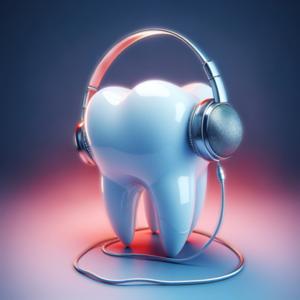

Dental caries continues to be one of the most important public health problems in Australia, and particularly for Australian children. One in three children experience tooth decay in their baby teeth by the age of 5-6 years and 40% in their adult teeth by the age of 12-14 year, and it is the leading cause of preventable hospitalisations amongst Australian children. So early detection and prevention are critically important – at both a public health and individual patient level.
New research published this week shows potential new applications for 3D intra-oral scanning with fluorescence as a tool to enhance the early detection of tooth decay. It is particularly useful to enable a comprehensive dental assessment for children who are only able to tolerate a brief or limited time in the dental chair, and may have telehealth applications for people living in rural and remote areas.
This week on the Dental As Anything podcast I speak to Dr Bree Jones. Bree is a dental academic and researcher at the Melbourne Dental School with expertise spanning public health, diagnostic innovation, education, and sustainability. She holds a Bachelor of Science, Bachelor of Oral Health, Graduate Certificate in Dental Therapy (Advanced Practice), Master of Public Health, and PhD.
She is the lead author of this paper which found that on-screen assessment of 3D models in colour showed strong agreement with a standard clinical visual examination for caries detection at different disease thresholds - from early lesions through to more extensive disease. 3D intra oral scanning might be a feasible alternative to traditional in-person clinical examination for research, monitoring and population level surveillance.
 View all episodes
 By Matt Hopcraft
Dental caries continues to be one of the most important public health problems in Australia, and particularly for Australian children. One in three children experience tooth decay in their baby teeth by the age of 5-6 years and 40% in their adult teeth by the age of 12-14 year, and it is the leading cause of preventable hospitalisations amongst Australian children. So early detection and prevention are critically important – at both a public health and individual patient level.
New research published this week shows potential new applications for 3D intra-oral scanning with fluorescence as a tool to enhance the early detection of tooth decay. It is particularly useful to enable a comprehensive dental assessment for children who are only able to tolerate a brief or limited time in the dental chair, and may have telehealth applications for people living in rural and remote areas.
This week on the Dental As Anything podcast I speak to Dr Bree Jones. Bree is a dental academic and researcher at the Melbourne Dental School with expertise spanning public health, diagnostic innovation, education, and sustainability. She holds a Bachelor of Science, Bachelor of Oral Health, Graduate Certificate in Dental Therapy (Advanced Practice), Master of Public Health, and PhD.
She is the lead author of this paper which found that on-screen assessment of 3D models in colour showed strong agreement with a standard clinical visual examination for caries detection at different disease thresholds - from early lesions through to more extensive disease. 3D intra oral scanning might be a feasible alternative to traditional in-person clinical examination for research, monitoring and population level surveillance.

92 Listeners
143 Listeners
57 Listeners

323 Listeners

206 Listeners
558 Listeners