
Sign up to save your podcasts
Or

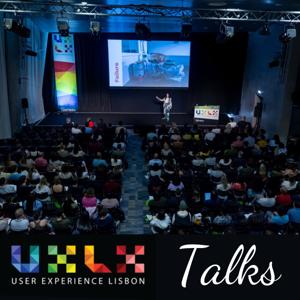


How we think about the world affects what we do. The imaginaries we have—the stories we tell ourselves and each other, the language and framings and metaphors we use, the associations and mental imagery that come to mind when we think about concepts—make a difference to the way we approach the issues that affect us, from the personal decisions of everyday life right up to global challenges such as climate change and the rise of extreme populism. "How do we understand?" is becoming increasingly important as we become enmeshed in complex systems of nature, technology and society, from ecosystems to AI to big data to our own health. Design research—techniques and methods developed by designers for use in developing new products and services—can offer new perspectives on exploring these imaginaries and their consequences for human behavior, complementing social and cognitive sciences with an experiential layer. Design can also help us go beyond characterising what we have already, and actively develop and propose new ways to understand, and new ways to live, supporting people’s imagining and helping them conceive of new perspectives. In this talk, I'll explore these areas through practical examples drawing on my work, with colleagues, in Europe and the US tackling topics including energy, local government, design for behavior change, and creating new metaphors.
t’s been 20+ years since the advent of IA, isn’t it about time we had more tools for our work? Enter IA Lenses, a new tool to help IAs evaluate and interrogate their concepts by looking at them from unique perspectives.
Information architecture remains the hardest part of the design process because it deals with abstractions. Even if you’re designing a navigation system, that part of the UI reveals only a small part of the underlying structure. Since design thrives on critique, and it’s difficult to critique something that’s abstract, designers need better tools for making decisions about a product’s information architecture.
After designing navigation websites and frameworks for digital products for 20 years, I realized that on every project I asked myself the same set of questions about the underlying structural decisions. These questions are the very critique that helps me move the design process forward.
Each question is a lens, through which I examine the structure. I choose a label for a category and ask myself, “What’s missing from the implied contents of this label?” I nest one category in another and I ask myself, “Even though this belongs here, does it bury an important concept?” I develop a set of top-level categories and ask myself, “What story does this tell about the organization?” The purpose of these lenses isn’t so much to determine correctness, but more to look at my decision from all angles. They let me dig deeper into my decisions to make sure my thought process is robust.
In this session, I’ll share some of the lenses, how they’re used, and how you might apply them to different IA challenges. As a consequence of articulating these lenses, I’ve also come to some realizations about the practice of information architecture itself.
So many designers go into UX to make the world better. While making delightful commercial products can fulfill this ambition, there’s also an important role for UX in the work of public institutions. In this inspiring talk, Cyd will discuss how UX practitioners can partner with public servants to shape institutional experiences that honor people’s time and human dignity. She will talk about the best ways to approach and foster trust with public sector partners new to UX, as well as sharing stories of frustration and success from her 6 years designing with governments. She'll invite all practitioners to make service a part of their career, and show how to realize that goal.
Technology has allowed services to have a more pervasive role in people's lives, influencing their everyday behaviors. And we are swimming in a sea of academic insights on how people make decisions and what levers influence their behavior. But what does it mean to apply these insights practically in the design of our products and services? How do we leverage new behavior change methods into our existing design workflow? How can we understand and harness machine learning and agentive technology for positive behavior change? Whether prompting a single action, or designing a whole behavior change system, what are the methods and techniques that help us design for behavior change?
When you think of an organization with a terrible user experience, what comes to mind? Is it their inconsistent styling and awkward onboarding? Or is it their terrible customer support, buggy software, and conflicted revenue model? We claim the grandiose label of “user experience” designers, but most of what makes a user experience good or bad has nothing to do with pixels, content, or CSS. It may not even be about the workflow. In reality, the experience is created by hundreds or thousands of employees who decide where to invest, what to measure, and what the business policies are. As designers, coders, or product managers, we may feel powerless to fix it…and we are, as long as we believe software is our design medium. Kim will make the case for focusing on values: how to recognize them, apply them to advocate for users, and when necessary, how to begin changing them.
The UXLX audience knows the power and the barriers of language—speaking the same language as someone else provides a deep and meaningful connection. It lets you build empathy, share insights, and collaborate productively.
Designers need to understand the language of business for the same reasons—we need to learn to speak CEO to be our most effective. Successful designs live in the real world of business, organizational politics, and executives who approve your budget. Business fluency helps you navigate that world to build business empathy and be a more effective advocate for better experiences.
This talk will share simple but powerful business fluency frameworks to understand business priorities, manage zoom levels between execution and executives, and to translate from business direction to a clear design hypothesis. Designers don’t just need more methods to create solutions or work with users. We need better methods to work with business, and that starts with the power of language. It starts with speaking CEO.
By growing our business fluency, we will expand our influence with executives, shape direction and strategy for our product and our organizations, and help design to have a greater impact in the world.
UX strategy is the intersection of UX design and business strategy. It’s a series of techniques that help product makers and stakeholders to derisk their product vision before it is released into the marketplace. But what of you aren’t working for some hip tech company but instead at a traditional enterprise with legacy systems, outdated processes and a siloed corporate structure? Using a healthcare industry business case, Jaime will walk us through how she applied digital transformation strategy to drive innovative software development and an organizational culture shift to support it.
July 6th, 2016 Pokémon Go launches and no one knows what’s about to happen. Weeks later people are swarming over fences, fields, and across cities trying to catch ‘em all. The game heralds the public introduction of augmented reality. The promise of AR seemed endless. A year and a half later, Pokémon Go is still around but it’s lost the luster it once had. Even more, augmented reality has lost steam. What happened to the promise of AR? Let’s look at what we thought AR was going to be, and where it’s gone since that fateful weekend.
Your project just failed. Well congratulations. If you're not stumbling and messing up from time to time you're not learning. Doing things that make us embarrassed and expose our fallibility can be the best lessons for all of us. If you allow them, these moments of failure and vulnerability are a portal to new knowledge. In this talk we'll look at how teams can use failure to increase their personal and collective emotional intelligence and business.
Science is a dialogue with nature. In the United States as well as in much of Europe, science has lost value in the public mind in recent years. Climate change denial is a leading force in this shift. In past years I have been extremely hopeful that humanity would engage in slowing or stopping climate change.
But many of our efforts have been thwarted, not only by the growth of nationalism, but also by the relentless erosion of our relationship with nature.
Our situation now requires deeper engagement by activists, progressives, scientists and designers. This talk will begin with a review historical highlights of “end of the world” moments and how humanity has addressed them. Then we will turn our attention to today’s “end of the world” problems and explore strategies for designing interventions. How might we as designers and engineers impact human attitudes and actions in this chaotic and threatening time?
From the publisher's feed