
Sign up to save your podcasts
Or



Send us Fan Mail
Why do you keep procrastinating, people-pleasing, shutting down, overworking, or repeating habits you already know are hurting you?
In this episode of Walk With Me, I explore Behavior as the Evidence of your internal architecture: the visible result of what your Identity, Mind, Nervous System, Emotions, and Capacity have been practicing beneath the surface. As a chiropractor, Identity and Internal Architecture Coach, and creator of the Walk With Me Method, I explain why sustainable behavior change requires more than discipline, motivation, willpower, or another habit tracker.
This episode is for anyone who has called themselves lazy, inconsistent, avoidant, self-destructive, or a procrastinator because they could not force themselves to act differently. Your repeated behavior may create real consequences, and you are still responsible for those consequences. But your behavior is not your identity. It is evidence that can be investigated, interpreted, and traced back to the system producing it.
I share how heavy self-criticism once helped me remain disciplined through the military, martial arts, school, professional responsibilities, and high-pressure environments. What began as fuel eventually became poison. The mentality that kept me sharp became a fragile foundation, and I realized I had learned to repeatedly beat myself down and call it discipline.
This walk reframes behavior as the fruit rather than the root. If a tree repeatedly produces bitter fruit, forcing the fruit to become sweeter does not address the conditions underneath it. You examine the roots, soil, water, and environment. In the same way, procrastination, avoidance, defensiveness, overexplaining, people-pleasing, and shutting down may reveal what your internal system is protecting, fearing, rehearsing, or trying to avoid.
Understanding the function of a behavior does not excuse harmful actions. Accountability still requires acknowledging impact, making repairs, and practicing a different response. But shame alone cannot explain why the behavior exists or teach your system what to do instead.
In this episode, you’ll explore:
I introduce behavioral congruence: the idea that your system may resist actions that feel incompatible with the person it still believes you are. If your Identity says you are not someone who speaks up, setting a boundary may feel wrong. If your Nervous System believes conflict leads to rejection, honesty may feel unsafe. If your Capacity is already overwhelmed, another responsibility may trigger avoidance rather than action.
The goal is not to excuse the pattern. The goal is to understand what makes the pattern logical to your current system so you can create a different response.
For this walk’s exercise, complete The Behavior Evidence Audit:
Do not try to transform your entire life in one moment. Create one new receipt.
Stay in the conversation for 10 seconds longer. State one honest boundary. Begin the task before you feel completely ready. Ask for time before answering. Make a mistake and repair it.
Every intentional action becomes evidence that your system can learn a different way of responding.
Your behavior is not your enemy. It is the visible result of the invisible life you have been living inside. Once you learn how to read it, you can stop treating yourself like a character flaw and begin changing what is happening upstream.
Follow Walk With Me for new episodes every Monday morning at 3:00 AM Eastern Time. Leave a review, share where you are listening from, and send this episode to someone who is tired of judging their habits and ready to understand the system producing them.
Want to see the face behind the voice and additional content not shared on the podcast? click the links below, ike and subscribe and most importantly engage with me. I read every comment and reply.
https://www.youtube.com/@RisetoReclaim-gio
https://www.facebook.com/giovanni.f.dejesus/
https://www.instagram.com/giovanni.f.dejesus/
Send us Fan Mail
Why do people sabotage healthy relationships, meaningful opportunities, success, love, or personal growth after finally receiving what they wanted?
In this episode of Walk With Me, Dr. Gio explores Capacity as the Container of your internal architecture: the ability to remain present with pressure, uncertainty, responsibility, intimacy, visibility, success, and even joy without collapsing, controlling everything, or returning to familiar patterns. As a chiropractor, Identity and Internal Architecture Coach, and creator of the Walk With Me Method, Gio explains why self-sabotage is not always a motivation or discipline problem. Sometimes the life arriving in front of you requires more capacity than your current system knows how to sustain.
This episode is for anyone who has received a good opportunity and procrastinated, entered a healthy relationship and created conflict, experienced success and immediately felt anxious, or finally reached a peaceful season and found themselves waiting for something to go wrong.
You may genuinely want the relationship, business, visibility, responsibility, or growth. But wanting a life and being able to hold that life are not the same thing.
Gio uses the metaphor of Capacity as a container. When the life you want requires a bucket but your current system has the available room of a cup, the result is overflow. Most people respond by trying to control the opportunity, relationship, timing, outcome, pressure, or people around them. Sustainable growth, however, is not only about controlling what enters the container. It is about developing a stronger, more adaptive container.
This walk explores why people can collapse under positive experiences as well as adversity. Healthy love may feel unfamiliar. Visibility may feel threatening. Responsibility may feel overwhelming. Joy may activate the expectation that something bad is about to happen. Rest may feel unsafe when your identity has been built around usefulness and performance.
The episode also reframes manifestation. Calling something into your life is only part of the process. You must also develop the emotional and internal capacity to receive, embody, and sustain what arrives.
In this episode, you’ll explore:
Capacity does not grow by overwhelming yourself, pretending to be fearless, or shaming yourself into becoming tougher. It grows through manageable exposure paired with regulation, reflection, and recovery.
For this walk’s practice, Gio introduces The Capacity Expansion Check:
The goal is not to force yourself to hold everything. The goal is to become capable of carrying what is aligned with you without repeatedly abandoning yourself in the process.
Ask yourself:
What part of the life I say I want would overwhelm the version of me that exists today?
Would it be the responsibility, intimacy, money, visibility, uncertainty, stillness, pressure, or joy?
Then ask:
Who am I becoming so I can hold this life without abandoning myself?
Your desires matter. Your goals matter. Your vision matters. But the life you are building also needs somewhere stable to land.
Follow Walk With Me for new episodes every Monday morning at 3:00 AM Eastern Time. Leave a review, share where you are listening from, and send this episode to someone who is ready to stop forcing a bigger life into an overwhelmed system and start building the capacity to sustain it.
Want to see the face behind the voice and additional content not shared on the podcast? click the links below, ike and subscribe and most importantly engage with me. I read every comment and reply.
https://www.youtube.com/@RisetoReclaim-gio
https://www.facebook.com/giovanni.f.dejesus/
https://www.instagram.com/giovanni.f.dejesus/
Send us Fan Mail
How do you understand your emotions without suppressing them, judging them, or letting them control your behavior?
In this episode of Walk With Me, Dr. Gio explores emotions as the Dashboard of your internal architecture: live signals that reveal what your Identity, Mind, and Nervous System are experiencing beneath the surface. As a chiropractor, mindset and manifestation coach, public speaker, and creator of the Walk With Me Method, Gio explains why emotional regulation is not about feeling less. It is about learning how to read what you feel, remain present with it, and respond without abandoning yourself or blowing up the room.
This episode is for anyone who has been told to control their anger, calm their anxiety, hide their sadness, stop being sensitive, or keep their emotions quiet enough that nobody notices the mess. What if your emotions are not defects in your system? What if they are information?
Through a deeply personal reflection on rage, violence, people-pleasing, violated boundaries, shame, and emotional suppression, Gio shares how he learned to reinterpret the anger that once ruled him. For years, he hid frustration behind a smile, said “it’s all good” when something was not good, and avoided speaking honestly until the pressure became explosive. The rage was destructive, but it was not meaningless. It was an alarm signaling that his boundaries had been crossed repeatedly and that he did not yet know how to speak before the pressure became a blast.
This walk examines what happens when emotions are judged instead of understood. Fear gets labeled cowardice. Sadness gets labeled weakness. Anger gets labeled toxic. When enough judgment accumulates, burying the feeling can seem like the safest option, but an emotion you refuse to hear does not simply disappear. It can influence your body, your relationships, your tone, your defensiveness, your distance, and the choices you keep making.
Gio describes emotion as high-voltage information: real energy and physical sensation moving through the body while the Mind attempts to interpret what it means. A tightening chest, heated face, clenched jaw, dropping stomach, or closing throat may be the signal. The story wrapped around that signal may be danger, rejection, embarrassment, failure, or shame.
The physical sensation is real. The interpretation may be shaped by an old experience, identity, or survival pattern. That is how growth can be mislabeled as danger and how the discomfort of expansion can be mistaken for a system breach.
In this episode, you’ll explore:
Identity influences which emotions feel permitted.
The Mind interprets what the emotion means.
The Nervous System determines whether the intensity feels safe.
Your emotions reveal the relationship between all three.
They show you what your system can currently hold, what it avoids, what it fears, where it feels overrun, and what it still does not trust. The goal is not to shut off the electricity. The goal is to strengthen the wiring so you can hold more truth without abandoning yourself or harming the people around you.
For this walk’s exercise, the next time an emotion rises, do not begin by asking, “How do I get rid of this?”
Ask:
“What is this trying to show me?”
Then move through four steps:
Do not rush to answer perfectly. Stay with the feeling long enough to hear the information without automatically obeying the reaction.
Your emotions are not flaws in the system.
They are markers on your map.
When you learn how to read them, they stop feeling like chaos and begin offering direction.
Follow Walk With Me for new episodes every Monday morning at 3:00 AM Eastern Time. Leave a review, share where you are listening from, and send this episode to someone who is learning to stop judging what they feel and start understanding what their emotions are trying to communicate.
Want to see the face behind the voice and additional content not shared on the podcast? click the links below, ike and subscribe and most importantly engage with me. I read every comment and reply.
https://www.youtube.com/@RisetoReclaim-gio
https://www.facebook.com/giovanni.f.dejesus/
https://www.instagram.com/giovanni.f.dejesus/
Send us Fan Mail
Why does freedom feel unsafe, overwhelming, or empty after you finally leave the job, relationship, role, or identity that once trapped you?
In this episode of Walk With Me, I explore the psychological weight of freedom through the lens of Erich Fromm’s Escape from Freedom and the Walk With Me Method. As a chiropractor, Identity and Internal architecture coach, public speaker, and creator of the Walk With Me internal architecture framework, I break down why people often say they want freedom, but unconsciously run from the responsibility, uncertainty, grief, and identity collapse that real freedom brings.
This episode is for anyone who has ever left a toxic job, relationship, belief system, family role, or old version of themselves, only to feel strangely lost afterward. You may have escaped the structure that confined you, but that structure may also have given you certainty. Without a strong internal architecture, freedom can feel less like liberation and more like standing in an open field with no map, no walls, no instructions, and no one left to blame.
I explore the difference between negative freedom and positive freedom. Negative freedom is freedom from control, rules, oppression, or old identities. Positive freedom is freedom to create, love, choose, build, and live from the inside out. The problem is that many people fight to be free from something without knowing who they are free for.
This walk also breaks down three ways people escape freedom: submission, destructiveness, and conformity. Submission is giving your identity to a person, group, ideology, relationship, role, or leader who promises certainty. Destructiveness is trying to destroy what makes you feel powerless, including opportunities, relationships, dreams, or parts of yourself. Conformity is becoming whatever the room, culture, platform, or system rewards until borrowed thoughts start to feel like your own.
Through the 8 pillars of the Walk With Me Method: Awareness, The Mind, Identity, The Nervous System, Emotions, Capacity, Behavior, and Meaning, I explain why freedom is not only a political or external condition. Freedom is an internal capacity. You can have options and still not be free. You can have money and still be chained to success. You can leave the old environment and still carry the same internal architecture.
In this episode, you’ll explore:
This episode challenges the fantasy that freedom means no limits, no responsibility, and no structure. Real freedom is the ability to choose consciously, stand in your own body, think your own thoughts, feel your emotions, belong without disappearing, love without submitting, disagree without destroying, succeed without becoming a product, and be alone without abandoning yourself.
The question for this walk is simple:
Where do you escape freedom?
Do you submit to a role, relationship, ideology, group, or authority so you do not have to stand alone? Do you destroy opportunities, relationships, or dreams before they can expose you? Do you conform so well that the life you built to be accepted starts looking like the life you actually wanted?
If that question hits something, do not shame yourself. Study it.
The part of you that escapes freedom is not evil. It is afraid. It is trying to find safety, belonging, and a structure strong enough to hold uncertainty. But what if the structure you are looking for is not another person, ideology, achievement, role, or group to disappear into?
What if the structure is you?
Follow Walk With Me for new episodes every Monday morning at 3:00 AM Eastern Time. Leave a review, share where you are listening from, and send this episode to someone who is ready to stop performing freedom and start building the internal architecture to actually live it.
Want to see the face behind the voice and additional content not shared on the podcast? click the links below, ike and subscribe and most importantly engage with me. I read every comment and reply.
https://www.youtube.com/@RisetoReclaim-gio
https://www.facebook.com/giovanni.f.dejesus/
https://www.instagram.com/giovanni.f.dejesus/
Send us Fan Mail
What if self-sabotage is not weakness, laziness, or inconsistency, but your nervous system trying to protect you?
In this episode of Walk With Me, I explore the nervous system as the part of your internal architecture that asks one question before you move toward love, success, visibility, rest, responsibility, or expansion: “Is it safe for me to be here?” As a chiropractor, Identity and internal architecture coach, public speaker, and creator of the Walk With Me Method, I break down why the body can pull the emergency brake even when the mind knows exactly what it wants.
This episode is for anyone who has ever felt ready to start the podcast, launch the brand, open their heart, grow the business, or step into their next level, only to procrastinate, pick a fight, disappear, overthink, get “sick,” or suddenly worry about everything that could go wrong. What most people call self-sabotage may actually be a nervous system caught between who you were and where you are trying to go.
Through the metaphor of the Hallway Monitor, I explain how your body scans for safety and may block you from rooms it still believes are dangerous: success, intimacy, peace, rest, being seen, or being fully yourself. I also share a personal story about expanding his coaching business and realizing that success itself had started to feel unsafe because achievement had often come at a high cost.
This walk reframes anxiety, procrastination, inconsistency, and self-sabotage as possible signs of dysregulation rather than proof that something is wrong with you. Instead of asking, “Why am I like this?” I invite you to ask, “What part of me does not feel safe yet?”
In this episode, you’ll explore:
For this week’s exercise, I walk you through five steps: locate the signal, acknowledge the manual, stay for 10 seconds, change the lens, and issue a temporary pass. The goal is not to force yourself forward or retreat into old patterns. The goal is to teach your nervous system: “We are safe enough to take one more step.”
Your nervous system is not your enemy. It is not broken. It is trying to protect you with the information it has. The work is not about breaking the system. It is about updating the manual.
Follow Walk With Me for new episodes every Monday morning at 3:00 AM Eastern Time. Leave a review, share where you are listening from, and send this episode to someone who is ready to stop calling themselves lazy and start understanding the system.
Want to see the face behind the voice and additional content not shared on the podcast? click the links below, ike and subscribe and most importantly engage with me. I read every comment and reply.
https://www.youtube.com/@RisetoReclaim-gio
https://www.facebook.com/giovanni.f.dejesus/
https://www.instagram.com/giovanni.f.dejesus/
Send us Fan Mail
Why do your thoughts feel so true, even when they keep pulling you back into old patterns?
In this episode of Walk With Me, I explore the mind as the narrator of your life: the part of your internal system that interprets experience, assigns meaning, and turns old stories into patterns that feel like personality. As we walk together, I break down how the conscious mind, subconscious mind, identity, nervous system, and body work together to shape the reality you keep living.
This episode is for anyone who has ever thought, “This always happens to me,” “I’m not enough,” “If I open up, I’ll get hurt,” or “I’m just not that kind of person.” Those thoughts may feel personal, objective, and true, but what if they are actually narration? What if your mind is not simply describing reality, but interpreting it through old survival scripts?
I share a personal story about rage, “Hulking out,” and the painful realization that what I once called a demon was actually a younger protector running an outdated subconscious survival script. Through the car metaphor, I explain the subconscious as the engine, the conscious mind as the steering wheel, the body as the vehicle, perception as the windshield and mirrors, and the mind as the driver interpreting the road.
This walk explores why your automatic reactions are not random, why old thoughts feel loyal to your identity, and why the subconscious does not care about your goals as much as it cares about repetition, familiarity, and survival. I also reframe manifestation as rehearsal: the process of teaching your system that a new reality can become familiar and safe.
You’ll learn how to interrupt the narrator through The Pause, question whether a thought is true or simply familiar, and begin reclaiming authorship over the story you are living.
In this episode, you’ll explore:
For this week’s exercise, I invite you to become the mechanic of your own system. Notice the thoughts that repeat when you feel challenged, pressured, rejected, or unseen. Then ask: What emotion came before this thought? Whose voice does this sound like? What is this story trying to protect me from? Is this thought describing reality, or continuing a pattern?
You are not here to perform growth. You are here to understand yourself clearly enough to live differently.
Follow Walk With Me for new episodes every Monday morning at 3:00 AM Eastern Time. Leave a review, share where you’re listening from, and send this episode to someone who is ready to stop fixing symptoms and start understanding the system.
Want to see the face behind the voice and additional content not shared on the podcast? click the links below, ike and subscribe and most importantly engage with me. I read every comment and reply.
https://www.youtube.com/@RisetoReclaim-gio
https://www.facebook.com/giovanni.f.dejesus/
https://www.instagram.com/giovanni.f.dejesus/
Send us Fan Mail
How do you find the strength to choose yourself without feeling selfish, guilty, or cruel?
In this bonus episode of Walk With Me, Gio Dejesus answers a question many people-pleasers, caregivers, and “strong ones” silently carry: “How do I find the strength to choose myself?” Through a deeply personal reflection on people-pleasing, family, his mother’s self-sacrifice, emotional responsibility, and the cost of always carrying everyone else, Gio reframes choosing yourself as a redirection of strength rather than the discovery of strength you do not have.
This episode is for anyone who struggles with self-abandonment, setting boundaries, saying no, disappointing others, or feeling selfish when they finally choose their own peace. Gio explains why “no” can become sacred, why guilt often rises when you stop abandoning yourself, and why choosing yourself does not mean you stop loving other people.
You’ll also receive The Strength Redirection Review, a practical exercise to help identify where your strength is being spent, what it is costing you, and how to redirect even ten percent of it back toward your own life.
Want to see the face behind the voice and additional content not shared on the podcast? click the links below, ike and subscribe and most importantly engage with me. I read every comment and reply.
https://www.youtube.com/@RisetoReclaim-gio
https://www.facebook.com/giovanni.f.dejesus/
https://www.instagram.com/giovanni.f.dejesus/
Send us Fan Mail
Awareness can help you see the pattern, but identity determines who you become when the pattern is activated.
In this episode of Walk With Me, Dr. Gio explores the second pillar of the Walk With Me Method: Identity, the subconscious blueprint shaping what you believe you are capable of, what you allow yourself to have, how you respond under pressure, and who you become without having to think about it.
Drawing from my experience joining the United States Marine Corps, I examine how environments intentionally shape identity through shared language, hardship, belonging, discipline, values, and purpose. I also explore what can happen when someone leaves the environment that identity was built to survive.
For me, leaving the military created an identity crisis that lasted more than a decade. Addiction, violence, high-risk behavior, and self-destruction initially appeared to be separate problems. In time, I began to recognize them as signals from someone who had lost the structure that once told me who I was, but had never learned how to consciously build another identity.
This episode is not only about military identity. Families, relationships, workplaces, sports teams, religious institutions, political movements, and social groups can all hand us roles that create safety, belonging, usefulness, and purpose. The danger is not simply failing to belong. It is disappearing inside what you belong to.
In this episode, you’ll explore:
• How identity is shaped by environments, roles, and relationships
• Why belonging can feel like safety
• What happens when a role or institution disappears
• The difference between healthy commitment and self-abandonment
• Why some versions of strength are outdated survival strategies
• How identity influences behavior, thoughts, relationships, and personal growth
• How to recognize a blueprint that no longer fits your life
I also introduce the Blueprint Audit, a reflective exercise designed to help you examine one area where you feel stuck:
Who are you required to be in this room?
When did you learn that this role kept you safe, loved, useful, or included?
What is the role protecting you from now, and what is it costing you to keep performing it?
You cannot renovate a house until you can see and understand the structure in the blueprint. In the same way, lasting transformation begins by identifying what was inherited, what was adapted for survival, and what you consciously choose to carry forward.
Reflection question: If your job, relationship, title, or social role disappeared tomorrow, who would be left standing?
Follow Walk With Me, leave a review, and share this episode with someone who may be living from an identity built for an environment that no longer exists.
Want to see the face behind the voice and additional content not shared on the podcast? click the links below, ike and subscribe and most importantly engage with me. I read every comment and reply.
https://www.youtube.com/@RisetoReclaim-gio
https://www.facebook.com/giovanni.f.dejesus/
https://www.instagram.com/giovanni.f.dejesus/
Send us Fan Mail
You can recognize the pattern, understand where it came from, and still repeat it.
In this episode of Walk With Me, Dr. Gio explores the first pillar of the Walk With Me Method: Awareness. I explain why self-awareness is not simply thinking about yourself, analyzing your past, or knowing why you react the way you do. Real awareness is the ability to observe what is happening inside you without immediately becoming it.
Most automatic reactions begin before the words, choices, or behaviors we later regret. They begin with a sensation: tightness in the chest, heat in the face, a drop in the stomach, or the urge to fight, avoid, shut down, explain, or escape. In that brief moment, the nervous system activates, the mind creates a story, and an old identity prepares to repeat itself.
This episode explores the difference between being self-conscious and being conscious of self, how the nervous system and identity reinforce familiar patterns, and why awareness alone does not automatically create change.
I introduce a simple but powerful practice: notice the sensation, pause for ten seconds, name what is happening, and choose an intentional response instead of an automatic one.
Because the true power of awareness is not simply knowing your patterns. It is catching the pattern before it becomes your personality again.
In this episode, you’ll learn:
• Why understanding a pattern does not always stop it
• How your nervous system reacts before your mind creates a story
• The difference between self-consciousness and conscious self-awareness
• Why discomfort makes us fight, avoid, shut down, or escape
• How a ten-second pause can create space for a different choice
• Why awareness is the starting point for lasting personal growth and behavior change
Reflection question: What happens in the seconds after you become aware that you have been activated?
Follow Walk With Me, leave a review, and share this episode with someone who is ready to stop fixing symptoms and start understanding the system.
New episodes are released every Monday morning at 3:00 AM Eastern Time.
Want to see the face behind the voice and additional content not shared on the podcast? click the links below, ike and subscribe and most importantly engage with me. I read every comment and reply.
https://www.youtube.com/@RisetoReclaim-gio
https://www.facebook.com/giovanni.f.dejesus/
https://www.instagram.com/giovanni.f.dejesus/
Send us Fan Mail
In this episode of Walk With Me, Dr. Gio continues building the Walk With Me Method by asking one of the most important questions in personal growth: Where are you on the map?
Having a map means nothing if you do not know where you are on it. Many people are trying to change their habits, improve their mindset, manifest a new life, or find deeper meaning, but they are working from the wrong place. They are trying to change their behavior without understanding the identity, nervous system, emotions, beliefs, and internal patterns creating that behavior.
In this episode, I break down the eight pillars of the Walk With Me Method: Awareness, Identity, The Mind, The Nervous System, Emotions, Capacity, Behavior, and Meaning. These pillars help explain why you can know what to do and still struggle to do it, why discipline alone is not always enough, and why real transformation begins with locating yourself honestly.
I also share a personal story from 2024, a season of financial stress, family upheaval, emotional overwhelm, and mental health struggle, where I realized I had been trying to fix my behavior while my nervous system was simply trying to feel safe.
This episode is for anyone who feels stuck, lost, overwhelmed, inconsistent, or disconnected despite trying to grow. Instead of asking, “What do I need to do?” this walk invites you to ask a deeper question: “Where am I on the map right now?”
Because once you know where you are, you can stop fighting yourself and start working with yourself.
Reflection question: Where are you on the map right now — in your awareness, identity, mind, nervous system, emotions, capacity, behavior, or meaning?
Walk With Me releases every Monday morning at 3:00 AM North American Eastern Time.
Follow the show, leave a review, and share this episode with someone who is ready to stop moving blindly and start understanding the system shaping their life.
Want to see the face behind the voice and additional content not shared on the podcast? click the links below, ike and subscribe and most importantly engage with me. I read every comment and reply.
https://www.youtube.com/@RisetoReclaim-gio
https://www.facebook.com/giovanni.f.dejesus/
https://www.instagram.com/giovanni.f.dejesus/
From the publisher's feed
Walk With Me is a podcast for people who feel stuck, misaligned, or disconnected from their lives despite doing the “work.” It helps them understand the internal pillars, patterns, and beliefs…
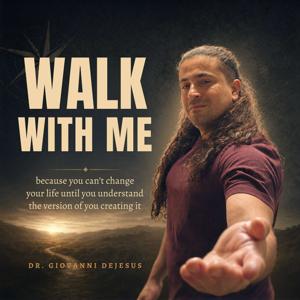
Walk With Me — because you can’t change your life until you understand the version of you creating it.