
Sign up to save your podcasts
Or

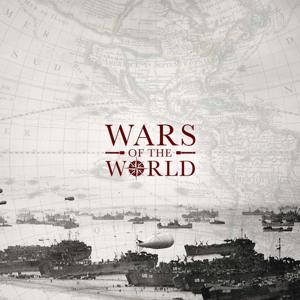


In April 1945, the Soviet Union’s military, better known as the Red Army, began attacking Berlin from the east, south, and north. Throughout WW2, Berlin was used as the Third Reich's base and, as such, its capture by the Allies was of utmost importance. Over 1.5 million Red Army soldiers participated in the assault and their leaders were ruthless, willing to deal with tremendous casualties if it meant inflicting as much damage as possible to Nazi Germany.
Learn more about your ad choices. Visit megaphone.fm/adchoices
The Gestapo: Hitler's Secret Police...
Learn more about your ad choices. Visit megaphone.fm/adchoices
Today’s episode will focus on one of the biggest – and most important – turning points in world history; the Battle of Gettysburg.
Learn more about your ad choices. Visit megaphone.fm/adchoices
Every war has its battles for the cities and in 2003 as US forces, aided predominantly by the United Kingdom, invaded Saddam Hussein’s Iraq, planners in Washington knew that at some point their troops would have to go into the Iraqi capital of Baghdad if they were to ever oust the middle eastern dictator and his government as was the mission objective of Operation Iraqi Freedom. No one was under any illusions that Baghdad would be a tough nut to crack and despite the technological advantage enjoyed by US forces, years of operational experience from Vietnam to Somalia told US commanders that in the end it would largely be down to the skill andfighting spirit of the infantry.
Learn more about your ad choices. Visit megaphone.fm/adchoices
Officially known as the German Reich, Nazi Germany was the German state between 1933 and 1945, when it was headed by Adolf Hitler and his Nazi Party, who governed by way of a totalitarian dictatorship. The term ‘Third Reich’ means ‘Third Realm’ or ‘Third Empire’, and refers to the Nazi declaration that Nazi Germany was the successor to both the Holy Roman Empire and the German Empire, the latter of which took place between 1871 and 1918. In Nazi Germany, life was difficult. Though there was little unemployment, workers were subject to poor wages and bad conditions. Women were to stay at home and produce children while children were indoctrinated with political propaganda as soon as they entered education.
And, of course, many who didn’t fit the so-called ‘norms’ of society - whether it was due to their sexuality, religion, ethnicity, race, disabilities or unwillingness to fight in war - were punished and persecuted. Join us for this documentary as we explore the rise and fall of the Third Reich.
Learn more about your ad choices. Visit megaphone.fm/adchoices
In the spring of 1945, The Battle of Iwo Jima raged between the US Marines and Navy, and the Imperial Japanese Army. Tasked with capturing the Japanese island and its accompanying airfields, the US launched a five-week assault that ultimately became one of the bloodiest conflicts of the Pacific War, leading to the deaths of almost 7000 US soldiers and as many as 18,375 Japanese troops. Though the US would ultimately succeed, the clash between the two countries was not without its controversies. Join us for this documentary as we examine The Battle of Iwo Jima. Welcome to Wars of the World
Learn more about your ad choices. Visit megaphone.fm/adchoices
Send us Fan Mail
The Battle of the Bulge, or the Ardennes Offensive, launched on December 16th, 1944 and was one of the last major German offensives of the Second World War. Although the Germans had gotten off to a strong start, the resulting battle dealt severe blows to the country’s armoured forces and saw the loss of between 63,000 and over 100,000 troops.
It is considered the largest and bloodiest single battle fought by the US during WW2 and the third-deadliest campaign in US history. Today we are looking at The Battle of the Bulge. Welcome to Wars of the World.
Support the show
Send us Fan Mail
In late 2004, the Second Battle of Fallujah commenced. It was an American-led offensive during the Iraq War, with the operation involving the efforts of the United States, United Kingdom and Iraqi Interim Government in what is considered the war’s first major engagement against the Iraqi insurgency, as opposed to its military forces. The conflict resulted in as many as 2000
insurgent deaths and has been described as the single bloodiest battle of the entire war. This is the story of the Second Battle of Fallujah. Welcome to Wars of the World.
Support the show
Learn more about your ad choices. Visit megaphone.fm/adchoices
Send us Fan Mail
Referred to by Vanity Fair as Hitler’s Doomed Angel, Geli Raubal was the fuhrer’s niece, whose demise at the age of 23 was swept under the carpet almost as quickly as it had come. Over the years, the pair’s relationship has come under intense scrutiny with rumours flying about what kind of relationship, exactly, the pair had and what circumstances led to her death. This is the story of Hitler’s strange fascination with his Niece, Geli Raubal.
Support the show
Learn more about your ad choices. Visit megaphone.fm/adchoices
Send us Fan Mail
The First World War was the culmination of the age of empires meeting the industrial revolution of the late 19th century. The battlefield had become a machine of death, crushing out life from thousands of soldiers with an efficiency never before witnessed in recorded Human history. In this episode, we are going to examine how the Allies snatched victory from the German clutches and then began a one hundred day march towards defeating the forces of the Kaiser. This is the story of the 100 Days Offensive. Welcome to Wars of the World.
Support the show
Learn more about your ad choices. Visit megaphone.fm/adchoices
From the publisher's feed

38,702 Listeners

1,243 Listeners

4,758 Listeners

82,353 Listeners

111,865 Listeners
654 Listeners
16,365 Listeners

1,440 Listeners

5,257 Listeners

3,377 Listeners

15,674 Listeners

927 Listeners
342 Listeners
792 Listeners

803 Listeners