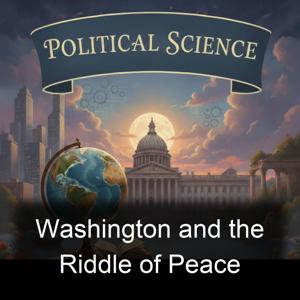
Washington and the Riddle of Peace

Washington and the Riddle of Peace

Download on the App Store

Washington and the Riddle of Peace episodes

  • 009 - The Future of Japan
    At the WASHINGTON CONFERENCE FOR THE LIMITATION OF ARMAMENTS in 1921, acclaimed author H. G. Wells served as a keen observer among the victorious nations of The Great War. His reflections, captured in 29 short essays published in the New York World and other outlets, offer a unique lens into this pivotal moment in history. Rather than serving as a straightforward record of the Conference, these essays convey the insights and impressions of one visitor contemplating the quest for global harmony. Wells critiques the failed League of Nations as America’s initial attempt at organized world peace, suggesting that in its absence, we are left with a world conversation rather than a constitution. Through his thought-provoking observations, Wells articulates a vision of how civilization can navigate the perils it faces and regain its momentum towards progress. While not all of Wells optimistic and pessimistic views have stood the test of time, his reflections on world peace resonate powerfully in todays context. (Lee Smalley)

    This episode includes AI-generated content.

    14 min
  • 008 - China in the Background
    At the WASHINGTON CONFERENCE FOR THE LIMITATION OF ARMAMENTS in 1921, acclaimed author H. G. Wells served as a keen observer among the victorious nations of The Great War. His reflections, captured in 29 short essays published in the New York World and other outlets, offer a unique lens into this pivotal moment in history. Rather than serving as a straightforward record of the Conference, these essays convey the insights and impressions of one visitor contemplating the quest for global harmony. Wells critiques the failed League of Nations as America’s initial attempt at organized world peace, suggesting that in its absence, we are left with a world conversation rather than a constitution. Through his thought-provoking observations, Wells articulates a vision of how civilization can navigate the perils it faces and regain its momentum towards progress. While not all of Wells optimistic and pessimistic views have stood the test of time, his reflections on world peace resonate powerfully in todays context. (Lee Smalley)

    This episode includes AI-generated content.
    13 min
  • 007 - What Is Japan
    At the WASHINGTON CONFERENCE FOR THE LIMITATION OF ARMAMENTS in 1921, acclaimed author H. G. Wells served as a keen observer among the victorious nations of The Great War. His reflections, captured in 29 short essays published in the New York World and other outlets, offer a unique lens into this pivotal moment in history. Rather than serving as a straightforward record of the Conference, these essays convey the insights and impressions of one visitor contemplating the quest for global harmony. Wells critiques the failed League of Nations as America’s initial attempt at organized world peace, suggesting that in its absence, we are left with a world conversation rather than a constitution. Through his thought-provoking observations, Wells articulates a vision of how civilization can navigate the perils it faces and regain its momentum towards progress. While not all of Wells optimistic and pessimistic views have stood the test of time, his reflections on world peace resonate powerfully in todays context. (Lee Smalley)

    This episode includes AI-generated content.
    16 min
  • 006 - The First Meeting
    At the WASHINGTON CONFERENCE FOR THE LIMITATION OF ARMAMENTS in 1921, acclaimed author H. G. Wells served as a keen observer among the victorious nations of The Great War. His reflections, captured in 29 short essays published in the New York World and other outlets, offer a unique lens into this pivotal moment in history. Rather than serving as a straightforward record of the Conference, these essays convey the insights and impressions of one visitor contemplating the quest for global harmony. Wells critiques the failed League of Nations as America’s initial attempt at organized world peace, suggesting that in its absence, we are left with a world conversation rather than a constitution. Through his thought-provoking observations, Wells articulates a vision of how civilization can navigate the perils it faces and regain its momentum towards progress. While not all of Wells optimistic and pessimistic views have stood the test of time, his reflections on world peace resonate powerfully in todays context. (Lee Smalley)

    This episode includes AI-generated content.
    10 min
  • 005 - The President at Arlington
    At the WASHINGTON CONFERENCE FOR THE LIMITATION OF ARMAMENTS in 1921, acclaimed author H. G. Wells served as a keen observer among the victorious nations of The Great War. His reflections, captured in 29 short essays published in the New York World and other outlets, offer a unique lens into this pivotal moment in history. Rather than serving as a straightforward record of the Conference, these essays convey the insights and impressions of one visitor contemplating the quest for global harmony. Wells critiques the failed League of Nations as America’s initial attempt at organized world peace, suggesting that in its absence, we are left with a world conversation rather than a constitution. Through his thought-provoking observations, Wells articulates a vision of how civilization can navigate the perils it faces and regain its momentum towards progress. While not all of Wells optimistic and pessimistic views have stood the test of time, his reflections on world peace resonate powerfully in todays context. (Lee Smalley)

    This episode includes AI-generated content.
    11 min
  • 004 - The Unknown Soldier of the Great War
    At the WASHINGTON CONFERENCE FOR THE LIMITATION OF ARMAMENTS in 1921, acclaimed author H. G. Wells served as a keen observer among the victorious nations of The Great War. His reflections, captured in 29 short essays published in the New York World and other outlets, offer a unique lens into this pivotal moment in history. Rather than serving as a straightforward record of the Conference, these essays convey the insights and impressions of one visitor contemplating the quest for global harmony. Wells critiques the failed League of Nations as America’s initial attempt at organized world peace, suggesting that in its absence, we are left with a world conversation rather than a constitution. Through his thought-provoking observations, Wells articulates a vision of how civilization can navigate the perils it faces and regain its momentum towards progress. While not all of Wells optimistic and pessimistic views have stood the test of time, his reflections on world peace resonate powerfully in todays context. (Lee Smalley)

    This episode includes AI-generated content.
    10 min
  • 003 - The Trail of Versailles Two Great Powers Are Silent and Absent
    At the WASHINGTON CONFERENCE FOR THE LIMITATION OF ARMAMENTS in 1921, acclaimed author H. G. Wells served as a keen observer among the victorious nations of The Great War. His reflections, captured in 29 short essays published in the New York World and other outlets, offer a unique lens into this pivotal moment in history. Rather than serving as a straightforward record of the Conference, these essays convey the insights and impressions of one visitor contemplating the quest for global harmony. Wells critiques the failed League of Nations as America’s initial attempt at organized world peace, suggesting that in its absence, we are left with a world conversation rather than a constitution. Through his thought-provoking observations, Wells articulates a vision of how civilization can navigate the perils it faces and regain its momentum towards progress. While not all of Wells optimistic and pessimistic views have stood the test of time, his reflections on world peace resonate powerfully in todays context. (Lee Smalley)

    This episode includes AI-generated content.
    20 min
  • 002 - Armaments the Futility of Mere Limitation
    At the WASHINGTON CONFERENCE FOR THE LIMITATION OF ARMAMENTS in 1921, acclaimed author H. G. Wells served as a keen observer among the victorious nations of The Great War. His reflections, captured in 29 short essays published in the New York World and other outlets, offer a unique lens into this pivotal moment in history. Rather than serving as a straightforward record of the Conference, these essays convey the insights and impressions of one visitor contemplating the quest for global harmony. Wells critiques the failed League of Nations as America’s initial attempt at organized world peace, suggesting that in its absence, we are left with a world conversation rather than a constitution. Through his thought-provoking observations, Wells articulates a vision of how civilization can navigate the perils it faces and regain its momentum towards progress. While not all of Wells optimistic and pessimistic views have stood the test of time, his reflections on world peace resonate powerfully in todays context. (Lee Smalley)

    This episode includes AI-generated content.
    18 min
  • 001 - Introduction and The Immensity of the Issue and the Triviality of Men
    At the WASHINGTON CONFERENCE FOR THE LIMITATION OF ARMAMENTS in 1921, acclaimed author H. G. Wells served as a keen observer among the victorious nations of The Great War. His reflections, captured in 29 short essays published in the New York World and other outlets, offer a unique lens into this pivotal moment in history. Rather than serving as a straightforward record of the Conference, these essays convey the insights and impressions of one visitor contemplating the quest for global harmony. Wells critiques the failed League of Nations as America’s initial attempt at organized world peace, suggesting that in its absence, we are left with a world conversation rather than a constitution. Through his thought-provoking observations, Wells articulates a vision of how civilization can navigate the perils it faces and regain its momentum towards progress. While not all of Wells optimistic and pessimistic views have stood the test of time, his reflections on world peace resonate powerfully in todays context. (Lee Smalley)

    This episode includes AI-generated content.
    25 min

About Washington and the Riddle of Peace

From the publisher's feed

At the WASHINGTON CONFERENCE FOR THE LIMITATION OF ARMAMENTS in 1921, acclaimed author H. G. Wells served as a keen observer among the victorious nations of The Great War. His reflections, captured in…