
Sign up to save your podcasts
Or



How do you navigate the "anniversary reaction" when the calendar reminds you of the hardest year of your life? In this episode, Monica and her daughters, Ari and Quesa, return from a hiatus to discuss the "collective low" of February and the physical toll of cumulative grief.
Following the loss of both their biological father ("Padre") and the dad who raised them(“Dad”), the family explores the concept of body memory; the way our bodies remember trauma even when our minds try to move forward. This raw and honest conversation dives into the reality of interrupted grief, the anger that can follow religious platitudes, and the struggle of navigating life when the physical presence of a loved one is gone.
In this episode, we discuss:
Whether you are a widow navigating solo parenting, a teenager dealing with the loss of a parent, or someone experiencing grief during an anniversary, this episode offers a space where you don't have to have it all figured out.
Monica and her daughters are joined by their close friend Alexus to explore the shifting landscape of friendships during grief. When life is marked by profound loss, the "normal" way of connecting often feels impossible, leading to a natural pull toward those who have walked similar paths of trauma.
The group dives into the raw realities of navigating life after losing loved ones, discussing:
Whether you are currently grieving or trying to support a friend through a hard time, this episode offers a grounded look at why shared trauma creates such an unbreakable bond and why it's okay if your social circle looks a little different than it used to.
When a parent dies by suicide or overdose, the tragedy is often followed by a secondary loss: the loss of community support.
Note to Our Listeners: This episode discuses sensitive topics including self-harm and suicidal ideation. Please listen with care.
In this unfiltered and deeply vulnerable conversation, Monica and her daughters, Ari and Evie, pull back the curtain on the complex reality of grieving loved ones lost to suicide and overdose. The family discusses the unique trauma of these losses and the painful lack of support they experienced from both their local community and broader charitable organizations.
The conversation delves into the high-risk factors for children who lose a parent to traumatic circumstances, including struggles with suicidal ideation and self-harm. Monica explains her unconventional parenting choices, such as allowing tattoos and piercings, as vital outlets for her children to process emotional pain and avoid further self-harm.
Key topics discussed in this episode include:
This episode serves as a powerful call for empathy and education. It highlights the desperate need for communities to show up for grieving families with the same fervor they would for any other tragedy.
The Impact of Traumatic Loss on Children: The Statistics
Research highlights that children who lose a parent to external causes, like suicide or overdose face a unique set of long-term challenges.
Sources & Further Reading:
Resources for Immediate Support
If you or someone you know is struggling, please reach out for help. You are not alone.
Note to Our Listeners: This episode gets very real. We discuss the physical experience of saying goodbye and preparing a parent for their funeral. If you’re in a particularly sensitive place with your own grief today, you may want to listen with a friend or save this for later.
How do you navigate a holiday season marked by the loss of two fathers?
In this deeply personal episode of We See Dead People, Monica and her daughters, Evie, Ari, and Marquesa, are joined by their sister, Zayah, to discuss a year of unimaginable transition. Following the recent passing of both their biological father, "Padre", and the man who raised them, "Dad", the family explores the "new normal" of living in the wake of double loss.
From the surreal experience of finding a half-sister through social media to using dark humor as a survival tool, the family shares how they are navigating the complexities of estrangement, memory, and healing.
In this episode, we discuss:
The Weight of Double Loss: Processing the simultaneous passing of a biological father and a father figure.
Grief Support Groups vs. Therapy: Why the girls found peer-led connection more effective than traditional one-on-one counseling for navigating their specific grief.
The Power of Dark Humor: How "Dead Dad Club" pajamas and awkward neighbor interactions help the family process pain and find levity.
Funeral Reality and Final Goodbyes: Zayah and Ari share raw, firsthand accounts of visiting Padre’s home, Zayah describes the sensory imprint left after helping her mother dress him for his funeral.
Healing Through Sibling Connection: How their relationships shifted from sibling rivalry to finding solace in a shared family bond and the "genuine hugs" that keep them going.
Unique Coping Mechanisms: Finding connection through the scent of a father’s truck and the "lifestyle" of using music as a tool for emotional processing.
Join the family for a conversation about the messy, painful, and occasionally hilarious journey of healing after a season of double loss—saying goodbye to both 'Padre' and 'Dad' at once.
Why do siblings grieve so differently? In this episode of We See Dead People, Monica and her daughters, Evie, Ari, and Marquesa, explore the "Hero vs. Villain" dynamic of grieving an estranged biological father after a history of substance abuse.
After years of no contact, "Padre’s" sudden death forced the sisters into a collision of conflicting grief styles. We dive deep into why one sibling retracted to friends for safety while the other clung to family, nearly turning sisters into "enemies."
Key topics in this conversation include:
Disenfranchised Grief: Navigating the stigma of death by overdose and the isolation of "complicated" family loss.
The "Outsider" Sibling: Evie shares the vulnerable perspective of being the eldest sibling with a different father, feeling left out as her sisters bonded through shared trauma.
The Science of Addiction: Quesa shares her research on Substance Use Disorder (SUD) as a chronic brain disease and the hard truth that you cannot "save" someone from addiction.
Despite the "vocal stims," ADHD tangents, and the occasional dog-related disaster, the family highlights their ongoing journey toward a new baseline of communication and sisterhood.
Note: This podcast discusses sensitive topics such as drug use, self-harm, death, and suicide. Listener discretion is advised.
We walk through the "snowball effect" of compounded grief: from the sudden loss of an aunt, the death of a biological father (Padre) to an overdose just two weeks later, and the tragic suicide of the father who raised them in his place.
We discuss the surreal moments in the ICU, the "grief incompatibility" between siblings, and why we decided to start "We See Dead People" when we couldn't find any resources for kids, by kids. If you’ve ever felt like you’re "going through hell and back," join us for a conversation about surviving the unthinkable with dark humor, honesty, and hope.
Note: This podcast discusses sensitive topics such as drug use, self-harm, death, and suicide. Listener discretion is advised.
From the publisher's feed
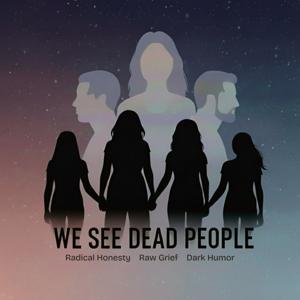
How do a mother and three daughters survive the loss of a parent? This podcast offers a raw, real-time look at bereavement and family grief as they grapple with the devastating loss of an aunt and two father figures in rapid succession. This isn't a show with polished answers or "stages of grief" advice; it offers radical honesty. Through candid conversations marked by necessary dark humor, a mother and her pre-teen/teen daughters share the day-to-day realities of compounded and complex grief.
They discuss the emotional exhaustion of mourning, the struggle of coping with parent loss, and the reality of keeping life "normal" when your world has ended. Whether you are a suicide loss survivor, a grieving teen, or a family feeling isolated in your pain, this show offers a community where you can find one punchline and one honest tear at a time.
WARNING: This podcast contains graphic discussions of sensitive topics such as death, suicide, and self-harm. Listener discretion is advised.