
Sign up to save your podcasts
Or



Diving into Zimbabwe’s challenges and opportunities, and final insights from the series.
Four years in office; one more year to go: Has the government of Zambia done enough for a second term?
Botswana has long been hailed as a model of democratic stability in Africa. Yet, since gaining independence in 1966, the country remained under the rule of a single dominant party—until the historic elections of October 2024. The Umbrella for Democratic Change (UDC) emerged victorious, ushering in a new era of governance.In this episode, we explore whether this political shift has led to meaningful change. Has the new government delivered on its campaign promises? What progress has been made, and what challenges remain as it nears the end of its first year in office?Mokaloba Mokaloba, our Botswana country researcher, joins us to unpack the evolving political landscape, assess the government's performance, and reflect on what this moment means for the future of Botswana’s democracy.
A closer look at the Government of National Unity in South Africa. Can they navigate internal tensions to deliver on commitments made to citizens?
For the first time since 1994, the ANC has lost its parliamentary majority. Now, ten parties are partnering under the Government of National Unity (GNU). But can shared governance deliver unity, or will it deepen division?
In this episode of What If ...We Think Differently?, we dive into the current state of the nation using fresh insights from our Tracker data: 121 promises made, 27 actions in progress. As old allegiances fracture and new coalitions form, we ask—what’s happening beneath the surface? And what does it mean for South Africa’s future?
Learn more about the South Africa Citizens Watch platform from our country researcher, Yolokazi Mfuto. https://africancitizenswatch.org/south-africa
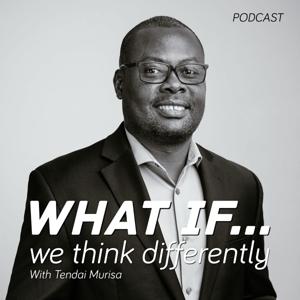
Democracy isn’t a one-time event—it’s a journey. African Citizens Watch is committed to walking that path alongside everyday citizens, tracking the promises made by governments during elections across Zimbabwe, Malawi, Zambia, Botswana, and South Africa.In this podcast series, we pull back the curtain. You will hear directly from the researchers immersed in the data, offering unfiltered insights into progress, pitfalls, and the power of transparency. Each episode bridges hard evidence with real-world stories, igniting conversations that matter.Tune in to explore how accountability is reshaped from the ground up. Learn how informed citizens transform governance. Be part of the movement redefining democratic engagement in Africa.
Explore how NGOs are redefining themselves beyond the traditional model, shifting back to authentic, membership-based associations and unions led by member interests. Learn about community-embedded organisations, innovative revenue strategies for sustainability, and hybrid models that blend community leadership with social enterprise. Gain concise, practical insights for building resilient, future-ready organisations.
In this episode, we examine the future of NGOs amid a rapidly changing global landscape. As traditional aid models face disruption, marked by reduced foreign funding and shifting donor priorities, NGOs must adapt to survive. We discuss how aid, once driven by donor interests and conditionalities, is being reimagined around mutual benefit and local agency, especially as Africa asserts its leverage through resources and skilled labour.
We also explore the necessity for NGOs to reset their strategies—prioritising accountability to their members, embracing digital transformation, and fostering local leadership.
Join us as we unpack these critical challenges and opportunities, providing actionable insights for NGO leaders, donors, and policymakers committed to shaping a more impactful and self-reliant nonprofit ecosystem.
In this episode, we dive headfirst into the fast-changing world of NGOs and nonprofits! Discover how organisations are navigating a perfect storm of funding cuts, rising costs, and fierce competition for resources, all while demand for their services keeps climbing.
We will unpack why today’s leaders need to think beyond traditional models, embracing entrepreneurial mindsets and bold strategies like mergers and collaborations to survive and thrive. From workforce shortages and financial uncertainty to the power of innovative partnerships, join us for a candid look at what it really takes to stand out, adapt, and make a lasting impact in 2025’s challenging landscape.
In this episode of the What If… We think differently? podcast, we discuss the dramatic shifts in NGO funding that unfolded in January 2025, focusing on the significant cuts to official development aid by major donors like the US and European countries. Drawing from Tendai’s recent paper, The Future of NGOs (https://doi.org/10.59186/SI.3KYH7WCH), we distil the key issues around sustainability and the evolving role of NGOs amid these funding disruptions.
We explore:
The conversation also highlights the shrinking legal and financial space for NGOs, especially in Africa, and contemplates whether this marks the end of an era for traditional aid models or the beginning of a new paradigm. Join us as we unpack these critical developments and set the stage for future discussions on the resilience and transformation of NGOs in a changing global landscape.#FutureOfNGOs #AidTransition #GlobalDevelopment #RethinkingAid #BeyondAidEra
We discuss the supposed ephemeral nature of community-based foundations practicing philanthropy in African Philanthropy. In this conversation, Tendai and Nonstikelelo interrogate the lack of systems, structure, and sustainability of African organisations. Although agile and responsive, Tendai posits that such African philanthropy organisations have not set themselves up for permanence because in their minds the problems they deal with are temporary ones that require a temporary solution. Despite their ephemerality, these pools build community resilience in a significant way. They stand against a potential threat of loss of agency when larger organisations engage with communities. The conversation also raises questions about how broad-based participation can lead to robust community engagement.
From the publisher's feed