
Sign up to save your podcasts
Or



Some messages are written, revised, and deleted before anyone else ever sees them. These unsent confessions, apologies, arguments, and questions often reveal emotions that feel too vulnerable, risky, or complicated to share.
The episode explores why people hesitate before pressing send: fear of rejection, loss of control, uncertainty about consequences, or the need to calm down before responding. Sometimes deleting a message is wise restraint; other times, silence prevents honesty, repair, or connection.
Ultimately, unsent messages remind us that relationships are shaped not only by what we say, but also by what we almost say. Behind every deleted sentence may be a feeling that was real, even if the words themselves disappeared.
A worn staircase is more than an aging piece of architecture. Its softened wood, polished railings, and shallow grooves quietly record thousands of forgotten journeys made by people over many years.
The episode explores how physical wear becomes an accidental archive of everyday life. Unlike photographs or written history, these marks preserve repetition rather than major events: footsteps, routines, habits, and movements that seemed unimportant when they happened.
Ultimately, the worn step reminds us that ordinary lives leave traces. One footstep changes almost nothing, but countless footsteps can permanently reshape a surface—turning architecture into a silent record of human presence.
The sounds of departure are ordinary—doors closing, footsteps fading, engines starting—but they can carry powerful emotional meaning when they belong to someone we care about. These sounds mark the transition from presence to absence and can make separation feel suddenly real.
The episode explores how familiar sounds become part of relationships and routines. We learn to recognize people through footsteps, keys, doors, and everyday movements, often without consciously noticing. When those sounds disappear, their absence can reveal how deeply they had become part of the environment.
Ultimately, the sound of someone leaving reminds us that goodbyes are not always defined by words. Sometimes the most memorable part is what comes afterward: the fading footsteps, the closing door, and the silence that quietly announces that distance has begun.
The last piece of food on a shared plate often becomes more than food. It turns into a small social test involving fairness, politeness, generosity, and the question of who feels comfortable enough to take it.
The episode explores how people learn invisible rules around sharing from childhood, family habits, culture, and past experiences. Some people leave the last piece out of kindness, while others hesitate because they are uncomfortable expressing what they want.
Ultimately, the final bite reveals how much social meaning can hide inside an ordinary meal. A single untouched piece can quietly show who feels secure, who waits for permission, who gives way to others, and how belonging is negotiated through the smallest actions.
Some people repeatedly arrive at the last possible moment, not necessarily because they do not care about time, but because urgency helps them focus. They may underestimate small transitions, dislike waiting, try to finish one more task, or assume that everything will go smoothly.
The episode explores how almost-lateness can become a cycle: pressure creates concentration, a last-minute arrival brings relief, and that success reinforces the habit. It also shows how the same few minutes can feel very different to the person rushing and the person waiting.
Ultimately, being almost late reveals a complicated relationship with time, control, efficiency, transitions, and uncertainty. The challenge is not simply learning to leave earlier, but understanding what makes the final minutes feel so necessary in the first place.
People who consistently arrive early may be doing more than simply following the clock. Their habit can reflect respect for others, a desire to feel prepared, discomfort with uncertainty, or memories of past embarrassment and stress. Extra time can act as a buffer against traffic, delays, and unexpected problems, creating a sense of control and calm. The episode also explores how punctuality can become part of identity and how different people experience time in very different ways. Ultimately, arriving early is often less about being ahead of schedule and more about avoiding the feeling that life is suddenly out of control.
Forgotten objects in public places are more than misplaced belongings. An umbrella under a café table, a glove on a sidewalk, or a book left on a train can become a small trace of someone's private life. These objects invite us to imagine who owned them, why they were forgotten, and whether someone is searching for them. The episode also explores how emotional value can be very different from financial value, and how returning a lost object can become a quiet act of empathy between strangers. Ultimately, forgotten objects remind us that ordinary public spaces are filled with invisible stories, interrupted routines, and small pieces of lives that briefly remain after their owners have gone.
_:empty]:hidden">Where we choose to sit is rarely completely random. On buses, in cafés, classrooms, waiting rooms, and meetings, seating decisions can reflect personal space, comfort, social anxiety, status, familiarity, and belonging. People often seek corners, exits, windows, distance from strangers, or places near people they trust. At the same time, seating can quietly communicate inclusion or exclusion, especially when someone makes room for another person—or fails to. Ultimately, the episode shows how something as simple as choosing a chair can reveal the invisible social rules and emotional needs that shape everyday human behavior.
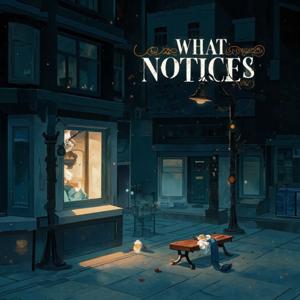
_:empty]:hidden">A single light glowing late at night can reveal the hidden rhythms of lives continuing after the rest of the world seems to have stopped. Behind illuminated windows may be workers finishing shifts, parents waiting for children, students studying, caregivers staying awake, or people simply seeking quiet solitude. The episode reflects on how these lights can represent dedication, worry, memory, responsibility, or comfort. Ultimately, the last light left on reminds us that every sleeping city still contains unseen stories—and that somewhere, someone is always awake, carrying on with a life we may never know.
_:empty]:hidden">A brief silence before someone answers can reveal emotions that words alone may hide. A pause may suggest uncertainty, fear, careful thinking, emotional conflict, restraint, or the struggle to find the right words. During difficult conversations, we often interpret hesitation as a sign that something is wrong, even though people pause for many different reasons. Silence can also protect relationships by giving us time to choose kinder, more thoughtful responses. Ultimately, the episode explores how the moments between question and answer can expose the complexity of human feelings—and sometimes communicate more than the words that finally follow.
From the publisher's feed