
Sign up to save your podcasts
Or

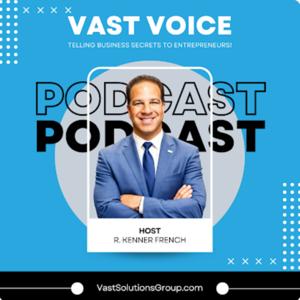


Many business owners feel overwhelmed when they hear terms like quantum computing. It sounds complex, technical, and far removed from everyday operations. But what if the real issue isn’t the technology itself—but the mindset around it?
In this episode, the conversation explores how entrepreneurs can shift from hesitation to action by using tools they already have today—like artificial intelligence. Instead of waiting to fully understand quantum computing, the key is to start where you are and let AI guide the transition.
R. Kenner French explains that business owners don’t need to jump straight into quantum computing. Instead, they can take a hybrid approach—leveraging AI to learn, test, and eventually integrate more advanced technologies. The message is clear: those who delay adopting AI risk being left behind by those who embrace it early.
The discussion also touches on an important reality—while quantum computing is incredibly powerful for calculations and optimization, its role in creative industries is still uncertain. However, there’s a strong possibility that as AI evolves, it will accelerate access to quantum capabilities, opening doors that don’t yet exist today.
Ultimately, this episode highlights a practical path forward: start small, stay consistent, and use AI as a stepping stone into the future of business technology. 📈
What You’ll Learn
• Why mindset is the biggest barrier to adopting new technology
• How AI can act as a bridge to understanding quantum computing
• The risks of ignoring artificial intelligence in business today ⚠️
• What a “hybrid approach” between AI and quantum looks like
• Why quantum computing may be more limited (for now) in creative industries
• How small daily actions (even 5 minutes) can build long-term advantage 🌱
Who This Episode Is For
• Business owners who feel overwhelmed by new technologies
• Entrepreneurs looking to stay ahead of future trends
• Creatives curious about the limits of AI and quantum computing
• Professionals who haven’t fully adopted AI yet
• Anyone interested in the next evolution beyond AI
Don’t stop here—Part 3 reveals what most business owners still don’t see coming.
A deal can look profitable at first glance—but hidden costs, weak systems, and poor research can quickly change the outcome. In this episode, R. Kenner French and Paul Lizell break down what investors often miss when evaluating real estate and crypto opportunities.
Paul explains why real estate returns are not only about purchase price. Insurance, taxes, utilities, flood zones, and local market conditions can quietly reduce profit. He shares how rising insurance costs in places like Louisiana and flood risks in Florida affect investment decisions.
The conversation also moves into crypto, where Paul emphasizes the importance of choosing assets with real-world utility instead of relying on hype. He discusses projects like XRP and HBAR as examples of crypto assets connected to practical use cases.
Kenner and Paul also talk about remote real estate investing—how to find reliable agents, evaluate bank-owned properties, use auction platforms, and decide when a deal is too risky. Paul shares why comparable sales matter, how he approaches rural markets, and when it’s smarter to walk away from a deal.
What You’ll Learn
• Why hidden real estate costs can destroy returns
• How insurance and flood zones affect investment decisions
• Why crypto utility matters more than speculation
• How to evaluate remote real estate markets
• Why comps are essential before buying
• How renegotiation can protect your downside
Who This Episode Is For
This episode is for real estate investors, crypto investors, entrepreneurs, and anyone looking to make smarter financial decisions. It is especially helpful for those who want to understand risk before committing capital.
🎧 This is just part of the strategy—Part 3 dives deeper into mistakes, money decisions, and what separates profitable investors from the rest.
Most business owners are still trying to understand AI.
But the real problem isn’t the technology…
👉 It’s not knowing how to actually use it.
In this episode, R. Kenner French shares why his partnership with the Bainbridge Island podcast is about more than content—it’s about bringing practical AI, business, and financial insights directly to the community.
Instead of complicated tech talk, the focus is simple:
👉 How AI can help business owners work smarter.
From improving efficiency to supporting teams, even basic tools like ChatGPT can make a real impact. Kenner also highlights the importance of making AI accessible—especially for those who feel left behind by fast-changing technology.
At its core, this conversation is about trust, community, and giving people the tools to adapt.
🎯 What You’ll Learn
• Why this podcast partnership matters
• How AI helps improve business efficiency
• Why AI is simpler than most people think
• How local communities can adopt new technology faster
👥 Who This Is For
• Business owners
• Entrepreneurs
• Beginners in AI
• Community-focused listeners
If you’re serious about staying ahead, this is a good place to start.
#AIforBusiness #ArtificialIntelligence #BusinessGrowth #Entrepreneurship #SmallBusiness #BusinessStrategy #TechForBusiness #AItools #StartupLife #DigitalTransformation
Most investors focus on one thing: making money when markets go up. 📈
But what happens when markets fall? ⚠️
That’s where most portfolios break—and where real strategy begins.
In this episode, Chris Vermeulen shares a different approach to investing—one that isn’t based on chasing returns, but on protecting capital first and growing it consistently over time. Instead of relying on traditional diversification or reacting to news, Chris explains how technical analysis and market sentiment can help investors identify opportunities—and more importantly, avoid major losses.
With decades of experience across multiple trading styles, Chris breaks down how markets actually move and why most investors get stuck riding the “roller coaster” of gains and losses. 🎢 His strategy focuses on identifying high-probability trends, stepping aside during uncertainty, and only entering positions when the odds are clearly in your favor.
The conversation also highlights a key shift in mindset: success in investing isn’t just about how much you make—it’s about how much you keep. 💡
By understanding market cycles and adapting your strategy to each phase, investors can reduce risk, avoid emotional decisions, and position themselves for long-term growth. 🌱
What You’ll Learn
✔ Why holding declining assets can hurt long-term returns
✔ The problem with traditional diversification strategies
✔ How technical analysis identifies strong market trends
✔ Why “following the money” matters more than following the news
✔ The role of market sentiment in investment decisions
✔ How to recognize the four stages of any asset cycle
✔ Why protecting capital is more important than chasing gains
✔ A strategy that works in both rising and falling markets
Who This Episode Is For
• Investors who want to reduce risk and volatility
• Business owners and real estate investors diversifying into markets
• Individuals nearing retirement focused on capital preservation
• Anyone tired of emotional investing and market guesswork
• People looking for a more structured, disciplined investment approach
Stay ahead of the market—follow the podcast for more smart investing insights. 🎧📊
Most business owners are still trying to understand AI 🤖. But what if the real shift isn’t AI anymore… it’s what comes next?
In this episode, R. Kenner French introduces a concept that many find overwhelming—quantum computing ⚛️—and explains why it’s not just a futuristic idea, but a powerful tool that could reshape how businesses operate, calculate, and grow.
While artificial intelligence has already transformed workflows and automation, Kenner describes quantum computing as a completely different level—one that can handle complex calculations at a scale traditional systems simply can’t match 📊.
For entrepreneurs, this could mean faster decision-making, improved efficiency, and smarter financial strategies 💡.
The conversation also explores the evolution of technology—from early automation to AI, and now toward quantum computing. More importantly, it breaks down why business owners should start paying attention now, even if the technology still feels unfamiliar or “too technical.”
The key takeaway: those who understand early will have the advantage later 🚀.
🎧 This episode is a practical introduction to what quantum computing means for real-world business.
What You’ll Learn:
• The difference between AI 🤖 and quantum computing ⚛️
• Why quantum is considered the “final frontier” in tech 🚀
• How advanced computing impacts business decisions 📈
• Why early adoption matters for entrepreneurs 💼
Who This Episode Is For:
• Business owners curious about emerging technology 💡
• Entrepreneurs using AI who want to stay ahead 📊
• Professionals interested in future trends in finance and business 🌍
Stay curious—this is just the beginning of where technology is heading.
🎧 Don’t miss Part 2 where we break down how you can actually start using AI in your business.
Most investors didn’t survive the 2008 financial crisis. Many lost everything because they failed to adapt when the market shifted.
In this episode, R. Kenner French sits down with real estate investor Paul Lizell to break down how he not only survived—but pivoted and continued to grow. From starting in banking to flipping over 100 deals a year, Paul shares the mindset and strategy that allowed him to stay in the game when most investors disappeared.
This conversation highlights a key truth: success in real estate isn’t about timing—it’s about adaptation. 📈
What You’ll Learn
• Why most investors failed during the 2008 crash
• The importance of adapting your strategy in changing markets
• The difference between fix-and-flip vs wholesaling
• How Paul scaled to over 100 deals per year
• The mindset required to survive market downturns ⚠️
Who This Episode Is For
• Real estate investors (new or experienced)
• Entrepreneurs navigating uncertain markets
• Anyone looking to build long-term wealth through real estate
• Business owners who want to learn how to pivot during crises
👉 Follow the podcast for future episodes
👉 If this episode gave you value, share it with someone building their real estate journey
👉 What would YOU have done in 2008—pivot or quit? Drop your answer below 👇
👉 Next week, we’ll break down the biggest mistake real estate investors make—don’t miss Part 2 📈
What if your city could run more efficiently, communicate better, and even lower costs—just by using artificial intelligence? ⚠️
In this episode, R. Kenner French explores a bold and timely idea: introducing AI into city government operations in Bainbridge Island. With the recent retirement of the city manager, this moment opens the door to rethinking how local governments operate—and whether AI can play a meaningful role.
Rather than replacing leadership entirely, the discussion focuses on practical, ethical, and proactive ways AI can support city functions. From chatbots answering citizen questions to automating administrative work, the potential is already here—and growing fast.
As AI technology matures, cities like Pittsburgh and San Francisco are already using it to improve traffic systems and infrastructure maintenance. The question is no longer if AI should be used—but how and when. Bainbridge Island may have an opportunity to lead. 📈
What You’ll Learn
• Why now is the right time to adopt AI in local government
• Practical ways AI can improve city operations (chatbots, research, automation)
• How other cities are already using AI successfully
• The role of AI in improving communication with citizens
• Common concerns about AI (security, job loss) and how to address them
Who This Episode Is For
• Local government leaders and policymakers
• Residents interested in the future of their city
• Business owners and entrepreneurs exploring AI
• Anyone curious about real-world applications of AI beyond chat tools
AI isn’t just about automation—it’s about creating smarter systems that benefit communities. When used ethically and strategically, it can reduce inefficiencies, improve services, and even lower costs for citizens. 🌱
The future of cities may not be fully AI-driven—but it will certainly be AI-supported.
If this episode opened your eyes to how AI could transform cities and improve everyday life, now is the time to start thinking differently. Embrace smarter systems, stay informed, and follow the podcast to keep learning how innovation can shape stronger, more efficient communities.
Many entrepreneurs spend decades working in their business without ever truly working on the end game. They pour their heart and soul into operations, only to realize too late that a profitable business isn't always a sellable one. Whether you are five years or two decades away from a transition, the decisions you make today regarding your corporate structure, tax planning, and management systems will dictate the ultimate value of your life’s work.
In this episode, R. Kenner French sits down with David Flores Wilson, a New York-based financial planner and former investment banker. David shares the sobering story of how his own family lost a business due to a lack of estate planning and proper coverage—a catalyst that drove him to help other entrepreneurs avoid the same fate. From the "five levers of financial literacy" to the technical nuances of C-Corp vs. LLC exits, this conversation is a masterclass in preparing for a "well-heeled" retirement.
What You’ll Learn
• The Exit-First Mindset: Why you need to work backward from your goals to create a truly valuable asset.
• Making Yourself Irrelevant: The "tough pill to swallow" regarding why systematic sales processes and management development increase your EBITDA multiple.
• The Four Pillars of Tax Mitigation: How to navigate entity structuring, tax deferral (Cash Balance plans vs. SEPs), credits, and capital gains timing.
• The 5 Levers of Financial Literacy: A breakdown of saving, investing, protecting, managing debt, and minimizing taxes.
• Wall Street Insights: How being in the heart of New York’s finance hub provides unique perspectives on global investment trends.
Who This Episode Is For
This episode is essential listening for entrepreneurs and business owners with a net worth of $5M+ or those scaling toward a high-value exit. If you are a founder who feels "married" to your daily operations or an owner curious about the tax implications of a stock sale vs. an asset sale, David’s insights will provide the roadmap you need.
Follow the podcast for future episodes as we continue to uncover the business secrets every entrepreneur needs to know.
Most entrepreneurs approach taxes by looking in the rearview mirror. You wait until tax day, tally up the damage, and pay the government whatever is due. But according to R. Kenner French, this "backward-looking" approach is the fastest way to overpay. If you are managing significant cash flow or navigating a $300,000+ tax liability, simply relying on last year's data isn't enough to protect your wealth.
In this episode, Elaine Mingus talks with R. Kenner French, founder of VASQ.com, about the shift from traditional accounting to prescriptive intelligence. We dive into the world of quantum computing—the "final frontier" of technology—and how it’s being used right now to run massive simulations that help business owners, high-net-worth individuals, and even professional sports teams optimize their finances.
From the impending "Q Day" and cybersecurity risks to the "Golden Path" report, Kenner explains how to stop counting rocks and start running simulations to save millions. 🎧📈
What You’ll Learn
• The rearview mirror trap: Why waiting until tax season to strategize is a losing game for entrepreneurs.
• AI vs. Quantum: How artificial intelligence looks for patterns in the past, while quantum computing projects solutions into the future.
• Prescriptive Intelligence: Using "scripts" and universal-scale computations to find the most efficient route from high liability to zero tax.
• Protecting your data: How to veil sensitive financial information in a world where quantum computing can pierce traditional encryption.
• Preparing for "Q Day": What the 2028-2035 timeline means for your passwords, banking, and business security.
• The Quarter-by-Quarter Method: Simple, actionable advice for "mom and pop" businesses to use technology and proactive planning today.
Who This Episode Is For
• High-Net-Worth Entrepreneurs looking for advanced, legal,and ethical ways to mitigate massive tax liabilities.
• Forward-Thinking Business Owners who want to stay ahead of the curve on AI and quantum technology.
• Logistics & Operations Managers interested in how massive calculations can optimize fleet routes or employee pay scales.
• Investors concerned about the future of cybersecurity and financial privacy.
Follow the podcast for future episodes to stay updated on the intersection of advanced technology, entrepreneurship, and wealth protection.
Most entrepreneurs are experts at their craft but "accidental" managers of their money. Whether you are scaling a startup or eyeing the retirement finish line, there is a common gap between having a successful business and having a secure future. Often, highly successful people feel a sense of embarrassment because, despite their high earnings, they lack clarity on their "bad math"—the gap between what they have and what they actually need to survive a 30-year "vacation."
In this episode, R. Kenner French sits down with Laura Rehbein, the "Queen of Planning" and founder of Impavid Wealth Advisors. With over 30 years of experience, Laura breaks down why planning isn't just about spreadsheets—it’s about managing the emotions, health costs, and family dynamics that dictate your financial freedom. She discusses the transition from "wearing all the hats" to focusing on unique abilities, and how to ensure your business provides for your lifestyle rather than just consuming it.
What You’ll Learn
• The "Bad Math" Trap: Why many 55-year-olds are closer to a financial crisis than they realize and how to bridge the gap.
• Money is Emotional: How to separate your hopes, fears, and dreams from the cold, hard numbers to make better decisions.
• Measuring Your Money: A simple framework for auditing if your dollars are doing the specific "jobs" they were assigned.
• Succession Pitfalls: Why "giving the business to little Jimmy" might be a recipe for disaster if you haven't planned for professional transition.
• The "Long Vacation" Mindset: Treating retirement as a multi-decade trip that requires a specific, inflation-adjusted budget for health and leisure.
Who This Episode Is For
This episode is a must-listen for small business owners who are driving revenue but lack a personal exit strategy. It is also designed for pre-retirees (ages 50–65) who feel a sense of "fearless finance" is missing from their current wealth management strategy and want to gain clarity without the jargon.
Ready to stop feeling overwhelmed and start feeling empowered? Follow the podcast for future episodes on mastering you
From the publisher's feed