
Sign up to save your podcasts
Or

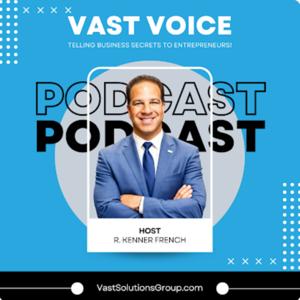


What does it actually take to move from a solo practitioner at a home desk to leading a high-profile architectural firm? In this episode, R. Kenner French sits down with Matthew Coates, a visionary architect based on Bainbridge Island, to peel back the curtain on the evolution of modern design.
Matthew shares a raw look at the "unemployable" spirit that drives entrepreneurs to step out on their own and why "half-assing" a business venture is the fastest road to failure. From navigating the complexities of high-end residential projects to exploring the untapped potential of artificial intelligence in the creative arts, this conversation is a masterclass in staying relevant in a rapidly shifting marketplace.
🎧 What You’ll Learn
• The "Burn the Boats" Mentality: Why leaving yourself a safety net might be the very thing holding your business back.
• The Future of Design & AI: How architects are transitioning from manual creators to "software captains" and what that means for the value of human intuition.
• Adaptive Marketing: Why Matthew’s new brand strategy involves "reverse marketing"—focusing on the power of the experience rather than a hard sales pitch.
• Architecture as Community Service: The story behind the "ReHome Project" and the challenge of building sustainable, affordable housing from 100% repurposed materials.
• Virtual Feasibility: How real estate investors and agents can use virtual walkthroughs and "vision casting" to rescue deals that are stuck on the fence.
⚠️ Who This Episode Is For
This episode is a must-listen for real estate investors looking for a competitive edge in development, entrepreneurs struggling with the transition from employee to owner, and real estate agents who need a vision-driven partner to help clients see the hidden potential in a property.
🌱 Growing Through Change
Whether you are interested in the technical side of Revit and VR or the philosophical side of "niche" vs. "niche," Matthew’s insights remind us that the most successful businesses are those that can adapt to change without losing their soul.
Follow the podcast for future episodes as we continue to explore the intersection of finance, technology, and entrepreneurship.
Are you a real estate investor feeling like you’re spinning your wheels with a massive portfolio but very little freedom? Many investors fall into the "more is better" trap, thinking that a higher door count automatically leads to a better life. However, veteran investor and Wall Street Journal bestselling author Jim Sheils suggests that the real secret to "cracking the code" is actually doing the opposite.
In this episode, Jim shares the pivotal "aha moment" from his 26-year career: Own less of better quality. By focusing on high-standard properties and new construction—specifically in landlord-friendly markets like Florida—investors can actually increase their equity and cash flow while drastically reducing their management headaches. Jim dives deep into how he transitioned from rehabbing foreclosures to becoming part of one of the largest building entities in the U.S., all while maintaining a primary focus on family and work-life balance.
📈 What You’ll Learn
• The Quality Over Quantity Pivot: Why owning fewer, higher-quality properties leads to more freedom and less "wheel-spinning."
• The Build-to-Rent Model: How new construction provides a cleaner trajectory for scaling and better long-term results.
• Market Selection Fundamentals: Why Florida remains a powerhouse for "affordable workforce housing" despite shifting headlines.
• The Power of Landlord-Friendly Laws: Why you should avoid investing in states that make it difficult to manage your assets.
• Balancing the "Family Board Meeting": Strategies for driven entrepreneurs to succeed at home while building a business legacy.
• The Best Real Estate Class: Why your first property is your greatest teacher and how to move from the sidelines to the playing field.
🌱 Who This Episode Is For
• Mid-Level Investors: Those with a net worth of $2M–$3M who are looking to optimize their portfolio for more free time.
• New Investors: Beginners who need a roadmap to avoid the "cheap property" trap that leads to burnout.
• W-2 Professionals: Corporate employees looking to "plant seeds" in real estate for a future retirement strategy.
• Family-Focused Entrepreneurs: High-performers who want to ensure their professional success doesn't come at the cost of their relationships at home.
Follow the podcast for future episodes as we continue to uncover the secrets to entrepreneurial success and wealth building.
Why is it that the wealthiest families in the world, like the Hiltons, seem to play by a different set of financial rules? The secret isn't just in how much they earn, but in how much they keep. Many entrepreneurs fall into the trap of focusing solely on gross revenue, only to realize on April 15th that they’ve overpaid Uncle Sam because they lacked a proactive tax strategy.
In this episode of What’s Kenner French Thinking?, R. Kenner French is joined by Elaine Mingus to discuss the "tax-free" mindset used by the ultra-wealthy. Featuring insights from Mark Miller, author of The Tax-Free Business Owner and advisor to the Hilton family office, this conversation bridges the gap between elite wealth management and modern artificial intelligence. Kenner explains how AI tools like "Einstein" act as a financial "warp zone," allowing everyday business owners to outthink traditional bookkeeping and claim the same deductions as the world’s most successful families.
Stop keeping your receipts in a shoebox and start using silicon-based intelligence to protect your net income.
What You’ll Learn
• Gross vs. Net Revenue: Why your "take-home" pay is the only metric that actually defines your business success.
• The Hilton Strategy: How family offices approach tax mitigation as a year-round strategy rather than a year-end headache.
• AI vs. The Ledger: Why manual bookkeeping is a liability and how AI models can out-calculate human advisors in finding deductions.
• Research & Development Credits: How the government might actually write you a check for innovating within your business.
• The "Warp Zone" Concept: Using technology to skip the "hard way" of wealth building and reach your financial goals faster.
Who This Episode Is For
This episode is essential for entrepreneurs, business owners, and tax professionals who are tired of manual processes and want to learn how the top 1% manage their liability. If you want to move from "working hard" to "working smart" using the latest in AI financial tech, this is for you.
Follow the podcast for future episodes as we continue to explore the intersection of AI, wealth, and tax strategy.
The Blueprint for Commercial Investing: Why the "Big Dogs" Leave the Best Deals for You.
For many real estate investors, the journey starts with a single-family home or a duplex. It’s comfortable, it’s familiar, and it’s what everyone else is doing. But according to commercial real estate veteran Luis Belmonte, if you want to find the real alpha in today’s market, you have to look where the "big dogs" aren't hunting.
In this episode, Luis joins R. Kenner French to pull back the curtain on the commercial property landscape. With a career that spans "since the earth cooled," Luis explains why now—despite the headlines—is the time to look at urban centers, small-unit industrial, and distressed office space. He breaks down the psychology of the "urban hub," explaining why tech giants and innovators still crave physical proximity, and why the "death of the city" is a narrative that historically misses the mark. 🎧
Whether you are looking to diversify your portfolio geographically or move up the food chain from residential to commercial, this conversation provides a grounded, ego-free roadmap to success. Luis shares hard-won lessons from his own "slaughters" in the market and explains the specific math behind buying at 20 cents on the dollar. 📈
What You’ll Learn
• The $5 Million Sweet Spot: Why the most profitable opportunities for individual entrepreneurs exist in deals under $5 million, away from institutional competition.
• The Truth About Urban Decay: Why the "death of New York and San Francisco" is a cycle we’ve seen before and why employers will always chase the "hip" talent pool in cities.
• The "Scientists' Lunch" Theory: A fascinating look at why physical proximity in tech and biotech is the primary driver of commercial real estate value.
• Rehab Pitfalls: How to avoid the "Artiste" trap and why over-renovating a cookie-cutter asset can lead to a financial bath.
• The Timing Clock: Understanding "political terrain" vs. "physical terrain" and how they dictate the speed of real estate cycles. ⚠️
Who This Episode Is For
• Residential Investors: Those who have mastered the "toilet and rent" game and are ready to scale into retail or industrial.
• Well-Heeled Entrepreneurs: High-net-worth individuals looking for geographic and product-type diversification.
• Contrarian Thinkers: Investors who aren't afraid of the "toilet" phase of the market cycle and want to buy when blood is in the streets.
• REIT Enthusiasts: Those interested in the history and mechanics of institutional real estate.
Follow the podcast for future episodes as we continue to unlock the business secrets of the world's most successful entrepreneurs.
For many entrepreneurs, the ultimate goal isn't just to make more money—it’s to buy back their time. However, the path to efficiency is often cluttered with manual tasks, complex tax liabilities, and the overwhelming noise of new technology. How can a business owner navigate the shift from traditional management to an AI-driven workflow without losing the human touch?
In this episode of What’s Kenner French Thinking?, co-host Elaine Mingus puts author and AI expert R. Kenner French through a fast-paced word association game. From the "Vast Vault" to the future of city management, Kenner breaks down how AI is currently reshaping the landscape of business, taxation, and even personal productivity. Whether you are curious about the origins of machine learning or looking for a way to stop missing out on family milestones, this conversation reveals how AI is the key to a more balanced life.
What You’ll Learn
🎧 Efficiency over Exhaustion: How AI tools allow entrepreneurs to spend more time at home by automating routine tasks.
📈 Tax Optimization through Tech: Insights into utilizing models like Claude and Vast Bookie to lower tax liability and increase savings.
⚠️ The LLM Landscape: Why understanding Large Language Models is essential for both beginners and experts in the modern market.
🌱 The Roots of Innovation: A brief look at the history of AI, from Alan Turing to the collective human effort that feeds today's "living ecosystem" of data.
📊 SEO & Testimonials: How AI-driven reviews and testimonials impact your visibility in the new era of Answer Engine Optimization (AEO).
Who This Episode Is For
This episode is a must-listen for entrepreneurs who feel "stuck in the weeds" of their daily operations. If you are a business owner looking for practical ways to implement AI, an aspiring pageant professional interested in modern branding, or simply someone who wants to understand how technology can provide more "Shirley Temple" moments of relaxation, Kenner’s "off the cuff" insights provide a perfect roadmap.
Follow the podcast for future episodes as we continue to explore the intersection of wealth, tech, and efficiency.
In the high-stakes world of entrepreneurship, most leaders treat their businesses better than their bodies. We track our KPIs, optimize our sales funnels, and monitor our cash flow with surgical precision, yet we often ignore the very engine that drives it all: our health. Many driven professionals operate in a state of "functional exhaustion," assuming that mid-day brain fog, stubborn belly fat, and poor sleep are simply the price of success.
In this episode, we sit down with Tracy Gapin, MD a "recovering urologist" turned longevity expert and the founder of the Gapin Institute. Dr. Gapin shares his personal journey from professional burnout and physical decline to building a high-performance medical practice that treats health like a precision-engineered system. We dive deep into the science of longevity, the "bleeding neck" problems facing modern entrepreneurs, and why your current "good enough" health might actually be your biggest business bottleneck.
What You’ll Learn
• The Power of Intentional Sleep: Why sleep is the most important "third" of your life and the exact "Five-Step Evening Ritual" (Reading, Journaling, Mindfulness, Sauna, and Intimacy) to optimize recovery.
• The "Cake" Analogy of Health: Understanding why "sexy" biohacks like cold plunges are just the icing, while hormones, gut health, and nutrition are the essential ingredients.
• Pharmaceuticals vs. Precision Medicine: Why traditional medicine is often "siloed" into treating diagnoses rather than creating health, and how to avoid the trap of sedative sleep aids.
• The Data-Driven Leader: How to use wearable technology, microbiome testing, and blood sugar tracking to find the "blind spots" holding back your cognitive function.
• Entrepreneurial Evolution: Dr. Gapin’s journey from a seven-figure surgical career to starting from scratch, and how he uses AI and human connection to scale a modern medical movement.
Who This Episode Is For
• High-Achieving Entrepreneurs who feel their energy and focus declining despite their professional success.
• Medical Professionals looking for a roadmap to transition from traditional "sick care" to proactive longevity medicine.
• Biohackers and Health Enthusiasts who want to move past the trends and focus on data-backed, foundational health strategies.
• Leaders interested in how the intersection of AI and human compassion is reshaping the future of personalized medicine.
Follow the podcast for future episodes as we continue to uncover the secrets of elite performance and business growth.
The honeymoon phase with ChatGPT often ends the same way for every business owner: with a phenomenon called "AI Drift." You start with a great prompt, but over a long conversation, the AI loses the plot, misses your formatting rules, or starts sounding like a generic robot. If you are tired of babysitting your AI tools just to get a consistent result, it might be time to stop treating AI as a search engine and start treating it as an employee.
In this episode of What’s Kenner French Thinking?, Elaine Mingus and R. Kenner French dive into the technical evolution from simple prompting to autonomous AI agents. Kenner explains why your current "GPT" might be getting tired and how modern business owners are now building "AI teams" where one agent manages another to ensure 100% accuracy.
Whether you’re a solopreneur trying to automate your SEO or a CEO looking to scale your department output without increasing headcount, this episode breaks down the "Transformer Paper" origins of AI and provides a roadmap for the future of digital work.
What You’ll Learn
• The AI Employee vs. The Chatbot: Why "proactive" AI is the next leap beyond simple back-and-forth prompting.
• Understanding AI Drift: Why your AI seems to "get tired" or forget instructions the longer you talk to it.
• The 14% Sigma Rate: The reality of AI error margins and how to use a "Senior/Junior" manager structure to combat it.
• The Tech Stack: An overview of tools like Lindy.ai and N8N for building autonomous workflows.
• Cost vs. Value: Why AI employees are more expensive than ChatGPT Plus, but cheaper than a human salary.
Who This Episode Is For
• Solopreneurs who need to automate repetitive tasks like social media or SEO without losing quality.
• Agency Owners looking to scale client deliverables using custom-built GPTs and autonomous agents.
• Tech Enthusiasts interested in the history of Google’s "Attention Paper" and the current state of the AI ecosystem (Claude, Gemini, and OpenAI).
Follow the podcast for future episodes as we continue to explore the cutting edge of tax, finance, and artificial intelligence.
For many entrepreneurs, their business isn't just a company—it’s their largest financial asset and the primary vehicle for their retirement. However, there is a massive gap between running a successful business and successfully exiting one. Most owners operate in silos, talking to an accountant about taxes, a lawyer about contracts, and a broker about a sale, but rarely do these professionals sit at the same table.
In this episode, Joe Lopresti, founder of Clearpoint Family Office and author of Exit by Design, explains why acting as your own "quarterback" is a recipe for missed opportunities. He breaks down the concept of the "Dumb Tax"—the high price owners pay for not knowing their options—and how to shift your mindset from generating lifestyle income to maximizing enterprise value. Whether you are six months or six years from retirement, this conversation provides a roadmap for the "red zone" of your financial life.
What You’ll Learn
• The Personal CFO Model: Why business owners need a "quarterback" to coordinate between legal, tax, and wealth advisors to catch synergistic opportunities.
• The "Dumb Tax" Explained: How a lack of education on transaction methods and tax strategies leads to post-sale regret.
• Tax Efficiency vs. High Net Worth: Why lowering your tax liability by 33% can drastically change the trajectory of your retirement corpus.
• The 20-Yard Line Strategy: Understanding why the skills that helped you build a business are often different from the skills needed to exit one.
• Maximizing Multiples: How to transition from a personality-driven business to a "machine" that runs without you, significantly increasing your sale price.
• Finding Your "Freedom Point": Identifying the exact valuation number you need to fund the life you want to live after the sale.
Who This Episode Is For
• Business Owners & Entrepreneurs: Anyone looking to eventually exit their company and maximize its final value.
• High-Net-Worth Individuals: Those seeking more sophisticated, coordinated wealth management beyond traditional "siloed" advice.
• Succession-Minded Founders: Owners who want to ensure their business remains a "self-running machine" rather than a job they can't leave.
• Pre-Retirees: Professionals entering the "Red Zone" who need a strategic withdrawal and tax-mitigation plan for their "longest vacation."
Follow the podcast for future episodes on wealth preservation and business growth.
Is artificial intelligence a threat to our local community, or the very tool needed to preserve it? For many residents of Bainbridge Island, AI feels like a distant "tech" concept or a potential risk to the environment. However, as the digital landscape shifts, the cost of staying behind is becoming higher than the cost of moving forward.
In this episode of What’s Kenner French Thinking, R. Kenner French—bestselling author of Modern Millions—joins co-host Elaine Mingus to discuss the intersection of local government, entrepreneurship, and artificial intelligence. They explore how cities like San Francisco and Pittsburgh are already leapfrogging traditional hurdles using AI, and why Bainbridge Island is perfectly positioned to do the same. From balancing city budgets to de-escalating workplace tension, this conversation peels back the curtain on AI as a tool for humanity rather than a replacement for it.
What You’ll Learn
🎧 The "City Model": How major U.S. cities are currently using AI to solve homelessness, optimize traffic patterns, and manage massive workforces.
📈 Efficiency Over Redundancy: Why AI isn’t about replacing jobs, but about eliminating the "garbage in, garbage out" cycle in city management.
⚠️ The Risk of the Status Quo: The specific dangers entrepreneurs and local governments face when they ignore AI while neighboring communities adopt it.
🌱 Emotional Intelligence (EQ) via AI: A fascinating look at using AI models to improve interpersonal relationships, de-escalate conflict, and enhance communication at home and in the office.
Who This Episode Is For
This episode is a must-listen for Bainbridge Island residents curious about the future of their community, entrepreneurs looking to protect their assets and lower taxes through tech, and local government officials seeking ways to run a more efficient, citizen-friendly city.
Follow the podcast for future episodes as we continue to explore the frontier of AI and finance.
The world of Artificial Intelligence moves at breakneck speed, often leaving entrepreneurs drowning in "breaking news" without a clear strategy. While the mainstream media focuses on the latest chatbot features, true innovators are looking for the frameworks and collaborations that will define the next decade of business.
In this episode, R. Kenner French sits down with Tom Allen, founder of The AI Journal, to discuss the evolution of the AI industry from the early days of Robotic Process Automation (RPA) to the current era of Large Language Models (LLMs). Tom shares his journey from a "bad student" at a private boarding school to a leading voice in the UK’s entrepreneurial scene, proving that passion and curiosity often outweigh traditional academic paths.
What You’ll Learn
• The Strategy-First Approach: Why deep-dive frameworks and long-form insights are more valuable for business growth than the 24-hour news cycle.
• The Power of Collaboration: How Tom grew a global platform by focusing on "partner ecosystems" rather than gatekeeping information.
• Overcoming the "Failure Fast" Myth: A candid look at the downs of 2023 and why character-building is the most important part of the entrepreneurial journey.
• The Future of Work: Why AI isn't coming for your job, but rather acting as a catalyst for new industries—much like the iPhone and the internet before it.
• Content Authority: Why honest, raw stories from practitioners carry more weight than traditional journalism in complex technical fields.
Who This Episode Is For
This episode is a must-listen for entrepreneurs looking to integrate AI into their business models, content creators aiming to build authority in the tech space, and forward-thinking professionals who want to understand the long-term societal shifts caused by automation and quantum computing.
Tom’s insights offer a roadmap for anyone who feels "behind" in the AI race, emphasizing that the best time to start collaborating and building community is right now.
Follow the podcast for future episodes as we continue to uncover the business secrets of top entrepreneurs.
From the publisher's feed