
Sign up to save your podcasts
Or

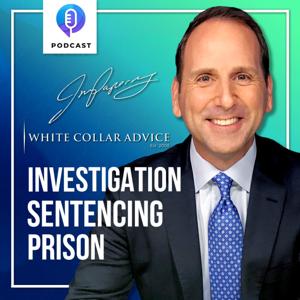


In this podcast episode, I dive into "The 50th Law" by 50 Cent and Robert Greene, a book that explores the profound theme of fearlessness. Drawing parallels to Greene's "The 48 Laws of Power," this work offers a compelling look at how embracing fearlessness can transform weaknesses into strengths.
I share personal insights on how these principles can be applied not just in confronting the challenges of federal prison or sentencing, but in overcoming any of life's significant obstacles.
Through stories of 50 Cent's resilience, from his early hardships in New York's streets to his rise in the music industry, we uncover the importance of self-reliance, opportunism, and maintaining a fearless approach in the face of adversity. J
Join me as we discuss how adopting this fearless mindset can empower you to take control of your sentence and all of the collateral consequences that follow a government investigation.
Justin Paperny
Achieving the best outcome in federal court requires dedicated work over a prolonged period. It necessitates not only having an excellent lawyer but also working effectively with them—being open and transparent at every step.
In this short blog, I wish to share about a particularly special relationship with Diane Bass, a friend and one of the best lawyers I've had the pleasure to work with. Located in Orange County, Diane handles cases throughout California. Whenever I need assistance outside of the state, she's my first call for a reliable referral.
Diane is a remarkable attorney because of her genuine care for her clients. She actively listens, personally invests in understanding their situations, and encourages them from day one to introspect and think deeply about how they got involved in a government investigation. This introspection is vital—it allows Diane to advocate passionately and precisely, ensuring she's equipped with all the necessary information to negotiate and support her clients effectively. (I am filming a live YouTube video this week highlighting the consequences of a defendant who failed to work openly with their lawyer.)
I first met Diane in 2014 when my business partner, Michael Santos, introduced us. Her appreciation for our team's expertise and her receptiveness to new ideas impressed me. Unlike some lawyers who are resistant to outside ideas, Diane puts her ego aside and embraces ideas that can help her client get the shortest federal prison sentence possible!
Some lawyers remain rigid in their approaches, which can undermine their client's interests.
For instance, a Midwest lawyer I recently spoke with refused to provide a personal narrative to a probation officer, despite the benefits our team has heard directly from Federal Judges.
Diane, however, embraces such strategies, presuming her client delivers the right message. This openness has led to significant victories, such as a recent case where a client faced a suggested 87 months but received only 46. Furthermore, I've recently done a YouTube video with Diane (posting soon!) featuring a client of hers convicted at trial.
The mitigation led to the judge in Riverside sentencing him to time served, whereas the government had sought 57 months. Diane's collaborative spirit, her willingness to consult with experts, and her profound commitment to her work are why she achieves such outcomes. It is not by accident!!
I am proud to endorse and support Diane's work.
Our team has referred numerous clients to her, and she has consistently performed exceptionally, helping individuals navigate a new, foreign world.
If you are looking for a lawyer in Orange County, look no further than Diane Bass. Her compassion and dedication are unmatched.
Best,
Justin Paperny
In my latest podcast I address the sentencing memorandum. Unfortunately, too many defendants lack an understanding of the sentencing memorandum--some have never even heard of it until it was turned in to the government before sentencing.
Presuming it was done well, the memo plays a pivotal role in influencing the sentencing phase by presenting a comprehensive, well-rounded defense narrative to the judge. Starting with essential background information about the defendant, the memorandum explores character details and mitigating circumstances surrounding the offense.
This podcast posted along with a longer blog on Topwca.com, highlights the strategic importance of integrating personal narratives into the memorandum to enhance its personal touch and persuasiveness. For example, during my own sentencing, my attorneys successfully incorporated details from my life to bolster the memorandum's effectiveness.
The post also advises defendants on the necessity of contributing to their memoranda, emphasizing unique mitigating factors to distinguish their cases, akin to Seth Godin's "Purple Cow" concept—making their cases stand out distinctly.
Finally, the blog stresses the importance of defendants being proactive and involved in the drafting of their sentencing memorandums.
Justin Paperny
In this podcast, I discuss a common challenge defendants face in government investigations: the harsh truth about sentencing mitigation efforts.
Despite significant investments in time and resources, a client learned from their lawyer yesterday that their mitigation efforts will not influence the judge's decision.
This situation raises questions about why some lawyers may downplay mitigation efforts. Possible reasons include a reluctance to embrace new ideas and past negative experiences with consultants who made false promises.
Despite these challenges, defendants must hold their lawyers accountable and document their mitigation efforts. Doing so can influence their sentencing and increase their chances of securing an earlier release from federal prison.
Justin Paperny
I was saddened to hear Sam Bankman-Fried say his useful life is over. Many individuals facing prison share that sentiment, and I certainly did during my own experience. Navigating through such challenging times requires learning from those who have not only faced but also found success in similar circumstances. Fortunately, I found invaluable guidance from my mentor, Michael Santos, while incarcerated. I literally sat next to him for 10-12 hours a day in that prison quiet room to learn and grow. When individuals tell me, "I cannot do it, Justin. Come on, man. The FEDS want (insert sentence length). I cannot do it," I can offer them a tangible roadmap based on documented experiences of overcoming such hurdles. Whether that person does the work or not is up to them. In this CNN video, I discuss how Bankman-Fried can discover meaning in his journey, much like I did. As I often emphasize, "If Michael can conquer 26 consecutive years in prison, you can overcome (insert sentence length)." Justin Paperny
Transcript from CNN Interview
We're joined now by Prison Consultant and the founder of White Collar Advice, Justin Paperny. Justin, thanks so much for sharing part of your afternoon with us. What would you be telling Peter Navarro now as he begins his first day of incarceration?
I would tell him this four months can feel like 40 years. If he complains all day and finds people who will tell him exactly what he wants to hear, that it wasn't his fault or he can adjust properly.
Don't complain about the length of his sentence, which can be off-putting to people who have been in prison for a long time. He can do his job with humility. He has a Ph.D. in economics from Harvard. He could use his experience to educate people so it could be a great time in his life, or it can be a miserable time. The good news for him, at least he gets credit for time served. Today he's one day closer to home.
That's true. He may not be a household name. He's not really a celebrity. He is well known in politics, though he was a prominent figure in the Trump White House. A Maga loyalist, he was able to hold a 30-minute press conference before starting his sentence. And most inmates don't have that luxury. How do you think his life on the outside will play on the inside?
Most people who go to prison, like me, are unknown. Because of his stature in the administration, there will be people who are sympathetic to him. There will be sycophants all around him offering to help him, and he can take that advice or help. Or he can lay low and recognize in the totality of his life this is a little blip, and he can use the experience for good. But certainly, guards and prisoners are going to come up to him and offer him things. Others won't care, and others will loathe him. Of course, he has an obligation to his family to adjust well, to never complain, and to use this experience somehow. Some way to benefit people in prison who have not had the opportunities that he has had throughout his lifetime. Use the 120 days on the inside to educate and help people. It's possible, but he has to make that choice.
I appreciate that that sort of stoic philosophy that you're recommending. There is not much privacy, apparently, in that elderly men's dorm that he's likely to live in. You mentioned keeping a low profile. Would that actually be possible under those circumstances?
If he chooses.
To create that profile, certainly he can. When I was in prison, I woke at 4:00, woke up at 4:00 in the morning. So I had several hours alone to think and create and write while the dorm slept. And I would exercise alone, go to the library alone, walk that track alone, and by exercising and working hard, you go to bed earlier because you are exhausted. Or he can do what so many prisoners do: sit in the chow hall and lament and complain. The great thing about complaining in prison is it will eventually be your turn, and there will be others who will be willing to listen to those complaints. The choice is his. But if someone tells you you cannot find respite or privacy in federal prison, that tells me they haven't been to federal prison. If he wants it, he can do it, but it's going to require an adjustment. Use the experience for good to teach rather than complain, which is what too many new prisoners do. All eyes will be on him. I hope he adjusts properly for his sake and his family's sake. They're watching.
Right? You did mention that he will have to find a job while he's in prison. What would you recommend he do? What are the options look like potentially for him?
I recommend he does his job because if he's in prison, there's already about 17 people who have come up to him and said, you shouldn't be here, I'll do your job for you. It shows humility and deference. If you're willing to contribute to that community of felons. He could be an orderly, work in the commissary, serve food. Maybe he's scrubbing toilets and showers. I'm not sure I know you do your job on the inside. You avoid disciplinary infractions, you avoid the prison hustle, and you never, ever complain. That's what he needs to do. Presume he wants this four month experience to be a productive experience in his life. And one will, that one will that will not define the rest of his life as it does for so many people who go through this system.
Justin Paperny, we really appreciate an illuminating conversation. Thanks so much.
Thank you.
In today's podcast, I analyze the new updates in Sam Bankman-Fried's case, highlighting his missed chances for mitigation that could influence his ultimate federal prison sentence.
Our team at White Collar Advice assists others involved with FTX, though Bankman-Fried isn't one of our clients. Bankman-Fried seems to be repeating history, relying heavily on his legal team instead of mitigating. This approach could lead to a harsher sentence, much like others before him. Understanding federal sentencing is complex. Bankman-Fried's lawyers suggest a 63 to 78-month term.
In reality, I'll explain what this could mean, factoring in the First Step Act and good behavior. His defense strategy leans on his attorneys' arguments and experts' reports, sidelining proactive efforts that could show his character and remorse—potentially crucial for leniency. I urge Bankman-Fried and anyone in a similar situation to mitigate. True change and resilience come from within, not through your defense team's efforts.
Thank you for listening.
Justin Paperny
Our client's case took a dramatic turn last February when a federal judge, exasperated by his actions, declared him "an absolute menace to society" and ordered him into custody. This pronouncement could have marked the beginning of a bleak chapter in our client's life, especially as he was staring down a potential 60-month sentence in federal prison.
Despite the likelihood of a 60-month sentence and the less-than-ideal start to our relationship (he hired us three days before he was taken into custody) his path to redemption had only just begun. With the help of his phenomenal lawyer, Diane Bass, and the comprehensive support from our team, he finally began to do the work.
He enrolled in our "Preparing for Success After Prison" course from that detention center, engaging daily with the material. This wasn't just about going through the motions but about genuine self-improvement and taking proactive steps towards rehabilitation. By documenting his journey of reflection and growth, he constructed a compelling narrative that demonstrated his commitment to change, far beyond mere apologies or expressions of regret. In sum, he had to prove to his Judge he would not be a "menace to society."
During the sentencing hearing, the federal judge acknowledged the significant strides our client had made, influenced in part by the insights and philosophies of Carl Jung, who said, "You are what you do, not what you'll say." Instead of the looming 60 months, the judge sentenced him to 37 months in federal prison, underscoring the impact of documenting the journey for all stakeholders.
If you are reading this and are facing a sentencing hearing, act now to change the narrative, like our client did.
Justin Paperny
I understand the shock and disbelief that comes with facing a federal prison sentence—I've been there. At first, I rejected advice and preparation, opting instead to blame others for my situation. But that lack of preparation made things harder for myself and my family.
Learn from my mistakes.
Now that you've been sentenced, you have clarity. There's a defined timeline: a beginning and an end to your federal prison sentence. The real challenge is ensuring you come out with a solid plan, ready to rebuild and rebrand.
Our team at White Collar Advice is eager to help you overcome these hurdles. As you prepare for prison, document your plans and establish a reliable contact person for managing outside affairs. Understand the financial implications, prepare a reading list that aligns with your goals, and plan to oversee your business legally. Manage your personal belongings, address medical needs, set a realistic communication plan with loved ones, and create a quadrant guide for decision-making. Begin an exercise regimen that you can maintain while inside.
Remember, it's about taking deliberate steps to document your journey, making it tangible for others, including judges and probation officers, to see. Our strategies are proven, not just ideas, and they'll serve as your blueprint for navigating your time through prison and life after prison.
Justin Paperny
Preface To Third Edition of Lessons From Prison
When I read 'United States of America Vs Justin Paperny,' I wasn't ready to change. Even after Judge Wilson sentenced me to prison, I continued to resist. It was only upon my surrender to Taft Federal Prison Camp in 2008 that the gravity of my circumstances truly dawned on me. In that moment of clarity, I finally understood the extent to which my own flawed character had led to my downfall.
I met Michael Santos in Dorm D on my second day in prison. I knew of Michael because my mother used to send me his blogs, which I ignored. As a federal prisoner, I began to truly understand the value of his insight.
Within days of my arrival at Taft Camp, Michael became my mentor, guiding me through a journey of profound personal growth during my sentence. His wisdom and guidance were invaluable. I was fortunate to work alongside him every day in prison, learning and evolving. He is still guiding me today!
Now, I invite you to do the same. While you may not have the opportunity to work alongside Michael as I did, through this book, you can access the same lessons he taught me and the insights we developed together.
At the time of publication in 2009, 'Lessons From Prison' was a compilation of what I learned from Michael while serving my 18-month prison sentence. Since then, my life—and the world—have evolved significantly. I married and had two children and relocated with my family from Los Angeles to Orange County. The move symbolized not just a location change but also the ongoing journey of personal and professional growth that has defined my life since my release from federal prison on May 20, 2009. This updated preface of the book offers new insights into preparing for successful outcomes and reflects recent changes in the law that affect sentencing and time served.
The successful outcomes produced by our dedicated team have garnered global media attention, amplifying our reach and impact. These opportunities have not only expanded our ability to help others but have also been instrumental in the growth of our business.
Navigating the complexities of a government investigation is a profoundly disorienting experience. Though I completed my own sentence in 2009, the rawness of the ordeal remains undiminished in my memory. The emotional turmoil, the gnawing uncertainty, the looming specter of incarceration—all these can weigh heavily on a person's psyche. Along with our team, I am privileged to guide countless individuals through these tumultuous times. This daily engagement keeps the reality of these struggles vivid in my mind. I share a deep, enduring empathy for the distress that accompanies this ordeal—it leaves an indelible mark, one that is both unforgettable and transformative.
In the face of these daunting challenges, I offer you reassurance grounded in lived experience: you can navigate through this crisis and emerge with a renewed sense of purpose and clarity. My own path to redemption, along with the journeys of the scores of individuals we've supported, bears witness to the indomitable strength of the human spirit. They serve as compelling evidence that even amidst the severest trials, opportunity exists for significant personal recalibration and the discovery of a deeper, more purposeful existence.
Emerging successfully will not happen by accident. As you will read in "Lessons From Prison," the hardest part of the process is not prison itself but rather the waiting and wondering. The success you strive for requires embracing hard truths: we cannot change the past, and the reality is that too many people continue to suffer long after serving their sentence. For many, a brief time spent in a minimum-security camp becomes a life sentence.
The passage of the First Step Act in 2018, championed by Michael Santos since his imprisonment began in 1987, is a testament to the power of vision and perseverance. This legislation mirrored Michael's decades-long commitment to advocacy, education, and reform and underscores a crucial message: with a clear vision and relentless effort, transformative change is achievable. His 'Preparing for Success After Prison' curriculum is now an approved First Step Act course in the Bureau of Prisons catalog.
This book does not explicitly mention the term "release plan," but that is precisely what it represents. A release plan changed my life. By documenting my progress and growth, I encouraged all stakeholders – from my family to my probation officer – to hold me accountable.
Whether your release plan is a manuscript like mine or something smaller, it must be created with the appropriate messaging and stakeholders in mind. Michael Santos often says, "We never ask anyone to do anything we didn't do." We are successful because we document our journeys, share them, and hold ourselves accountable. Follow this path, and you can achieve whatever it is you want. Success, whether that means a shorter sentence, early release from prison, or more liberty on supervised release, will not happen by accident. It requires a commitment to a well-thought-out plan and the discipline to see it through.
Moreover, I invite you to join the mission of the Prison Professors Charitable Corporation. Founded by Michael and Carole Santos and supported by our personal donations, this nonprofit organization is dedicated to improving the lives of people impacted by the criminal justice system. From preparing for prison to navigating societal reintegration, Prison Professors Charitable Corporation offers hope and practical guidance. We are a movement committed to reimagining and reforming America's prison system, advocating for merit-based liberty, and reducing recidivism.
Reflecting on my personal growth since my release, I've realized that the commitments and goals I set in prison were the bedrock of my success. Despite the challenges of reentry as a convicted felon, the principles I adhered to – principles shared in this book – have been instrumental in overcoming the odds. As a husband and father, these lessons continue to guide me.
In this updated preface, I address the critical need for justice-impacted individuals to create assets that influence stakeholders. The unfortunate reality is that without documented, shared evidence of reform, many in the legal system remain skeptical. This book aims to guide you in creating that evidence, in expressing genuine remorse and reform, and in charting a path that ensures you never return to a courtroom.
The call to action remains as vital as ever: Read this book, absorb the content, and implement the lessons. This edition, available as an audiobook, allows for convenient and private consumption. Let each chapter guide you, step by step, towards a future where slow and steady effort brings about lasting change. And remember, our team stands ready to assist you further.
As you embark on this journey with White Collar Advice, remember that our collaboration is more than just a path to a shorter sentence and earlier release from prison; it's a contribution to a larger justice reform movement. Together, we can prepare for the new realities of life post-conviction and work towards a future where your past does not define your potential and where a prison term doesn't become a life sentence of unfulfilled potential and ongoing challenges.
From my perspective, as you read this book, you're faced with three distinct choices. Each of these choices carries its own set of consequences, and it's important to consider them carefully:
The first option is to wait. Waiting doesn't require any effort. In fact, while waiting, you don't have to do anything. As a consequence, however, you may continue to live in fear. You may continue to deny or minimize the magnitude of the problem. Instead of acting, you might cling to a fantasy that events will improve or magically disappear. You may fail to live productively while in that "waiting" mode.
Rather than working productively to restore confidence, if you choose the first option, you might surf the internet looking for information when you can't sleep. I know this option well. I endured it for several months before my surrender to prison. I felt lost, invaded, hopeless, afraid, and tormented by anxieties about what was to come. It's not an option that I recommend for anyone.
You have a second option: to actively engage with our team for guidance through your journey. If the sleepless nights and constant anxiety have become overwhelming, you can choose to work with us. We'll define a clear scope of work with a fee agreement tailored to your needs.
We'll collaborate closely to develop a strategic approach if you opt for this path. Our work together will vary depending on your current stage in the journey. We can focus on sentence mitigation, aiming for the most favorable outcome, or concentrate on preparing for prison and ensuring the best possible experience on the inside.
The highly personalized work we undertake together will depend on a variety of factors. While we do not offer legal guidance, we collaborate closely with many defense attorneys who are familiar with our programs and services. Our joint efforts will be primarily focused on preparing you for sentencing and the challenges of imprisonment. More importantly, we'll develop a clear and deliberate strategy to help you emerge from prison with your dignity intact and enhance your prospects for success upon release.
You'll find a renewed sense of purpose if you choose this second option. Our collaborative work will reduce your anxieties and support you as you navigate the judicial and prison process.
Of course, there is a third option. You may choose to retain our team. But more is needed than just hiring our team. Our methods require preparatory work. Our team has developed mitigation strategies proven to be best-practice guides (as taught by the federal judges we interviewed) for getting a shorter sentence and preparing for the prison experience. During an initial free consultation, we would review the scope of work and come to an agreement. Yet, if you fail to engage and participate in the work, progress will not follow.
We cannot purchase restored peace and confidence. We must work to achieve it.
Which option will you choose?
Justin Paperny
January 22, 2024 (my 49th birthday)
From the publisher's feed

78,273 Listeners

227,415 Listeners

6,406 Listeners

111,727 Listeners

56,400 Listeners

10,106 Listeners