Who is God? And, how can we find God - Bible answers.

Who is God? And, how can we find God - Bible answers.

Download on the App Store

Who is God? And, how can we find God - Bible answers. episodes

  • Numbers 5 Commentary: Purity in the Camp

    This episode is also available as a blog post: http://lovingscripture.com/2021/06/30/numbers-5-commentary/

    Numbers 5 Commentary

    www.lovingscripture.com

    The LORD orders Moses to expel any individual who is ritually unclean from the community of God's people. Now we fully understand the reason - it’s because the LORD is present among the people. He detests sickness of this kind. Man was made in God's image but now this disease is truly a misrepresentation of God’s glory. It is representing the otherness that is detestable before the LORD. This LORD here is very different from the LORD of the New Testament who didn't expel lepers but bent backwards and healed them. Isn't there something in the contrast that reminds us of the declaration below?


    The Lord then passed in front of him and called out, “I, the Lord, am a God who is full of compassion and pity, who is not easily angered and who shows great love and faithfulness. I keep my promise for thousands of generations and forgive evil and sin; but I will not fail to punish children and grandchildren to the third and fourth generation for the sins of their parents.”
    Exodus 34:6-7 Good News Translation.

    We have a repeat of laws on restitution. After this we get some very strange instructions on testing a wife's faithfulness or proving a wife's unfaithfulness. While this law appears harsh it really is very cool. In a culture where women stood disadvantaged a possibility existed for injustice against women, even on mere accusation. This law is not meant to suppress women, but rather meant to protect them from unscrupulous male activity.

    As a test for a wife's faithfulness, this strange law protected women from unjustifiable 'sending away with a certificate', even on mere suspicion. As a test for unfaithfulness it protected the sanctity of marriage.

    Chapter 5 is very strange! Men and women with defiling skin diseases are expelled from the camp. Strange and rough. The Old Testament does have good words like self-isolation that we have today – with Covid-19 pandemic. Expulsion here shouldn’t surprise us. In fact it helps us understand the expulsion of man in Genesis 3 by the same God because of impurity. The God of the Old Testament expels while the God of the New Testament embraces and heals. This is the gospel.

    More resources visit www.lovingscripture.com

    3 min
  • Numbers 4 Commentary

    This episode is also available as a blog post: http://lovingscripture.com/2021/06/29/numbers-4-commentary/

    Numbers 4 Commentary

    www.lovingscripture.com

    Both Moses and Aaron came from the line of Kohath, the son of Levi, the son of the patriarch Jacob. Chapter 4 zooms into the family line of Kohath and their role as caretakers of the most holy things. We have seen different lists. The list in chapter 2 is for military service. The considered age is 20 and above. The second list is for all the Levitical families and it starts from 1 month. Now this list for Kohath starts from 30. The LORD Jesus Christ started ministry aged 30. We are entitled to suspect the connection of the priest Jesus to the curtain-raiser here in the book of Numbers.


    The required age runs from 30 to 50. The age cap may help us appreciate the need for maturity in ministry while at the same time it tells us of the need to maximize input as the window for service is limited. The LORD is to be served by man’s prime time. The very best of a man’s prowess is dedicated to the LORD.

    We need reminding that we are still at the foot of Mount Sinai. The nation is being readied for a conquest. A lone chapter, chapter 2, was dedicated to organizing the military machinery of the nation. The next several chapters deal with the care of the Sanctuary in transit. It is the very first time that the Sanctuary is going to be taken down as the nation moves to take possession of the land. Care is required during the disassembly, the packing and the carrying.

    A lone chapter for military organization and strategy compared to several chapters of Sanctuary care is very instructive. How I organize my heart as the official residence of the Holy Spirit is very important. While spiritual warfare is important, it is the cleanliness of heart that should draw our best effort. The Sanctuary components were to be carried by human beings. It is so strange that the honor of taking care of the sanctuary in most churches today is given to paid, often unbelieving individuals. Members sit back complaining about offerings that are hardly good enough to buy a dust pan.

    Aaron and his sons had to physically go in first to cover the most holy components before the rest of their brothers moved in to carry the items. The shepherd who wouldn’t come down to wash the feet of the saints isn’t good enough. Certain tasks cannot be delegated.

    While the tabernacle remained important it is not equivalent to a church building today. The tabernacle would be equal to a person being the temple of the Holy Spirit or the household of faith, being the corporate residence of the Holy Spirit.

    More resource visit www.bibleproject.com

    3 min
  • Numbers 3 Commentary

    This episode is also available as a blog post: http://lovingscripture.com/2021/06/28/numbers-3-commentary/

    Numbers 3 Commentary

    www.lovingscripture.com

    The scripture zooms into the Levitical family with a list of key figures. Then the LORD confirms Aaron and his sons as priests. The rest of their brothers, (the Levites) are recruited as helpers. There is a clear division of labor. Here we see that even less honorable tasks like carrying tabernacle posts and pegs are important to God. So time is taken to assign required tasks to individuals and groups.


    In a very strange transaction, the LORD states that the Levites belonged to Him - as payment for saving and preserving Israel's firstborns in Egypt. We are tempted to think of Christ's work of salvation as a sale/buy transaction. The LORD buys off one who is meant for the chop. You were not bought so that you can roam the streets free but to be a slave of Christ. The transaction that the LORD refers to here wasn't one for political reasons. There was genuine interest in the slaves. This key line underlines the work of salvation and highlights the cross more brilliantly.

    In the immediate context Israel must pay in order to clear off the debt. It's a debt that Israel incurred when the LORD saved Israel's firstborns. The debt has been partly cleared by Israel's offer of free labor to the LORD (Levites). The difference must be paid for by cash. It is a constant reminder that salvation isn't free. Someone (Christ Jesus) paid for it.

    Every Levite male a month old or more is counted and listed. For other tribes only males aged 20 or more were counted. The reasons are obvious. What may not be obvious is that the age of service, be it potential or actual, is right at the beginning for the priest. It tells us the importance of teaching our children to trust in God the very moment they are born.

    It would be great if we taught our children to speak out the word 'God' first before the word 'mum'! Won't it be easier to point them to God at this stage when the LORD'S glory is strongest?
    It's at this stage that even pagans are left awestruck by the mysteries of God's creation, as the LORD works wonders through the gears of child birth, first breath, first suckle, first glance and the first smile. It’s actually easier to preach to a mother than a diva!

    More resources visit www.bibleproject.com

    3 min
  • Numbers 2 Commentary: Numbers are organized.

    This episode is also available as a blog post: http://lovingscripture.com/2021/06/27/numbers-2-commentary/

    Numbers 2 Commentary

    www.lovingscripture.com

    The first census is covered in chapter 1. Chapter 2 concerns itself with the physical arrangement in the camp and when marching out as they begin to possess the land. It looks plain but in reality this is a military activity and forms part of the conquest strategy.

    The nation of Israel is organized in units. There is a pattern for marching out as well as a pattern for camping. The value of organization we saw in chapter one is expanded here. Chapter 2 is the reason for the census.

    The units seem to surround the tabernacle. The obvious picture is that the Ark required protection. No. The picture is that the Ark was a central component of life for Israel. They needed the Ark to protect them. We need the presence of God to protect us hence the centrality of its importance. The divisions are equidistantly spaced around the Ark. No one should be closer than the others. The LORD is as near to your heart as He is near to your brother’s heart.

    Generally speaking Israel is marching in the Eastern direction from the West. So camped in the Eastern side is the division of Judah - the strongest and leader of God's community. Any enemy resistance will have to deal with Judah first. Put your right foot forward. This seems to be the obvious pick from these lines.

    The weakest division belonged to Joseph and it camped in the western side of the Sanctuary. We guess there is no better way to protect the weakest member of the community. But when charging out this division marched out third. So we have the strongest division leading the charge while the real guard is served by the second strongest division.

    Judah is to march out first, probably because of its military strength. We are reminded of the blessing of Judah in Genesis chapter 49. The Levites are not numbered because of the important role of caring for the tabernacle. The general misunderstanding that pastors don't work is partly drawn from here. No. They work. Their work is taking care of the tabernacle. They get paid and are sustained by the tabernacle offering machinery initiated by God.


    This chapter continues the preparations started in chapter 1 for the conquest of Canaan. The two years were important as the LORD needed to spell out terms of the covenant with the entire community. They needed to be washed before entering the Promised Land.

    A Christian walk is a charge into enemy territory. Both organization and placement of troops is important. Yes, the LORD will achieve the conquest of Canaan on Israel’s behalf but the community must be organized first. Put out your strengths first. Let your best charge out first. This is a military strategy. In our walk with the LORD we are encouraged to let our light shine. We shouldn’t let our weakness take charge of our campaigns. Let the enemy face your faith first, not your prayerlessness and doubt.

    More resources visit www.bibleproject.com

    3 min
  • Numbers 1 Commentary: Numbers

    This episode is also available as a blog post: http://lovingscripture.com/2021/06/26/numbers-1-commentary/

    Numbers 1 Commentary

    www.lovingscripture.com

    Location? Foot of Mount Sinai.


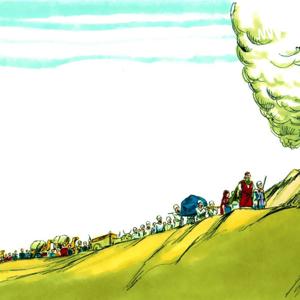
    The LORD speaks to Moses and orders him to conduct a census of the community. It is a detailed census. Members of God's community must be counted one by one and listed by name. We possibly understand why in some sections of the holy script we find long lists of genealogies. Numbers are important to God but that is just statistics. There is more to it. The Message translation puts it this way, Romans 9 verses 20 to 33; if each grain of sand on the seashore were numbered and the sum labeled “chosen of God,” They’d be numbers still, not names; salvation comes by personal selection. God doesn’t count us; he calls us by name. Arithmetic is not his focus.

    We also want to find out why the LORD called for a census. For sure it wasn't like the LORD needed to know the numbers! It was Moses who needed to know the figures and not God. It is also interesting that the LORD wanted Moses to conduct the actual census. Why didn’t the LORD just provide the figures? After all the LORD knew the figures already. It was going to be easier, accurate and cheaper.

    Could there be things that the LORD wants us to do for our benefit? I have in mind the sciences and technology. The LORD may want you to know the art of business and the value of customers, not because the LORD hasn't any idea about 'earthy' matters. It is for our benefit. That is how the LORD wants to run the world.

    Moses would need the figures to plan his military campaigns. Our own economic battles require planning and much more information about our strengths and capacities. Numbers communicated Israel's strength. The figures showed organization and location of resources. For example: if you called Judah to arms, you knew exactly what strength you were drawing out.

    This book is about 14 days becoming 40 years. What a trip! It is about a population of 600,000 at the start and the same 600,000 after 40 years. A farmer who starts with two cattle and still has two animals after 40 years should sit down and explain. The book, appropriately named Numbers, must explain these numbers. Forget increase, the fact that we still have men marching into Canaan at the end of 40 years is the greatest miracle in itself. Many of us would say the same thing: a death sentence for our sins is just the right decision, BUT mercy said NO.

    Even here we can see the generosity of the LORD in giving Moses a list of helpers. This job is truly important! Not everyone is listed name by name but only men aged 20 or more - capable of military service. This chapter is preparing us for grand entry into Canaan to possess the land that the LORD had given to Abraham.

    More resources visit www.bibleproject.com

    3 min
  • Leviticus 27 Commentary: Cost of dedication

    This episode is also available as a blog post: http://lovingscripture.com/2021/06/25/leviticus-27-commentary/

    Leviticus 27 Commentary

    www.lovingscripture.com

    The practice of redemption as presented here is difficult to read and actually understand. Many Bible translations offer very little help. GNT and its modern approach is a good resource for understanding chapter 27.


    Many saints have gone to God offering to dedicate their lives to the LORD. What isn't clear to them is that there is a cost when you dedicate your life to the LORD. Chapter 27 is like a cost sheet for dedication or consecration. It's a fee chart.

    There is a different fee depending on age and gender. Females generally get lower fees than their male counterparts. This may reflect men's role as family heads. We may also suspect that a man's given role in prosperity (fruitfulness) renders them liable to hefty fees. Some may even be tempted to think of man's counter-blessing of 'sweat' for the difference in fees. He shouldn't get anything easily.

    Fees. Yes, fees but only in name. The system had the poor in mind. A fee was meant to fit the budget for the very poorest of God's people. It reminds us of the LORD Jesus who invites all to the party, regardless. Importantly the chapter highlights the need to appreciate that there is a cost attached to the Christian walk.

    Those who do not carry their own cross and come after me cannot be my disciples.
    Luke 14 verse 27. According to Good News Translation.

    Many physical items could be dedicated to the LORD: land, property and animals, among many other things. Different fees are defined for different items. Even in the immediate context the system resembled a tax system for various certifications. Presenting this view makes this chapter less attractive, indeed much of Leviticus is like that. But in truth the system represented value in the worship system. There is a cost to following Christ. You don't just dedicate your life to Christ without losing something of human value. Today the calling may make you lose friends, popularity, and family closeness, among many other things. You may have to give up certain desires, opportunities and certain appetites.  

    Leviticus ends here.

    The book has been a long instruction book for the priest. The saint as the priest of today has been instructed on means of worship. The symbols we find here are a constant reminder of the need for holiness before the LORD.

    Chapter 26 seems to summarize the effort of the book in its reference to fruitfulness and increase as a result of obedience. It is the repeat of the history-long blessing that the LORD has faithfully maintained. It is the adamic blessing of Genesis 1 verse 28, the noahic blessing of Genesis 9 verse 1 and the abrahamic blessing of Genesis 12. The LORD had repeated the blessing to Isaac, then to Jacob and his 12 sons and now the nation in transit to the Promised Land hears it.

    Leviticus closes with rules on dedication. Israel will follow the LORD but it will be at a cost. They have to give up something. In the closing lines of Leviticus we hear the LORD Jesus calling out: Those who do not carry their own cross and come after me cannot be my disciples.
    Luke 14 verse 27. If we decided to select one word to describe Leviticus, then the word ‘sacrifice’ would be the best. It would make the last chapter of Leviticus the highlight of the book as it talks about dedication and the cost or sacrifice required for a close and intimate relationship with the LORD.

    Stay blessed.

    4 min
  • Leviticus 26 Commentary: Blessings come with obedience

    This episode is also available as a blog post: http://lovingscripture.com/2021/06/24/leviticus-26-commentary/

    Leviticus 26 Commentary

    www.lovingscripture.com

    The closing verses of chapters 26 and 27 give us a picture that Leviticus is written with the first two years in the background at the famous Mount Sinai.


    Chapter 26 is important in reminding us of the beginning at creation.

    I will look on you with favor and make you fruitful and increase your numbers, and I will keep my covenant with you. Leviticus 26 verse 9.

    The original blessing triad, [Increase, fruitfulness (prosperity) and dominion] are repeatedly referenced in the Torah to highlight man's need for restoration. Here two of them are directly referenced while dominion is mentioned in what is clearly only a resemblance of the original blessing. Indeed 'dominion' is scantily mentioned because its fulfillment lies in waiting until the time of the Christ. At God's appointed time the saints shall reign with Christ in the paradise of God.

    The same history-long blessing is repeated. In the background is the sad reality of sin. Israel would definitely fall many times along the way. Moses speaks to the future. His words are reported as though coming from a man transported into the future and looking at events unfolding. His words are prophetic.

    The 'idolatry and Sabbath' laws are repeated but with a different purpose. If Israel obeys, the land will produce for them. We are reflecting on Genesis 3. Because of sin the land was cursed. An attempt at obedience will bring about restoration in part. It's not restoration of vanity, rather it is the restoration of Genesis 1 - the blessing of the LORD.

    We can expand on the promised blessings. Rain will fall in season and an abundant harvest is expected. The opposite is true. Sin, cursing of the land in Genesis 3 means that rain is no longer consistent and the ground produces less and less. We have a multiplier effect. Life isn't the same when ungodliness sets in. More suffering is expected. It is suffering that the LORD initiates and sustains. It is as a consequence of a withdrawal of the blessing of the LORD.

    Chapter 26 reminds us of the blessings of the LORD if and when man obeys. It also reminds us of man's need for restoration. We have seen how the LORD'S plans have suffered repeatedly at the hands of sinful man. Now we can understand the purpose of Leviticus. It is yet another attempt by the LORD to redirect man towards Himself. Chapter 27 closes Leviticus but the journey reaches its climax in this chapter with the LORD pointing man to a restored relationship, as it was back in the Garden of blessings and tranquility.

    More resources visit www.lovingscripture.com

    3 min
  • Leviticus 24 Commentary: The Lampstand, the bread and the stoning of the blasphemer.

    This episode is also available as a blog post: http://lovingscripture.com/2021/06/22/leviticus-24-commentary/

    Leviticus Chapter 24

    www.lovingscripture.com

    We have three main items in this chapter: the lampstand, the bread and the stoning of the blasphemer.

    We began this journey in Genesis with the LORD creating the earth in verses 1 and 2 of Genesis. It was formless and empty, darkness was over the surface of the deep, and the Spirit of God was hovering over the waters. The very first item created was light, in these words: “let there be light”. Light was created long before the sun! In this chapter we read of the instruction to keep the golden lampstand alight continually with great interest.


    In Exodus we learn of three components in the Holy place: the golden lampstand, the table for bread and another table for incense. In this chapter the LORD commands Moses to commission the lampstand and the table for bread. The holy place is to be kept lit by the light from the lampstand. Aaron is personally charged with this task.

    The bread of the presence on the golden table is to be provided continually. The bread is most holy and must be consumed by priests. In the New Testament we are reminded of one who is both 'light of this world' and 'bread of life'. The symbolism here is powerful. It was a nice revelation until I realized that the same scripture talks about me being the light (and salt) of this world. I should be ablaze continually. What an exam! I must confess I wasn’t very proud of my results.

    The consequence for blasphemy is severe. The scripture takes time to relate to us the parentage of the blasphemer. Could it be that the scripture is making a case against intermarriage? It is possible that the blasphemer didn't have the reverence for the LORD'S name that a normal Israelite man would have. He must have grown up believing in the Egyptian gods of his fathers.

    More resources visit www.bibleproject.com

    2 min
  • Leviticus 23 Commentary: Israel's seven Festivals

    This episode is also available as a blog post: http://lovingscripture.com/2021/06/21/leviticus-23-commentary/

    Leviticus 23 Commentary

    www.lovingscripture.com

    Chapter 23 lists the following sacred assemblies

    1. The Sabbath.

    2. The Passover and the Festival of Unleavened Bread.

    3. The Festival of First fruits or First Harvest.

    4. The Festival of Weeks or Festival of Harvest.

    5. The Festival of Trumpets

    6. The Day of Atonement

    7. The Festival of Tabernacles Festival of shelters or booths

    First on the list of sacred assemblies is the Sabbath. It predates the fall of man in Genesis chapter 3. The LORD talks about Sabbath immediately after creation. It is actually part of creation. Sabbath at creation depicts rest in God's holy presence. It speaks of heavenly tranquility in the garden of rest and perfection.


    After the fall (Genesis 3), Sabbath is a missing piece. It is a rest that man longs for. A man in hard labor, wrought on self by sin, is seen searching for that missing rest. With the law, we see the LORD making an attempt to restore the perfection of heavenly existence in Sabbath rest. So Sabbath as a sacred assembly comes up first. The frequency of Sabbath speaks of God's love for man - A father who wants his son to show up more often.

    The Passover is next. Its observance is a celebration of the famous exodus. One special day, a specially selected lamb was killed. Its blood, splashed against door posts, saved Jacob from the angel of death on that night. At day-break the following day the LORD led Israel out of Egypt - it was a special Sabbath. It was a Passover day. It became the first day of the Jewish calendar - a starting point. Several centuries would pass before another lamb would be slaughtered on Friday. We call it good Friday. The blood that we splash on ourselves saves us from our sins. It's another start. It's another Sabbath - the real Sabbath. These things are not different at all! They all point to Jesus - the same.

    The festival of 'unleavened bread' runs in parallel with the Passover meal. Or may be seen to start immediately after the Passover. The offering of the first fruits was both a celebration of the LORD'S provisions as well as a show of gratitude. It was important for Israel to be reminded of the provider God. The feast of weeks and other feasts are listed. A few notes on these feasts are: (1) that Israel is to observe them for endless generations, (2) Israel is to conduct extra rituals in addition to usual tabernacle rituals on these festival days (3) They served as memorial events.

    Remembering the mighty acts of grace in the lives of God's people is important. Symbols were set up and a command to observe them continuously, year after year (for endless generations) was put in place. It's for us. During a time when people celebrated festivals to honor demons, these festivals served as reminders of God’s constant watch over Israel.

    As you journey through Leviticus 23, and read of the command to perpetuate these activities, your mind is drawn to the life and ministry of the LORD Jesus Christ. The triumphant entry with people waving branches may remind you of one of these events. The garden of Gethsemane experience may remind you of another garden of pre-sin existence. Yet you still cannot take your mind off another festival as you think of the disciples taking shelter under open skies while their LORD wrestled in prayer.

    More resources visit www.bibleproject.com

    4 min
  • Leviticus 22 Commentary

    This episode is also available as a blog post: http://lovingscripture.com/2021/06/20/leviticus-22-commentary/

    Leviticus 22 Commentary

    www.lovingscripture.com

    The chapter opens with a warning to the priests to treat the holy gifts with reverence. We can easily relate with this warning in our day. Once money is separated for use at Church, it becomes holy. We cannot use it otherwise. We cannot use the monies that God's people bring to church carelessly. I think we can include time on the list. Sabbath laws give us a picture of time exclusively dedicated to the LORD. We should respect that time. You cannot read the word of the LORD while watching football!


    Physical purity is important. The priest cannot minister when he is ritually unclean. Again this requirement represents inner purity of the worshiper - it’s a picture of the required holiness at the tabernacle.

    Earlier we saw how monthly periods became an issue for women. Now men and semen emissions are an issue. Anyone with crushed testicles, or any other form of deformity on the organ is excluded from ministry. The general picture could be that the LORD created perfection and man's sin has produced imperfection in nature and in daily activity. The LORD abhors imperfection. What we have here is symbolism of that imperfect situation. It is imperfection verses perfection. Our journey towards perfection should not be riddled with imperfect articles.....especially articles that are involved in reproduction - a primary function on the blessing of increase and fruitfulness.

    Partaking of the holy meals is restricted. Again the picture we get is that the holiness of the priest is to be protected from pollution. It is mind boggling that the LORD had actually intended all to be priests. Today saints are said to be priests, regardless of gender. Is there something to be learnt from these restrictions? Who are we mingling with? Who do we share meals with? Who we marry and produce during with is a question with similar answers to what we find in this chapter.

    More resources visit www.bibleproject.com

    2 min

About Who is God? And, how can we find God - Bible answers.

From the publisher's feed

Find life's meaning in God's word. Read it daily. Meditate on it. Be transformed by it.

More shows like Who is God? And, how can we find God - Bible answers.

The Bible Recap by Tara-Leigh Cobble

The Bible Recap

35,885 Listeners