
Sign up to save your podcasts
Or

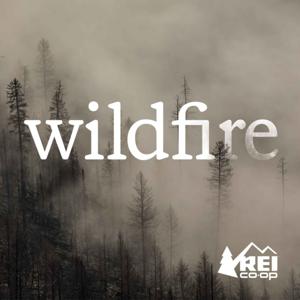


Only a few days after it started, the Eagle Creek Fire in the Columbia River Gorge was only seven percent contained, so a sudden increase in the wind could cause it to once again continue its approach toward Portland, Oregon, a heavily wooded city of 700,00 people that hadn’t seen any measurable precipitation in 50 days. Everyone was skeptical that anything but rain could put this fire out, and it was nowhere in the forecast.
In episode four of Wildfire, we’ll look into our wildfire management strategy as an institution; to learn from its founding principles, as well as its pitfalls, and learn from our triumphs and mistakes to help chart the best path forward. How did these policies originate, and why? What lead to this overwhelming strategy of suppression, and where has that left us now?
Regarding the young man who started the fire, we’ll reveal everything we know about him, from press releases and news articles, to hopefully make some sense of his crime. And from there, we’ll look at the birth of the National Forest Service in the beginning of the 20th Century, the pioneering efforts of Teddy Roosevelt and Gifford Pinchot, and the systemic perception of wildfire that has sunk its roots so deeply into society’s consciousness that it has been next to impossible to change.
Key takeaways:
Resources
After the 15-year-old threw a lit smoke bomb that caused the Eagle Creek Fire to erupt almost immediately during Oregon’s record dry summer of 2017, he and his friends fled downhill toward the trailhead. “Do you realize you’ve started a forest fire?”, demanded a hiker also attempting to escape the flames. “What’re we supposed to do about it now?”, the kids replied, clueless as to the severity of their actions.
In episode three of Wildfire, we examine the incident command structure of wildland firefighting forces, how these response systems work, and what drives these men and women to keep going as they put their life on the line to stop these fires. We talk to a Fire Captain from Eastern Oregon, to one of the commanders from the Eagle Creek Fire itself, and to a wildland firefighter who worked in the early 2000s, the most-deadly era in wildland firefighting. And, of course, we hear from the people of the Columbia River Gorge about the initial days of the Eagle Creek Fire evacuation, when they were trying desperately to save their homes, their town and their lives.
Key takeaways:
Resources:
More about the Wildfire podcast
Forest fires and the destruction they cause are not black and white phenomenon, and they cannot be understood without looking closely at the issues that swirl and mutate around the subject of wildfire as much as the fires themselves.
In Wildfire, hosts Graham Zimmerman and Jim Aikman explore the natural forest habitats in which wildfires burn, and how humans have historically interacted with forest fires and fire-susceptible terrain. Graham and Jim lead us into wild places impacted by forest fire; into history books; into conversations with scientists, naturalists, firefighters and politicians; and into the story of the destructive 2017 Eagle Creek Fire, a human-caused forest fire that forever changed Oregon’s Columbia River Gorge, one of the most unique and beloved scenic areas in the Pacific Northwest.
Guided by the story of the Eagle Creek Fire—and the ordeal of the 150 hikers who were unexpectedly trapped behind its towering flames—Wildfire explores how, over the last 100 years in the United States, we have demonized and sought to suppress wildfire in an effort to preserve natural resources, scenic spaces, and, of course, human civilization.
Connect with the team
You can see more of Graham and Jim's work through their production company, Bedrock Film Works.
Are wildfires natural? And, if so, what purpose do they serve within the ecology of our forests? Has our recent history of suppressing and combating forest fires impacted the number and severity of wildland fires today?
In this episode of Wildfire, hosts Graham Zimmerman and Jim Aikman explore the natural place of wildfire in our forests, and how our government’s recent approach to wildfire management has been drastically different from the approach of Native Americans, who, for thousands of years, struck a more harmonious chord with nature.
They also continue the story of the human-caused Eagle Creek Fire, which, on September 4 and 5, 2017, exploded in size, threatening the small town of Cascade Locks, Oregon—"The Heart of the Columbia River Gorge”—with total devastation.
Key takeaways:
Show transcript
On September 2, 2017, 150 hikers in Oregon’s Columbia River Gorge were suddenly and terrifyingly trapped near Punch Bowl Falls by the Eagle Creek Fire, a human-caused forest fire that burned for three months and decimated some 50,000 acres in one of the most unique, beloved and popular scenic areas of the Pacific Northwest. Episode one of Wildfire tells these hikers’ story and explores the broader issue of forest fires and their often misunderstood and contentious place in the natural order of our forests.
Key takeaways:
More About the Wildfire Podcast
Forest fires and the destruction they cause are not black and white phenomenon, and they cannot be understood without looking closely at the issues that swirl and mutate around the subject of wildfire as much as the fires themselves.
In Wildfire, hosts Graham Zimmerman and Jim Aikman explore the natural forest habitats in which wildfires burn, and how humans have historically interacted with forest fires and fire-susceptible terrain. Graham and Jim lead us into wild places impacted by forest fire; into history books; into conversations with scientists, naturalists, firefighters and politicians; and into the story of the destructive 2017 Eagle Creek Fire, a human-caused forest fire that forever changed Oregon’s Columbia River Gorge, one of the most unique and beloved scenic areas in the Pacific Northwest.
Guided by the story of the Eagle Creek Fire—and the ordeal of the 150 hikers who were unexpectedly trapped behind its towering flames—Wildfire explores how, over the last 100 years in the United States, we have demonized and sought to suppress wildfire in an effort to preserve natural resources, scenic spaces, and, of course, human civilization.
Connect with the hosts
You can see more of Graham and Jim's work through their production company, Bedrock Film Works.
Introducing Wildfire, a podcast presented by REI Co-op. This 6-part investigative series explores the past, present and future of wildfires by examining the devastating and controversial Eagle Creek Wildfire outside of Portland, Oregon. Hosts Graham Zimmerman and Jim Aikman, both Oregon residents, investigate the fire and what impacts it had, and continues to have, on the community as well as asking the question: what role do wildfires play in our lives?
From the publisher's feed

467 Listeners

785 Listeners

2,618 Listeners

1,475 Listeners
11,962 Listeners
2,126 Listeners

2,231 Listeners
1,272 Listeners

1,248 Listeners
1,692 Listeners
67 Listeners

3,433 Listeners

2,955 Listeners

17,919 Listeners

18,914 Listeners

1,249 Listeners
436 Listeners