
Sign up to save your podcasts
Or



Chris Shyrock is helping Atlantic.Net strengthen customer support in one of the most demanding environments in technology: cloud infrastructure and data centers. As Director of Support Services, Chris leads the team responsible for supporting customers who rely on Atlantic.Net for cloud services, colocation, dedicated hosting, managed services, and infrastructure they cannot afford to have fail.
In this episode, Russ and Chris explore how Atlantic.Net transformed its support organization while also completing a major data center migration with no customer impacts attributed to the move. Chris explains how the company improved queue ownership, daily governance, shift handoffs, escalation paths, and customer communication while maintaining 24/7/365 service for clients in high-stakes industries like healthcare.
They also discuss what it takes to turn technically strong support staff into customer-ready communicators. Chris shares how he reviewed calls and emails, re-onboarded the team, trained people to own the call, and encouraged support professionals to de-escalate concerns, explain issues clearly, and meet customers at their level.
Along the way, Chris discusses Trustpilot reviews, customer feedback, team empowerment, regulated customer environments, AI cloud infrastructure, NVIDIA GPU hosting, continuous improvement, and why support is often the trust layer between a technology provider and the customers who depend on it.
Topics Covered:
[00:01] Welcome and intro, Chris Shyrock, Atlantic.Net, and the Excellence in Customer Service Award win
[00:45] Atlantic.Net’s long history in cloud and infrastructure services
[01:23] What Atlantic.Net provides for cloud, colocation, dedicated services, and managed infrastructure
[02:58] Why Atlantic.Net focused on customer service transformation
[04:00] Teaching technical support teams to communicate with customers more clearly
[05:21] Aligning staffing, mindset, and shift coverage
[06:30] Queue ownership and daily governance in support operations
[07:26] Managing customer change, technology change, and internal change at the same time
[08:45] Training the team to own the call and de-escalate urgent customer issues
[09:25] Why practice matters in customer support training
[11:00] Getting support teams comfortable with doing the harder thing for customers
[12:10] Why leaders need to be reachable during high-stakes incidents
[13:40] Transforming the support team during a major data center migration
[14:46] How the support organization contributed to a no-impact migration
[16:10] How major operational events can elevate a team
[16:44] The hardest habit to change in a long-running support organization
[17:44] Using Trustpilot reviews as evidence of support quality
[19:34] Why moving review scores is hard and meaningful
[20:00] Turning customer problems into trust-building opportunities
[22:36] Upskilling support teams for new infrastructure and AI workloads
[23:32] Advice for technical support leaders with inconsistent customer experience
[27:22] Final thoughts on Atlantic.Net’s transformation and continuous improvement
Selva Murali is helping design the chips that power AI factories, data centers, laptops, and the connected devices shaping modern life. As a staff-level engineer at AMD, Selva works on leading-edge semiconductor technology nodes, circuit design, physical implementation, and the use of AI and machine learning to improve chip performance, power, and area.
In this episode, Russ and Selva discuss what it really takes to build faster, smaller, more power-efficient chips in an AI-driven world. Selva explains how physical design sits between architecture and circuits, why power is becoming one of the biggest bottlenecks for AI infrastructure, and why data center scale computing depends as much on heat, energy, and layout as it does on raw performance.
The conversation explores how machine learning is changing semiconductor design by running thousands of layout iterations faster than a human team could manually test. Selva explains how ML can improve timing, reduce gates, save engineering time, and help teams make better decisions with data.
Russ and Selva also discuss the differences between Samsung and AMD, the shift from mechanical to semiconductor-driven industries like automotive, the growing importance of chip packaging, and why the semiconductor field needs more young engineers willing to work at the intersection of hardware, software, and AI.
As one of BIG’s all-star judges, Selva also shares how judging innovation, cybersecurity, AI, and customer service nominations has changed the way he thinks about customers, internal teams, and the real-world impact of technology.
Topics Covered:
[00:01] Welcome and intro, Selva Murali, AMD, and BIG judging
[00:58] Selva’s work on leading-edge semiconductor nodes
[01:30] AI and ML for circuit design
[02:23] Where digital meets physical in chip design
[03:05] Front-end design versus back-end physical implementation
[04:38] Making chips faster, smaller, and more power efficient
[05:08] Explaining semiconductor design in simple terms
[05:34] How chips became part of nearly everything
[06:31] Comparing Samsung and AMD design environments
[10:10] The real AI infrastructure bottleneck
[10:34] Why power may be the biggest limit for data centers
[11:57] Heat, cooling, and data center scale
[12:20] What happens when power, performance, or area targets are missed
[13:47] Why chip layout is harder today than 10 years ago
[15:52] Foundry rules and avoiding unusable silicon
[16:27] Using machine learning to automate physical design
[16:44] Testing thousands of chip layout iterations
[19:08] How ML reduced manual work from days to minutes
[21:32] Building trust in ML-driven design with data
[22:52] Power, performance, and area tradeoffs
[23:23] Why CPUs and GPUs prioritize different design goals
[25:13] What it takes to move a chip from design to shipping
[27:00] Packaging, boards, skilled labor, and semiconductor bottlenecks
[28:52] What makes an innovation submission truly strong
[30:24] What semiconductor growth feels like inside engineering teams
[31:40] Training the next generation of chip designers
[35:51] Why students are showing more interest in circuit design
[36:46] How judging customer service changed Selva’s perspective
[39:11] Treating internal customers with more care and urgency
[40:48] Final thoughts on judging and the BIG community
Chris Schueler is helping large, complex organizations rethink cybersecurity for an AI-accelerated threat environment. At Cyderes, Chris leads a pure-play cybersecurity company focused on managed security, transformation, operations, identity, non-human identity, and proactive threat defense. Cyderes recently won a Fortress Cybersecurity Award, with Chris recognized as an executive leadership winner.
In this episode, Russ and Chris discuss how his early military experience building one of the first Army security operations centers still shapes how he builds security teams today. Chris explains why trust, buy-in, autonomy, and execution matter when security teams need authority to act quickly across complex environments.
The conversation also explores Cyderes’ Meridian platform and how it connects traditional cyber threat data with identity and non-human identity signals that are often siloed across technology stacks. Chris explains why the future of security depends not just on reacting faster, but on stitching together context so organizations can prevent threats before they spread.
Russ and Chris also discuss why the old mindset of “not if, but when” can become an excuse. Chris argues that security leaders need to keep turning over every stone, especially around identity, access, blast radius, and non-human users. As AI compresses the time between vulnerability discovery and exploitation, security operations need to move from hours to minutes.
The episode also covers agentic SOCs, zero trust, third-party risk, patching, unpatchable vulnerabilities, privileged access, dynamic recertification, budget pressure, AI-driven efficiency, and why thought leadership may now be the real barrier to building better cybersecurity systems.
Topics Covered:
[00:00] Welcome and intro, Chris Schueler and Cyderes
[01:00] What Cyderes does as a pure-play cybersecurity company
[01:30] Meridian and connecting threat data with identity signals
[02:11] Chris’s Army background and building an early SOC
[02:27] Bringing network operations and incident response together
[03:30] Why trust is earned in drops and lost in buckets
[05:15] Opportunity spotting in military versus enterprise environments
[05:54] Public sector speed, private sector speed, and different stakes
[08:52] Building analyst-recognized cybersecurity companies
[09:05] Staying aligned with customers and the direction of the market
[11:27] How Chris thinks about future-looking strategy
[13:36] Why “not if, but when” can become an excuse
[14:16] Turning over every stone again and again
[15:30] Why identity is becoming central again
[16:27] AI adversaries and compressed attack timelines
[16:54] Breakout time dropping from 61 minutes to 25 minutes
[17:52] What SOCs need to do in minutes
[18:30] Reducing blast radius before attacks happen
[20:10] Stitching telemetry together across silos
[20:40] Moving toward pre-crime security
[21:12] Massive patches, zero days, and proactive defense
[21:53] Why some vulnerabilities may be unpatchable
[23:00] Third-party breaches and shared business risk
[23:50] Why patching still matters
[24:42] Access rights, copy-paste permissions, and just-in-time controls
[25:37] Using existing controls better instead of adding more tools
[25:54] Questions CISOs should be asking now
[26:19] Budget pressure during AI investment cycles
[27:30] Data exposure fears around frontier models
[28:44] Using AI to do more, not just spend less
[29:22] Why building is easier when vision is clear
[30:02] Final thoughts on service, leadership, and cybersecurity’s future
Keith Hollender is helping enterprises rethink cybersecurity as AI changes both attack and defense. At Arcova, Keith and his team work with large organizations to solve complex security challenges with a practitioner-led approach built around flexibility, execution, and client trust. Arcova recently won a Fortress Cybersecurity Award for its work helping enterprises strengthen their security programs in a fast-changing threat environment.
In this episode, Russ and Keith discuss Arcova’s evolution from a cybersecurity practice inside Morgan Franklin Consulting to an independent, private equity-backed company. Keith explains how his experience as a cybersecurity buyer inside large financial institutions shaped Arcova’s approach: make engagements easier, stay flexible, avoid unnecessary bureaucracy, and focus on delivering what clients actually need.
The conversation dives into how AI is changing cybersecurity. Keith explains that AI is helping defenders identify and fix vulnerabilities faster, but it is also helping adversaries find new pathways in. That shift is accelerating everything, from threat and vulnerability management to detection engineering, autonomous SOC work, and the need for faster response.
Russ and Keith also discuss why identity has become the new front line. As non-human identities, agents, API keys, and automation expand across enterprises, organizations need better control over who or what has access, what those identities can do, how they are monitored, and how quickly access can be revoked.
The episode also covers third-party risk, supply chain exposure, the Lynx Technology Partners acquisition, continuous risk monitoring, geopolitical risk, global regulation, quantum readiness, and why security strategies may need to evolve every 18 months as AI and quantum computing continue to change what organizations know and what they need to protect.
Topics Covered:
[00:01] Welcome and intro, Keith Hollender and Arcova
[00:32] Arcova’s origin inside Morgan Franklin Consulting
[01:33] Keith’s background inside large financial institutions
[01:54] Building a cybersecurity firm from the buyer’s perspective
[03:20] Management buyout, acquisition, AI practice launch, and rebrand
[04:02] Why the management buyout was the catalyst event
[05:14] What enterprises ask Arcova to solve
[06:12] How AI is changing enterprise security engagements
[06:33] AI, efficiency, and changing operating models
[08:09] The difference between digital transformation and AI transformation
[09:28] How AI affects vulnerabilities and zero-day discovery
[11:16] Old attack methods becoming new again
[12:36] Detection engineering and autonomous SOC work
[13:25] Faster breakout times and faster response needs
[14:20] Why identity is now the front line
[15:13] Non-human identities, access controls, and monitoring
[16:47] Managing AI agents, credentials, and guardrails
[18:46] Third-party and supply chain risk
[19:25] Why third-party risk remains difficult to control
[21:00] Lessons from the Lynx Technology Partners acquisition
[21:17] Continuous monitoring versus annual vendor surveys
[22:47] Geopolitical risk and nation-state threat actors
[25:13] Global regulation, DORA, GDPR, CCPA, and NYDFS
[27:02] Quantum readiness and post-quantum security
[28:49] Why quantum will create another major shift
[30:31] Hardening for what we know while preparing for uncertainty
[31:24] Final thoughts on AI, quantum, and cybersecurity strategy
Mike Maynard has spent decades helping technical B2B companies communicate clearly, reach the right audiences, and turn complex ideas into effective marketing. As Managing Director of Napier, Mike brings a rare mix of engineering, sales, and marketing experience to industries like telecom, semiconductors, industrial automation, and technical B2B. He is also one of BIG’s All-Star Judges, recognized for his thoughtful work reviewing nominations and identifying strong examples of innovation.
In this episode, Russ and Mike discuss how B2B marketing is changing again as AI reshapes content, search, data, personalization, attribution, and go-to-market strategy. Mike explains why AI is already becoming part of nearly every marketing workflow, but also why it is not equally good at everything. For highly technical, original content, human expertise still matters. For personalization at scale, idea generation, and speeding up execution, AI can be incredibly powerful.
The conversation dives deeply into GEO, or generative engine optimization, and how brands can show up in AI-generated answers. Mike explains why good SEO still matters, but why marketers now need to think beyond keywords and start optimizing for prompts, questions, summaries, FAQs, key takeaways, brand mentions, YouTube, LinkedIn articles, newsletters, and high quality content that AI engines can understand and cite.
Russ and Mike also discuss B2B data overload, attribution, incrementality, personalization, customer journey timing, and why many companies still fail to use even the most basic data they collect. Mike explains why marketers should focus less on misleading attribution models and more on whether campaigns actually move people forward in the buying journey.
Along the way, Mike shares lessons from buying Napier just before the dot-com crash, judging BIG nominations, technical content marketing, AI sales coaching, Coachable AI, and why marketers should treat AI like a conversation instead of a one-shot prompt machine.
Topics Covered:
[00:00] Welcome and intro, Mike Maynard, Napier, and BIG judging
[00:57] Mike’s path from electronics engineering to marketing
[02:00] Buying Napier just before the dot-com crash
[03:58] Napier’s focus on technical B2B marketing
[04:30] How the internet changed how engineers find information
[06:02] Technical sales, expertise, and content marketing
[06:51] How AI is changing content marketing
[07:30] Where AI works well and where human experts still matter
[08:33] GEO, AIO, AEO, and getting found in AI engines
[09:28] Why many brands still lack an AI visibility strategy
[10:00] Why strong SEO still helps with GEO
[10:56] Optimizing for prompts instead of keywords
[11:30] Why FAQs, summaries, and key takeaways help AI visibility
[12:22] White hat versus risky GEO tactics
[14:13] Why some AI optimization tactics also help humans
[14:50] Getting your brand into AI-generated answers
[15:33] What Mike learned from testing 1,000 prompts
[15:56] Why Reddit and Wikipedia matter less in niche technical B2B
[16:52] YouTube, multimedia, and AI visibility
[22:11] GEO compared with early SEO and content marketing
[25:09] LinkedIn articles and newsletters as AI visibility opportunities
[27:17] B2B marketers and data overload
[27:57] Using data to identify untapped sales opportunities
[29:30] Companies collecting data but failing to follow up
[31:55] Why Mike cares more about incrementality than attribution
[36:18] Personalization, timing, and customer journey context
[39:14] Coachable AI and AI-powered sales role play
[42:19] The AI prompt Mike recommends for marketers
[43:40] Why AI should be a conversation, not a single prompt
[44:32] Final thoughts on B2B marketing, AI, and judging
Becca Toth is helping redefine CRM for the AI era. At SugarAI, Becca is focused on how AI, CRM, ERP data, and revenue signals can come together to help sales teams make better decisions and take the right next action. SugarCRM recently won a SAMI Award for its work helping organizations organize, understand, and act on the data inside their sales, prospecting, and marketing engines.
In this episode, Russ and Becca discuss how CRM has evolved from a system of record into a system of intelligence, and now toward what Sugar calls precision selling. Becca explains that the old CRM promise of a 360-degree customer view often left users with more dashboards, more reports, and more manual analysis. Today, sellers do not need more data. They need clarity, context, and guidance on what to do next.
The conversation explores why CRM adoption and value often break down at the user level. Salespeople are not always sitting at a desk searching through dashboards. They are in meetings, on the road, working with customers, and trying to decide where to focus their limited attention. Sugar AI is designed to help by surfacing next best actions, preparing sellers for customer conversations, and connecting signals that already exist across the business.
Russ and Becca also discuss the role of ERP data, agentic AI, business signals, customer retention, inventory insights, decision velocity, CFO expectations, and why many organizations are reevaluating their tech stacks as license costs rise and AI changes what software should deliver.
A major theme is that growth is often hiding in the data companies already have, but have not connected. Becca explains that AI should not simply be an “ask me anything” search bar. It should absorb complexity so people can focus on relationships, judgment, creativity, and better customer outcomes.
Topics Covered:
[00:01] Welcome and intro, Becca Toth and SugarAI
[00:55] Sugar’s history and redefining CRM for the AI era
[01:53] Moving from customer data to customer intent
[02:36] Why the old CRM model stopped meeting user needs
[03:38] How CRM has evolved beyond desk-based workflows
[04:26] Bringing mature products forward without alienating customers
[05:06] What precision selling means
[05:32] Shifting from a data problem to a decision problem
[06:30] CRM as a system of record, intelligence, and precision
[07:11] Why many CRM vendors remain dashboard-driven
[08:15] Where CRM pain shows up in organizations
[10:30] Validating AI tools against real business outcomes
[11:41] Finding growth in connected business signals
[12:36] Customer stories and measurable productivity gains
[13:57] Retooling business infrastructure with AI
[15:15] Connecting CRM, ERP data, and AI
[16:42] Replacing task lists with next best actions
[17:05] How Sugar AI changes a salesperson’s daily workflow
[18:40] Customizing AI around each customer’s business
[20:08] Agentic AI and the future of CRM workflows
[20:52] Moving beyond AI as a search bar
[21:30] Decision velocity and faster action
[22:29] How B2B buying behavior is changing
[24:33] ROI conversations with skeptical CFOs
[26:00] How quickly customers see impact
[27:49] Why CRM change often happens during broader business change
[29:13] AI’s impact on marketing, engineering, and software teams
[29:48] How AI lets non-technologists participate in technology work
[31:17] Final thoughts on Sugar AI, and the SAMI Award
Episode Description:
Becca Toth is helping redefine CRM for the AI era. At SugarCRM, Becca is focused on how AI, CRM, ERP data, and revenue signals can come together to help sales teams make better decisions and take the right next action. SugarCRM recently won a SAMI Award for its work helping organizations organize, understand, and act on the data inside their sales, prospecting, and marketing engines.
In this episode, Russ and Becca discuss how CRM has evolved from a system of record into a system of intelligence, and now toward what Sugar calls precision selling. Becca explains that the old CRM promise of a 360-degree customer view often left users with more dashboards, more reports, and more manual analysis. Today, sellers do not need more data. They need clarity, context, and guidance on what to do next.
The conversation explores why CRM adoption and value often break down at the user level. Salespeople are not always sitting at a desk searching through dashboards. They are in meetings, on the road, working with customers, and trying to decide where to focus their limited attention. Sugar AI is designed to help by surfacing next best actions, preparing sellers for customer conversations, and connecting signals that already exist across the business.
Russ and Becca also discuss the role of ERP data, agentic AI, business signals, customer retention, inventory insights, decision velocity, CFO expectations, and why many organizations are reevaluating their tech stacks as license costs rise and AI changes what software should deliver.
A major theme is that growth is often hiding in the data companies already have, but have not connected. Becca explains that AI should not simply be an “ask me anything” search bar. It should absorb complexity so people can focus on relationships, judgment, creativity, and better customer outcomes.
Topics Covered:
[00:01] Welcome and intro, Becca Toth and SugarCRM
[00:55] Sugar’s history and redefining CRM for the AI era
[01:53] Moving from customer data to customer intent
[02:36] Why the old CRM model stopped meeting user needs
[03:38] How CRM has evolved beyond desk-based workflows
[04:26] Bringing mature products forward without alienating customers
[05:06] What precision selling means
[05:32] Shifting from a data problem to a decision problem
[06:30] CRM as a system of record, intelligence, and precision
[07:11] Why many CRM vendors remain dashboard-driven
[08:15] Where CRM pain shows up in organizations
[10:30] Validating AI tools against real business outcomes
[11:41] Finding growth in connected business signals
[12:36] Customer stories and measurable productivity gains
[13:57] Retooling business infrastructure with AI
[15:15] Connecting CRM, ERP data, and AI
[16:42] Replacing task lists with next best actions
[17:05] How Sugar AI changes a salesperson’s daily workflow
[18:40] Customizing AI around each customer’s business
[20:08] Agentic AI and the future of CRM workflows
[20:52] Moving beyond AI as a search bar
[21:30] Decision velocity and faster action
[22:29] How B2B buying behavior is changing
[24:33] ROI conversations with skeptical CFOs
[26:00] How quickly customers see impact
[27:49] Why CRM change often happens during broader business change
[29:13] AI’s impact on marketing, engineering, and software teams
[29:48] How AI lets non-technologists participate in technology work
[31:17] Final thoughts on SugarCRM, Sugar AI, and the SAMI Award
Sanjay Castelino is helping organizations protect sensitive data as AI, SaaS, cloud, remote work, and agentic systems expand the modern attack surface. At Skyhigh Security, Sanjay focuses on Secure Service Edge, data protection, AI governance, and helping enterprises control how people and systems access and use critical information. Skyhigh Security recently won a Fortress Cybersecurity Award for its work protecting organizations from internal and external data threats.
In this episode, Russ and Sanjay discuss why data protection has become central to enterprise security. Companies want to move faster with AI, but they fear sensitive data leakage, unauthorized access, and loss of control over intellectual property, customer information, and regulated data.
Sanjay explains how Skyhigh helps organizations unify protection across web, cloud, SaaS, private applications, endpoints, mobile devices, browsers, and AI services. A key starting point is visibility. Organizations need to know where sensitive data lives before they can protect it, which is why DSPM, or Data Security Posture Management, has become so important.
Russ and Sanjay also discuss shadow AI, secure browser controls, WebSockets, copy and paste risks, and why traditional web protection is not enough for modern AI use. Sanjay shares how Skyhigh can identify sensitive data, apply policies across environments, and block risky actions like copying protected content into public AI tools.
A major theme is zero trust for AI. Sanjay explains that companies can no longer think only about users outside the network coming in. With AI agents operating inside systems at machine speed, security teams must also think inside to inside and inside to outside. That means applying zero trust controls to human and non-human users, specific applications, specific data sets, and specific moments in time.
Topics Covered:
[00:01] Welcome and intro, Sanjay Castelino and Skyhigh Security
[00:31] What Skyhigh does in Secure Service Edge
[01:00] Protecting data from internal and external threats
[01:49] Why data protection became central to Sanjay’s work
[04:18] Explaining value to CISOs with crowded security stacks
[05:00] Secure browser controls without disrupting users
[06:18] Reducing incident resolution time from hours to minutes
[08:01] Why data protection was overlooked during the SSE rush
[10:07] Why data now lives across web, cloud, private apps, and AI
[11:39] DSPM and finding sensitive data across environments
[12:20] Connecting data visibility with policy enforcement
[13:42] What surprises customers after AI governance goes live
[14:30] Why organizations underestimate AI service usage
[15:13] Why WebSockets create new AI data protection challenges
[16:00] Blocking sensitive copy and paste into AI tools
[17:49] Best-of-breed versus platform consolidation
[18:30] How to test whether a platform is truly integrated
[19:00] Processing massive data sets fast enough to protect them
[21:14] Shadow AI and unapproved employee tools
[22:00] Different corporate risk tolerances around AI
[22:53] Zero trust for human and non-human users
[23:22] Rethinking zero trust for agentic AI
[24:00] Inside to inside and inside to outside security models
[25:15] Why agentic AI makes zero trust more urgent
[25:45] Human-targeted attacks and AI-targeted attacks
[26:42] User behavior, impossible travel, and access controls
[27:33] Moving from blocking AI to enabling it safely
[28:19] Final thoughts on secure AI adoption
Eddy Zervigon is helping enterprises prepare for the shift to post quantum cryptography. As CEO of Quantum Xchange, Eddy is focused on helping organizations secure critical data before quantum computing changes the rules of encryption. Quantum Xchange recently won a Fortress Cybersecurity Award for its work helping enterprises build a more agile approach to cryptographic security.
In this episode, Russ and Eddy discuss why post quantum security is not just about choosing a new algorithm. Eddy explains that encryption has worked for decades because organizations could rely on a small number of trusted algorithms and predictable advances in computing power. But with quantum computing and AI advancing together, that model is breaking down.
The conversation dives into crypto agility and why Quantum Xchange believes companies need an architecture that lets them change cryptographic algorithms without bringing down the network. Eddy explains the importance of separating key generation and delivery from the data plane, giving organizations more control over their post quantum journey.
Russ and Eddy also discuss the “harvest now, decrypt later” threat, where adversaries collect encrypted data today and wait until quantum computers can break it in the future. That makes quantum security a current issue, not a distant one. Eddy argues that organizations should start by securing the biggest pipes carrying the most important data, including backup, data center, high value network, healthcare, financial services, and critical infrastructure traffic.
Along the way, Eddy covers NIST standards, federal timelines, cryptographic inventory, FIPS validation, vendor dependence, budget gaps, congressional testimony, and why real crypto agility means being able to hot swap algorithms without creating network downtime.
Topics Covered:
[00:00] Welcome and intro, Eddy Zervigon and Quantum Xchange
[01:06] What Quantum Xchange does
[01:30] NIST, post quantum algorithms, and architectural security
[02:14] Why encryption must keep evolving
[02:50] AI as the brains and quantum as the brawn
[03:33] Eddy’s background in investment banking and mission driven companies
[04:55] Separating cryptographic control from the data plane
[05:35] Why embedded endpoint encryption is no longer enough
[06:30] Why algorithm updates should not require downtime
[07:32] Why the post quantum threat is urgent
[08:21] Harvest now, decrypt later
[09:36] What happens if organizations do nothing
[09:51] Why cryptographic inventory alone may not be enough
[10:30] Securing the biggest data pipes first
[11:37] Why migration is harder than people assume
[11:52] Moving beyond set it and forget it encryption
[13:21] Reducing post quantum migration timelines
[14:10] How often algorithms may need to change
[14:26] NIST algorithms and future uncertainty
[15:42] Change nothing, change everything
[16:08] Comparing crypto control to identity and access management
[17:02] Why network engineers are cautious
[18:00] What the next two years may look like
[19:21] Guidance for smaller and mid-sized businesses
[19:41] Starting with the most sensitive data flows
[21:37] Deciding what needs to be quantum safe first
[22:59] Federal post quantum migration deadlines
[23:27] Standards, validation, FIPS, and common criteria
[24:19] Eddy’s congressional testimony
[25:38] Why budgets need to match timelines
[26:21] Defining real crypto agility
[26:40] Hot swapping algorithms without downtime
[27:41] Final thoughts on crypto agile versus crypto fragile
Sandeep Rachapudi is helping enterprises navigate the shift from digital transformation to AI transformation. As an IT services expert at Tata Consultancy Services, Sandeep has spent more than two decades working across fintech, cloud migration, digital transformation, generative AI, and now agentic AI. He is also one of BIG’s 2025 All-Star Judges, recognized for his commitment to reviewing nominations, providing thoughtful feedback, and helping identify innovation across industries.
In this episode, Russ and Sandeep discuss what it means to judge innovation in a world where every company is trying to prove its value. Sandeep shares how his background in IT services helps him evaluate nominations by looking past the technology itself and asking a more important question: what value did it create?
The conversation also explores what separates strong award submissions from weaker ones. For Sandeep, the best nominations clearly explain the problem, show how the solution was implemented, provide evidence, and demonstrate measurable impact. He especially values entries that include outside links, videos, customer outcomes, and clear proof of how an innovation improved a process, helped a customer, reduced risk, or created business value.
Russ and Sandeep also discuss the current wave of AI adoption. Sandeep explains why companies should not put AI everywhere just because they can. Instead, they need to understand where probabilistic systems make sense, where deterministic systems should remain untouched, and what happens if an AI agent fails. His message is clear: use AI where it can improve decisions, patterns, analytics, fraud detection, operations, and efficiency, but keep humans in the loop where failure could create serious risk.
Along the way, Sandeep discusses recognition, trust signals, cloud transformation, agentic AI, token costs, fintech use cases, kitchen inventory automation, risk assessment, and why human judging still matters in an AI-driven world.
Topics Covered:
[00:00] Welcome and intro, Sandeep Rachapudi and BIG’s All-Star Judges
[01:03] Sandeep’s role at TCS and background in IT services
[01:09] Two decades in fintech, cloud migration, digital transformation, and AI
[01:41] How Sandeep first became involved as a BIG judge
[02:12] Why recognition matters beyond internal company awards
[04:43] Recognition as a trust signal and third party validation
[05:33] Why transparent, online judging matters
[06:46] The commitment behind judging six BIG programs
[07:20] What keeps Sandeep coming back as a judge
[08:55] Why reviewing nominations feels like seeing innovation pitches
[09:40] How Sandeep evaluates award entries
[10:00] Why outside links, videos, and proof points help judges
[11:22] How judging sparks new ideas
[12:06] What separates standout nominations from weaker ones
[12:30] Examples of innovation in sustainability, AI, and customer value
[14:27] Why outcomes matter more than technical complexity
[15:28] The importance of showing clear value
[16:34] How judging across industries helps Sandeep in his own work
[17:06] Learning from nominations and applying those ideas to AI agents
[18:30] Digital transformation, cloud migration, and the next wave of AI
[20:23] What has changed most in enterprise AI over the last year
[22:00] Where AI should and should not be applied
[22:40] Fintech examples: transaction systems, fraud prevention, and analytics
[25:48] AI use cases in operations, kitchens, inventory, and waste reduction
[27:30] Asking what happens if an AI agent fails
[28:28] Human in the loop as the last risk mitigator
[29:16] What listeners should understand about judging and recognition
[31:42] Final thoughts on judging, feedback, and the BIG community
From the publisher's feed
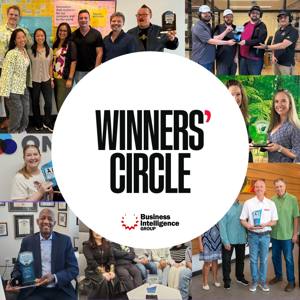
Winners’ Circle is where award winners and volunteer judges step out from behind the recognition and tell the stories that made the win matter.
Hosted by Business Intelligence Group,…
You will hear from winners who used recognition to build credibility, open doors, strengthen team morale, earn customer trust, and create new growth opportunities. You will also hear from judges who have reviewed countless nominations and know what separates a strong story from a forgettable one.
These are not acceptance speeches. They are honest conversations with the people doing the work. Winners talk about the campaigns, products, decisions, setbacks, breakthroughs, and lessons that shaped their success. Judges share what stands out, what gets overlooked, and how companies can tell clearer, stronger stories about their impact.
For companies, Winners’ Circle offers practical ideas for turning recognition into real business value. For leaders and teams, it highlights the people behind the results. For marketers and PR pros, it shows how awards can become more than a headline.
Pull up a chair in the Winners’ Circle. This is where winners and judges tell the stories behind the recognition.