
Sign up to save your podcasts
Or



Paul Mander is helping businesses reduce one of the fastest-growing cybersecurity risks: exposed personal data. As Chief Commercial Officer for Optery for Business, Paul works with enterprises to remove employee data from data broker sites and reduce the information available to threat actors. Optery recently won a Fortress Cybersecurity Award for its work helping organizations protect people, executives, and teams from AI-enabled social engineering attacks.
In this episode, Russ and Paul explore what data brokers are, how they collect and sell personal information, and why exposed data has become a major enterprise security issue. Paul explains how personal details like phone numbers, home addresses, family connections, organizational charts, and email addresses can be used to create more convincing attacks.
They dive into how Optery scans data broker sites, finds exposed profiles, submits opt-out and deletion requests, and verifies removals with screenshots, links, and proof inside the platform. Paul also explains why this is not a one-time cleanup, since data brokers constantly rebuild profiles, rebrand, resurface data, and create new exposures.
The conversation also covers how AI has changed the threat landscape by making social engineering faster, cheaper, more personalized, and easier to scale. Paul shares why IT, finance, HR, and executives are common targets, why BYOD policies create additional risk, and why CISOs are increasingly treating personal data removal as part of the cybersecurity stack.
Along the way, Paul discusses data broker directories, human plus machine workflows, enterprise attack surfaces, employee privacy, consumer control, open web data, and why removing exposed personal data is becoming a proactive defense against the next generation of cyberattacks.
Topics Covered:
[00:01] Welcome and intro, Paul Mander, Optery for Business, and the Fortress Cybersecurity Award win
[00:41] What Optery does and how personal data removal works
[01:15] Why data brokers create risk for enterprises
[02:11] How exposed data enables social engineering attacks
[03:12] Why IT, finance, HR, and executives are major targets
[04:20] Selling personal data removal as an enterprise security solution
[04:51] How CISOs are starting to treat exposed employee data as attack surface
[05:40] Why phone numbers and personal devices can create breach risk
[06:16] BYOD, personal phone numbers, and compromised devices
[07:12] Why this attack surface has been overlooked
[08:00] How AI has made social engineering easier to launch and scale
[09:30] Moving from reactive employee training to proactive data reduction
[10:21] Why data removal is never fully finished
[10:45] How data brokers rebuild profiles and relist information
[11:39] Data broker rebrands, shell companies, and whack a mole removals
[12:16] How Optery proves what it found and what it removed
[13:31] Why executive exposure can make the risk feel real
[14:06] What Paul has seen in exposed personal data
[15:27] Why AI search changes how people should think about exposure
[16:06] Why new data appears constantly
[16:22] Why Optery uses humans plus machines for removals
[17:02] Why professionals may want visibility but still need control
[19:24] Why Optery open sourced its data broker directory
[20:31] Where the personal data removal industry is headed
[21:01] Why data removal may become part of the cybersecurity stack
[22:00] Consumer control, privacy laws, and where personal data goes next
[22:43] Why personal data removal is more like an ongoing insurance policy
[23:19] Why exposed data requires proactive monitoring
[23:57] Final thoughts on social engineering, personal data, and cybersecurity risk
Katy Irving and Rory Mitchell are helping HRW, Healthcare Research Worldwide, explore a new way to understand one of the most important moments in healthcare: the doctor patient consultation. HRW recently won an AI Excellence Award for its work using interactive AI avatars to simulate consultation conversations in pharmaceutical market research.
In this episode, Russ, Katy, and Rory explore why real doctor patient conversations are so difficult to study. Katy explains how those moments inside the consultation room are often the “holy grail” for pharma and medtech companies because they reveal how doctors ask questions, how patients describe symptoms, and how treatment decisions begin to take shape.
They dive into HRW’s AI avatar project, which uses an avatar to play one side of the consultation while a real doctor or patient interacts with it. The goal is not to replace clinicians, but to create a more realistic research simulation that can uncover the actual language, questions, concerns, and behaviors that emerge in healthcare conversations.
The conversation also covers the technical and ethical challenges of building avatars that behave like doctors or patients. Rory shares how the team had to carefully limit the doctor avatar to avoid medical advice, while also giving patient avatars enough personality, emotion, and realism to feel believable without becoming unpredictable.
Along the way, Katy and Rory discuss avatar bugs, emotional realism, patient trust, the uncanny valley, self-funded innovation, conference reactions, cross-functional teamwork, training applications, and how AI avatars could help researchers, clients, and healthcare teams better understand the conversations that shape patient care.
Topics Covered:
[00:01] Welcome and intro, Katy Irving, Rory Mitchell, HRW, and the AI Excellence Award win
[00:43] What Healthcare Research Worldwide does in pharma and medtech research
[01:00] Why doctor patient consultations are so valuable to understand
[01:30] Why real consultations are difficult to simulate in research
[02:00] Using interactive AI avatars to play one side of a consultation
[02:39] Why old research workarounds often fell short
[03:06] Compliance, ethics, and brand-specific consultation simulations
[04:22] Building doctor and patient avatars with different guardrails
[04:46] Why the doctor avatar had to avoid medical recommendations
[05:30] Creating patient avatars with personality, history, and emotion
[06:30] Testing, refining, and “parenting” the avatars into better behavior
[08:45] Why consultation insights matter for pharma strategy
[10:03] What HRW underestimated when building the avatar experience
[10:27] Platform bugs, delayed answers, and strange conversation paths
[13:23] How HRW defined success in a self-funded proof of concept
[14:30] The first successful doctor and avatar interaction
[15:32] How patients reacted to avatar doctors
[16:00] Testing different tones, including neutral, empathetic, and friend-like avatars
[17:07] Why HRW shared failures and funny moments with the industry
[19:25] The line between realistic enough and misleadingly real
[20:33] Why HRW is not trying to replace doctors or nurses with avatars
[21:55] How the cross-functional team shaped the project
[23:36] Combining technology, behavioral science, and patient research perspectives
[24:33] Future uses for AI avatars beyond consultation simulation
[24:44] Using avatars as interactive research deliverables for clients
[25:30] Training applications for medical and professional conversations
[26:26] Using doctor avatars to understand product language and peer conversations
[26:57] Final thoughts on AI avatars and the hidden world of healthcare research
Oli Ostertag is helping restaurant and convenience store operators use AI to improve performance without losing the human side of hospitality. At PAR Technology, Oli works on enterprise technology for restaurants and C-stores, supporting operations, loyalty, payments, engagement, and point of sale systems across more than 150,000 sites. PAR recently won a BIG Innovation Award for its work bringing AI into restaurant operations.
In this episode, Russ and Oli explore why restaurant technology is becoming more connected, more data driven, and more important in a market where margins are tight and value wars are really price wars. Oli explains how AI can help operators play both offense and defense, increasing revenue while improving labor, inventory, pricing, and operational efficiency.
They dive into Coach AI, PAR’s AI product designed to help operators understand store performance, spot waste, and make better decisions in real time. Oli shares why the performance gap between the best and worst stores can be massive, and how better data context can help more locations operate like the strongest ones.
The conversation also covers why AI must be built into restaurant workflows instead of bolted on afterward. Oli discusses context equity, data integrity, hallucination risk, enterprise rollout challenges, and why AI should enhance people rather than replace the hospitality experience.
Along the way, Oli discusses restaurant loyalty, franchise operations, pricing agents, fraud agents, kiosks, international adoption, operator training, and why the best restaurant technology should stay out of the way so food and people remain at the center.
Topics Covered:
[00:01] Welcome and intro, Oli Ostertag and PAR Technology’s BIG Innovation Award win
[00:35] What PAR Technology does for restaurants and convenience stores
[01:36] Why restaurant systems are often disconnected
[02:22] Context equity, data integration, and enterprise restaurant complexity
[03:58] Operator products, engagement products, and the PAR technology stack
[04:20] How Coach AI helps operators understand performance in real time
[05:00] The gap between top performing and underperforming stores
[05:45] Moving from ask and answer AI to self-driving store optimization
[06:42] Automated offers and AI-driven marketing campaigns
[07:22] Closing the gap between technology rollout and real outcomes
[08:21] AI fatigue and why outcomes matter more than AI hype
[09:44] Data integrity and the importance of clean, connected systems
[10:19] Playing offense and defense in restaurant operations
[11:39] Value wars, price wars, and inventory-driven promotions
[12:19] Using AI to optimize inventory, staffing, and profitability
[13:54] Why PAR built AI into the operator engine instead of bolting it on
[14:22] Built-in AI, context equity, and learning from workflow data
[15:26] What PAR learned from enterprise restaurant customers
[15:47] Avoiding hallucinations in high-stakes restaurant operations
[17:31] Moving from manager insights to operator agents
[18:39] Where Coach AI and PAR’s agent strategy go next
[19:20] Pricing agents, fraud agents, and future restaurant AI use cases
[20:20] Why AI should make people more effective, not replace hospitality
[23:12] How younger consumers engage with restaurant apps and loyalty
[23:38] How AI adoption differs across global restaurant markets
[25:19] What the first week with Coach AI needs to prove
[26:06] Training, services, and natural language usability for operators
[27:04] Product lessons for AI builders in other industries
[28:30] Why usage rates matter after the enterprise contract is signed
[29:18] Final thoughts on better operations, better food, and smarter restaurant technology
Rakesh Ravuri is helping enterprises modernize legacy systems with AI while preserving the context, governance, and explainability that complex organizations require. As CTO of Publicis Sapient, he leads technology for a digital transformation company helping clients evolve through each major technology shift, from the internet and e-commerce to mobile, cloud, and now AI. Publicis Sapient’s Slingshot platform recently won an AI Excellence Award for its work accelerating software development and legacy modernization.
In this episode, Russ and Rakesh explore how Slingshot began as an internal AI tool after the rise of ChatGPT, then evolved into a platform for AI-assisted engineering, modernization, and enterprise transformation. Rakesh explains why Publicis Sapient first built a secure internal chat tool to protect client data, then extended it with APIs, developer plugins, and eventually a modernization workflow.
They dive into the legacy technical debt problem, especially large COBOL systems that still power critical business functions in finance, healthcare, telecom, and other enterprise environments. Rakesh explains how Slingshot breaks large codebases into intelligent chunks, extracts business rules, creates specifications, generates new code, and supports modernization without relying on armies of retired COBOL experts.
The conversation also covers why context is the key to useful enterprise AI. Rakesh explains Publicis Sapient’s enterprise context graph, which connects strategy, product, engineering, experience, data, code, tests, prompts, and decisions so AI can understand not just what to build, but why it matters.
Along the way, Rakesh discusses AI governance, provenance, explainable code, human-in-the-loop review, deterministic testing, regulated environments, reusable enterprise prompts, agentic workflows, and why the future of AI transformation depends on capturing both enterprise knowledge and enterprise behavior.
Topics Covered:
[00:01] Welcome and intro, Rakesh Ravuri and Publicis Sapient’s AI Excellence Award win
[00:38] Publicis Sapient’s background in digital transformation
[01:43] AI as the latest transformation trigger
[02:33] How Slingshot began as an internal AI tool
[02:53] Building a secure internal ChatGPT-style platform
[04:10] Creating APIs and early developer plugins
[05:13] The legacy technical debt problem
[05:52] Using AI to understand millions of lines of COBOL code
[06:45] Intelligent chunking and context layers for large codebases
[07:55] Moving from code to specification to new code
[09:10] Whyhot’s first-principles approach outperformed brute-force code conversion
[10:24] Why COBOL modernization has waited decades
[13:19] What an enterprise context graph is and why it matters
[15:30] Local context versus enterprise context
[17:25] Why developers need the business context behind a product decision
[18:14] Slingshot as a GPS for modernization
[20:00] Explainability, maintainability, and code provenance
[21:56] Governance for regulated industries
[22:11] Measuring how much code was generated by AI
[23:24] Explainable code over working code
[24:08] Using context to investigate hallucinations and errors
[25:43] Making expert knowledge repeatable
[27:15] Building trust through proof-of-concept work
[29:10] Guardrails, test cases, and deterministic evaluation
[30:53] First conversations CTOs should have about legacy modernization
[32:04] How Slingshot differs from coding tools like Copilot and Cursor
[35:43] How AI changes teamwork across the software lifecycle
[36:11] Shared prompt libraries and enterprise standards
[39:56] Capturing enterprise behavior, not just enterprise data
[43:59] Final thoughts on AI-driven transformation and modernization
Abhay Jajoo is helping life sciences companies use AI to find better answers faster. As CEO and Founder of CustomerInsights.AI, Abhay works with pharma, biotech, and life sciences teams to identify patients, understand physicians, improve commercial decision making, and make sales and marketing operations more efficient. CustomerInsights.AI recently won an AI Excellence Award for its work bringing hyper-vertical AI into life sciences commercial analytics.
In this episode, Russ and Abhay explore why pharma commercial operations have been slow to move away from people-heavy consulting models, and why AI is now creating a better path for answering business questions at scale.
They dive into CI Parthenon, CustomerInsights.AI’s foundational platform for integrating, transforming, modeling, and visualizing commercial data. Abhay explains how the platform reduces data movement, speeds up time to insight, and helps teams move from weeks of analysis to near real-time decision support.
The conversation also covers CI Athena, the company’s agentic AI platform built specifically for life sciences commercial analytics. Abhay shares how Athena uses intelligent agents, workflows, and conversational interfaces to help users ask business questions, get grounded answers, and explore insights without needing to navigate siloed systems.
Along the way, Abhay discusses pharma data complexity, patient and physician targeting, market access, contracting strategy, compliance, hallucination control, token management, enterprise AI adoption, and why the future of consulting may shift from people-heavy delivery to outcome-based technology models.
Topics Covered:
[00:01] Welcome and intro, Abhay Jajoo and CustomerInsights.AI’s AI Excellence Award win
[00:29] What CustomerInsights.AI does for pharma and life sciences companies
[01:03] Why Abhay saw a broken model in life sciences consulting
[03:40] Better, faster, and more cost-effective commercial analytics
[04:30] The silo problem across sales, marketing, and market access teams
[05:23] Reducing time to insight from weeks to hours
[07:17] Why life sciences AI is harder than generic GenAI
[09:46] Business rules, therapeutic nuance, and explainable insights
[11:25] What CI means and how Parthenon and Athena got their names
[13:09] What enterprise clients need to see before trusting AI
[15:39] How Athena uses agents, workflows, and conversational interfaces
[17:56] What CustomerInsights.AI learned from Parthenon deployments
[20:21] Security, compliance, guardrails, and token management
[21:55] Deploying Athena inside the customer’s own environment
[24:36] Infrastructure agnostic architecture and where CustomerInsights.AI’s IP sits
[28:22] How pharma CIOs are responding to AI mandates
[30:43] Why buying hyper-vertical AI can accelerate enterprise deployment
[32:04] How AI may reshape life sciences consulting
[35:56] Why CustomerInsights.AI is staying focused on life sciences commercial analytics
[38:38] Final thoughts on AI, commercial analytics, and patient impact
Coley Norman is helping Liviniti prove that healthcare customer experience can still be personal, transparent, and human. As a leader at Liviniti, a transparent pharmacy benefit manager, Coley has helped shape a service culture built around a simple belief: service is something people receive, but an experience is something they remember. Coley was named Executive of the Year in the Excellence in Customer Service Awards for his work leading that transformation.
In this episode, Russ and Coley explore what a pharmacy benefit manager does, why PBMs sit inside one of the most complex parts of healthcare, and how Liviniti’s transparent, pass-through model is designed to make prescription benefit management easier to understand.
They dive into Coley’s philosophy of client experience and why Liviniti has chosen to keep real people at the center of service. Coley explains why members and clients do not reach an AI bot or phone tree when they call Liviniti. They reach a person who can listen, help, and move quickly when medication access and benefit questions matter most.
The conversation also covers how Coley rebuilt and strengthened the client experience organization with data, accountability, mentorship, and direct client communication. He shares how Liviniti uses voice of the customer surveys, client-specific goals, retention benchmarks, dashboards, and business reviews to make experience measurable without losing the human connection.
Along the way, Coley discusses servant leadership, team-first culture, mentorship, client retention, AI as a complement to human work, and why old school relationship building may become a major differentiator in a more automated world.
Topics Covered:
[00:01] Welcome and intro, Coley Norman and Liviniti’s Customer Service Excellence Award win
[00:53] What a PBM is and how Liviniti approaches pharmacy benefit management
[01:40] Liviniti’s transparent, pass-through model
[03:11] Why service is received, but experience is remembered
[04:00] How Liviniti defines the experience business
[05:46] Choosing a more human service model in an automated industry
[06:33] Where AI fits, and where Liviniti keeps real people involved
[08:30] Why benefit conversations require urgency and human care
[09:01] Building a client experience team around servant leadership
[10:30] Using data, KPIs, and retention benchmarks to guide service
[12:30] The Know Your Numbers campaign and client-specific goals
[13:02] Voice of the customer surveys and closing the feedback loop
[15:05] Business reviews, dashboards, and consultative client relationships
[16:17] Moving from passive channels to real conversations
[16:52] Helping teams get comfortable with being uncomfortable
[18:25] Creating entrepreneurial thinking inside a service organization
[18:58] Why progress should not be blocked by titles or red tape
[21:08] Improving satisfaction while growing the team
[21:58] Mentorship and developing tomorrow’s leaders
[23:30] Daily standups, priorities, barriers, and team accountability
[24:58] Where automation helps and where it can become a false economy
[25:31] Using AI for reporting, seasonality, and better client insight
[28:03] The one customer experience principle leaders should take away
[28:30] Why taking care of the team comes before taking care of clients
[29:52] Final thoughts on leadership, service, and the Liviniti team
Khadim Batti is helping companies get more value from the software they already use. As Co-Founder of Whatfix, Khadim has spent more than a decade building digital adoption technology that sits on top of enterprise applications and helps employees and customers use software the right way, at the right moment. Whatfix recently won an Excellence in Customer Service Award for the way it uses its own platform, AI, and customer feedback to improve service, adoption, and outcomes.
In this episode, Russ and Khadim explore why digital transformation often fails to deliver its promised ROI. Khadim explains how companies spend millions on ERP, CRM, CLM, and other platforms, only to see adoption lag because users do not receive the guidance, context, or support they need inside the workflow.
They dive into Whatfix’s idea of “userization,” which means making software adapt to each user instead of forcing every user to adapt to the software. Khadim shares how AI is accelerating this vision by making nudges, training, guidance, and support more personalized to the user, the task, the role, and the moment.
The conversation also covers how Whatfix uses its own tools internally, including digital adoption, simulations, AI agents, analytics, and customer service workflows. Khadim explains how customer support roles are evolving, why Whatfix has seen strong CSAT and NPS performance, and how AI can help teams reimagine work instead of simply automating old processes.
Along the way, Khadim discusses software adoption, service as part of SaaS, AI transformation, enterprise training, customer advisory boards, product roadmap discipline, and why the future of digital adoption may move from showing users what to do to getting work done on their behalf.
Topics Covered:
[00:01] Welcome and intro, Khadim Batti and Whatfix’s customer service award win
[00:42] How Whatfix started and why digital adoption became the core problem
[02:16] Why enterprise software rollouts often fall short after training
[03:03] How Whatfix pivoted from its original platform to digital adoption
[04:00] Insurance, claims, medical supplies, and real-world adoption use cases
[05:43] What “userization” means and why software should adapt to users
[07:46] Why context matters inside enterprise software workflows
[08:23] Personalized nudges for sales, compliance, and role-specific work
[09:47] What fails when companies lack digital adoption technology
[10:13] Ticket reduction, win rate improvement, and compliance gains
[11:11] Why enterprise software is still hard to use
[12:00] How AI may increase the need for adoption support
[13:30] Using Whatfix inside Whatfix
[14:07] CSAT, NPS, simulations, Mirror AI, and internal adoption tools
[15:30] Authoring agents, analytics agents, and guidance agents
[16:39] How Whatfix improves its own people, not just its own software
[17:05] Reimagining customer support roles with AI
[18:30] What happened when Whatfix rolled out new AI tools internally
[20:16] How customer feedback shapes the Whatfix roadmap
[21:00] Balancing customer requests with market direction and innovation
[22:00] User groups, design partners, and customer advisory boards
[23:37] Where digital adoption platforms may go over the next five years
[24:00] Moving from guidance to getting work done for users
[25:00] Advice for SaaS founders building in the AI era
[26:32] The customer service principle Khadim would pass on to others
[26:47] Why SaaS companies should not forget the service side of software
[27:36] Final thoughts on software adoption in the AI age
Saima Khan is helping bring AI into one of the most overlooked but critical parts of the healthcare experience: patient meals. As SVP of Healthcare Digital at Compass Digital, the technology and innovation arm of Compass Group North America, Saima works on technology that supports healthcare food service operations, patient satisfaction, and safer workflows inside hospitals. Compass Digital recently won an AI Excellence Award for its Nutrition AI solution.
In this episode, Russ and Saima explore why food in a hospital is much more than a meal. Saima explains how patient trays are tied to safety, recovery, satisfaction, dietary restrictions, allergens, medication timing, clinical workflows, and the overall patient experience.
They dive into Nutrition AI, a computer vision system that scans patient meal trays before they leave the kitchen. The system checks whether the food on the tray matches the patient’s order and dietary requirements, then flags issues for staff before the meal is sent to the room.
The conversation also covers why AI is being used to support staff, not replace them. Saima shares how human verification remains part of the workflow, why Compass Digital ran side by side pilots to prove value, and how the technology has helped improve accuracy while reducing the time from ticket print to meal delivery.
Along the way, Saima discusses food as medicine, patient satisfaction, tray line workflows, kitchen staff adoption, malnutrition monitoring, thermal imaging, frontline innovation, and why the best AI implementations often come from listening closely to the people using the technology every day.
Topics Covered:
[00:00] Welcome and intro, Saima Khan and Compass Digital’s AI Excellence Award win
[00:35] Compass Digital’s role as the technology arm of Compass Group North America
[01:00] How Nutrition AI uses computer vision in healthcare food service
[02:05] Saima’s path from clinical technology to healthcare food service innovation
[03:37] Why food is medicine in a hospital environment
[04:16] Patient safety, allergens, dietary restrictions, and tray accuracy
[05:30] How meal errors can affect nurses, kitchen staff, patients, and workflows
[07:00] Why tray accuracy was hard to solve before AI
[07:20] Combining patient dining software, human checks, and AI assistance
[08:30] Reducing time from ticket print to cart delivery
[09:31] Why human staff still verify and correct flagged trays
[10:34] Running side by side pilots to prove ROI and accuracy
[11:53] Early reactions from staff and what showed the system was working
[13:33] Adoption challenges inside hospital kitchens
[13:59] Working with champions, operators, and frontline teams
[15:21] The design principle behind Compass Digital’s healthcare platform
[15:51] Why patient satisfaction is the North Star
[17:32] Expanding Nutrition AI beyond tray accuracy
[17:53] Using AI to monitor malnutrition and meal consumption
[19:29] Closing the loop from meal creation to meal consumption
[20:14] Operating at scale across millions of patient meals
[21:41] Augmented intelligence and the role of AI in healthcare workflows
[22:05] Using AI to surface recommendations instead of replacing humans
[23:44] Lessons for logistics, manufacturing, hospitality, and other industries
[24:01] Iterating on hardware, workflow, thermal imaging, and new use cases
[25:31] Final thoughts on AI, patient specific meals, and healthcare innovation
Rakesh Ravuri is helping enterprises modernize legacy systems with AI while preserving the context, governance, and explainability that complex organizations require. As CTO of Publicis Sapient, he leads technology for a digital transformation company helping clients evolve through each major technology shift, from the internet and e-commerce to mobile, cloud, and now AI. Publicis Sapient’s Slingshot platform recently won an AI Excellence Award for its work accelerating software development and legacy modernization.
In this episode, Russ and Rakesh explore how Slingshot began as an internal AI tool after the rise of ChatGPT, then evolved into a platform for AI-assisted engineering, modernization, and enterprise transformation. Rakesh explains why Publicis Sapient first built a secure internal chat tool to protect client data, then extended it with APIs, developer plugins, and eventually a modernization workflow.
They dive into the legacy technical debt problem, especially large COBOL systems that still power critical business functions in finance, healthcare, telecom, and other enterprise environments. Rakesh explains how Slingshot breaks large codebases into intelligent chunks, extracts business rules, creates specifications, generates new code, and supports modernization without relying on armies of retired COBOL experts.
The conversation also covers why context is the key to useful enterprise AI. Rakesh explains Publicis Sapient’s enterprise context graph, which connects strategy, product, engineering, experience, data, code, tests, prompts, and decisions so AI can understand not just what to build, but why it matters.
Along the way, Rakesh discusses AI governance, provenance, explainable code, human-in-the-loop review, deterministic testing, regulated environments, reusable enterprise prompts, agentic workflows, and why the future of AI transformation depends on capturing both enterprise knowledge and enterprise behavior.
Topics Covered:
[00:01] Welcome and intro, Rakesh Ravuri and Publicis Sapient’s AI Excellence Award win
[00:38] Publicis Sapient’s background in digital transformation
[01:43] AI as the latest transformation trigger
[02:33] How Slingshot began as an internal AI tool
[02:53] Building a secure internal ChatGPT-style platform
[04:10] Creating APIs and early developer plugins
[05:13] The legacy technical debt problem
[05:52] Using AI to understand millions of lines of COBOL code
[06:45] Intelligent chunking and context layers for large codebases
[07:55] Moving from code to specification to new code
[09:10] Whyhot’s first-principles approach outperformed brute-force code conversion
[10:24] Why COBOL modernization has waited decades
[13:19] What an enterprise context graph is and why it matters
[15:30] Local context versus enterprise context
[17:25] Why developers need the business context behind a product decision
[18:14] Slingshot as a GPS for modernization
[20:00] Explainability, maintainability, and code provenance
[21:56] Governance for regulated industries
[22:11] Measuring how much code was generated by AI
[23:24] Explainable code over working code
[24:08] Using context to investigate hallucinations and errors
[25:43] Making expert knowledge repeatable
[27:15] Building trust through proof-of-concept work
[29:10] Guardrails, test cases, and deterministic evaluation
[30:53] First conversations CTOs should have about legacy modernization
[32:04] How Slingshot differs from coding tools like Copilot and Cursor
[35:43] How AI changes teamwork across the software lifecycle
[36:11] Shared prompt libraries and enterprise standards
[39:56] Capturing enterprise behavior, not just enterprise data
[43:59] Final thoughts on AI-driven transformation and modernization
Kenny Thompson is helping BASYS prove that great customer experience can still be a competitive advantage, even in a highly commoditized payments industry. BASYS works across healthcare, banking, SaaS, distribution, manufacturing, construction materials, media, and other payment-heavy industries, while keeping a strong focus on in-house support and real human service. BASYS was recently recognized for its customer experience work and its ability to blend AI efficiency with human connection.
In this episode, Russ and Kenny explore why payments are the lifeblood of so many businesses, especially for SaaS companies, banks, healthcare providers, and small business operators. Kenny explains how BASYS supports customers through complex payment workflows while helping software partners create a more seamless experience for their own users.
They dive into how BASYS uses AI, chatbots, and internal support tools without losing the human touch. Kenny shares why the company still answers calls with live people, how its support teams are structured, and why its Kansas City-based model remains central to the company’s identity.
The conversation also covers healthcare payment complexity, fragmented systems, customer support standards, partner integrations, Net Promoter Score, company culture, and why BASYS has chosen steady growth and long-term trust over shortcuts.
Along the way, Kenny discusses community banks, SaaS partnerships, support escalation, employee hiring, customer retention, and why great service still starts with people, even when AI is helping behind the scenes.
Topics Covered:
[00:01] Welcome and intro, Kenny Thompson and BASYS
[00:54] BASYS’ role in payments across healthcare and other industries
[01:20] Why healthcare payment experiences can be clunky and frustrating
[02:36] The fragmented nature of hospitals, vendors, and payment systems
[03:15] BASYS’ work across payments, distribution, manufacturing, construction, and SaaS
[04:19] Blending AI efficiency with live human support
[05:03] Why BASYS still answers phone calls with a real person
[06:00] Building an in-house support team instead of outsourcing service
[07:10] How BASYS integrates payments into software platforms
[08:20] Reducing the swivel chair problem in payments workflows
[09:32] Why payments are mission critical for SMBs and SaaS users
[10:10] Supporting small business owners who rely on payments as their revenue channel
[11:27] Why many industries follow each other when technology works
[12:17] Why BASYS chose Kansas City-based support over offshore service models
[12:50] Tracking Net Promoter Score as a core business metric
[14:00] Hiring for customer service quality and cultural fit
[15:42] What happens during a typical BASYS support call
[16:06] Using AI and internal chatbots to support customer service agents
[17:32] Escalation from tier one to tier two support
[18:06] How strong onboarding and support reduce customer problems
[18:40] Why more processors do not invest this heavily in service
[19:33] Maintaining support quality while growing integrations and verticals
[20:30] Protecting company culture during growth
[22:24] Nonnegotiables for building a service-led company
[23:59] How BASYS helps SaaS partners grow revenue and prepare for exits
[25:13] Why customer service can differentiate SaaS and payment platforms
[26:45] Why Kenny believes human trust still matters in business
[27:03] What the payments industry could learn about customer service
[29:42] Final thoughts on blending humans, AI, and long-term customer care
From the publisher's feed
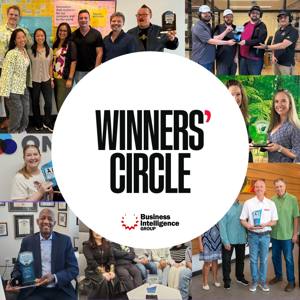
Winners’ Circle is where award winners and volunteer judges step out from behind the recognition and tell the stories that made the win matter.
Hosted by Business Intelligence Group,…
You will hear from winners who used recognition to build credibility, open doors, strengthen team morale, earn customer trust, and create new growth opportunities. You will also hear from judges who have reviewed countless nominations and know what separates a strong story from a forgettable one.
These are not acceptance speeches. They are honest conversations with the people doing the work. Winners talk about the campaigns, products, decisions, setbacks, breakthroughs, and lessons that shaped their success. Judges share what stands out, what gets overlooked, and how companies can tell clearer, stronger stories about their impact.
For companies, Winners’ Circle offers practical ideas for turning recognition into real business value. For leaders and teams, it highlights the people behind the results. For marketers and PR pros, it shows how awards can become more than a headline.
Pull up a chair in the Winners’ Circle. This is where winners and judges tell the stories behind the recognition.