
Sign up to save your podcasts
Or



Hosted on Acast. See acast.com/privacy for more information.
In our final episode of Season 4, hosts Emily Bassett and Cole Graham zoom in on the figure of Jupiter inside of Lyly's Woman in the Moon specifically and in the context of early modern drama more generally. What does it mean when a major god like Jupiter shows up in your play? What kind of (mostly bad) behavior should the audience expect? And how do productions of these plays handle divine spectacle in practical terms? Join Emily and Cole for an excavation of performance choices and a close-reading of Woman in the Moon's concentrated production history. Featuring a scene from the plays as performed by guest actors Jake Raiter and Joan Raube-Wilson
Hosted on Acast. See acast.com/privacy for more information.
Hosted on Acast. See acast.com/privacy for more information.
In this episode, intrepid host Trent Stephens is joined by guest expert Dr. Barbara Fuchs. Dr. Fuchs is Distinguished Professor of Spanish and English at UCLA and director of the Working Group on the Comedia in Translation and Performance and the Diversifying the Classics project. Dr. Fuchs shares details on the process of collaborative translation used to create the first English translation of Caro's play. Together, Stephens and Fuchs then unpack connections between English Renaissance drama and Spanish Golden Age plays, with an emphasis on the role of actress on the Spanish stage and look at how Caro converses with her contemporaries.
Hosted on Acast. See acast.com/privacy for more information.
Hosted on Acast. See acast.com/privacy for more information.
Hosted on Acast. See acast.com/privacy for more information.
In this episode, our hosts Gray Casterline and Scarlet Frishman Darling excavate the main plot of Thomas Middleton's The Changeling through the lens of both onstage violence and intimacy, using gender studies and queer theory as their guides. They close read key staging moments in the play across several productions to think about the staging required by the text and that which is implied by the story's context. Then, they talk with Charlene V. Smith, the Artistic Director of Brave Spirits Theatre in Washington, DC about the stellar production she directed for the company in 2018.
A note on content: This episode includes discussions sexual violence, intimacy, concept of virginity, purity culture, and violence including the severing of limbs.
Hosted on Acast. See acast.com/privacy for more information.
In this episode, our hosts Aubree Gray and Grayson Fulp ford the murky streams of The Changeling's B-plot, through a deep dive into the context of mental illness, madness, and asylums in the early modern period. Through historical research, their deployment of disability studies, and a very depressing game of true or false, they ask critical and insightful questions about how to responsibly work with this challenging subplot in production today.
A note on content: This episode includes in-depth discussion of mental illness, specifically madness, in the early modern period, including details on the mistreatment of the mentally ill, violence against women, and use of loaded language.
Hosted on Acast. See acast.com/privacy for more information.
In this episode, our hosts Rose Herold, Ella Pellegrino, and Julia Sommer explore the wild world of Molière's farce Tartuffe through the lens of censorship and (self) adaptation. How did the tension between Moliére, King Louis XIV, and the French Roman Catholic Church impact reception of Tartuffe? What revisions did the playwright make to appease Church and state? And why the introduction of a king ex machina, dude? All this and a look at Tartuffe is contemporary production and resonance in our current cultural moment too! Music for this episode was created using Online Sequencer. Online Sequencer is the creation and property of Jacob Morgan and George Burdell (https://onlinesequencer.net/).
A note on content -- This episode includes discussion of sexual harassment and sexual assault.
Hosted on Acast. See acast.com/privacy for more information.
In the final episode of Season 3, hosts Jovita Roselene and John Williams apply feminist theory to Molière's Tartuffe, using Taylor Swift as their guide! They unpack what Taylor's struggle to gain control of her own musical catalog might have in common with the censorship Molière experienced in his lifetime. Then, they turn to thinking about feminist theory and how applying it to Tartuffe allows us to center Dorine's agency inside of the plot. John explains the plot of the play in under a minute and our hosts then experiment with aligning the female characters in the play with an anthem from TSwift's ouevre.
A note on content: This episode includes one instance of the f-word. It is the very first word of the episode because Prof. Seremet told the class they could use it *once* inside an episode. Prof. Seremet acknowledges that this was her error and commends the hosts for their chutzpah.
Hosted on Acast. See acast.com/privacy for more information.
From the publisher's feed
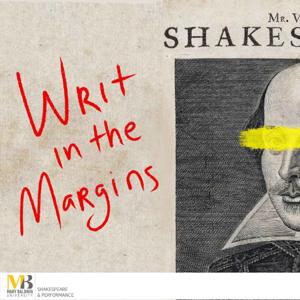
Have you ever wondered what might be hiding between the lines of a play? Writ in the Margins investigates dramaturgical mysteries from early modern (and early modern adjacent) plays.…
This podcast was created by the graduate students enrolled in REN670: Dramaturgy in the Shakespeare and Performance program at Mary Baldwin University. Writ in the Margins is produced in collaboration with course convener Prof. Molly Seremet.
Hosted on Acast. See acast.com/privacy for more information.