
Sign up to save your podcasts
Or


Introduction
December 27th brings sudden urgency—just four days remain to implement critical year-end financial strategies that could save thousands in taxes, reduce portfolio risk, and position retirement accounts for 2025 success.
Most people spend more time planning vacations than reviewing their largest asset: their retirement portfolio. But the market’s strong multi-year run has created hidden dangers in 401(k) accounts, particularly for those approaching retirement who haven’t rebalanced in years.
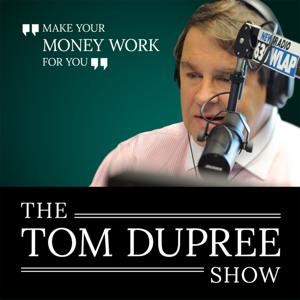
In this episode of The Tom Dupree Show, Tom Dupree and Mike Johnson provide an essential year-end checklist covering portfolio drift, account consolidation, tax-smart charitable giving, target date fund dangers, and fraud protection as scam season intensifies.
If you established a 60/40 portfolio (60% stocks, 40% bonds) five years ago and never rebalanced, you’re sitting on dramatically more risk than intended.
“If you had a 60-40 split in 2020, today you’re at about 76% stocks if you’ve made no changes,” Mike Johnson explained. “And your account’s worth 20 or 30% more, so there’s more dollars at stake, at risk.”
The drift problem:
Example: $500,000 in 2020 (60% stocks = $300,000) is now $650,000 with 76% stocks = $494,000 in equities. Your stock exposure grew 65%.
“About 40% of the S&P 500 is allocated to tech and high multiple stocks,” Mike noted. “If it’s been on autopilot, now is as good a time as any to look at it critically.”
“On average, every year you have a 10% drop in the market. That’s just the cost of admission,” Mike explained. “We had one back in April—it was closer to 20%. You were looking at 40, 50% drops in some things.”
“A lot of people have forgotten how—and even that they should—play defense, especially when you’re getting close to retirement,” Mike cautioned.
Year-end action: Check your actual allocation today. If stocks exceed your risk tolerance, rebalance before December 31st.
“People’s thinking is, if I have this account over here and this account over here, I’ve got more money,” Tom observed. “When they consolidate those accounts, every one of those five pieces put together as one is gonna get managed better.”
“It’s really hard to track performance if you have multiple accounts,” Mike explained. “It’s much simpler, much more accountable when it’s all consolidated together.”
Problems with scattered accounts:
Mike’s consolidation benefits: “Proper investment to reach your goals, performance tracking, tax reporting, tax planning, and possible discounts on fees.”
Year-end action: List all retirement accounts—schedule consolidation to simplify 2025 RMDs and reduce fees.
“Let’s say you give $10,000 a year to charity. You can gift those appreciated shares of stock to the organization,” Mike explained. “You can put that money right back into your brokerage account and reinvest it. You could even repurchase the same stock.”
The double benefit:
Example: Stock purchased for $4,000, now worth $10,000. Gift it, avoid $6,000 capital gain, use the $10,000 cash to buy it back.
“If you’re of the age where you have required minimum distributions, you can do a qualified charitable distribution,” Mike explained. “If you gift the RMD straight to the charity, it never flows through as taxable income to you.”
QCD advantages:
Year-end deadline: Execute stock gifts or QCDs before December 31st to count for 2024 taxes.
“At 59 and a half, you can do what’s called an in-service rollover,” Mike explained. “Even if you’re still employed and working, you can move over the balance of your 401(k) to an IRA and invest it more specifically for your situation.”
“Let’s say you’re 59 and a half and planning on retiring at 62. You can do that rollover, get the funds invested into an income-producing portfolio,” Mike detailed. “While you’re working, that income just reinvests back in. But when you hit 62, that portfolio’s already in place, it’s already working, and literally it’s linked to your checking account.”
Tom emphasized the benefit: “It makes the retirement process more comfortable because you’re not leaving work and at the same time coming in brand new, getting comfortable with our investment approach. You’ve planned for it.”
The seamless transition:
Year-end action: If age 59½+, investigate in-service rollover options.
“52% of the assets in target date funds—over $2 trillion—are now in collective investment trusts,” Mike reported.
What makes CITs dangerous:
“A collective investment trust—they’re not required to register with the SEC,” Mike explained. “They don’t have to report, as transparently, all the internal fees. And they’re allowed to hold more illiquid investments inside of them.”
“There was a private real estate fund—the Blue Rock Total Income Fund,” Mike detailed. “The net asset value when it was private was about $24 a share. They decided to go public. The fund closed the day it went public at $14.70.”
Investor loss: 39% immediately when real market pricing was revealed.
“The NAV was bogus. It was totally bogus,” Mike concluded.
“Vanguard announced they’re partnering with TIAA, and the target date fund automatically enrolls the investor in an annuity,” Mike reported.
“What they’re hoping is that these people that have been on autopilot for 40 years—they’re not gonna change from being on autopilot at year 41,” Mike explained. “It’s just gonna automatically roll into these annuities. This is a money grab to keep the assets locked in.”
“We don’t use target date funds. We don’t like what the target date fund does to the client’s return,” Tom stated. “It’s about having all your money in one spot the day you retire. That money doesn’t need to be in one spot. It needs to be growing and throwing off dividends.”
Mike: “The target date’s all based on historical averages. It doesn’t take into account what’s going on in the market or your situation.”
Year-end action: If in a target date fund, research what’s actually inside it before the “glide path” continues.
“This time last year, at the first of the year, was one of the biggest fraud pushes that we’ve seen,” Mike warned. “As we get close to the end of the year, be diligent and protect yourself.”
“These fraudsters are very convincing. They sound like us. They sound like an advisor,” Mike explained. “They’ll bring somebody onto the line. They’ll keep people on the line for three hours. They’ve gotten used to handling objections.”
“We heard two in a row from our clients—older women, same amount: $10,000 each,” Tom recounted. “One woman could afford it. The other one really couldn’t.”
“The first line of defense is you, the client,” Mike stated. “If you have something that pops up on your screen—don’t click there. If somebody calls—call somebody. Call a trusted person. If you’re a client of ours, call us. But do not take action on any of these things.”
Critical warning: “Do not verify within their ecosystem. They say, ‘We’ll let you verify,’ and then they transfer you. They’re all working together.”
Tom’s advice: “Get off the phone or don’t click on things and get somebody that you trust to find out exactly what’s going on.”
Year-end vigilance: Never click pop-ups, never transfer money based on calls, always verify independently.
✓ Check portfolio drift – Verify stock/bond allocation matches risk tolerance
✓ Rebalance if needed – Reduce risk before 2025
✓ Execute charitable strategies – Gift stock or make QCD before deadline
✓ Consolidate accounts – Simplify RMDs and reduce fees
✓ Research in-service rollovers – If 59½+, investigate options
✓ Review target date funds – Understand holdings before glide path continues
✓ Increase fraud vigilance – Peak scam season protection
With days remaining in 2024, retirement investors face critical decisions affecting taxes, risk exposure, and 2025 positioning.
Portfolio drift has likely pushed your stock allocation far beyond original intentions. Target date funds may contain illiquid investments, opaque fees, and automatic annuitization. But opportunities exist: tax-smart giving, consolidation, in-service rollovers, and rebalancing.
“All of these things fit into more of a holistic long-term retirement financial plan,” Mike concluded. “You want everything moving in the right direction to accomplish your goals.”
Is your portfolio drifted into dangerous territory? Missing tax-saving strategies? Approaching retirement without a transition plan?
Call (859) 233-0400 or schedule your complimentary portfolio review.
Dupree Financial Group – Where we make your money work for you.
Dupree Financial Group is a registered investment advisor with the U.S. Securities and Exchange Commission (SEC). This content is for informational purposes only and does not constitute investment advice, tax advice, or a solicitation. Past performance does not indicate future results. All investments involve risk, including potential loss of principal. Tax strategies should be reviewed with a qualified tax professional. Before making investment or tax decisions, consult qualified professionals. For more information, review our Form ADV Part 2A at www.adviserinfo.sec.gov or call (859) 233-0400.
The post Year-End Financial Planning Checklist: Critical Actions Before December 31st appeared first on Dupree Financial.
 View all episodes
 By Tom Dupree

4.1
1414 ratings
Introduction
December 27th brings sudden urgency—just four days remain to implement critical year-end financial strategies that could save thousands in taxes, reduce portfolio risk, and position retirement accounts for 2025 success.
Most people spend more time planning vacations than reviewing their largest asset: their retirement portfolio. But the market’s strong multi-year run has created hidden dangers in 401(k) accounts, particularly for those approaching retirement who haven’t rebalanced in years.
In this episode of The Tom Dupree Show, Tom Dupree and Mike Johnson provide an essential year-end checklist covering portfolio drift, account consolidation, tax-smart charitable giving, target date fund dangers, and fraud protection as scam season intensifies.
If you established a 60/40 portfolio (60% stocks, 40% bonds) five years ago and never rebalanced, you’re sitting on dramatically more risk than intended.
“If you had a 60-40 split in 2020, today you’re at about 76% stocks if you’ve made no changes,” Mike Johnson explained. “And your account’s worth 20 or 30% more, so there’s more dollars at stake, at risk.”
The drift problem:
Example: $500,000 in 2020 (60% stocks = $300,000) is now $650,000 with 76% stocks = $494,000 in equities. Your stock exposure grew 65%.
“About 40% of the S&P 500 is allocated to tech and high multiple stocks,” Mike noted. “If it’s been on autopilot, now is as good a time as any to look at it critically.”
“On average, every year you have a 10% drop in the market. That’s just the cost of admission,” Mike explained. “We had one back in April—it was closer to 20%. You were looking at 40, 50% drops in some things.”
“A lot of people have forgotten how—and even that they should—play defense, especially when you’re getting close to retirement,” Mike cautioned.
Year-end action: Check your actual allocation today. If stocks exceed your risk tolerance, rebalance before December 31st.
“People’s thinking is, if I have this account over here and this account over here, I’ve got more money,” Tom observed. “When they consolidate those accounts, every one of those five pieces put together as one is gonna get managed better.”
“It’s really hard to track performance if you have multiple accounts,” Mike explained. “It’s much simpler, much more accountable when it’s all consolidated together.”
Problems with scattered accounts:
Mike’s consolidation benefits: “Proper investment to reach your goals, performance tracking, tax reporting, tax planning, and possible discounts on fees.”
Year-end action: List all retirement accounts—schedule consolidation to simplify 2025 RMDs and reduce fees.
“Let’s say you give $10,000 a year to charity. You can gift those appreciated shares of stock to the organization,” Mike explained. “You can put that money right back into your brokerage account and reinvest it. You could even repurchase the same stock.”
The double benefit:
Example: Stock purchased for $4,000, now worth $10,000. Gift it, avoid $6,000 capital gain, use the $10,000 cash to buy it back.
“If you’re of the age where you have required minimum distributions, you can do a qualified charitable distribution,” Mike explained. “If you gift the RMD straight to the charity, it never flows through as taxable income to you.”
QCD advantages:
Year-end deadline: Execute stock gifts or QCDs before December 31st to count for 2024 taxes.
“At 59 and a half, you can do what’s called an in-service rollover,” Mike explained. “Even if you’re still employed and working, you can move over the balance of your 401(k) to an IRA and invest it more specifically for your situation.”
“Let’s say you’re 59 and a half and planning on retiring at 62. You can do that rollover, get the funds invested into an income-producing portfolio,” Mike detailed. “While you’re working, that income just reinvests back in. But when you hit 62, that portfolio’s already in place, it’s already working, and literally it’s linked to your checking account.”
Tom emphasized the benefit: “It makes the retirement process more comfortable because you’re not leaving work and at the same time coming in brand new, getting comfortable with our investment approach. You’ve planned for it.”
The seamless transition:
Year-end action: If age 59½+, investigate in-service rollover options.
“52% of the assets in target date funds—over $2 trillion—are now in collective investment trusts,” Mike reported.
What makes CITs dangerous:
“A collective investment trust—they’re not required to register with the SEC,” Mike explained. “They don’t have to report, as transparently, all the internal fees. And they’re allowed to hold more illiquid investments inside of them.”
“There was a private real estate fund—the Blue Rock Total Income Fund,” Mike detailed. “The net asset value when it was private was about $24 a share. They decided to go public. The fund closed the day it went public at $14.70.”
Investor loss: 39% immediately when real market pricing was revealed.
“The NAV was bogus. It was totally bogus,” Mike concluded.
“Vanguard announced they’re partnering with TIAA, and the target date fund automatically enrolls the investor in an annuity,” Mike reported.
“What they’re hoping is that these people that have been on autopilot for 40 years—they’re not gonna change from being on autopilot at year 41,” Mike explained. “It’s just gonna automatically roll into these annuities. This is a money grab to keep the assets locked in.”
“We don’t use target date funds. We don’t like what the target date fund does to the client’s return,” Tom stated. “It’s about having all your money in one spot the day you retire. That money doesn’t need to be in one spot. It needs to be growing and throwing off dividends.”
Mike: “The target date’s all based on historical averages. It doesn’t take into account what’s going on in the market or your situation.”
Year-end action: If in a target date fund, research what’s actually inside it before the “glide path” continues.
“This time last year, at the first of the year, was one of the biggest fraud pushes that we’ve seen,” Mike warned. “As we get close to the end of the year, be diligent and protect yourself.”
“These fraudsters are very convincing. They sound like us. They sound like an advisor,” Mike explained. “They’ll bring somebody onto the line. They’ll keep people on the line for three hours. They’ve gotten used to handling objections.”
“We heard two in a row from our clients—older women, same amount: $10,000 each,” Tom recounted. “One woman could afford it. The other one really couldn’t.”
“The first line of defense is you, the client,” Mike stated. “If you have something that pops up on your screen—don’t click there. If somebody calls—call somebody. Call a trusted person. If you’re a client of ours, call us. But do not take action on any of these things.”
Critical warning: “Do not verify within their ecosystem. They say, ‘We’ll let you verify,’ and then they transfer you. They’re all working together.”
Tom’s advice: “Get off the phone or don’t click on things and get somebody that you trust to find out exactly what’s going on.”
Year-end vigilance: Never click pop-ups, never transfer money based on calls, always verify independently.
✓ Check portfolio drift – Verify stock/bond allocation matches risk tolerance
✓ Rebalance if needed – Reduce risk before 2025
✓ Execute charitable strategies – Gift stock or make QCD before deadline
✓ Consolidate accounts – Simplify RMDs and reduce fees
✓ Research in-service rollovers – If 59½+, investigate options
✓ Review target date funds – Understand holdings before glide path continues
✓ Increase fraud vigilance – Peak scam season protection
With days remaining in 2024, retirement investors face critical decisions affecting taxes, risk exposure, and 2025 positioning.
Portfolio drift has likely pushed your stock allocation far beyond original intentions. Target date funds may contain illiquid investments, opaque fees, and automatic annuitization. But opportunities exist: tax-smart giving, consolidation, in-service rollovers, and rebalancing.
“All of these things fit into more of a holistic long-term retirement financial plan,” Mike concluded. “You want everything moving in the right direction to accomplish your goals.”
Is your portfolio drifted into dangerous territory? Missing tax-saving strategies? Approaching retirement without a transition plan?
Call (859) 233-0400 or schedule your complimentary portfolio review.
Dupree Financial Group – Where we make your money work for you.
Dupree Financial Group is a registered investment advisor with the U.S. Securities and Exchange Commission (SEC). This content is for informational purposes only and does not constitute investment advice, tax advice, or a solicitation. Past performance does not indicate future results. All investments involve risk, including potential loss of principal. Tax strategies should be reviewed with a qualified tax professional. Before making investment or tax decisions, consult qualified professionals. For more information, review our Form ADV Part 2A at www.adviserinfo.sec.gov or call (859) 233-0400.
The post Year-End Financial Planning Checklist: Critical Actions Before December 31st appeared first on Dupree Financial.
228,856 Listeners

4,099 Listeners

55 Listeners

9,971 Listeners
1,054 Listeners