
Sign up to save your podcasts
Or

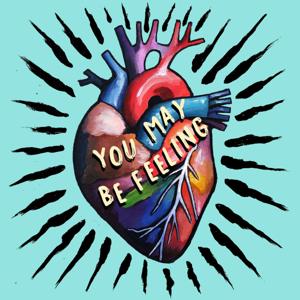


The activity of the internet has been described as a “race to the bottom of the brain stem.” Much of what we encounter online appeals to our most primal impulses. Cause if you can access that shit, you can sell yours.
It makes sense in an attention economy, that the fiercer the competition for people’s attention, the wilier and more wicked the tactics for getting it have gotten. That others are capitalizing on our achilles’ heels is just par for the course now. And learned helplessness is often the feeling that results. Followed by the one I’m fighting through in this episode: shame.
Last episode, I focused on online dating to consider how we’re becoming increasingly accustomed to a version of presence that is so half-assed it might as well be absence. I’m enjoying being off the apps, by the way.
A feature of the internet we’ve long metabolized is how it facilitates identity doubling. The fact that we have online versions of ourselves is a splintering that’s easy to forget. We are at ease expressing ourselves, to ourselves and to others, in the forms and flavours of someone else’s design; and we have become immersed so deeply in a system and its symbols, we’ve internalized its language as our own.
Dating apps are built on a business model that ushers users through a revolving door of disgust and desire. Hopeful romantics ping reliably between two poles: “That’s it, I quit” and “Oh god, the crushing loneliness.”
Users are jaded and tired. Dating apps, once exciting and fun, are scrambling to save themselves from drowning in all the meh. I think it’s all connected to a broader crisis we’re experiencing in how we relate to being present these days: we don’t want to miss out on anything, but we don’t really want to show up for it either.
Increasingly, self-checkouts are being recognized as a failed experiment. More and more stores are removing them. They of course cite theft and over-estimated savings in staff costs for the surprising reversal, but businesses are also having to admit that they are implicated in the social fabric, and they play a role in people’s well-being and their sense of connection. Surely an odd concession for capitalists.
In this episode, I reflect on how the general experience of the self-checkout, the feelings it provokes, and the impulse that led to it in the first place, are being seen elsewhere. I hope that the backlash against self-checkouts can serve as a lesson applicable beyond themselves.
This first episode looks at a theme that will certainly come up a lot: real things disappearing from our world, virtual things taking their place.
I think it’s important to notice when we’ve attached to objects simply because they are important to us, our own biographical timeframe. A nostalgia that is sweet but narcissistic too, a longing for objects that were symbols in one’s own life to matter more than they seem to. A stab at continued relevance. ‘Back in my day’ insistence. For me, the distinction comes with objects that are linked to pro-sociality. It is the disappearance of these objects, that I feel should give us pause.
My name is Caitlin, and I’m an HSP.
HSP stands for highly sensitive person.
Cue the eye roll, I know.
Believe me, I appreciate how fucking precious it sounds to announce that you’re a highly sensitive person. Right out of the gate even. Like, wow. Look at you.
But, the truth is, after so many years, living my life, winding my way through the world, wondering why I always feel so porous and exposed, it’s really the best explanation I’ve found.
And I lead with it because it’s kind of what led me here. To making this podcast, to talking to you.