
Sign up to save your podcasts
Or



Send us Fan Mail
Your students already have a worldview. But is it being shaped by Scripture or by the scroll?
Every teenager is building a foundation for how they understand the world. The question is whether that foundation is being formed by God's Word or by algorithms, friendships, feelings, and whatever shows up next in their feed.
Zac Workun sits down with Daniel Kinkade from Lifeway Students to explore what it actually takes to build a biblical worldview in teenagers.
They tackle the gap between knowing Scripture and living Scripture, why students need space to wrestle with difficult questions, and how youth leaders can make the most of increasingly limited time with students.
Along the way, Daniel shares the unforgettable observation from a middle schooler: "Jesus didn't play Minecraft." It's funny, but it reveals a serious discipleship challenge: Are we helping teenagers connect ancient biblical truth to their everyday lives?
You'll hear practical encouragement for:
The takeaway: Youth ministry isn't just about teaching students what to believe. It's about helping them become people whose lives are shaped by what they believe.
Listen, subscribe, and share this episode with a youth ministry leader who needs the encouragement.
Support the show
Join the community!
Send us Fan Mail
A broke church van is funny until you realize it might be the perfect picture of youth ministry: underfunded, wildly creative, occasionally held together with duct tape, and somehow still getting students where they need to go.
Live from Nashville, Zac sits down with Blake and Rico from the Broke Church Van Podcast to talk about the stuff only youth pastors understand, and the surprisingly serious ministry lessons underneath it.
Why does fun matter so much in youth ministry? How do you lead students who have already spent eight hours being told to sit down and pay attention? And what happens when you're expected to be the game guy, Bible teacher, counselor, event planner, comedian, and spiritual leader all in the same night?
But also, Are you building a youth ministry that can survive without you?
Blake and Rico share what they've learned about moving beyond personality-driven ministry, developing volunteers, sharing leadership, and building a student ministry that belongs to the whole church, not just the youth pastor.
The friends we make along the way!
We also talk about the relationships that make longevity possible: ministry friends who can tell you the truth, spouses who keep your priorities straight, shared calendars, family rhythms, and learning that you don't have to carry the whole ministry yourself.
Plus: dodgeball theology, Waffle House warning signs, terrible church vans, Matt Flanagan casting choices, and Diet Mountain Dew.
The goal isn't to build a youth ministry that needs you forever. It's to faithfully build one that can outlast you.
Support the show
Join the community!
Send us Fan Mail
Youth ministry can feel like a holy adrenaline rush. Packed rooms. Camp. Baptisms. Students responding to the gospel. The next Wednesday night is always coming.
But what happens when you start needing the ministry as much as the ministry needs you?
Dane Leake joins Zac for an unusually honest conversation about burnout, mental health, identity, and the hidden cost of chasing the next ministry high.
Dane shares the story of his 2023 collapse, years of overwork, lack of sleep, caffeine, unprocessed grief, and tying too much of his identity to ministry outcomes eventually caught up with him. After camp, his body and mind effectively shut down. What followed included hospitalization, stepping away from a ministry he loved, and a long season of rebuilding his life.
But this isn't just an episode about burnout. It's about learning another way to lead.
Zac and Dane talk about the dopamine cycle built into ministry, the warning signs Dane wishes he'd noticed earlier, why a bad Wednesday can ruin your entire week, and the danger of confusing ministry success with personal worth.
They also get intensely practical about what changed: real Sabbath, honest friendships, clear personal values, slower rhythms, letting go of outcomes, and learning to lead from conviction rather than KPIs.
And the conversation eventually turns toward our students: if we're trying to disciple an anxious, screen-saturated generation, maybe our ministries can't simply offer them another adrenaline hit.
This one is for the youth minister who loves ministry—but is beginning to wonder what ministry is doing to them.
In this episode:
• Why youth ministry can become emotionally addictive
• The warning signs of burnout we tend to rationalize
• Dane's 2023 mental health crisis and road toward recovery
• Why your identity cannot rise and fall with Wednesday night
• Sabbath as structure, delight, and resistance
• Conviction vs. outcomes in ministry leadership
• Why ministers need people who can see the “storm conditions” before the storm
• Programming for an anxious generation without manufacturing emotional response
• How to work hard without losing your soul
Youth minister, you don't walk alone.
YMB isn't just a podcast. It's a place to belong. Join a community of folks that share your calling.
Support the show
Join the community!
Send us Fan Mail
“We’re good, just busy” might be the most common sentence in American family life, and it’s reshaping what people can realistically say yes to.
It's become the default answer for families, pastors, and church leaders. And when everyone feels stretched thin, youth ministry can easily respond by either adding more programming or blaming sports, school, and extracurricular activities for stealing students away.
But what if that's not the whole story?
Maybe youth ministry doesn't need more things on the calendar. Maybe the things already on the calendar need to matter more.
In this episode, Zac Workun and Chad Higgins explore the difference between being busy and being intentional.
Families demonstrate all the time that they're willing to make significant commitments when they understand the value. Sports have practices, specialized training, games, and clearly defined wins. Meanwhile, churches can accidentally fill calendars with gatherings that all feel vaguely similar—and therefore increasingly missable.
That leads to a challenging principle:
If everything is for everyone, eventually it feels like it's for no one.
What if every gathering in your student ministry had a clearer purpose? An outreach event doesn't have to accomplish the entire discipleship process. A small discipleship gathering doesn't need the attendance of your biggest event. Some environments are designed to invite. Others help students practice. Others should give students opportunities to lead.
Or, as Zac and Chad put it: pep rallies, practices, and games.
The conversation moves beyond programming into a bigger vision for student discipleship. Instead of measuring success primarily by how many teenagers attended, what would happen if churches became clearer about the kind of disciples they're trying to form?
Could students graduate from youth ministry knowing Scripture, understanding core theology, experiencing meaningful Christian community, serving the church, sharing their faith, and increasingly teaching others to do the same?
That's a much more compelling goal than simply keeping the calendar full.
And it might help us rethink the supposed competition between church and everything else in a teenager's life.
The goal isn't simply getting students into more church activities. It's forming students who know how to follow Jesus everywhere else.
If your fall youth ministry calendar is already packed, this episode will help you ask a better question than “What should we add?”
What is all of this actually for?
This Episode Will Help You Think About
Youth Ministry Booster exists to encourage and equip youth pastors and student ministry leaders for healthier, more intentional ministry.
Subscribe to the podcast, share this episode with another youth ministry leader, and leave a review to help more youth pastors find the conversation.
Support the show
Join the community!
Send us Fan Mail
Student ministry has always adapted to changing culture.
The message never changes.
Sometimes the methods need to.
In this episode, Zac Workun and Chad Higgins ask an important question:
Today's students aren't disengaged...they're simply communicating the way they've been formed to communicate.
From AIM away messages and Facebook walls to Snapchat, group chats, Twitch streams, and endless scrolling, every generation learns differently because every generation communicates differently. That reality matters when we gather students into circles and ask them to process the deepest questions of life in real time.
Rather than criticizing technology, Zac and Chad explore what youth pastors can learn from it.
You'll hear practical ideas for creating healthier discussions, reducing unnecessary social pressure, helping students observe Scripture before performing knowledge, and equipping small group leaders to become guides instead of answer dispensers.
The conversation also explores why Twitch and creator culture may actually reveal something hopeful: students still want to learn—they often learn first by watching trusted people model wisdom before stepping into it themselves. That's why one of the greatest opportunities in youth ministry today is inviting students to move beyond consuming content toward creating, teaching, serving, and leading within the life of the church.
If you're leading teenagers today, this episode will help you think more carefully about attention, communication, discipleship, and what faithful ministry looks like in a digital age.
Episode Highlights
Discussion Questions
If this episode encouraged you, subscribe, leave a review, and share it with another youth pastor or volunteer. Every share helps more ministry leaders find practical, Gospel-centered encouragement for leading the next generation.
Support the show
Join the community!
Send us Fan Mail
Time is limited. Your calling isn't.
Camp season leaves most youth pastors physically exhausted, emotionally stretched, and mentally staring at an already-full fall calendar. In this episode of the Youth Ministry Booster Podcast, Zac and Chad begin with some hilarious camp memories before asking a much more important question:
Why do we always feel like we're running out of time?
This conversation isn't another productivity episode. We can't help you get more hours in the day. It cannot be done.
Instead, it's an honest look beneath the calendar to examine the emotional, mental, and spiritual realities that shape how we lead.
We do have practical insights about identifying your biggest time wasters, setting healthy constraints, reusing ministry systems instead of constantly reinventing them, and why technology alone can't solve the deeper issues of procrastination or overwhelm.
More importantly, Zac and Chad explore what happens when ministry pressure begins affecting your relationships, your emotions, and your walk with Christ. They discuss fight-flight-freeze responses, protecting your family during busy seasons, inviting trusted friends into your struggles, and recovering the sacred nature of ministry instead of reducing it to a checklist.
The challenge at the end is simple:
Don't just organize your tasks. Order your day around prayer.
Episode Highlights
Questions
Subscribe to Youth Ministry Booster for practical conversations that help youth pastors lead healthier ministries and become healthier leaders themselves.
Support the show
Join the community!
Send us Fan Mail
What if the biggest threat to your youth ministry isn't a lack of volunteers, budget, or attendance... but your own exhaustion?
In this episode of the Youth Ministry Booster Podcast, Zac Workun sits down with Dr. Jody Dean (New Orleans Baptist Theological Seminary) for an honest conversation about burnout, sustainability, and staying faithful for the long haul. Drawing from decades of ministry, mentoring, and leadership development, Dr. Dean shares practical wisdom for youth pastors who love student ministry but feel like they're running on empty.
Together they unpack:
Whether you're fresh off summer camp, gearing up for another ministry season, or simply feeling tired, this conversation is a timely reminder that God has called you to more than surviving ministry—He has called you to endure with joy.
Your labor is not in vain.
Support the show
Join the community!
Send us Fan Mail
What if we've been measuring youth ministry by the wrong scoreboard?
Attendance matters. Camp decisions matter. Great programming matters. But Jesus didn't commission us to create busy ministries—He commissioned us to make disciples.
Recorded live at SBC 2026, Zac Workun sits down with Dr. Jason Engle to explore one of the most important conversations every youth pastor needs to have: What does spiritual maturity actually look like?
Drawing from the Great Commission and Colossians 1:28, Jason argues that the true aim of youth ministry isn't simply activity, engagement, or even decisions—it's helping students become mature in Christ.
Together we unpack:
One of the most memorable moments comes when Jason shares the story of a student he believed wasn't listening, only to discover years later that God had been working beneath the surface all along.
If you've ever wondered whether your ministry is making a lasting difference, this conversation offers both biblical clarity and tremendous encouragement.
Key Scriptures
Memorable Quotes
"The goal isn't students who depend on the ministry. It's students who know how to pursue Christ when the ministry is gone."Support the show
Join the community!
Send us Fan Mail
What if the greatest measure of success in youth ministry isn't getting students to graduation...
...it's what happens after they leave?
Every youth pastor has watched it happen. A student who was faithful all through high school slowly disappears during their first semester of college. Rarely is it one dramatic decision. More often it's loneliness, distraction, isolation, and never learning how to follow Jesus without someone planning their spiritual life.
In this episode, Zac Workun sits down with Paul Worcester (North American Mission Board) to explore what college ministry leaders see every fall—and what youth pastors can do before graduation to help students develop a faith that actually lasts.
Together they unpack why the first 90 days of college are one of the most important windows in a student's spiritual life, how discipleship must move beyond teaching into training, and why smaller discipleship groups may be one of the missing pieces in modern youth ministry.
📘Paul also introduces Thrive, a new Bible study designed to help students navigate the transition from high school to college with a gospel-centered identity and sustainable spiritual habits.
If you want your graduates to leave your ministry prepared—not just inspired—this conversation is for you.
In This Episode
Key Takeaways
One of the biggest ideas from this conversation is simple:
Students don't simply need more or better sermons. They need better training. Intentional, relational, and personal.Teaching informs.
Training transforms.
When students regularly practice Scripture, prayer, accountability, evangelism, and spiritual disciplines before graduation, they're far more likely to continue those rhythms when nobody is checking attendance.
As Paul says:
"More time with fewer people leads to greater lasting Kingdom impact."Support the show
Join the community!
Send us Fan Mail
Teenagers are drowning in noise, and most of them don’t have the brain bandwidth or life experience to sort it all out yet. From the SBC 2026 exhibit hall, we talk with Dr. Kristen Kellen about what it looks like to counsel teens faithfully when anxiety, comparison, and overwhelm feel like the background music of adolescence.
If you've ever wondered:
"Am I doing enough for struggling students?"
"When should I listen...and when should I refer?"
"How do I help teenagers who feel anxious all the time?"
...this conversation is for you.
We get specific about emotional health and why it can’t be separated from the rest of life. Sleep, food, hydration, exercise, and screen time matter more than we want to admit, especially for developing bodies and brains. Then we challenge a popular idea that quietly shapes teen culture: the belief that emotions are authoritative and binding. Dr. Kellen gives language that protects kids from shame while still giving them agency, helping them move from “I feel anxious, so I am anxious” to “I’m experiencing anxiety, and I can respond wisely.”
For youth pastors and youth leaders, we dig into the difference between helping a student feel better in the moment and helping them become healthy over time. We talk modeling emotional regulation, naming feelings without being ruled by them, and using practical steps that build resilience. We also explore suffering and spiritual maturity, why Scripture assumes hardship, and how patience and the fruit of the Spirit grow through repeated practice, not instant change. If you’ve wanted a clearer framework for Christian counseling and pastoral care with teens, this conversation will give you traction.
We talk about why so many teenagers feel overwhelmed and how we can respond with wisdom instead of panic. We lay out practical ways to help students name their feelings, build agency, and grow toward long-term health and spiritual maturity.
In This Episode
Quotes
Support the show
Join the community!
From the publisher's feed
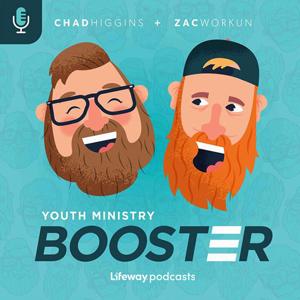
Welcome to the Youth Ministry Booster podcast! The most honest and hilarious podcast in student ministry. Hosted by Zac Workun and Chad Higgins. We are the biggest fans of youth ministry leaders…

39,043 Listeners

15,975 Listeners

2,266 Listeners

10,740 Listeners
140 Listeners
198 Listeners

2,872 Listeners

35,896 Listeners
4,661 Listeners

12 Listeners

220 Listeners

26,562 Listeners

4,379 Listeners