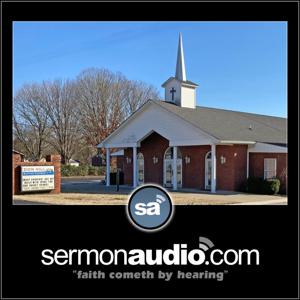
Zion Hill Baptist

Zion Hill Baptist

Download on the App Store

Zion Hill Baptist episodes

  • Asa's Revival
    The message tells the story of the Revival in Judah that King Asa lead after a message from the Lord. It emphasizes the necessity of praying for spiritual needs rather than personal desires, using King Asa's reforms in 2 Chronicles 15 as a primary example. It defines true revival as an active process requiring believers to diligently seek God with their whole heart, removing idols that distract from Him. I challenged the church to perform spiritual work by sacrificing time, talents, and addictions (like social media) to restore their relationship with God through prayer and worship. Accountability within the church community is highlighted as essential for maintaining this commitment and fostering a environment where God's presence can be experienced. Ultimately, I urge both believers and seekers to pursue God earnestly, promising that He will be found when sought with genuine devotion.
    37 min
  • The Other Brother
    Tonight we explore the Parable of the Prodigal Son and his brother to address two distinct audiences: those who have rebelled against God and those who rely on religious self-righteousness. I contend that both the younger son's wild rebellion and the elder son's bitter obedience lead to separation from the Father if not met with genuine repentance and humility. Central to the message is the character of God, who actively seeks out the lost and eagerly welcomes them back with unconditional grace rather than condemnation. I share my personal testimony of realizing that outward religious performance without a true relationship with Christ is equally dangerous as open sin. Ultimately, the sermon calls listeners to recognize their need for God's mercy and to respond by coming to themselves and returning to the Father who is waiting with open arms.
    34 min
  • Death the Adversary's Tool
    The sermon identifies the adversary as the hidden force behind societal acceptance of death through abortion, physician assisted suicide, and war. It contrasts this destructive influence with Jesus Christ's mission to provide abundant life and eternal salvation. I argue that cultural desensitization, justification, and ignorance blinds people to the spiritual reality that death is an evil tool of Satan. Believers are urged to recognize the inherent value of every human life created in the image of God. The ultimate solution presented is the proclamation of the gospel to bring spiritual transformation and victory over sin through the sacrifice of Christ and his resurrection and triumph over sin and death.
    49 min
  • The Mercy Seat
    Today we explore the significance of the mercy seat in Exodus, establishing it as the place where God meets His people and provides atonement for sin. By examining the Old Testament rituals involving the Ark of the Covenant and the high priest's yearly entry into the Holy of Holies, the message highlights humanity's inherent guilt and separation from a holy God. I show how to connect these ancient symbols to the New Testament revelation that Jesus Christ is the ultimate propitiation, fulfilling the law through His perfect sacrifice. This fulfillment grants believers direct access to God without the need for physical rituals or repeated offerings. The central call urges listeners to respond in faith, recognizing that God has purposefully provided a way for reconciliation through the blood of Christ.
    42 min
  • Pool of Bethesda
    The sermon centers on Jesus' healing of a man paralyzed for 38 years at the Pool of Bethesda, using this event to confront the deeper spiritual condition of humanity—our tendency to rely on excuses, external circumstances, or past failures rather than responding to God's direct call to be made whole. Through the man's encounter with Christ, the message emerges that salvation and transformation are not contingent on human effort, merit, or perfect conditions, but on a simple, personal response to the divine question: 'Will you be made whole?' The healing is not merely physical but symbolic of spiritual renewal, demanding immediate obedience—rising, carrying one's burden, and worshiping God. The subsequent conflict with religious leaders underscores the tension between legalistic tradition and divine authority, as Jesus asserts His unity with the Father, revealing that true sonship is defined by obedience to the Father's will, not human rules. The sermon calls listeners to abandon earthly comparisons and flawed models of fatherhood, instead looking to God as the perfect standard, surrendering control, confessing sin, and following Christ's example of faith, obedience, and testimony, all rooted in the Father's unchanging love and authority.

    34 min
  • Tasting God
    Today we consider the necessity of an experiential faith in God, emphasizing that true relationship with Him transcends intellectual belief or ritual, requiring personal, intimate encounter. Drawing from Scripture—particularly Psalms 34:8 and 1 Peter 2:3—it illustrates how God reveals Himself through sensory metaphors like 'tasting' and 'seeing,' symbolizing the deep, transformative intimacy possible with a spiritual God. I argue that spiritual nourishment comes not from superficial religious habits but from a genuine, ongoing experience of God's goodness, which naturally produces craving, joy, and transformation in the believer's life. I challenge both believers and unbelievers to abandon spiritual complacency and pride, urging them to surrender their self-reliance and open themselves to God's healing presence, where conviction, salvation, and sanctification lead to eternal communion. Ultimately, the call is to taste and know God's goodness firsthand, not through hearsay or obligation, but through willing surrender and personal encounter.
    34 min
  • Are we Slaves?
    The sermon centers on the profound truth that all humanity is enslaved—either to sin or to Christ—emphasizing that freedom is not found in autonomy but in faithful servitude to the one who sets us free. Drawing from John 8:34 and Romans 6–7, it explains that sin enslaves by binding the will, making it impossible to break free through human effort, while Christ's sacrifice provides liberation not for self-indulgence but for lifelong obedience to God. The message underscores the ongoing spiritual battle believers face, where the flesh wars against the Spirit, and highlights that true freedom is found in daily surrender, prayer, and reliance on the Holy Spirit to overcome sin. It calls all listeners—both the unsaved and the struggling believer—to recognize their master, repent of self-rule, and commit fully to Christ, who alone can transform lives and restore purpose through grace.
    27 min
  • The God who Sees
    The sermon centers on Genesis 16, using Hagar's story to illustrate the consequences of human effort, pride, and contempt in place of faith and submission to God's timing. It highlights how Abraham's failure to trust God's promise, Sarah's lack of faith leading to a flawed solution, and Hagar's resulting contempt created a cycle of division and suffering, demonstrating that human attempts to force divine outcomes lead to relational breakdown. Yet, in the midst of her despair, Hagar encounters God in the wilderness, naming Him El Roi 'the God who sees' revealing a profound truth: God is intimately aware of every person's struggles, even in isolation, and cares deeply for each individual, as evidenced by His detailed knowledge of sparrows and the hairs on one's head. The sermon calls listeners to repent of spiritual pride and contempt, urging a return to God not merely in obedience but in heartfelt submission, recognizing that true salvation and transformation come when we surrender control and embrace God's personal, all-seeing love. Ultimately, the message is both comforting to believers and convicting to those who have rejected God, affirming that He sees, hears, and desires a close, intimate relationship with every person.
    27 min
  • Our Mt. Zion
    The sermon draws a powerful contrast between Mount Sinai, symbolizing the Old Testament era of law and physical separation from God, and Mount Zion, representing the New Testament reality of grace, spiritual access, and intimate relationship with God through Jesus Christ. It emphasizes that under the old covenant, God's presence was marked by fire, darkness, and deadly holiness, underscoring humanity's inability to approach Him due to sin. In contrast, the new covenant in Christ removes the need for physical proximity, as believers now approach God with confidence through the blood of Jesus, the mediator of a better covenant, and the indwelling Holy Spirit. The passage calls the audience to respond to God's present, gentle voice—not through fear of judgment, but through faith and obedience—warning that rejecting this spiritual access is far more dangerous than rejecting the audible voice of God at Sinai. Ultimately, the message is one of profound gratitude and urgent invitation: salvation is not earned by law-keeping, but received by grace through faith in Christ, who has made eternal access to God possible.
    28 min
  • Precepts of Psalm 37
    Today we consider Psalm 37 and how it presents a transformative framework for godly living centered on centered on trust, surrender, and active righteousness. It calls believers to reject anxiety over evil and injustice, instead cultivating a deep delight in the Lord, which reshapes their desires and aligns them with God's will. Through eight interconnected precepts—fret not, trust and do good, delight in the Lord, commit your way, rest and wait patiently, cease from anger, depart from evil, and keep His ways—the psalm offers a path of spiritual discipline and dependence on God. The message emphasizes that true peace and purpose come not from self-effort or moral performance, but from surrendering control and waiting on God's timing, knowing that He ultimately vindicates the righteous and delivers them through faith. While these commands are not a means of earning salvation, they reflect the character of a life transformed by grace, calling both believers to continual obedience and the lost to repentant trust in Christ alone.
    33 min

About Zion Hill Baptist

From the publisher's feed

The newest sermons from Zion Hill Baptist on SermonAudio.