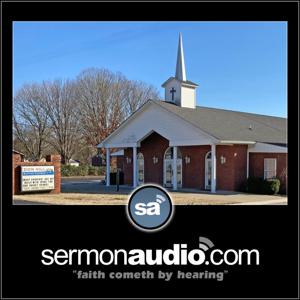
Zion Hill Baptist

Zion Hill Baptist

Download on the App Store

Zion Hill Baptist episodes

  • His Rest
    The sermon centers on the transformative power of God's Word and the necessity of faith in Jesus Christ for entering into His eternal rest, a spiritual inheritance not earned by works but received through belief. Drawing from Hebrews 3–4, it emphasizes that the Israelites' failure to enter God's rest was rooted not in isolated sins but in persistent unbelief, illustrating how human hearts are deceitful and prone to self-reliance, even after witnessing divine miracles. The passage reveals that true rest is not a physical or earthly possession, but an eternal, heavenly state secured by faith in Christ, who, as the perfect High Priest, empathizes with human weakness and offers bold access to grace. The Word of God is portrayed as living, active, and piercing—discerning the deepest thoughts and intentions—thereby convicting, guiding, and transforming believers as they remain steadfast in faith. Ultimately, the message calls for daily dependence on Christ, continual spiritual vigilance, and confident approach to God's throne, not for self-justification, but for mercy and grace in every season of life.
    41 min
  • Fulfillment of the Law
    The sermon centers on the fulfillment of the Old Testament law through Jesus Christ, emphasizing that while the law reveals human sinfulness and points to the need for a Savior, it is no longer binding on believers. Drawing from Matthew 5:17–18 and Galatians, it explains that Jesus did not come to abolish the law but to fulfill it perfectly—through His sinless life, sacrificial death, and resurrection—thereby establishing a new covenant based on grace through faith. The moral essence of the law is distilled into two commandments: loving God with all one's being and loving one's neighbor as oneself, which are not easier to follow but are the true purpose of the law's revelation. The message warns against returning to legalistic observance, not out of freedom to sin, but out of gratitude for Christ's complete work, calling believers to live by the Holy Spirit's guidance in love rather than rule-keeping. Ultimately, the sermon invites a personal, heartfelt response—repentance, surrender, and prayer—recognizing that salvation is not earned by obedience to law but received through faith in Christ, whose sacrifice covers all sin.
    36 min
  • 6 - Pastor
    This lesson presents a comprehensive biblical framework for understanding the pastoral office, emphasizing that the role is not defined by human institutions but by divine appointment, as reflected in the three interrelated terms—pastor (shepherd), elder (mature leader), and bishop (overseer)—all pointing to a unified ministry of spiritual care, teaching, and oversight. Central to this role is the conviction that pastors are called by God, not self-ordained or elected solely by human consensus, and must meet rigorous moral, doctrinal, and relational qualifications, including blamelessness, faithfulness in marriage, sound teaching ability, and a life marked by humility and integrity. The lesson underscores that while the church plays a vital role in recognizing and ordaining a pastor through collective consent, it does not create the office but affirms God's prior calling, and that disqualification arises not from isolated failures but from persistent unrepentant sin or doctrinal departure from core Christian truths. Ultimately, the pastoral role is portrayed as a sacred, lifelong vocation requiring both spiritual maturity and accountability, with the church responsible for upholding these standards while also providing fair treatment, including just compensation, to honor the labor of those who serve in this capacity.
    59 min
  • Conversions in Acts
    Today we contrasts genuine conversion with superficial or self-serving faith through key narratives in Acts, emphasizing that true salvation involves heartfelt repentance, divine conviction, and a transformed life rather than mere intellectual assent or religious performance. It examines Simon the sorcerer's false conversion—marked by hypocrisy and a desire for power—against the authentic faith of the Ethiopian eunuch, who boldly confessed Christ despite social risk, and the Philippian jailer, whose trembling before God led to immediate repentance and joy. The sermon also highlights Felix and Agrippa, who were convicted yet remained unconvinced, illustrating the danger of delaying obedience to God's call. Ultimately, it calls listeners to move beyond intellectual agreement or emotional reactions to a personal, transformative faith in Jesus Christ, warning that neglecting this salvation leads to eternal separation from God, and urging immediate response to the gospel's urgent call.
    44 min
  • The Ekklesia
    Today we distinguish between the modern cultural understanding of 'church' as a physical building or institutional structure and the biblical concept of ekklesia—the assembly of believers called out from the world for a holy purpose. Drawing from Greek etymology and New Testament usage, it emphasizes that the true church is not defined by architecture or hierarchy, but by a living, gathered body of believers united in faith, worship, and mission. This distinction is vital, as it reorients the believer's identity from passive attendance to active separation from sin, holy living, and intentional fellowship in Christ. We find the early church turned the world upside down not through buildings, rituals or hierarchy, but through bold proclamation of the gospel and a transformed life. Ultimately, listeners to see themselves not as members of a holy assembly called out by God to be salt and light, worshiping Him in spirit and truth, and living in such a way that their difference points others to Christ.
    36 min
  • 4 - Salvation
    This lesson aims to present a comprehensive theological framework of salvation, emphasizing that humanity is saved from the pervasive consequences of sin—physical death, spiritual separation from God, and eternal condemnation—rooted in Adam's fall and perpetuated by inherited sin and personal rebellion. It clearly rejects salvation through religious rituals or human works, underscoring the futility of self-effort due to the inherent deceitfulness and corruption of the human heart, and instead affirms that salvation is solely through the substitutionary atonement of Jesus Christ, who, as both fully God and fully man, lived a sinless life and bore the penalty for all sin on the cross, thereby canceling the debt that humanity could never repay. The process of salvation is described as beginning with the Holy Spirit's conviction, leading to genuine repentance and faith—more than mere intellectual assent, but a transformative trust in Christ's work—resulting in eternal security, sealed by the Holy Spirit and guaranteed by God's power, ensuring that believers are eternally preserved in fellowship with God, obedience to His will, and the hope of eternal life, all grounded in grace and not human merit.
    1 hr 3 min
  • Judge Not?
    Are we allowed to judge others? This sermon clarifies that the biblical command 'Judge not' in Matthew 7:1 is often misused to avoid moral accountability, when in fact Scripture consistently calls believers to discernment, righteous judgment, and loving correction grounded in God's truth. It emphasizes that judgment is not forbidden but must be exercised with humility, self-examination, and compassion—avoiding hypocrisy, superficiality, harshness, and self-righteousness—while always seeking to restore others in love. Drawing from passages like John 7:24 and the broader context of Matthew 7, the message affirms that believers are to judge rightly, based on the full counsel of Scripture, with the goal of guiding others toward God's will and away from destructive sin. The sermon challenges the church to reclaim its moral witness in a culture that denies objective truth, urging Christians to courageously yet gently confront sin in themselves and others, not out of pride, but out of love and a desire to see others freed from the bondage of error and brought into the life God intends.
    35 min
  • 3 - Man
    Part 3 of What We Believe: The Basics of Christian Doctrine and the Baptist Faith. This lesson presents a unified theological vision of the Triune God—Father, Son, and Holy Spirit—as co-equal, co-eternal persons who function in distinct yet harmonious roles. It emphasizes God the Father as the source of divine will and authority, not in hierarchy but in relational order; God the Son as fully divine and fully human, incarnate to fulfill the Father's redemptive plan, whose name 'Jesus' means 'Jehovah is salvation' and whose obedience to death on the cross is the ultimate act of humility and divine love; and God the Holy Spirit as a personal, active presence who dwells in believers, convicts, comforts, intercedes, and seals them for eternal life, not as a mystical force but as the intimate, ongoing agent of God's presence on earth. The lesson then turns to humanity, created in God's image with a material body and immaterial spirit and soul, endowed with reason, morality, social nature, and free will, all for the purpose of glorifying God through intimate fellowship. However, due to Adam's sin, humanity fell into spiritual death, resulting in separation from God, a cursed creation, and a life marked by toil, decay, and enmity toward God—setting up the urgent need for redemption. The message culminates in the profound question of how a holy God can reconcile sinful humanity without compromising justice or love, pointing forward to the solution found in Christ's atoning sacrifice, which will be explored in the next lesson.
    1 hr 5 min
  • Temptation
    This sermon, drawn from James 1:13–18, centers on the reality that temptation originates not from God or external demons, but from within—specifically from our own lusts and desires. It emphasizes that while all people face temptation, the root of sin lies in the heart's voluntary surrender to selfish longing, which, when nurtured, gives birth to sin and ultimately leads to spiritual death. Believers are to take personal responsibility, rejecting the tendency to blame God, Satan, or others, and instead to recognize that overcoming temptation requires a transformative reliance on God through His Word, the Holy Spirit, prayer, intentional focus on heavenly things, and the deliberate act of fleeing from sin. Ultimately, victory over temptation is only possible through a personal, ongoing relationship with Christ, rooted in salvation, repentance, and continual dependence on divine grace.
    40 min
  • 2 - The Godhead
    Part 2 of What We Believe: The Basics of Christian Doctrine and the Baptist Faith. The lesson aims to present a comprehensive theological exploration of God's nature, beginning with the assumption of God's existence as foundational to Scripture and human reason, supported by logical arguments from creation, design, and moral awareness. It then unfolds the doctrine of the Trinity—not as a term found in Scripture but as a vital concept affirming one God in three co-equal, co-eternal persons: Father, Son, and Holy Spirit—each fully God, distinct in role yet unified in essence, with the Father initiating, the Son accomplishing, and the Spirit applying divine work. The lesson emphasizes God's infinite, unchanging, holy, self-existent, and sovereign attributes—omnipresent, omniscient, omnipotent—revealed through Scripture and experienced in worship, while underscoring that God is a personal Spirit with thoughts, emotions, and desires, capable of sorrow over human sin, yet eternally loving, just, merciful, and faithful. Ultimately, the purpose is to reveal God's greatness and nearness, inviting awe, humility, and trust in a God who is both infinitely beyond humanity and intimately concerned for it.

    58 min

About Zion Hill Baptist

From the publisher's feed

The newest sermons from Zion Hill Baptist on SermonAudio.