
Sign up to save your podcasts
Or

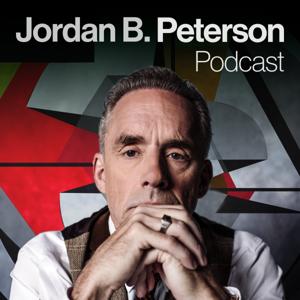

In this, the final Maps of Meaning lecture for 2017, Dr. Peterson reviews the year and its offerings: What is a belief system? Why are people so inclined to engage in conflict to protect their belief systems?
It's partly because our belief systems are not only systems of belief, but structures that serve to render everyone who participates in that belief and its dramatization and acting out in the world predictable, trustworthy and cooperative (even when competing).
Is there a hierarchy of rank or value among belief systems, or are they merely arbitrary?
What is the relationship between descriptions of the objective world and moral guidelines? How do you determine how to conduct yourself in the world? What should you do (and is that question even genuine -- or answerable?)
What inbuilt structures do you bring into the world, as a consequence of biological evolution, that help you orient yourself in life, in the face of its overwhelming complexity? What is the relationship between the games that children learn to play when becoming socialized and the cultural structures that guide us in broader society? How is all this related to the underlying symbolic structures (religious structures) that sit at the base of our societies and belief structures?
Learn more about your ad choices. Visit podcastchoices.com/adchoices
 View all episodes
 By Dr. Jordan B. Peterson

4.6
3289032,890 ratings
In this, the final Maps of Meaning lecture for 2017, Dr. Peterson reviews the year and its offerings: What is a belief system? Why are people so inclined to engage in conflict to protect their belief systems?
It's partly because our belief systems are not only systems of belief, but structures that serve to render everyone who participates in that belief and its dramatization and acting out in the world predictable, trustworthy and cooperative (even when competing).
Is there a hierarchy of rank or value among belief systems, or are they merely arbitrary?
What is the relationship between descriptions of the objective world and moral guidelines? How do you determine how to conduct yourself in the world? What should you do (and is that question even genuine -- or answerable?)
What inbuilt structures do you bring into the world, as a consequence of biological evolution, that help you orient yourself in life, in the face of its overwhelming complexity? What is the relationship between the games that children learn to play when becoming socialized and the cultural structures that guide us in broader society? How is all this related to the underlying symbolic structures (religious structures) that sit at the base of our societies and belief structures?
Learn more about your ad choices. Visit podcastchoices.com/adchoices
229,444 Listeners

153,799 Listeners
14,220 Listeners
22,714 Listeners
29,733 Listeners

28,398 Listeners
2,109 Listeners

509 Listeners
7,788 Listeners

5,323 Listeners
45,351 Listeners

1,181 Listeners
4,259 Listeners
40,431 Listeners

1,637 Listeners
3,884 Listeners

4,003 Listeners
15,546 Listeners
1,534 Listeners

8,510 Listeners

539 Listeners
26,634 Listeners

280 Listeners

17,092 Listeners

419 Listeners

172 Listeners