Most people — and most organizations — confuse mental health with mental illness, so they miss early signals, underinvest in daily coping skills, and end up with preventable distress, disability, and burnout. Bill’s mission is to teach people and workplaces how to build mental health on purpose before it becomes mental illness.
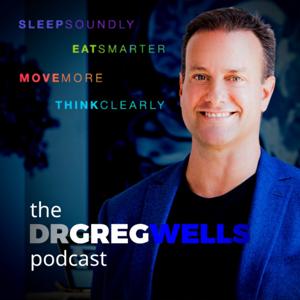
In today’s conversation Bill Howatt explores how his own lived experience with dyslexia, ADHD, anxiety, and shame became the engine for a 30-year career in mental health — and why he now focuses on helping employers create psychologically safe, health-promoting workplaces. He and Dr. Wells map the crucial distinction between mental health and mental illness, walk through the “awareness → accountability → action” pathway, and show why coping skills must be trained like oral hygiene. They also unpack the role of managers, stress, and fast-brain autopilot in the current “coping crisis.” The through-line: mental health is trainable, but only if we make it intentional.
You will learn how Bill separates mental health (daily emotional weather) from mental illness (clinical criteria) — two axes, not one spectrum; how small, teachable “developmental coping skills” (locus of control, emotional regulation, self-efficacy) protect you from sliding into distress; how chronic stress, if unrecognized, quietly rewires behaviour and physiology; why managers and workplaces carry half the accountability for employee mental health; and how to create your own daily sustainability plan — the mental-health equivalent of brushing your teeth.
You will discover that there is no finish line for mental health — just a repeatable loop: get a baseline → learn micro-skills → practise them daily → ask for help early. That loop is what keeps stress from becoming illness.
Lots of high performers “renormalize” feeling lousy — they stay in emotional coping, add more stress, then wonder why they can’t recover. Bill gives a way to spot that slide and a language leaders can use with teams to intervene early.



 View all episodes