
Sign up to save your podcasts
Or

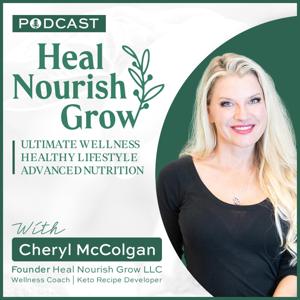

In this conversation, Cheryl McColgan discusses the importance of creating a stress release ritual as part of the healthy habits challenge. She emphasizes the benefits of consistent practice in managing stress, including physiological and mental health improvements.
Cheryl shares various breathing techniques and practical applications for stress relief, encouraging listeners to find what works best for them and to incorporate these practices into their daily routines.
Disclaimer: Links may contain affiliate links, which means we may get paid a commission at no additional cost to you if you purchase through this page. Read our full disclosure here.
CONNECT WITH CHERYL
Shop all my healthy lifestyle favorites, lots of discounts!
21 Day Fat Loss Kickstart: Make Keto Easy, Take Diet Breaks and Still Lose Weight
Dry Farm Wines, extra bottle for a penny
Drinking Ketones
Wild Pastures, Clean Meat to Your Doorstep 20% off for life
Clean Beauty 20% off first order
DIY Lashes 10% off
NIRA at Home Laser for Wrinkles 10% off or current promo with code HealNourishGrow
Instagram for daily stories with recipes, what I eat in a day and what’s going on in life
YouTube
TikTok
Amazon Store
The Shoe Fairy Competition Gear
The Complete Beginners Guide to Keto
Getting Started with Keto Podcast Episode
Getting Started with Keto Resource Guide
Episode Transcript
Cheryl McColgan (00:00.494)
Hey everyone, I’m Cheryl McCogan, founder of Heal Nourish Grow and welcome to a day 23 of your 30 days of healthy habits challenge. Today’s challenge is to create a stress release ritual. This is either going to be movement or breath. And this is just going to be something simple. It’s something easy and that you can repeat and that’s about 60 seconds of breath if you’re choosing breath or two minutes of movement. And we’ve had some…
of this in the challenge already, you’ve tried different types of movement, you challenge yourself to move in a different way on some of the days. And so maybe if there was something that you tried and you notice like, hey, that’s really good for me. And it does relieve stress. Maybe it’s that maybe it’s if you try to need a mobility exercises we talked about or stretching or something like that to release stress or if it’s 60 seconds of a breath practice, one of the previous days we mentioned the three
just three deep breaths, something that simple 60 seconds is going to take longer. So it might be like five deep breaths, 10 deep breaths, but you’re just doing something that’s more extended amount of time. was like a quick stress release in the moment. This is something that is more focused on bringing your heart rate down, just, you know, bringing your stress in your body, your heart, your blood pressure, that kind of things like reducing all of those are really getting the parasympathetic system nervous system to come into play on this so that it
relieves your body and your mind of stress. So we’re just doing the minimum, the minimum, the minimum today. We’re just doing the minimum today on this. And this short stress ritual is good for a couple of reasons. It can reduce physiological stress, so your body stress and build resistance over time. And then can also reduce mental stress. So if you do this consistently as a reset, it’ll help you to respond rather than react in the moment. It’s going to make, you know,
that makes for better discipline, better decision making. If you’re not just flying off the handle at a moment’s notice, it also helps with your interactions with people. If you happen to notice when you get stressed that you snap people little more often or respond in a way that is not professional or calm. Having this little ritual will give you a way to kind of downshift. And the more that you train yourself on this, you know, you might notice anytime that you take some deep breaths, it helps. But when you train this every single day as a habit,
Cheryl McColgan (02:17.43)
It is a response that trains your brain to automatically go into that more relaxed state just by the act of you starting to do it. So it’ll become more effective and act more quickly every single time. So here’s some examples. If you’re having trouble thinking of one to do, we can go back to that three breath rate set, but you might do it for longer. Just set your timer for one minute and inhale, exhale, slightly longer exhale to really bring in that parasympathetic nervous system response.
You could try box breathing. You could do a quick walk. You could do wall pushups or you could do the stretching routine. Those are all good ones. And if you have something else outside of that that you think of to do, I would love to hear about it in the comments so that we can share that with others. And then, you know, one of the times you want to try it is any time during the day where you’re feeling a trigger or something that’s making you nervous or anxious, angry or anxious.
And so maybe it’s like you got an email from your boss and it’s automatically creating stress in your body. That’s a great time to do this stress release routine. Or if you are getting ready to sit down for a meal and you’ve been running around all day before you try to start eating, maybe calm your body. It’s just gonna promote better digestion and better, you know, mindfulness of your chewing and experiencing your food. So again, it’s just to be repeatable. It doesn’t need to be really complex or…
long or drawn out, like I said, just 60 minutes for breath practice, two minutes for a movement practice. Some people might notice, and I did notice this when I was teaching yoga a lot, is that for some people, a breathing practice can kind of create anxiety. And usually if that’s the case, it might be that you have, your body is kind of trained to take very shallow breaths and not expand the diaphragm. So really thinking about when you’re breathing to let your…
abdomen and belly expand as you’re breathing. So if you were to lay on the ground and put your hand on your stomach, you want your belly to be expanding up as you’re breathing. So that’s really feeling all of your lungs, not just the top of your lungs, but your lungs are going like all the way down almost to your waist. So you want to expand your lungs as fully as possible. And again, that slightly longer exhale, that’s going to really calm any feelings of anxiety. So if you notice that you’re trying to do the breathing, but it’s causing some anxiety for you for some reason,
Cheryl McColgan (04:32.376)
I’m going to guess it’s because you’re kind of habitually a shallow breather and you’re kind of just breathing almost in the upper chest. So try that low, slow breathing that expands your belly and see if that doesn’t help. So that’s about it for today. Start this stress release practice, whatever that looks like for you. As always, the links to the research are in the notes and my gosh, there are so much good data on meditation and breathing and things like that for
relieving stress and anxiety and just doing a whole lot of great things for your physiology as well as your mental state. So definitely check that out if you have time and then optional journal prompt for you there too. So anyway, that is it for today and I will see you again tomorrow.
 View all episodes
 By Cheryl McColgan

4.9
2525 ratings
In this conversation, Cheryl McColgan discusses the importance of creating a stress release ritual as part of the healthy habits challenge. She emphasizes the benefits of consistent practice in managing stress, including physiological and mental health improvements.
Cheryl shares various breathing techniques and practical applications for stress relief, encouraging listeners to find what works best for them and to incorporate these practices into their daily routines.
Disclaimer: Links may contain affiliate links, which means we may get paid a commission at no additional cost to you if you purchase through this page. Read our full disclosure here.
CONNECT WITH CHERYL
Shop all my healthy lifestyle favorites, lots of discounts!
21 Day Fat Loss Kickstart: Make Keto Easy, Take Diet Breaks and Still Lose Weight
Dry Farm Wines, extra bottle for a penny
Drinking Ketones
Wild Pastures, Clean Meat to Your Doorstep 20% off for life
Clean Beauty 20% off first order
DIY Lashes 10% off
NIRA at Home Laser for Wrinkles 10% off or current promo with code HealNourishGrow
Instagram for daily stories with recipes, what I eat in a day and what’s going on in life
YouTube
TikTok
Amazon Store
The Shoe Fairy Competition Gear
The Complete Beginners Guide to Keto
Getting Started with Keto Podcast Episode
Getting Started with Keto Resource Guide
Episode Transcript
Cheryl McColgan (00:00.494)
Hey everyone, I’m Cheryl McCogan, founder of Heal Nourish Grow and welcome to a day 23 of your 30 days of healthy habits challenge. Today’s challenge is to create a stress release ritual. This is either going to be movement or breath. And this is just going to be something simple. It’s something easy and that you can repeat and that’s about 60 seconds of breath if you’re choosing breath or two minutes of movement. And we’ve had some…
of this in the challenge already, you’ve tried different types of movement, you challenge yourself to move in a different way on some of the days. And so maybe if there was something that you tried and you notice like, hey, that’s really good for me. And it does relieve stress. Maybe it’s that maybe it’s if you try to need a mobility exercises we talked about or stretching or something like that to release stress or if it’s 60 seconds of a breath practice, one of the previous days we mentioned the three
just three deep breaths, something that simple 60 seconds is going to take longer. So it might be like five deep breaths, 10 deep breaths, but you’re just doing something that’s more extended amount of time. was like a quick stress release in the moment. This is something that is more focused on bringing your heart rate down, just, you know, bringing your stress in your body, your heart, your blood pressure, that kind of things like reducing all of those are really getting the parasympathetic system nervous system to come into play on this so that it
relieves your body and your mind of stress. So we’re just doing the minimum, the minimum, the minimum today. We’re just doing the minimum today on this. And this short stress ritual is good for a couple of reasons. It can reduce physiological stress, so your body stress and build resistance over time. And then can also reduce mental stress. So if you do this consistently as a reset, it’ll help you to respond rather than react in the moment. It’s going to make, you know,
that makes for better discipline, better decision making. If you’re not just flying off the handle at a moment’s notice, it also helps with your interactions with people. If you happen to notice when you get stressed that you snap people little more often or respond in a way that is not professional or calm. Having this little ritual will give you a way to kind of downshift. And the more that you train yourself on this, you know, you might notice anytime that you take some deep breaths, it helps. But when you train this every single day as a habit,
Cheryl McColgan (02:17.43)
It is a response that trains your brain to automatically go into that more relaxed state just by the act of you starting to do it. So it’ll become more effective and act more quickly every single time. So here’s some examples. If you’re having trouble thinking of one to do, we can go back to that three breath rate set, but you might do it for longer. Just set your timer for one minute and inhale, exhale, slightly longer exhale to really bring in that parasympathetic nervous system response.
You could try box breathing. You could do a quick walk. You could do wall pushups or you could do the stretching routine. Those are all good ones. And if you have something else outside of that that you think of to do, I would love to hear about it in the comments so that we can share that with others. And then, you know, one of the times you want to try it is any time during the day where you’re feeling a trigger or something that’s making you nervous or anxious, angry or anxious.
And so maybe it’s like you got an email from your boss and it’s automatically creating stress in your body. That’s a great time to do this stress release routine. Or if you are getting ready to sit down for a meal and you’ve been running around all day before you try to start eating, maybe calm your body. It’s just gonna promote better digestion and better, you know, mindfulness of your chewing and experiencing your food. So again, it’s just to be repeatable. It doesn’t need to be really complex or…
long or drawn out, like I said, just 60 minutes for breath practice, two minutes for a movement practice. Some people might notice, and I did notice this when I was teaching yoga a lot, is that for some people, a breathing practice can kind of create anxiety. And usually if that’s the case, it might be that you have, your body is kind of trained to take very shallow breaths and not expand the diaphragm. So really thinking about when you’re breathing to let your…
abdomen and belly expand as you’re breathing. So if you were to lay on the ground and put your hand on your stomach, you want your belly to be expanding up as you’re breathing. So that’s really feeling all of your lungs, not just the top of your lungs, but your lungs are going like all the way down almost to your waist. So you want to expand your lungs as fully as possible. And again, that slightly longer exhale, that’s going to really calm any feelings of anxiety. So if you notice that you’re trying to do the breathing, but it’s causing some anxiety for you for some reason,
Cheryl McColgan (04:32.376)
I’m going to guess it’s because you’re kind of habitually a shallow breather and you’re kind of just breathing almost in the upper chest. So try that low, slow breathing that expands your belly and see if that doesn’t help. So that’s about it for today. Start this stress release practice, whatever that looks like for you. As always, the links to the research are in the notes and my gosh, there are so much good data on meditation and breathing and things like that for
relieving stress and anxiety and just doing a whole lot of great things for your physiology as well as your mental state. So definitely check that out if you have time and then optional journal prompt for you there too. So anyway, that is it for today and I will see you again tomorrow.
23 Listeners

29,304 Listeners

20,475 Listeners
628 Listeners

7,302 Listeners