
Sign up to save your podcasts
Or

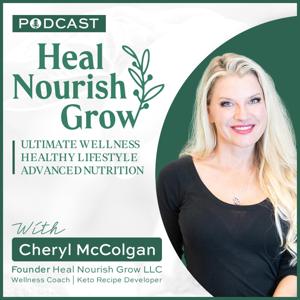

In this episode, Cheryl McColgan shares actionable insights on establishing sustainable habits, building strong foundational practices for health and wellness, and overcoming common challenges like overwhelm and inconsistency. Whether you’re starting out or looking to refine your routine, this conversation offers clear steps backed by research and personal experience.
Disclaimer: Links may contain affiliate links, which means we may get paid a commission at no additional cost to you if you purchase through this page. Read our full disclosure here.
CONNECT WITH CHERYL
Shop all my healthy lifestyle favorites, lots of discounts!
21 Day Fat Loss Kickstart: Make Keto Easy, Take Diet Breaks and Still Lose Weight
Avaline Wines, Tested and Clean, Sugar Free
Drinking Ketones
Wild Pastures, Clean Meat to Your Doorstep 20% off for life
Clean Beauty 20% off first order
DIY Lashes 10% off
NIRA at Home Laser for Wrinkles 10% off or current promo with code HealNourishGrow
Instagram for daily stories with recipes, what I eat in a day and what’s going on in life
YouTube
TikTok
Amazon Store
The Shoe Fairy Competition Gear
The Complete Beginners Guide to Keto
Getting Started with Keto Podcast Episode
Getting Started with Keto Resource Guide
Episode Transcript
Cheryl McColgan (00:00)
Hey everyone, I’m Cheryl McColgan, founder of Heal Nourish Grow. And today I wanted to chat with you about a new program that I just started. And it’s actually a whole little system called the Foundations series. So a lot of this came about because over the years, as you know, if you’ve watched some of my content before, I’m very focused on habits. My background is in psychology and I’ve been basically interested in health and wellness my entire adult life and have had
many different kind of jobs and coaching in this kind of area. And so it’s something that I’ve worked on for myself for a long time. It’s something I’ve worked with other people on for a long time. And it is the content that you see every day on Heal Nourish Grow all has something to do with these sorts of things. So when I thought about it more like how can I put this all these learnings and all the information that I have learned for myself over the last years and practice for so long, how can I put it into a foundational system
that will actually help other people without being overwhelming, being organized and get you to a place where you actually do these things. Cause I feel like a lot of people will say to me sometimes, well, I know what to do. I just don’t actually do it. And so part of that, I think is the overwhelm of it. Part of it’s just that life is so busy, you know, so many factors, but this really breaks it down into little buckets that you can focus on for a small period of time. And just again,
As I always talk about with habits, just starting really slow and building on them. And so that’s why I called it the foundation series, because it literally is the whole foundation, find foundational practices, foundational ideas that will really help you just build your life to meet your goals from there. So these very small things that you start with and creating this very strong foundation will really allow you then to create whatever it is that you want for your life, for your health, all of that.
So I feel like most people, again, they just don’t fail because they’re not trying or they don’t want to. It’s just they’re not really clear yet about their own priorities. Like they think that they know what’s important, but you know, quite often the choices that we make every day don’t match what we think are our priorities. So really identifying them and making them clear in your mind is a really big part of that. So the first thing I started with, with the health
of the situation because once you get your health in order, once you are able to sleep well, eat well, feel good in your body every single day, that also just helps everything with your mental health as well. focusing on these foundational principles that relate to your health that are small things you can do every day, I think really make it a lot less overwhelming than it might be otherwise. And so these are all just daily consistency.
low friction routines, creating things that are easy to repeat every single day.
Cheryl McColgan (02:45)
The very first part of the program is something that’s really in alignment with this time of year, which it happens to be January, 2026 when I’m recording this. And that is working on healthy habits as kind of a challenge for the new year, because people often make New Year’s resolutions. And usually by about this time, by about the end of January, a lot of those have already gone by the wayside, because quite often people just take on too much at once, rather than doing small
things over time and consistently building. really think that’s a much more sustainable way to approach habit change and to incorporating new healthy habits into your life. So the first thing is the free healthy habits challenge. It doesn’t have to be the beginning of the new year. Whenever you find this video, you can always start the healthy habits challenge. You just put in your email and then it’ll start a series of things that you do every single day. It will send you some worksheets. There are links to research that backs up these small practices like why they’re good for you and
what kinds of things it helps. And so you just try a new simple habit every day for 30 days. None of them take any more than 15 minutes. And you can always dive deeper into any of the subjects if you want. Like I said, there’s research links you can read, there’s journal prompts, but the minimum is just doing the habit that day, trying it out and then noticing if that’s something that you think would work well for you in your life that could really help you feel better, look better, perform better, all of those things.
And then ideally after the 30 days is finished, you identify some of those things that you tried that you really want to incorporate going forward for the next 90 days. And so that’s when I decided that I would actually create this whole other series of programs after the free healthy habits, because a lot of times it’s like, well, what’s next after you do that, you kind of, you know, it was great to try all that. And I do give direction in the healthy habits challenge. You’re identifying three to carry forward over 90 days. And you just really try to create that consistency.
But what if you wanted something that’s a little bit more structured and gives you more ideas about how to perform the habits that you’ve chosen, work towards your goals, all that. So that’s where the foundation series comes in.
Cheryl McColgan (04:46)
And so the first one that I decided to focus on, and again, if you’ve already are familiar with my content, this will not be a surprise. And that is protein, because once you get the protein foundation in place, identifying what’s optimal for your body and optimal for your goals, and then actually integrating that and hitting it every single day, that becomes the basis then for your whole nutrition plan.
So this first part, just focusing on protein is because it’s such an important building block in your body, it’s not the protein itself that we need. It is the amino acids that our body breaks down that we need for muscle, for metabolism. It creates more satiety makes it easier for you to feel full longer. And it is big in repair and recovery in your body. So having that proper amount.
on a consistent basis every day really just lays the foundation then for you to build your whole nutrition program. And that is the second foundation is nutrition. So that may sound, you we talked about proteins, obviously one of the major macro nutrients alongside carbohydrates and fat, but that whole thing is what really creates all of your nutrition. Like you can’t live on just protein. mean, you actually can. A lot of people do the carnivore diet these days, but for most people, that’s not a choice.
that they’re making, they want to create something that’s more balanced, that’s more sustainable, that’s easy to still be able to eat out, that’s still easy to go to events and not feel overwhelmed. And so the second foundation, once you have your protein amount in place that you’re going to create on that consistent basis, then you can start to focus on your overall diet. And so the nutrition thing really works with, it doesn’t matter what style of eating that you choose, it’s going to create something that’s balanced and that it’s in alignment with your goals.
And so that’s something that you’ll work on through the program is figuring out is your goal muscle gaining muscle. Is it losing fat? Is it just maintaining your current body weight? Is it maybe reducing inflammation in your body? So any one of those goals that you have will fit into this nutrition framework. So you’ll select those goals. You’re going to figure out your, macronutrients that work best for you. The protein part is always non-negotiable. That number
really never changes that much on a daily basis unless you have like a super hard workout or something that maybe you might go do a little extra for recovery purposes. But for the most part, that number will never change. And so then it becomes figuring out how to balance that and the carbohydrates in a way that make you feel good, that digest well, and that work with your goals. So that gives you a lot of flexibility. It really creates a way to think about things so that when you’re in an unfamiliar situation, you’re not
for yourself, you can still make really good choices and make things work for you. And again, a lot of this is things that people think that they know how to do or that they should do that kind of thing, but they don’t actually execute on a daily basis. And so that’s what the foundation system really helps with is creating that consistency. Again, it’s these small habits over time that build to help you get to your overall longer term goals. But you’ve got to get to those longer term goals. You have to work on those little parts of it every single day.
And so that’s really what this part of it is about. And then the last foundation is the strength foundation. And again, it’s something that you’ve heard me say before, and it’s something that I’ve come to appreciate a lot more now that I’m over 50. And that is that we really need to have some strength training in our life. And I know it’s a challenge for a lot of people, especially a lot of people in my age group, if you happen to be a woman.
⁓ There really wasn’t as much focus on strength training when I was younger I mean I got kind of lucky because I was exposed to it at young age through my dad and Then I did play sports in high school and college So I was in the weight room and I have probably more familiarity with it than a lot of women my age But I was in that same trap growing up in the 90s where it was all about, you know Being skinny was the thing and so I never really had a focus
on muscle is more just about, you know, maintaining my body weight. And I did that through running for 17 years, I kind of did almost the exact opposite of what is really good for your long term health as far as muscle mass anyway, I mean, ⁓ running and walking have a lot of great awesome heart and cardiovascular benefits, but it’s not so great in terms of building muscle. In fact, it often creates a body type where you don’t have nearly as much muscle. So
now that I am more educated and you know, you learn things over time and once you learn things, it’s hard to unsee the importance of it. And when you really think about muscle health in terms of your metabolism and in terms of just living well as you get older, you know, it’s a slow thing, right? That happens over years that you kind of have to just fight all the time and you don’t want to get to be
know, 70 years old and be so frail that you have a hard time getting out of the chair that you can’t do simple things like carry your own groceries in or shovel your driveway when you need to. had a lot of that here in the Midwest just recently in January 2026. So all that is to say that I think what creates maybe a little bit of fear or something in your mind about not wanting to do it as much is because we kind of envision this thing that we have to be in the gym.
five or six days a week, something like that to make it work. And you have to do a whole lot of strength training to make it work worthwhile. But after I’ve really taken a deep dive into this and done more studying and more learning, especially over the last three years focused on strength training is really that there is a minimum effective dose of strength training. And surprisingly, you can get most of the benefits that you can get out of training on a regular basis and just doing two full body work workouts per week.
I think twice per week is way, way less intimidating than the multiple times a week that many of us think of when we think about strength training. And it also then affords you to do many other kinds of physical activities that you might, that are more enjoyable, let’s say. So if it’s walking, hiking, biking, snowboarding, whatever it is for you, if you know that you only have to be strength training in the gym two days a week, I just feel like that mentally takes a lot of the stress off and it makes it seem
more doable. And again, it’s about creating these small habits. once you get into it, obviously, if you want to do more, there’s a little incremental benefit of that over two days a week. And there’s also, if you have very specific goals in relation to body composition or, you know, doing any kind of competitions or anything like that, then that program looks a little different. But all we’re talking about is what is the minimum effective dose for staying healthy and vibrant and strong into old age and just being able to take care of yourself. And that is really a strength training program that is two days a week.
So what I’ve done is I’m actually studying for my personal trainer certification right now. I haven’t taken the test yet. But the two days a week foundation, it’s really about like not creating this intimidation around the gym. Because I mentioned like for a lot of us women, especially in this particular age group, a gym can be very intimidating or just knowing how to use the machines or knowing what to do in the gym or going into the gym, seeing so many machines and this feeling overwhelmed because you’re not sure what to do.
That’s what this program is designed to counteract. If you’re more experienced, this definitely might be a little too basic for you, but this is really meant to take the person who has not been in the gym for a couple years, let’s say, or even if it’s been a year since you’ve been out of the gym, this might be totally appropriate because it’s just going to be a program like I said, is two days a week and it’s going to be simple and it’s going to have some videos to show you some things to do. It works if you’re working out from home with just a few simple tools.
So that’s what this part is. It’s designed to not create overwhelm and to just get you into the gym, get you into strength training and hopefully get you to realize the benefit of it. And then from there, obviously there’s so many more, more complex and more ⁓ extensive programs out there, but this is really just meant for if...
 View all episodes
 By Cheryl McColgan

4.9
2525 ratings
In this episode, Cheryl McColgan shares actionable insights on establishing sustainable habits, building strong foundational practices for health and wellness, and overcoming common challenges like overwhelm and inconsistency. Whether you’re starting out or looking to refine your routine, this conversation offers clear steps backed by research and personal experience.
Disclaimer: Links may contain affiliate links, which means we may get paid a commission at no additional cost to you if you purchase through this page. Read our full disclosure here.
CONNECT WITH CHERYL
Shop all my healthy lifestyle favorites, lots of discounts!
21 Day Fat Loss Kickstart: Make Keto Easy, Take Diet Breaks and Still Lose Weight
Avaline Wines, Tested and Clean, Sugar Free
Drinking Ketones
Wild Pastures, Clean Meat to Your Doorstep 20% off for life
Clean Beauty 20% off first order
DIY Lashes 10% off
NIRA at Home Laser for Wrinkles 10% off or current promo with code HealNourishGrow
Instagram for daily stories with recipes, what I eat in a day and what’s going on in life
YouTube
TikTok
Amazon Store
The Shoe Fairy Competition Gear
The Complete Beginners Guide to Keto
Getting Started with Keto Podcast Episode
Getting Started with Keto Resource Guide
Episode Transcript
Cheryl McColgan (00:00)
Hey everyone, I’m Cheryl McColgan, founder of Heal Nourish Grow. And today I wanted to chat with you about a new program that I just started. And it’s actually a whole little system called the Foundations series. So a lot of this came about because over the years, as you know, if you’ve watched some of my content before, I’m very focused on habits. My background is in psychology and I’ve been basically interested in health and wellness my entire adult life and have had
many different kind of jobs and coaching in this kind of area. And so it’s something that I’ve worked on for myself for a long time. It’s something I’ve worked with other people on for a long time. And it is the content that you see every day on Heal Nourish Grow all has something to do with these sorts of things. So when I thought about it more like how can I put this all these learnings and all the information that I have learned for myself over the last years and practice for so long, how can I put it into a foundational system
that will actually help other people without being overwhelming, being organized and get you to a place where you actually do these things. Cause I feel like a lot of people will say to me sometimes, well, I know what to do. I just don’t actually do it. And so part of that, I think is the overwhelm of it. Part of it’s just that life is so busy, you know, so many factors, but this really breaks it down into little buckets that you can focus on for a small period of time. And just again,
As I always talk about with habits, just starting really slow and building on them. And so that’s why I called it the foundation series, because it literally is the whole foundation, find foundational practices, foundational ideas that will really help you just build your life to meet your goals from there. So these very small things that you start with and creating this very strong foundation will really allow you then to create whatever it is that you want for your life, for your health, all of that.
So I feel like most people, again, they just don’t fail because they’re not trying or they don’t want to. It’s just they’re not really clear yet about their own priorities. Like they think that they know what’s important, but you know, quite often the choices that we make every day don’t match what we think are our priorities. So really identifying them and making them clear in your mind is a really big part of that. So the first thing I started with, with the health
of the situation because once you get your health in order, once you are able to sleep well, eat well, feel good in your body every single day, that also just helps everything with your mental health as well. focusing on these foundational principles that relate to your health that are small things you can do every day, I think really make it a lot less overwhelming than it might be otherwise. And so these are all just daily consistency.
low friction routines, creating things that are easy to repeat every single day.
Cheryl McColgan (02:45)
The very first part of the program is something that’s really in alignment with this time of year, which it happens to be January, 2026 when I’m recording this. And that is working on healthy habits as kind of a challenge for the new year, because people often make New Year’s resolutions. And usually by about this time, by about the end of January, a lot of those have already gone by the wayside, because quite often people just take on too much at once, rather than doing small
things over time and consistently building. really think that’s a much more sustainable way to approach habit change and to incorporating new healthy habits into your life. So the first thing is the free healthy habits challenge. It doesn’t have to be the beginning of the new year. Whenever you find this video, you can always start the healthy habits challenge. You just put in your email and then it’ll start a series of things that you do every single day. It will send you some worksheets. There are links to research that backs up these small practices like why they’re good for you and
what kinds of things it helps. And so you just try a new simple habit every day for 30 days. None of them take any more than 15 minutes. And you can always dive deeper into any of the subjects if you want. Like I said, there’s research links you can read, there’s journal prompts, but the minimum is just doing the habit that day, trying it out and then noticing if that’s something that you think would work well for you in your life that could really help you feel better, look better, perform better, all of those things.
And then ideally after the 30 days is finished, you identify some of those things that you tried that you really want to incorporate going forward for the next 90 days. And so that’s when I decided that I would actually create this whole other series of programs after the free healthy habits, because a lot of times it’s like, well, what’s next after you do that, you kind of, you know, it was great to try all that. And I do give direction in the healthy habits challenge. You’re identifying three to carry forward over 90 days. And you just really try to create that consistency.
But what if you wanted something that’s a little bit more structured and gives you more ideas about how to perform the habits that you’ve chosen, work towards your goals, all that. So that’s where the foundation series comes in.
Cheryl McColgan (04:46)
And so the first one that I decided to focus on, and again, if you’ve already are familiar with my content, this will not be a surprise. And that is protein, because once you get the protein foundation in place, identifying what’s optimal for your body and optimal for your goals, and then actually integrating that and hitting it every single day, that becomes the basis then for your whole nutrition plan.
So this first part, just focusing on protein is because it’s such an important building block in your body, it’s not the protein itself that we need. It is the amino acids that our body breaks down that we need for muscle, for metabolism. It creates more satiety makes it easier for you to feel full longer. And it is big in repair and recovery in your body. So having that proper amount.
on a consistent basis every day really just lays the foundation then for you to build your whole nutrition program. And that is the second foundation is nutrition. So that may sound, you we talked about proteins, obviously one of the major macro nutrients alongside carbohydrates and fat, but that whole thing is what really creates all of your nutrition. Like you can’t live on just protein. mean, you actually can. A lot of people do the carnivore diet these days, but for most people, that’s not a choice.
that they’re making, they want to create something that’s more balanced, that’s more sustainable, that’s easy to still be able to eat out, that’s still easy to go to events and not feel overwhelmed. And so the second foundation, once you have your protein amount in place that you’re going to create on that consistent basis, then you can start to focus on your overall diet. And so the nutrition thing really works with, it doesn’t matter what style of eating that you choose, it’s going to create something that’s balanced and that it’s in alignment with your goals.
And so that’s something that you’ll work on through the program is figuring out is your goal muscle gaining muscle. Is it losing fat? Is it just maintaining your current body weight? Is it maybe reducing inflammation in your body? So any one of those goals that you have will fit into this nutrition framework. So you’ll select those goals. You’re going to figure out your, macronutrients that work best for you. The protein part is always non-negotiable. That number
really never changes that much on a daily basis unless you have like a super hard workout or something that maybe you might go do a little extra for recovery purposes. But for the most part, that number will never change. And so then it becomes figuring out how to balance that and the carbohydrates in a way that make you feel good, that digest well, and that work with your goals. So that gives you a lot of flexibility. It really creates a way to think about things so that when you’re in an unfamiliar situation, you’re not
for yourself, you can still make really good choices and make things work for you. And again, a lot of this is things that people think that they know how to do or that they should do that kind of thing, but they don’t actually execute on a daily basis. And so that’s what the foundation system really helps with is creating that consistency. Again, it’s these small habits over time that build to help you get to your overall longer term goals. But you’ve got to get to those longer term goals. You have to work on those little parts of it every single day.
And so that’s really what this part of it is about. And then the last foundation is the strength foundation. And again, it’s something that you’ve heard me say before, and it’s something that I’ve come to appreciate a lot more now that I’m over 50. And that is that we really need to have some strength training in our life. And I know it’s a challenge for a lot of people, especially a lot of people in my age group, if you happen to be a woman.
⁓ There really wasn’t as much focus on strength training when I was younger I mean I got kind of lucky because I was exposed to it at young age through my dad and Then I did play sports in high school and college So I was in the weight room and I have probably more familiarity with it than a lot of women my age But I was in that same trap growing up in the 90s where it was all about, you know Being skinny was the thing and so I never really had a focus
on muscle is more just about, you know, maintaining my body weight. And I did that through running for 17 years, I kind of did almost the exact opposite of what is really good for your long term health as far as muscle mass anyway, I mean, ⁓ running and walking have a lot of great awesome heart and cardiovascular benefits, but it’s not so great in terms of building muscle. In fact, it often creates a body type where you don’t have nearly as much muscle. So
now that I am more educated and you know, you learn things over time and once you learn things, it’s hard to unsee the importance of it. And when you really think about muscle health in terms of your metabolism and in terms of just living well as you get older, you know, it’s a slow thing, right? That happens over years that you kind of have to just fight all the time and you don’t want to get to be
know, 70 years old and be so frail that you have a hard time getting out of the chair that you can’t do simple things like carry your own groceries in or shovel your driveway when you need to. had a lot of that here in the Midwest just recently in January 2026. So all that is to say that I think what creates maybe a little bit of fear or something in your mind about not wanting to do it as much is because we kind of envision this thing that we have to be in the gym.
five or six days a week, something like that to make it work. And you have to do a whole lot of strength training to make it work worthwhile. But after I’ve really taken a deep dive into this and done more studying and more learning, especially over the last three years focused on strength training is really that there is a minimum effective dose of strength training. And surprisingly, you can get most of the benefits that you can get out of training on a regular basis and just doing two full body work workouts per week.
I think twice per week is way, way less intimidating than the multiple times a week that many of us think of when we think about strength training. And it also then affords you to do many other kinds of physical activities that you might, that are more enjoyable, let’s say. So if it’s walking, hiking, biking, snowboarding, whatever it is for you, if you know that you only have to be strength training in the gym two days a week, I just feel like that mentally takes a lot of the stress off and it makes it seem
more doable. And again, it’s about creating these small habits. once you get into it, obviously, if you want to do more, there’s a little incremental benefit of that over two days a week. And there’s also, if you have very specific goals in relation to body composition or, you know, doing any kind of competitions or anything like that, then that program looks a little different. But all we’re talking about is what is the minimum effective dose for staying healthy and vibrant and strong into old age and just being able to take care of yourself. And that is really a strength training program that is two days a week.
So what I’ve done is I’m actually studying for my personal trainer certification right now. I haven’t taken the test yet. But the two days a week foundation, it’s really about like not creating this intimidation around the gym. Because I mentioned like for a lot of us women, especially in this particular age group, a gym can be very intimidating or just knowing how to use the machines or knowing what to do in the gym or going into the gym, seeing so many machines and this feeling overwhelmed because you’re not sure what to do.
That’s what this program is designed to counteract. If you’re more experienced, this definitely might be a little too basic for you, but this is really meant to take the person who has not been in the gym for a couple years, let’s say, or even if it’s been a year since you’ve been out of the gym, this might be totally appropriate because it’s just going to be a program like I said, is two days a week and it’s going to be simple and it’s going to have some videos to show you some things to do. It works if you’re working out from home with just a few simple tools.
So that’s what this part is. It’s designed to not create overwhelm and to just get you into the gym, get you into strength training and hopefully get you to realize the benefit of it. And then from there, obviously there’s so many more, more complex and more ⁓ extensive programs out there, but this is really just meant for if...
23 Listeners

29,272 Listeners

20,222 Listeners
625 Listeners

7,317 Listeners