
Sign up to save your podcasts
Or

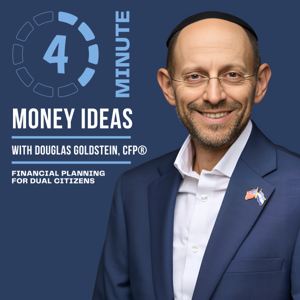


Why You Need to Build an Emergency Fund By Douglas Goldstein CFP®- helping olim handle their U.S. investments from Israel What would happen if you had an emergency – like a huge dental bill or unexpected car repair? And even worse, what if you had lost your job a month before and couldn't even get an interview for a new one? To top it off, you get a call that a close relative in the States is sick and you desperately want to fly in to help. Do you have cash available to pay, or would you need to withdraw from your long-term retirement account or sell investments (possibly incurring a large tax bill)?
How to build an effective emergency fund
Generally, folks should have three to six months' worth of essential living expenses as the benchmark, and sometimes as much as twelve months or more, depending on their other assets and job prospects.
Your emergency fund money should be in a liquid investment so it can be accessed instantly, when needed, without penalties. It's true that you won't earn a lot on it, but that's the cost of liquidity. Investing in something that yields a higher return usually involves greater risk… risk you shouldn't take with your emergency fund. Since you may need all of this money, you can't afford a drop in its value. Additionally, if you put this money into an illiquid investment, you may not be able to sell it quickly enough when faced with a bill. Remember, emergencies don't wait for a bull market.
Review your personal life and work situation. Someone who works in a field with frequent turnover – like technology, or on a commission-based salary, may need a larger emergency fund. Likewise, a single person may face fewer emergencies than a family with many children, and his fund may not need to be as large.
If you continually need to call on your emergency fund, you should also reevaluate your budgeting practices.
For other advice on saving and investing, download a free copy of The Retirement Planning Book at: Profile-Financial.com/rpb
Douglas Goldstein, CFP®, is the director of Profile Investment Services, Ltd. www.profile-financial.com. He is a licensed financial professional both in the U.S. and Israel. Call (02) 624-2788 for a consultation about handling your U.S. investments from Israel. Securities offered through Portfolio Resources Group, Inc. Member FINRA, SIPC, MSRB, FSI. The opinions expressed are those of the author and not those of Portfolio Resources Group, Inc. or its affiliates. Neither PRG nor its affiliates give tax or legal advice.
The Things Not to Do With an Inheritance
By Douglas Goldstein, CFP® - helping olim handle their U.S. investments from Israel
When you get an inheritance, your first question may be, "What should I do now?" But perhaps a better question is "What shouldn't I do now?"
An emotional rollercoaster
Getting an inheritance arouses many emotions. Sometimes, people get too excited and they spend all the money without thinking about the best uses for it. Others feel uncertain that they know how to manage the wealth they just received. Their fear paralyzes them, preventing them from making good investment decisions.
What are the mistakes to avoid?
When you get an inheritance, try not to let the tangle of emotions interfere with making the right choices. Avoid the following:
Impulse spending. While you may have always wanted a luxury car, designer jewelry, or the latest technological gadget, step back and ask yourself if these are really the best uses for your new wealth. Sometimes there is an additional cost to an item beyond its price tag – can you afford the ongoing costs of maintaining a new acquisition?
Get-rich-quick schemes. While it may be prudent to invest some or all of your inheritance, don't get blinded by your desire to make as much money as possible. Many offers of "high returns" that sound too good to be true often are. Sometimes preservation of wealth is more important than growth. Consult your financial advisor before making any investment decision, since their objectivity and knowledge can alert you to scams and unrealistic expectations.
Fear and anxiety. Don't be too frightened to take some risks. The problem with conservative investments is that low interest rates may not beat inflation, so in the long run, your money may lose its real value. A financial advisor can help you assess your situation and suggest suitable investments.
Greedy/Needy friends or relatives. If you are approached by gift/loan requests, don't feel pressured into agreeing. First make sure that your own future is financially secure, and only then weigh the merits of the request.
What should you do now?
There are positive ways to use your inheritance. For some more information on what to do after you receive an inheritance, join my free webinar. Register at Profile-Financial.com/webinar
Douglas Goldstein, CFP®, is the director of Profile Investment Services, Ltd. www.profile-financial.com. He is a licensed financial professional both in the U.S. and Israel. Call (02) 624-2788 for a consultation about handling your U.S. investments from Israel. Securities offered through Portfolio Resources Group, Inc. Member FINRA, SIPC, MSRB, FSI. The opinions expressed are those of the author and not those of Portfolio Resources Group, Inc. or its affiliates. Neither PRG nor its affiliates give tax or legal advice.
How Can You Increase Your Retirement Income? By Douglas Goldstein, CFP® - helping olim handle their U.S. investments from Israel How can you increase your retirement income and avoid risk? That's tricky, and a lot of folks simply opt to put their money in the bank. But the good news is that there are other options, aside from the bank, for reducing risk and generating more retirement income. While banks present a lower risk than the markets, bank deposits historically have low yields. This is very significant in retirement because you need sufficient income from your investments to replace your paycheck. Your bank savings may not grow if interest rates are low, and may even lose value over time due to inflation. Income-producing investments These two income-producing investments, while more risky than bank deposits, may be appropriate for some investors, and it's worth asking a professional, licensed investment advisor if they're right for you: Bonds – A bond is a loan to a government or company over a set time period. When the bond matures, you get back your original sum (the principal), while during the time that you own the bond, you receive regular interest payments. Even though bonds are lower risk than stocks, they are not risk free. During a bond's lifetime, market volatility can cause its value to go up or down, and there is the risk of default. You don't have to invest in individual bonds – a bond fund gives you the opportunity to diversify. These funds are managed for you, and you can also receive a monthly payment instead of the semi-annual payments received from individual bonds. Be sure to read the prospectus before investing in a mutual fund so that you understand the risks and expenses. Dividend-paying stocks – Individual stocks may pay dividends, as well as REITs (real estate investment trusts), ETFs (Exchange Traded Funds), and mutual funds. While the dividend rate isn't guaranteed (that is up to the board of directors to decide), dividend-producing investments generate income on a regular basis. (Don't forget that the initial investment does carry risk of principal.) Consult with a financial advisor Before deciding on an income-producing investment, consult a financial advisor to find out which investment strategy is best for you. For more information about increasing your retirement income, watch the 9-minute video at Profile-Financial.com/videos/increase-retirement-income
Douglas Goldstein, CFP®, is the director of Profile Investment Services, Ltd. www.profile-financial.com. He is a licensed financial professional both in the U.S. and Israel. Call (02) 624-2788 for a consultation about handling your U.S. investments from Israel. Securities offered through Portfolio Resources Group, Inc. Member FINRA, SIPC, MSRB, FSI. The opinions expressed are those of the author and not those of Portfolio Resources Group, Inc. or its affiliates.
What Happens to Your U.S. Brokerage Account When You Leave America? By Douglas Goldstein, CFP® - helping olim handle their U.S. investments from Israel The good news is that if you are an American expat, or you are not a U.S. citizen at all, you can still benefit from having a U.S. brokerage account. (For more information about managing your American brokerage account from abroad, download the Profile Toolkit.) Why have an American brokerage account? There are many reasons to keep your investments inside a U.S. brokerage account. These include: transparency and efficiency, lower transaction fees, and an opportunity to profit from worldwide markets in both dollars and foreign currencies. You can diversify your holdings inside a U.S. brokerage account, with CDs (certificates of deposit in a bank), mutual bunds, stocks, bonds, and much more. Additionally, if you are an American expat, keeping your investments inside a U.S. brokerage account will make it easier for you to file your U.S. taxes and fill out the FBAR form. By keeping some of your investments in a U.S. brokerage account, your portfolio becomes more diverse as you are not relying on the movements of one single economy. How can you invest in U.S. markets from outside America? While it is still possible to invest in U.S. markets from overseas, the most cost-efficient way to do so may be through a U.S. brokerage account. To do this, you need to enlist the services of an investment company that specializes in cross-border and international clientele. The brokerage company you choose should not only be cross-border friendly, but should also specialize in customer service. It should provide you with clear advice and services for custody and clearing, meaning that it can hold securities for you on your behalf and execute your trade orders. Make sure that whatever firm you choose is properly licensed and experienced. For more about how to open a U.S. brokerage account and invest in U.S. markets from outside America, download the Profile Toolkit. Douglas Goldstein, CFP®, is the director of Profile Investment Services, Ltd. www.profile-financial.com. He is a licensed financial professional both in the U.S. and Israel. Call (02) 624-2788 for a consultation about handling your U.S. investments from Israel. Securities offered through Portfolio Resources Group, Inc. Member FINRA, SIPC, MSRB, FSI. The opinions expressed are those of the author and not those of Portfolio Resources Group, Inc. or its affiliates.
Are Foreign Investments Good for Your Retirement Plan? By Douglas Goldstein, CFP® - helping olim handle their U.S. investments from Israel Do you want to minimize risk in your retirement accounts? If so, consider diversifying your holdings to include foreign investments. Investing internationally may boost your returns and minimize risk, as you're "geographically diversified" and not relying on any single country's economic performance. Geographic diversification can be achieved by buying foreign stocks, ETFs, mutual funds, REITs, and foreign corporate and/governmental bonds. Saving your pension in one country and keeping your assets in another country is another form of geographic diversification. If you want to know more about minimizing risk in retirement planning, download The Retirement Planning Book, at: Profile-Financial.com/rpb Examples of global investment opportunities: Owning Foreign Stocks: Most major stockbrokers can help you buy individual foreign stocks, taking care of any currency conversions if necessary. If you like stocks, also consider buying an "ADR" (American Depository Receipt). These investments trade like stocks in American dollars on U.S. exchanges but represent shares in foreign companies. Exchange-Traded Index Funds: There are many ETFs that follow a variety of different foreign-based markets and sectors. They can be global, regional, or focused on a specific country. International ETFs may carry lower risk than individual stocks in specific foreign companies because they are diversified. Foreign Real Estate: Buying real estate in foreign countries can be considered geographic diversification, but it usually requires a greater amount of investment capital than buying stock or mutual funds (i.e., you have to buy a whole property as opposed to just shares). To avoid the management hassles of owning physical real estate, consider buying international REITs (real estate investment trusts). Unlike owning a physical property, REITs pay dividends, mitigate risks among several properties, and are more liquid investments because they often trade on the stock market. Risks associated with foreign investments While investing some of your retirement portfolio in international assets can hedge your portfolio against swings in your domestic economy, it's not risk-free. It's important to remember that the added risks of currency and political uncertainties in other countries can impact your assets. For more strategies about investing for retirement, download (for free) The Retirement Planning Book at Profile-Financial.com/rpb Douglas Goldstein, CFP®, is the director of Profile Investment Services, Ltd. www.profile-financial.com. He is a licensed financial professional both in the U.S. and Israel. Call (02) 624-2788 for a consultation about handling your U.S. investments from Israel. Securities offered through Portfolio Resources Group, Inc. Member FINRA, SIPC, MSRB, FSI. The opinions expressed are those of the author and not those of Portfolio Resources Group, Inc. or its affiliates.
Is there a safe investment that carries little risk?
Bonds are often described as a "safe investment" since, compared with other investments, they have a smaller risk of losing principal. However, just because some people call them "safe," that does not mean they cannot lose money. Bonds are popular because they distribute interest payments on a set schedule, providing a reliable source of predictable income.
When choosing which bonds to buy, investors can select issues according to their individual risk tolerance – higher yields often correlate with higher risk. This choice gives investors a sense of control, because they can decide how much they are willing to risk to get a particular interest rate in return.
There are many different types of bonds on the market: Treasury bonds, municipal bonds, premium bonds, junk bonds, and more. In fact, bonds are so popular that the bond market is larger than the stock market!
Bonds, bond funds, and bond ladders can be effective tools in hedging against market volatility. Depending on your specific risk level and financial situation, chances are there is some type of bond program that can meet your needs and goals.
There's no such thing as a "super safe" investment
It's important to keep in mind that there are no guarantees. Even though bonds may be a "low-risk" investment, they are not risk-free; investing in bonds and bond funds carries a certain element of risk to your principal. In fact, no investment is 100% safe.
Remember that no two investors are the same. What's good for one person may not necessarily be appropriate for another. If you are an oleh, you should note that some types of bonds, such as municipal bonds, are generally not appropriate for cross-border investors.
For more specific information about how to begin investing in bonds, and how to determine what type of bonds to buy, download the Profile Bond Toolkit at: Profile-Financial.com/bond-toolkit. It contains a variety of resources that explain how bonds work, and how to determine which bond is right for you.
When you plan for retirement, you must have the right tools. What are the most important things that you need?
An emergency fund
Before you begin saving for retirement, create an emergency fund for unexpected expenses. This way, you will always have money available in a crisis and you won't need to withdraw from savings or take a loan. Ideally, your emergency fund should cover at least 3-6 months' worth of expenses. Keep this money liquid, in a bank account, so that you can withdraw it easily in a time of need. You might not earn much interest on it, but the purpose of this money is to be accessible in an emergency rather than growth.
Time
It's never too early to start saving for retirement. Even if you are just beginning your career, you need to put money aside into savings, in addition to maximizing contributions to your pension and other tax-deferred accounts. The earlier you start saving, the more chance you have for compound interest to work its magic.
A retirement dream
Retirement isn't only about ending your employment. It's also about the life you'll lead when you no longer need to go to the office every day. Do you want to study, travel, or take up a hobby? When you have clear retirement goals in mind, you'll know approximately how much it costs, and it's that much easier to plan. Of course, life always throws unexpected surprises your way, so a good retirement plan also takes into account what might happen if your health-related expenses are more than anticipated, or the market doesn't act as analysts predict. A flexible strategy is critical to retirement success.
A financial plan
To realize your retirement goals, you need to create a financial plan. Not only can a plan help you assess how much money you'll need to save, but it can help you determine the proper asset allocation and investment model. Consult with a financial planner to assist you in formulating a strategy.
What other tools do you need to plan for retirement? Watch this 9-minute video to find out: Profile-Financial.com/videos/tools
Is your investment account in jeopardy because of your address? If your American brokerage firm no longer wants to hold your account because your legal address is not in the United States, you may find the information contained in the Profile Toolkit useful. (Free download at Profile-Financial.com/toolkit)
Financial companies follow strict regulations for all their clients. However, some companies are deterred by the expenses and time involved in managing accounts belonging to U.S. citizens living abroad. American expats in this situation are left wondering what to do with their U.S. assets once they leave the United States.
Should you transfer your assets out of the United States?
While it is useful having sufficient assets in Israel to cover day-to-day expenses, the question of whether you should move your entire investment portfolio to Israel is complicated. There are points you should consider on both the American and Israeli side.
Beware of losing American tax-beneficial status. If you withdraw money from an American retirement savings account (IRA, 401(k), etc.) and bring it to Israel, not only do you lose the tax-deferred appreciation in America, but you may trigger tax bills and other penalties.
On the Israeli side, there is the issue of incurring additional American taxes if you invest in Israeli mutual funds. Furthermore, Israeli firms may not want to service American clients since it subjects them to further tax reporting to a foreign government (the IRS has a very long reach).
For these reasons, many American expats find it useful to keep their savings accounts in America – for the simple reason that Israel does not have the equivalent of FDIC or SIPC insurance. Once you find a cross-border-friendly brokerage firm (a specialty of Profile Investment Services, Ltd.), you can do a custodian-to-custodian transfer of assets from the old company to the new one to avoid any tax consequences of early withdrawals from retirement accounts.
If you want more information about maintaining your U.S. investment accounts while living in Israel, download the Profile Toolkit at Profile-Financial.com/toolkit, which contains a variety of resources and links.
An Exchange Traded Fund (ETF) is a security that owns a basket of assets (like stocks or bonds), the ownership of which is divided into shares. It is often compared with a "mutual fund," as a mutual fund is also a basket of assets. One of the main differences between the two, however, is that an ETF trades on an exchange (like the New York Stock Exchange) throughout the trading day. A regular (or "open end") mutual fund, on the other hand, normally only trades once a day. All the investors in a mutual fund will get the same price when the fund trades at the end of the day.
Why do people invest in ETFs?
What you need to know when considering an ETF
ETFs are not risk-free, as they are affected by market volatility. Moreover, if you own an ETF that holds stocks, you are exposed to the stock market. The fact that the ETF is diversified is in no way a guarantee of your principal.
If you're considering an investment in any fund, be sure to read the prospectus before investing. For more information about ETFs, listen to a 9-minute podcast at: www.profile-financial.com/ETF
Why Money Transfers Aren't as Easy as They Used to Be
By Douglas Goldstein, CFP®, - helping olim handle U.S. brokerage accounts, including IRS, from Israel
If you attempted a money transfer recently, you may have been surprised at the amount of documentation you were asked to provide.
Any financial institution can ask for proof as to why you're moving money. They do this to make sure that they are in compliance with anti-money-laundering regulations.
Even law-abiding citizens may need to submit extra proof when they want to transfer funds from one financial institution to another, especially between banks and brokerage firms.
Bank accounts enable you to take care of daily money needs: pay bills, write checks, use credit cards, or make automatic bank transfers. An investment account is geared to long-term growth or, depending on the holdings, steady income payments (bond interest, dividends, etc.). Even if you have liquid investments in such an account, moving money in and out can raise suspicion.
Possibly suspicious activities even if they are 100% legit
Legitimate money transfers may get flagged as suspicious, so be prepared to show extra documentation in the following cases:
Every bank and brokerage house has its own regulations. Before transferring money, make sure you understand what documentation you need to provide and how long it will take the funds to move.
While your money is yours, you may need to follow certain rules to access it. Though we can't eliminate documentation requests, Profile Investment Services, Ltd. deals with money transfers on a regular basis and can advise you about what you can do to make moving your money go more smoothly.
To get help with oversight of your American brokerage account and accessing your money, be in touch with our office for customer-oriented service and professional advice (02-624-2788).
Douglas Goldstein, CFP®, is the director of Profile Investment Services, Ltd. www.profile-financial.com. He is a licensed financial professional both in the U.S. and Israel. Call (02) 624-2788 for a consultation about handling your U.S. investments from Israel. Securities offered through Portfolio Resources Group, Inc. Member FINRA, SIPC, MSRB, FSI. The opinions expressed are those of the author and not those of Portfolio Resources Group, Inc. or its affiliates.
From the publisher's feed

30 Listeners

19 Listeners