
Sign up to save your podcasts
Or

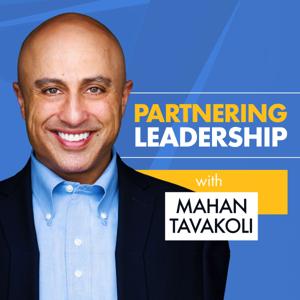

Most executives still chase superstar hires, assuming great individuals will automatically form great teams. In this Partnering Leadership conversation, Dr. Vanessa Druskat brings research depth and field-tested experience to make a different case. She is the author of The Emotionally Intelligent Team: Building Collaborative Groups that Outperform the Rest and a leading voice on how team norms drive performance. Her central claim is practical and testable. Outperformance comes from a clear system of team norms that reliably produce trust, candor, and real debate.
Druskat explains why experienced leadership teams underdeliver even with strong résumés. Status and power dominate airtime. Quiet voices go unheard. The organization leaves talent on the table. Her work shows that ordinary teams become extraordinary when leaders codify the right norms, invite every voice, and convert distributed knowledge into better decisions.
The episode organizes Team Emotional Intelligence into three buckets you can put to work fast. First, Belonging. People feel known, valued, and supported. Second, Learning Together. The team reviews what is working and what is not, and every voice participates in the analysis. Third, Outside In. The team seeks ideas and pressure tests beyond the group, including customers and friendly skeptics. Druskat ties these norms to psychological safety and faster, higher quality decisions, with concrete examples like 60-second check-ins, round-robins on live decisions, and five-minute debriefs.
For time-pressed CEOs, the playbook is efficient. Start with an all-voices baseline to gauge current norms. Leaders often see a rosier picture than the team. Then pilot small behaviors in leadership meetings. Shift time from presenting to exchanging information and deciding. Add a short debrief after key moments. Druskat shares examples from executive teams and clinical settings where simple routines quickly lifted collaboration and results.
She closes by tackling a stubborn myth. Hiring matters, but interactions matter more. Teams with average talent and superior norms outperform star teams with poor interactions. If your board expects speed, quality decisions, and execution, engineer the team’s operating system, not just its org chart.
Actionable Takeaways
Connect with Vanessa Druskat
Vanessa Druskat Website
Vanessa Drustkat LinkedIn
Connect with Mahan Tavakoli:
Mahan Tavakoli Website
Mahan Tavakoli on LinkedIn
Partnering Leadership Website
 View all episodes
 By Mahan Tavakoli
5
3232 ratings
Most executives still chase superstar hires, assuming great individuals will automatically form great teams. In this Partnering Leadership conversation, Dr. Vanessa Druskat brings research depth and field-tested experience to make a different case. She is the author of The Emotionally Intelligent Team: Building Collaborative Groups that Outperform the Rest and a leading voice on how team norms drive performance. Her central claim is practical and testable. Outperformance comes from a clear system of team norms that reliably produce trust, candor, and real debate.
Druskat explains why experienced leadership teams underdeliver even with strong résumés. Status and power dominate airtime. Quiet voices go unheard. The organization leaves talent on the table. Her work shows that ordinary teams become extraordinary when leaders codify the right norms, invite every voice, and convert distributed knowledge into better decisions.
The episode organizes Team Emotional Intelligence into three buckets you can put to work fast. First, Belonging. People feel known, valued, and supported. Second, Learning Together. The team reviews what is working and what is not, and every voice participates in the analysis. Third, Outside In. The team seeks ideas and pressure tests beyond the group, including customers and friendly skeptics. Druskat ties these norms to psychological safety and faster, higher quality decisions, with concrete examples like 60-second check-ins, round-robins on live decisions, and five-minute debriefs.
For time-pressed CEOs, the playbook is efficient. Start with an all-voices baseline to gauge current norms. Leaders often see a rosier picture than the team. Then pilot small behaviors in leadership meetings. Shift time from presenting to exchanging information and deciding. Add a short debrief after key moments. Druskat shares examples from executive teams and clinical settings where simple routines quickly lifted collaboration and results.
She closes by tackling a stubborn myth. Hiring matters, but interactions matter more. Teams with average talent and superior norms outperform star teams with poor interactions. If your board expects speed, quality decisions, and execution, engineer the team’s operating system, not just its org chart.
Actionable Takeaways
Connect with Vanessa Druskat
Vanessa Druskat Website
Vanessa Drustkat LinkedIn
Connect with Mahan Tavakoli:
Mahan Tavakoli Website
Mahan Tavakoli on LinkedIn
Partnering Leadership Website
3,230 Listeners

3,382 Listeners
944 Listeners
937 Listeners

88 Listeners

6,063 Listeners
800 Listeners
5,567 Listeners

19,885 Listeners
168 Listeners
319 Listeners
23 Listeners