
Sign up to save your podcasts
Or


LBRY is building the ultimate content distribution protocol. This protocol combines blockchain, P2P data distribution, and good old fashioned applications, to provide the first direct-to-audience distribution pipeline without middlemen.
Each element of the LBRY software suite is open-source and available on Github. Anyone can build applications on top of the LBRY protocol or fork existing ones, taking advantage of the LBRY blockchain to meet their content needs for any type of media.
Watch, read, and play in a decentralized digital library controlled by the community, not algorithms. Ultimately, LBRY is a sharing platform that uses blockchain technology to enable users to publish material and get paid for doing so. People using LBRY’s service can monetize their published material with its built-in payment system.
The concept melds together the great technical advantages of both Bitcoin and BitTorrent services for people looking to share content. For an upcoming project, LBRY is offering 200,000 LBC for developers to compete to launch their apps, projects, and social platforms. These competitive designs will allow for grant funding through the LBRY Foundation.
Prior to this effort -- LBRY has approved of 21 projects and gave out close to 1 million LBC for musicians, for conferences to connect people in India, and for video personalities as well as animators to post their work.
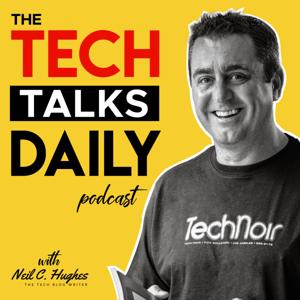
Intrigued and wanting to find out more, I invited Jeremy Kauffman, Co-Founder and CEO of LBRY onto my daily tech podcast. Jeremy knows how to build and scale a startup starting from day one.
Jeremy created LBRY because he fell in love with the idea of shared, global content registry that is owned and controlled by no one. Unsurprisingly, he is a longtime supporter of decentralized technology and freedom of information.
Prior to LBRY, Jeremy founded TopScore, a startup that processes millions of dollars monthly in event and activity registrations. He attended Rensselaer Polytechnic Institute, where he received degrees in physics and computer science.
 View all episodes
 By Neil C. Hughes
5
200200 ratings
LBRY is building the ultimate content distribution protocol. This protocol combines blockchain, P2P data distribution, and good old fashioned applications, to provide the first direct-to-audience distribution pipeline without middlemen.
Each element of the LBRY software suite is open-source and available on Github. Anyone can build applications on top of the LBRY protocol or fork existing ones, taking advantage of the LBRY blockchain to meet their content needs for any type of media.
Watch, read, and play in a decentralized digital library controlled by the community, not algorithms. Ultimately, LBRY is a sharing platform that uses blockchain technology to enable users to publish material and get paid for doing so. People using LBRY’s service can monetize their published material with its built-in payment system.
The concept melds together the great technical advantages of both Bitcoin and BitTorrent services for people looking to share content. For an upcoming project, LBRY is offering 200,000 LBC for developers to compete to launch their apps, projects, and social platforms. These competitive designs will allow for grant funding through the LBRY Foundation.
Prior to this effort -- LBRY has approved of 21 projects and gave out close to 1 million LBC for musicians, for conferences to connect people in India, and for video personalities as well as animators to post their work.
Intrigued and wanting to find out more, I invited Jeremy Kauffman, Co-Founder and CEO of LBRY onto my daily tech podcast. Jeremy knows how to build and scale a startup starting from day one.
Jeremy created LBRY because he fell in love with the idea of shared, global content registry that is owned and controlled by no one. Unsurprisingly, he is a longtime supporter of decentralized technology and freedom of information.
Prior to LBRY, Jeremy founded TopScore, a startup that processes millions of dollars monthly in event and activity registrations. He attended Rensselaer Polytechnic Institute, where he received degrees in physics and computer science.

1,290 Listeners

537 Listeners

1,657 Listeners
1,093 Listeners
626 Listeners
1,030 Listeners
301 Listeners

345 Listeners

228 Listeners
208 Listeners
508 Listeners

136 Listeners

347 Listeners
63 Listeners
682 Listeners
0 Listeners
0 Listeners
0 Listeners
0 Listeners
0 Listeners
0 Listeners
0 Listeners