
Sign up to save your podcasts
Or

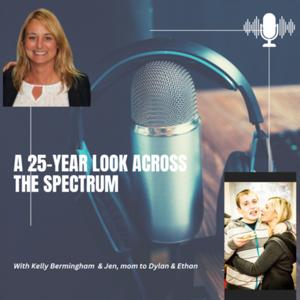


Although the data is varied, some data suggests that parents of a child diagnosed with autism have a higher chance of divorce than their counterparts, especially if they are younger when married and have a child early on in their marriage. Parents raising children with autism experience greater marriage strain in part due to stress related to resources, severity of Autism symptoms, and concerns over long-term care. Kelly and Jen have both experienced this firsthand and share their experiences. Sponsored by
Kelly and Jen speak to Jennifer, BCBA, and mom to her 13-year-old son with ADHD. She shared his struggles with ADHD and anxiety coming out of the pandemic, trying to organize his homework and keep us with social pressures that ultimately led to hospitalization. Research tells us there is a stronger link between homework difficulties and ADHD than the general population. The National Institute of Mental Health suggests medication and behavioral therapy as the two main treatments. But how do you know when to do what? Hear Jennifer's story and her advice to caregivers and BCBAs.
Sponsored by Cite Pro
Up to 75% of autistic children and adults will be bullied over the internet or taken advantage of in some way. Predators look for those who may not understand the nuances of social cues making autistic children and adults targets. In this podcast, Kelly speaks with Dennis Debbaudt, long-time safety trainer and author on how to create a cyber safety plan. Links for filters and protections can be found here:
Dennis: Autism Risk & Safety Management | Autism Training for Police (autismriskmanagement.com)
Sponsored by Cite Pro
Kelly & Jen talk with long-time Registered Behavior Therapist Salvador Cadenas about why he works with children and adults on the autism spectrum with severe behavior and shares his perspective on what BCBAs and families get right to keep behavior interventionists (RBTs) in their jobs, and what they don't get right, which may contribute to turnover and burnout. In this session, we also discuss the importance of not using jargon when working with families and reference the following research article:
Kelly & Jen wrap up season 3 by talking about the Ethics Code for Behavior Analysis, specifically 2.12, Considering Medical Needs. "Behavior Analysts ensure, to the best of their ability that medical needs are addressed and make referrals as needed." From the caregiver's perspective, finding qualified medical professionals that understand and even help those on the autism spectrum is nearly impossible. With GI disorders nearly eight times more common in children and adults with autism than other children and adults, a call to action must happen. Sponsored by Cite Pro
When an infant's attention is drawn to another person's face and voice, they experience a positive emotion as the amygdala and prefrontal cortex are activated. These networks are often faulty in children on the autism spectrum. As a result, no MO is created for wanting to look toward others. Coordinated eye gaze and shared experiences with others, knowns as joint attention, is considered a prerequisite skill for other skills including imitation, social engagement, and communication, a behavior cusp skill. Teaching this skill is often left out of ABA programs because it is challenging to teach, and requires very thoughtful and specific planning. Hear more from Kelly about this topic and learn how you can have further training on this topic from her.
Extinction can best be defined as the discontinuing of reinforcement of a previously reinforced behavior (i.e., response no longer produces reinforcement). The goal of extinction is for the behavior to cease without having used a punishment procedure. Over the years the concept of extinction has become controversial. Kelly & Jen break down the different functions of behavior and discuss why extinction may or may not be warranted, from a BCBA and a caregiver perspective.
Sponsored by: Cite Pro
From the publisher's feed